
Centro buses carried almost 10,000 fewer people in May 2024 than they did in May 2023. That’s the second time year-over-year ridership has declined in the last 3 months after 35 straight months of growth. With overall ridership still 25-30% below pre-pandemic levels, the causes of the drops need to be identified and addressed.
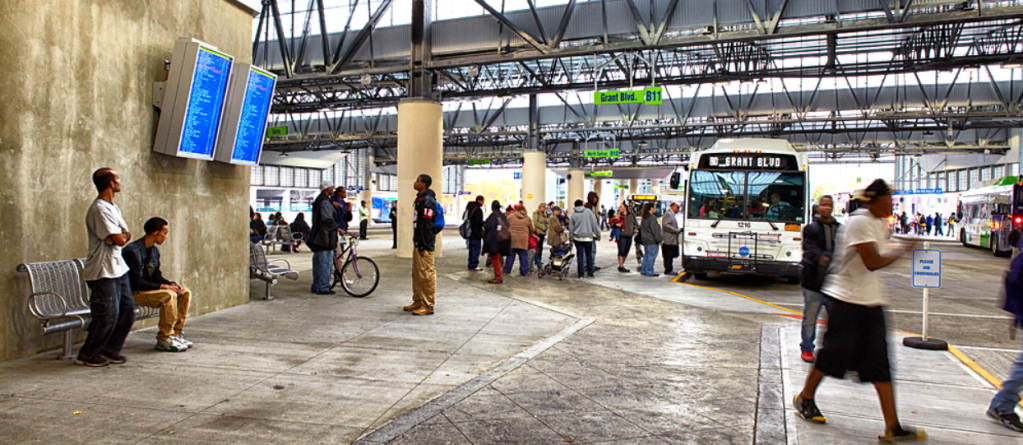
One obvious culprit for lagging ridership is insufficient service. May’s drop in absolute ridership (1.8%) was accompanied by an even bigger drop in service (2.7%), so ridership per revenue hour actually increased for the 36th month in a row. Syracuse’s transit service still hasn’t recovered from the drastic 2021 cuts caused by Centro’s inability to hire and retain bus drivers—scheduled weekday hub departures are down 17% compared to 2020—and fewer buses on the streets mean riders have fewer opportunities to catch a ride. It’s a fair bet that total ridership would have continued its post-pandemic recovery if service levels had remained stable or improved.
May’s ridership decline is complicated by the new service model in Rome. Centro combines Syracuse and Utica-Rome in its monthly reports to the Federal Transit Administration, and recent drops in overall ridership have coincided with Centro’s rollout of a new two-tiered service model that pairs higher frequencies through high-ridership areas with on-demand service for lower-ridership neighborhoods. In theory, that model could improve overall ridership by focusing service where it’s most likely to be ridden, but those service improvements might take time to generate increased ridership while cutting lines from lower-performing areas might have an immediate negative effect on ridership.
So it’s possible that the moderate declines in total ridership over the Syracuse-Utica-Rome area are the result of a transition to Rome’s new service model, or it might be the case that the new service model is improving ridership and covering up even greater losses in Centro’s other markets.

Whatever the explanation for May’s ridership declines, it’s a worrying sign. Syracuse needs and deserves better transit service—we punch above our weight nationally on bus ridership, walkability, and car-independence. All of that makes this a better place to live, and all those good things are only possible with a useful and reliable public transit system.
But the past few years of poor service are enough to push people into cars. When the bus runs less than once an hour, when it doesn’t run past 7pm, when it can’t get you where you need to go when you need to be there, people are going to look for other options to get around. A lot of the time that’s going to mean buying a car, and once someone has made that investment they’re not coming back to the bus even if service does eventually get better. In order to build a better Syracuse, we need to keep that from happening by getting buses back on the streets.
 inthesalt.city