By Alex Lawson
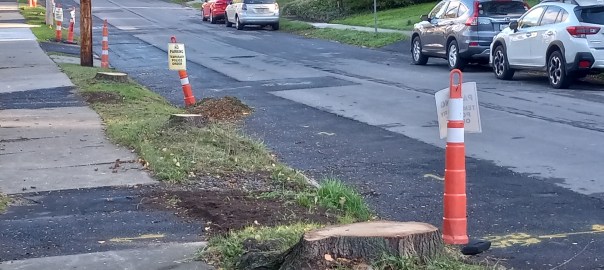
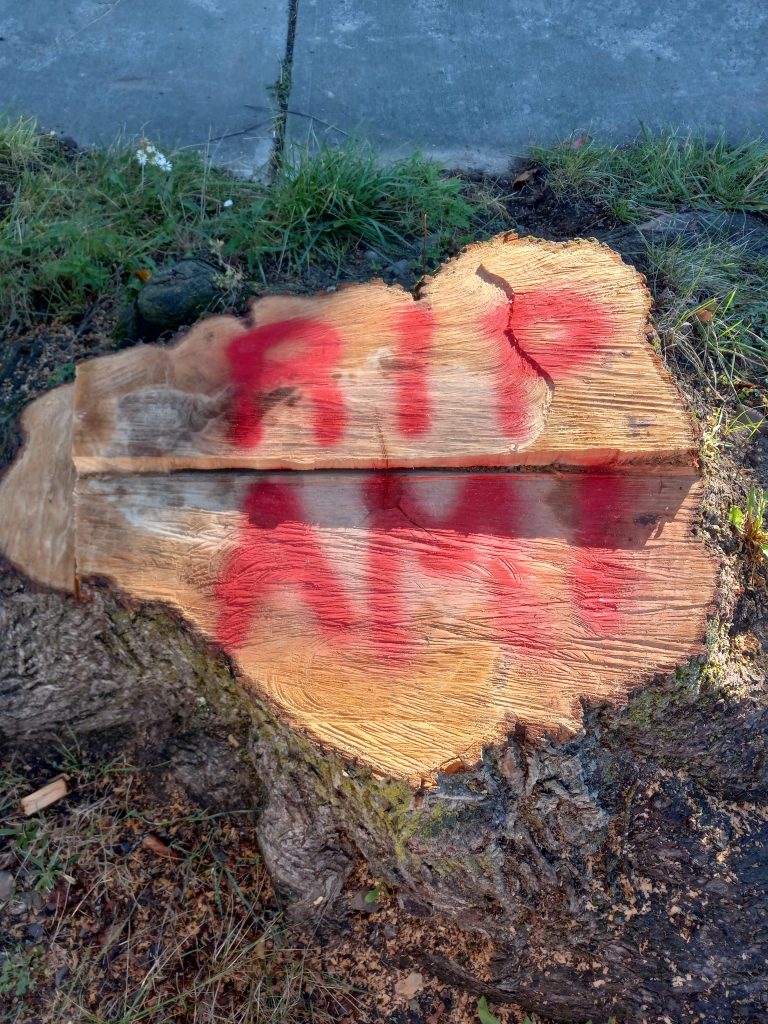
City Hall is wrapping up its annual project of clear cutting blocks of street trees to the detriment of all our quality of life. This unfortunate outcome is entirely avoidable, but City Hall does not avoid it because they do not value mature street trees when it matters most: during street and sidewalk maintenance. Changes to the policies and procedures that govern street and sidewalk maintenance could preserve more street trees by better accounting for the value those trees provide to Syracuse.
Street trees provide three specific benefits that align with other City Hall policy priorities. First, street trees support Vision Zero by calming traffic and improving walkability. Second, they support the Syracuse Housing Strategy by improving property values. And third, they support the Sustainability Plan by mitigating the impacts of climate change by cooling streets and preventing flooding. Most people understand that trees have value, and that’s why local print and social media are full of people bemoaning City Hall’s tree removal spree—people value trees and want to preserve as many as possible.
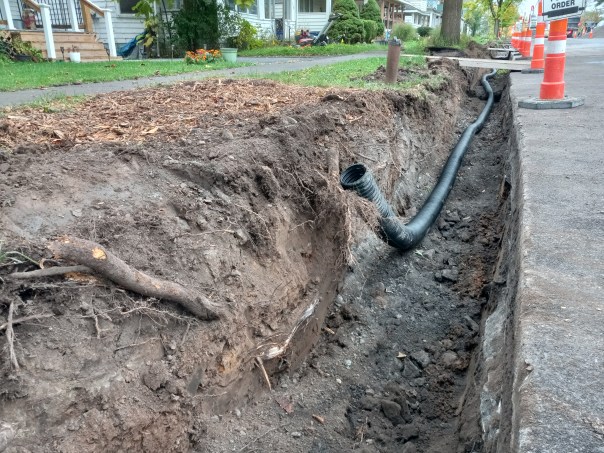
City Hall cuts down street trees when it replaces streets and sidewalks. It cuts them down to keep sidewalks straight, and it tears up their roots to replace granite curbs. Even if the initial construction doesn’t kill a tree, City Hall may still cut it down to avoid the liability of the tree falling over if construction cuts through too many roots. Syracuse’s Urban Forest Master Plan estimates that 20% of street tree removals are caused by sidewalk maintenance.
Some of that tree removal may be necessary, but simple changes could preserve many more mature street trees. Sidewalks can curve around tree trunks, they can be made of more flexible materials, and—when in good condition—sections near trees can simply be left undisturbed. Curbs can be dug out with smaller machines less likely to tear up roots, and they also be left in place (and as a 2020 pilot showed, this halves the cost of street repair).
The problem is that City Hall does not do these things because the sidewalk and street maintenance programs have not internalized the value of street trees. When City Hall is planning out those construction activities, it only thinks of trees as obstacles. All of the benefits street trees provide are unaccounted for in the internal logic of those programs, so additional expenses like alternative paving materials, or design compromises like leaving old curbs in place make no sense. When trees aren’t seen to have any value, even minor efforts to protect them seem extravagant. As the Urban Forest Master Plan puts it:
“In Syracuse, the current regulations and standard operating procedures regarding sidewalks are in direct conflict with the desire to preserve existing trees and the goal to provide more trees and canopy benefits for the citizens.”
There are three solutions to this conflict. First, the Forestry Division—which values trees—could be included in planning street and sidewalk maintenance. Forestry can protect trees ahead of street and sidewalk work if it gets proper notice of planned maintenance. Forestry could also play a more active role in planning and funding maintenance around trees by suggesting and paying for mitigations such as alternative paving materials.
Second, City Hall can incorporate value for trees into the internal standards that govern street and sidewalk maintenance. This could take a few different forms including standards for street tree density (two trees per 100 linear feet of sidewalk, say), and requiring mitigations for tree removals to maintain that density. Another major change that could solve a lot of sidewalk/tree conflicts would be to end the current policy of replacing entire blocks of sidewalk at a time and instead only replace damaged or otherwise non-compliant sections. The most unnecessary tree loss comes when City Hall damages roots by ripping up perfectly good sections of sidewalk.
Third, City Hall can place a monetary value on street trees to change its calculations about the prudence of damaging mature trees. Mitigation measures that protect street trees (such as using alternate paving materials) can add costs to street and sidewalk maintenance, and so they appear as inefficiencies in those programs. If DPW had to pay into City Hall’s Tree Fund whenever its actions led to the removal of a street tree (as is the case for private developers, and as is proposed in the draft Tree Ordinance), then those mitigations could actually save DPW money by avoiding tree removal fees.
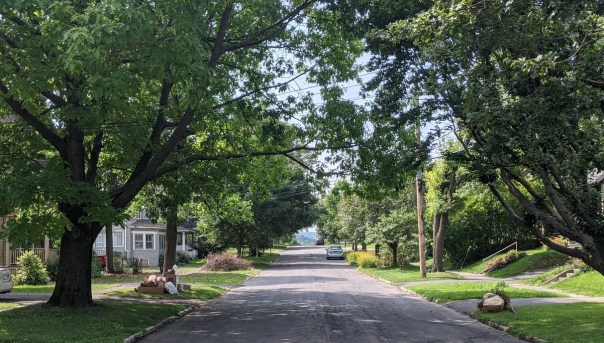
Too often, sidewalks and trees are put in opposition to each other as if Syracuse has to choose between accessible pedestrian infrastructure and a beneficial street tree canopy. The truth is that both sidewalks and street trees are necessary pieces of urban infrastructure. The most beautifully laid sidewalk is not walkable if a blazing sun keeps people from using it—trees and sidewalks work together to make a block walkable. If City Hall really values trees—if it really wants to secure the benefits of decreased flooding, lower energy bills, calmed traffic, a better pedestrian environment, and higher property values—then it needs to find a way to incorporate that value into the process of street and sidewalk maintenance.

