Category Archives: Community

Pushing Parolees out of Public Housing

After a twelve year old boy was shot and killed on the Northside, Mayor Ben Walsh and Governor Andrew Cuomo announced that state troopers would start patrolling Syracuse’s streets alongside city police officers. That surge in law enforcement is supposed to make the City safer, but it’s going to restrict people’s access to housing, perpetuating the long-term problems that cause this violence in the first place.

The state troopers are going to focus their attention on parolees living in Syracuse:

“As part of the Syracuse crackdown, the state Department of Correction and Community supervision will monitor parolees in Syracuse for recent gang involvement, restrict the access of parolees to high-crime areas, and conduct unannounced home visits and curfew checks.”

The idea is that repeat offenders are to blame for all this violence, and if you keep those people away from each other, then there will be less crime.

Those restrictions on parolees work against the State’s other efforts to reduce crime in the City. In 2017, New York State picked Syracuse to pilot a program placing parolees in public housing. Access to housing reduces recidivism and makes communities safer, so it was a good idea for the Syracuse Housing Authority to open its doors to the formerly incarcerated.

But in Syracuse, a lot of public housing is in neighborhoods that could be described as “high-crime areas”


If the State is going keep parolees out of “high-crime areas,” then it’s also going to have to keep those same people out of public housing, eliminating its own reentry program.

Syracuse is too violent. That’s an obvious problem, and it’s tempting to think that there’s an equally obvious solution. The Mayor and the Governor have given into that temptation, sending in troops to stop the violence by force. But cities are more complicated than that. By restricting the freedom of people who have served time, the Mayor and the Governor are torpedoing another government program that could have made Syracuse safer in the long term.

Policing Won’t Eliminate Poverty

Five young people have been killed violently in Syracuse this year. After the most recent killing on October 11, the community and its leaders are calling for action to stop the violence and to address its root causes. New York State Governor Andrew Cuomo responded to that call by sending State Troopers to patrol “high-crime areas” in the City, as if heavy policing is some kind of new solution to a “recent” problem.

The long term plan for dealing with violence and poverty in Syracuse has, for decades, been segregation and incarceration enacted through the exercise of police force in certain neighborhoods and on certain kinds of people. It’s led to miscarried justice, like when a man trying to make a new life was sent to jail after speaking out about the difficulty of reentry. It’s enabled major private employers to deny jobs to qualified applicants. It’s how Syracuse, the 9th poorest city in the nation, managed to pen all of its poorest people in a few select neighborhoods. Sending more police into these neighborhoods will just extend the status quo.

What’s changed now is that the neighborhoods that we were comfortable to write off are bursting at the seams. In 2000, there were 12 census tracts in Syracuse where at least 40% of people were poor. Fifteen years later, 30 census tracts were “high-poverty.”


It’s no coincidence that the community’s call to action came after James Springer III was murdered on the Northside–a neighborhood that has only become “high-poverty” in the last several years.

This moment is an opportunity and a reason for hope. The people who know have long tried to convince the wider community that poverty in one neighborhood is a problem for all neighborhoods. Their words used to fall on deaf ears, but as their predictions come true, powerful people like Mayor Ben Walsh are adopting their language:

“just because you don’t live in the neighborhood where there is chaos, that doesn’t mean that you don’t own it, and that I don’t own it, and that the entire region doesn’t own it”

If anything good can come of this year’s violence, it will be that people recognize our common cause in making all of Syracuse a better place to live.

The governor has promised to speak with “community leaders, clergy and law enforcement” about making a “longterm plan to reduce violence” in the City. Those conversations have to result in a plan that radically changes the way the police and the courts operate here, prioritizing rehabilitation and community stability over punishment and control.

But that can only happen with the common understanding that zealous policing is the source of so many problems in Syracuse’s neighborhoods. The reflexive expansion of police activity in response to the spread of those problems reveals that no such common understanding exists. Those who cannot remember the past are doomed to repeat it.

Variety Makes the City

On October 13, the Post-Standard published a list of the cities, towns, villages, hamlets, and census designated places with the highest median monthly rent in each of Upstate’s fifty-three counties. Westvale was tops in Onondaga. The median rent there is $1,025 a month. That’s a lot higher than the $737 a month that the median renter pays in Syracuse.

But it’s a funny idea to try and compare Westvale to Syracuse like this. All of Westvale’s 89 apartments are about the same size, they’re about the same age, they’re in a single neighborhood. Its cheapest apartments aren’t much cheaper than it’s most expensive apartments because all of its apartments are about the same.

Syracuse’s 33,926 apartments offer a lot more variety. Take the Near Westside. It’s a mix of houses built in the 1800’s, public housing from the 1950s, and some new ‘green’ houses built in the last couple of years. The median rent in that neighborhood is $473. In the oldest part of Eastwood, the houses are closer together and closer to the street, and the median rent is $709. Downtown, where a lot of the housing is brand new luxury apartments in old office buildings, the median rent is $1,010. Up in Skytop, the median Syracuse University student pays $1,366 a month to live in a dorm. Just reporting the median rent for the whole City covers up all that variety.

When someone is choosing where to live in Syracuse, they’ve got a lot of options. They can live in brand new apartments on the City’s outskirts, they can live in a renovated factory in a former industrial area, they can live in a skyscraper downtown, they can live in an old house in an inner neighborhood. All of those places offer different things to different people–whether it’s the neighborhood, the commute, the apartment itself, or the rent–so many different kinds of people can find a place to make a life in the City.

That variety makes Syracuse unique in Onondaga County. It means that there’s more opportunity in the City, and it keeps Syracuse resilient while its homogenous suburbs–like Westvale–are vulnerable to changes in the economy and in people’s tastes. You can’t reduce all that to a single number.

Isolated and Systematic Cruelty

On September 30, Shakeen Robbins, an employee at the Dunkin Donuts on N Salina Street, poured cold water on Jeremy Dufresne, a homeless man who was in the donut shop to charge his phone. A video of that cruel act got international attention, the Post-Standard published a new story about it every day for seven days in a row, a GoFundMe page raised over $20,000 for Dufresne, and Syracuse Deputy Mayor Sharon Owens, Common Council President Helen Hudson, and Police Chief Frank Fowler have all gotten in touch with the company that operates that particular Dunkin Donuts to talk about how to treat poor people better.

Poor people deal with isolated acts of cruelty everyday. Those acts are pointless and dehumanizing, and they’re all worth our attention. When that video went viral, all kinds of people saw the cruelty of dumping water on another human being just because that person couldn’t do anything about it, and they recognized that cruelty for what it was. Now, hopefully, people like Jeremy Dufresne won’t have to put up with so much casual abuse every single day.

But poor people also face cruelty that isn’t so isolated. They face cruelty that’s part of a coordinated effort to push them out of sight, to pretend that ‘progress’ isn’t leaving anybody behind, to pretend that people who are doing well have no responsibility to the people who aren’t. That kind of systematic cruelty is worth just as much attention and it deserves just as much condemnation as the kinds of isolated acts that Jeremy Dufresne has brought to top of mind.

Ryan McMahon’s plan to incarcerate poor people is an act of systematic cruelty. It tries to use the power of the state to exclude poor people from public space because their presence might be “perceived as threatening.” It targets poor people specifically for being poor and specifically when they make their poverty known. It’s an abuse of power, a failure of government, and a cruel act.

So let’s pay attention as the new County Executive tries to turn his plan into a law. Let’s pay attention to whether Mayor Ben Walsh stands up for Syracuse–the 9th poorest city in the nation–or whether he chooses to go along with the County’s plan to hide its poverty behind bars. Let’s pay attention when SPD arrests any person in the service of that plan, and let’s condemn every single act that fails to respect people’s basic human dignity.

Hope for North Salina Street

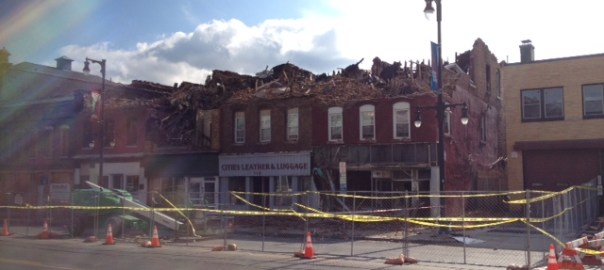
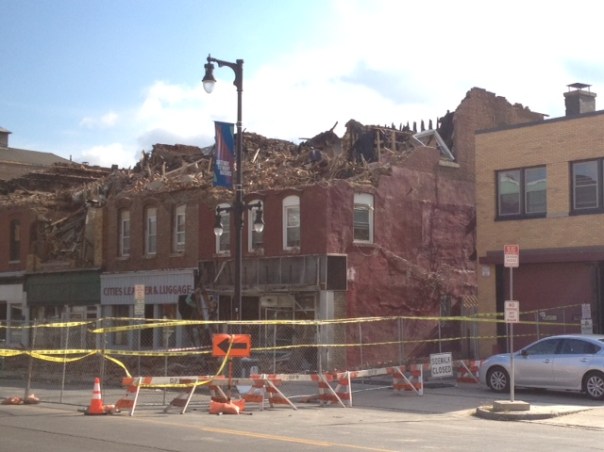
On the afternoon of August 29, four buildings on the 700 block of North Salina Street caught fire and burned until firefighters extinguished the blaze the next morning. After the fire was put out, Mayor Ben Walsh announced that all four buildings would have to be knocked down for safety reasons.

IMG_2694 (1)

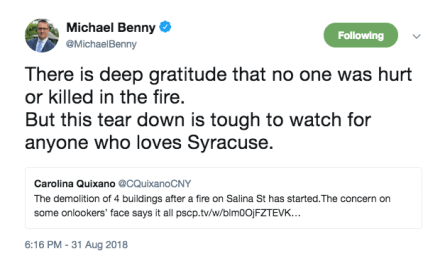
Since the fire, many in the community have combined sympathy for the people directly affected–the people who lived and worked in those buildings–with a sense that this fire is a blow to the City as a whole. CBS anchor Michael Benny summed that feeling up in a tweet two days after the fire:

Screen Shot 2018-09-10 at 8.30.22 AM

It’s a pretty forlorn reaction from a city that is supposed to be “brimming with excitement” about its own “modern-day renaissance.” If there’s as much energy and action as Syracuse’s boosters say, why mourn a few old buildings? Shouldn’t someone swoop in to build something newer and better on the site?

The truth is that all of the new construction happening downtown doesn’t have much to do with the Northside, and everybody knows it. That “renaissance” going on in Armory Square hasn’t even spread to the empty corner of Fayette and Warren Streets, so you know it’s not going to reach all the way up to the 700 block of North Salina Street. If Downtown’s revival is the only thing Syracuse has going for it, then the land where those buildings burned is going to stay empty for a long time.

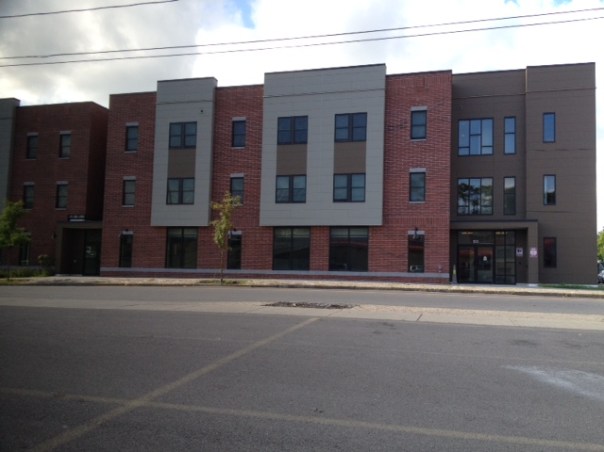
But there is more going on in Syracuse, and you don’t even have to look that far to find it. Less than half a mile away from the fire, at the corner of Butternut and McBride, a hospital and two non-profits got together to build something new on a site where something old fell down. The vacant building that had sat on that corner for more than 100 years started to fall apart, and by 2012 it was a hazard to people walking down the sidewalk. St. Joseph’s Hospital, Home Headquarters, and Housing Visions bought the old building, knocked it down, and built the new one as part of a huge project that put up 49 new affordable apartments all across the neighborhood. The result is a better place to live for the people in Syracuse who need it the most.

IMG_2695 (1)

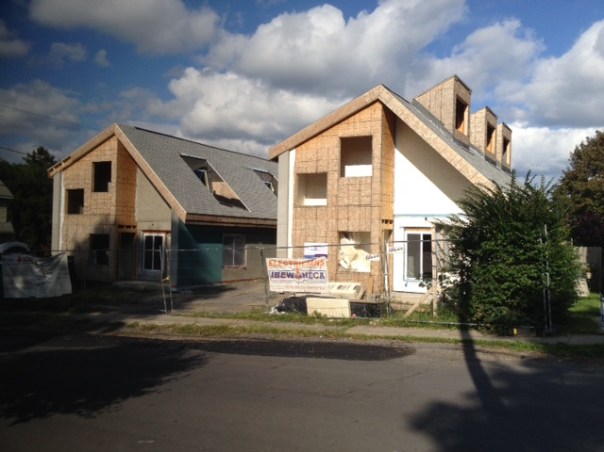
Walk two miles further east to 603 Hixson Avenue, and you’ll find more reason to hope for a better future in Syracuse. In 2014, the house at that address burned and had to be knocked down. No for-profit developer would have wanted anything to do with that land, but Habitat for Humanity bought the land and decided to build two new houses on it. Habitat turned the construction site into a workforce development program for local masons, and Habitat worked with the Syracuse University School of Architecture to design houses that are “high quality yet still affordable” and that use green technology for heating and cooling.

IMG_2698 (1)

A new thing is happening in Syracuse, and it’s happening where people don’t always think to look. Community organizations are working together to create better neighborhoods all across the City. That’s hard work, it takes time, and it’s happening in neighborhoods left behind by the financial and economic systems that build glitzy, profitable, exclusive places like Downtown. That work means hope for the whole City, and it means hope for North Salina Street.

The “New Economy” in Upstate New York

Last week at the ceremony opening the new Expo Center at the State Fairgrounds, Governor Andrew Cuomo spoke about bringing Upstate New York into the “new economy.” As he sees it, that new economy is based on making Upstate into a place that people want to be.

The Governor pointed to County Executive Joanie Mahoney and Mayor Ben Walsh as two local politicians who understand this “new economy.” The County Executive turned Onondaga Lake “into an asset and an attraction which is what water is everywhere, and that amphitheater on the lake is magnificent, and it’s working, and it’s attracting people.” In Syracuse, the Mayor focused on “downtown development” because that attracts “the new workforce: the millenials… They want to be downtown.” Investing  in tourist destinations and downtown apartments attracts people to the region, it gets people to spend their money here, and it gets people to live here.

But now we’re seeing the dark side of this “new economy.” On the same day that the Governor gave that speech, Ryan McMahon, Chairman of the Onondaga County Legislature, went public with his proposal to incarcerate people who ask for money “aggressively.” The new law “would prohibit persistent solicitation after a person has rejected a request for money, which could be perceived as threatening.” A couple days later, Mayor Walsh came out in support of the law, saying that he’d heard complaints from “business owners and citizens who have felt threatened or harassed by panhandlers.”

If your idea of the “new economy” is based on bringing in new people, this panhandling law makes perfect sense. Those new people are the ones spending money Downtown, renting the $2500 apartments, shopping at the high-end clothing stores, drinking the $6 beer, and they’re not going to do all those things if they “feel threatened” or if they “perceive” Downtown to be dangerous. They are the people that matter, and if they might get scared off by interacting with some of the people in Syracuse who don’t matter, the obvious solution is to criminalize that interaction.

That’s why the Governor’s “new economy” is a moral failure–the people who have been living in Syracuse do matter, and they don’t deserve this. They don’t deserve to be talked about like they’re the problem, like they’re the reason the City has fallen on hard times. They deserve better lives, and any economy that can’t make that happen isn’t one worth bringing about.

It’s exciting that people want to be in Syracuse, are choosing to live in Syracuse. But those people need to see the whole City. It’s a City racked by poverty, segregation, and homelessness. The health of this community depends on facing those challenges squarely, respecting the humanity of each person who has suffered from them, and working together to overcome them. When Syracuse finally does that, it will have created a New Economy worth talking about.

The Other Viaduct

On August 7, the Post-Standard published a letter by Ed Griffin-Nolan arguing that the rail viaduct that runs along Downtown’s south and west sides should be torn down.

That viaduct does have its problems. A small bridge used to carry Jefferson Street over Onondaga Creek, but when they elevated the trains they got rid of that bridge. Now there’s no way to get directly from Armory Square to the Near Westside, and that has something to do with the stark differences between Wyoming and Walton Streets.


SHA’s East Adams Street Neighborhood Transformation Plan also talks about how the viaduct needs “cosmetic treatment” and “noise reduction treatment” for the sake of the people living right next to it.

But let’s not overdo it. Despite its problems, the viaduct has a lot of potential too, and there are plenty of people talking about all the ways that it can be a positive asset for Syracuse.

In 2015, the Alliance of Communities Transforming Syracuse hosted a public forum where people talked about running some kind of transit service on the viaduct. The most interesting idea to come out of that was paving the viaduct as part of a Bus Rapid Transit system. That could give Syracuse something like the Silver Line in Boston or the trolleys in Philadelphia–transit that runs in the street through most city neighborhoods, but that avoids the worst traffic in the city’s center.

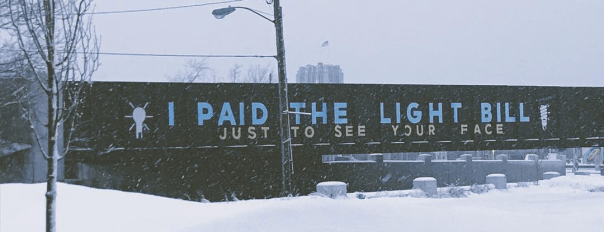
The viaduct is also a canvas for public art. It started with the murals on the bridges over West and Fayette Streets in 2010, and artists has continued to make good use of the viaduct’s long flat undecorated walls ever since. This is some of the very best public art in Syracuse, and it elevates people’s daily lived experience of the City.

bridge.png

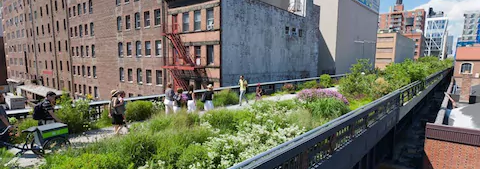
Syracuse could also follow in New York City’s footsteps and turn the viaduct into something like the High Line–an elevated linear park that’s a magnet for people. As an elevated greenway, the viaduct would let people walk or bike between several different neighborhoods without having to worry about car traffic. It would connect the Creekwalk to more neighborhoods, and it’s a good opportunity to bring the Onondaga Lake trail into the City. It would take what is now a visual barrier between Downtown and the Southside, and turn it into a vantage point for people to see the City in a new way.

highline

Ed Griffin-Nolan is right to call that the rail viaduct a “vestige of the past.” It could only have been built in the past because the political and economic conditions that allowed the railroad to elevate its tracks through the center of Syracuse don’t exist anymore.

But he could just as well say the same thing about the New York City Subway. That city could never build its current subway if it had to start from scratch today either, but that that only makes the all those tunnels and rails more precious.

Syracuse is full of resources like this. No one would build something like Holy Trinity Church on Park Street anymore, but thank god it was there so that the City’s growing Muslim community could use it as a mosque. No one would dig a channel at the southern end of Onondaga Lake anymore, but the Inner Harbor is an asset for the City today anyway. No one would build a factory on Erie Boulevard, Wilkinson Street, Emerson Avenue, or Plum Street anymore, but old shop buildings on all those streets are finding new life as housing. Hell, the entire City of Syracuse is a relic of the 19th century, but it has remained relevant by making the best use of the resources at hand throughout its history.

Syracuse has 200 years of built heritage. For too long, the City treated that inheritance with contempt, demolishing buildings and tearing up infrastructure without thinking of the costs, all in the name of progress. We filled the Canal in to build a road, and then 100 years later decided we wanted part of the Canal back in Clinton Square. Syracuse isn’t so wealthy that it can afford to keep making mistakes like that. The City has to make the best use of what it’s got now. That’s the real challenge of the 21st century.

Transformed Neighborhoods

Someday, NYSDOT will demolish the structurally suspect I81 viaduct that runs alongside Downtown. That’s going to uncover a lot of land in the City’s center. Some people want for NYSDOT to build a new viaduct on that land, but last week, the Gifford Foundation put out a statement suggesting that Syracuse instead use the land to build a new neighborhood.

The Gifford Foundation isn’t interested in just any neighborhood–it thinks that this is an opportunity to do something “transformational”:

“A transformational neighborhood with mixed-income housing, extraordinary schools, and facilities, programs, and services that honor the rich history of the community, reflect priorities of those who live there, promote health and safety, and create jobs”

That sounds like a great place to live and a positive addition to the City. It’s the best possible outcome of this whole drawn-out process. Here’s hoping that kind of a neighborhood goes up when the viaduct comes down.

But in the meantime, let’s recognize that what the Gifford Foundation has described isn’t just a good blueprint for building a transformational new neighborhood. It’s also a call to transform the neighborhoods that Syracuse already has. Everybody living in this City deserves access to good schools, services, community, health, and employment, so while we’re all waiting for the possibility of getting a neighborhood that’s brand new, let’s do the work to make those things a reality in the neighborhoods that are already here.

It’s dangerous to focus too hard on something like I81. It’s such a big thing that’ll have such a big effect, that it’s too easy to just wait around for it to happen. But Syracuse can’t wait. Blodgett is falling apart now, people are showing up hungry at the Samaritan Center now, Centro’s out of money now, and this City needs to respond to all of that with urgency. If it does, then that new neighborhood the Gifford Foundation’s imagined won’t be so transformational. It’ll just be a new addition to a Syracuse that’s already transformed.

Syracuse’s Pride is Welcoming the Stranger

Since 2000, Syracuse has welcomed more than 10,000 people from overseas. Many of them arrived in the City as refugees, escaping violence in places like Somalia, the Sudan, and Syria. It’s hard work to get those people to the City, to help them fit in, to get them housing and a job, and it takes a whole constellation of allied organizations, businesses, and neighbors to do that work well.

This is work to be proud of. For too long, Syracuse found its pride and identity in vain things–national prominence borrowed from name brands, ill-defined and ill-conceived notions of growth. But it’s a truer pride that Syracuse, even with all of its challenges, continues to accept and embrace an ever-larger portion of the human family. The City is keeping the Nation’s promise to ‘lift its lamp beside the golden door’ and fulfilling the sacred duty to ‘welcome the strangers,’ even if they are some of the ‘least of these.’

Keeping that promise and fulfilling that duty have changed Syracuse for the better. Refugees are renewing old neighborhoods–fixing up homes and opening businesses. They are bringing new life to institutions like the Farmers Market and the Public Schools, and to old community fixtures like DiLauro’s Bakery and St. Vincent DePaul Church.

But now that’s all in jeopardy. On June 17, the Post-Standard published a letter from Beth Broadway, CEO of InterFaith works, that talked about all kinds of artificial barriers that the federal government has thrown up to make it hard for people to come to America. The numbers don’t lie–Syracuse is on pace to welcome 72% fewer refugees this year than it did in 2017. The prospects for 2019 are even worse.

That is all the result of a poisonous national politics. A politics that demonizes people who are made in the same image as all of us. A politics that criminalizes self-improvement and replaces compassion with cruelty– that attempts to deny our commonality. Ultimately, this politics harms us all, because we are all created equal, and so when we dehumanize these others, we equally dehumanize ourselves.

Syracuse will suffer spiritually and practically from the effects of this politics. It will suffer from the loss of that good work, and it will suffer from the loss of so many good people who would otherwise have added to all that the City already has. But Syracuse can keep its pride by fighting for those people at every opportunity.

In her letter, Ms Broadway talks about three ways that we can do this:

› Write letters, make phone calls and speak out for refugees with elected officials.
› Invite a refugee to speak to your congregation, club meeting or social group through InterFaith Works’ Spirit of America program.
› Volunteer with any of the refugee-serving organizations in Syracuse. We can use English tutors, drivers, organizers, friends to teach people about our community and more.

We can also give money to InterFaith Works, Catholic Charities, the Northside Learning Center, or any other that works with refugees directly or indirectly.

June 20th is World Refugee Day. This should be an occasion to celebrate Syracuse and the good work that the City is doing, but that work is now in jeopardy. Take June 20th as an opportunity to make a personal commitment to that work and, in doing so, make Syracuse a city to be proud of.

Who are jobs for?

In an opinion piece that the Post-Standard printed on May 13, Mitchell Patterson predicted that in the next few years, companies in and around Syracuse will be hiring for tens of thousands of jobs. This, he says, is a problem:

Having too many jobs sounds like a good problem to have. But not having the people – or the people with the right skills – to fill them is holding us back.

Who’s this “us,” and who’s a part of the “we” that worries elsewhere in the piece about how “we have a job glut,” and “we can’t even fill the current surplus of jobs that exist.”

That “us” certainly doesn’t include the 17,000 people who are looking for work right now. If it did, then several thousand new jobs would not be a problem, but an opportunity to improve several thousand people’s lives. When you include those people in the “us” that has a stake in Syracuse’s future, the problem instead becomes turning that opportunity into a reality for the people with the direst need.

To tackle that problem, Syracuse needs relevant educational opportunities for adult learners, and it needs useful transportation options for people who don’t own a car.

So many of these new jobs are going to require some kind of diploma, and that’s a barrier for a lot of people who are looking for work. Public educational institutions like OCC and BOCES serve adults who need to get new training so that they can earn those diplomas. These schools already do a lot of this good work, and they could do even more with larger staffs and more locations.

Those educational opportunities are no use, though, if people can’t reach them. It’s too difficult to take a class at OCC if you have to get there on the bus. It can be even more difficult to keep a job when day in and day out you’re relying on this bus system to get you to work on time. Organizations like Providence Services can help, but what the City really needs is to renew its commitment to public transportation as a tool of individual empowerment. The Syracuse Metropolitan Transportation Council’s SMART1 recommendations will make it possible for more people to get to OCC and to more of the jobs available in the community. Centro needs support and pressure to act on those recommendations, and the SMTC needs to finish the job it started by planning all the other service improvements suggested in the Syracuse Transit System Analysis.

17,000 people are out looking for work. That’s more people than live in all of Geddes. They have to be a part of the conversation when we’re talking about the future of work in Syracuse. When they’re included, the the community’s obvious overriding imperative is to make sure that they benefit from these changes that are coming, these new jobs that will open up. Once we’ve taken care of that basic business, then let’s talk about whether or not there are too many jobs and not enough workers in this community.