By Alex Lawson
When isn’t a house a home? When it’s occupied by renters, according to the City of Syracuse’s zoning code. In every other municipality in New York State, the single-unit houses, duplexes, townhouses, apartments, and condos where people live are considered to be ‘residential’ uses for the purposes of zoning regardless of when the families living in those housing units are tenants or owner occupants. That was true for more than 100 years in Syracuse too, but in 2024 City Hall amended its zoning code to claim that a house is only ‘residential’ if owner-occupied—all rented housing is now considered ‘residential-commercial.’
That would be a little gross but not too much of a problem if it were simply a matter of language, but City Hall’s distinction between renters and homeowners has practical implications. Read through the City of Syracuse zoning code, and you’ll find many instances where City Hall’s decision to discriminate between homeowners and tenants as a matter of zoning creates inconsistent and unfair outcomes.
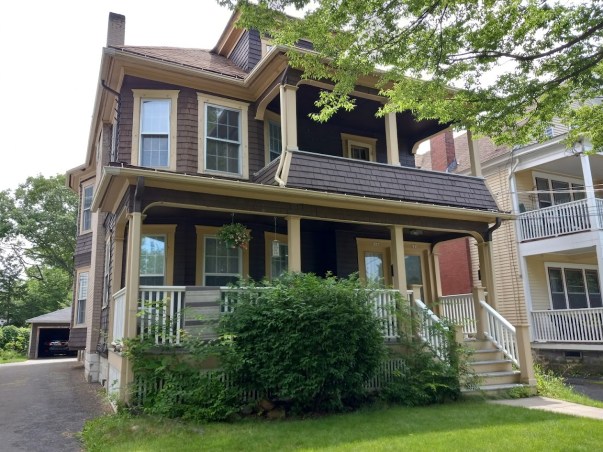
Rented vs Owner-Occupied single- and two-unit dwellings
The City of Syracuse’s zoning code distinguishes physically identical residential structures as different use types based on whether or not the occupants own or rent the building. In the case of single- and two-unit dwellings, this distinction brings with it different zoning regulations, and it means that physically identical buildings could be owned but not rented depending on the size, location, and history of the structure. The distinction also creates the possibility of banning rental housing from entire zoning districts.
Owner-Occupied dwellings in multi-unit buildings.
The City of Syracuse’s zoning code does not allow owner-occupancy of dwellings in multi-unit buildings. Multi-unit dwellings are listed as a use under the Residential-Commercial use category, and that category only contains dwellings that are rented:
“Uses in this category comprise non-Owner Occupied residential occupancy of a Dwelling Unit. Tenancy is arranged on a month-to-month or longer basis and may include individually rented rooms or rental of the entire Dwelling Unit by a person or group of people for the purpose of residential occupancy.”
Owner-occupied dwellings are listed under the Residential Living use category, and there is no multi-unit use type in that category so it is not possible—as a matter of zoning—to own an individual unit within a multi-unit structure. This makes condominiums and cooperatives in buildings with more than three units—such as the condominiums above the Landmark Theater—impermissible uses in the City of Syracuse.
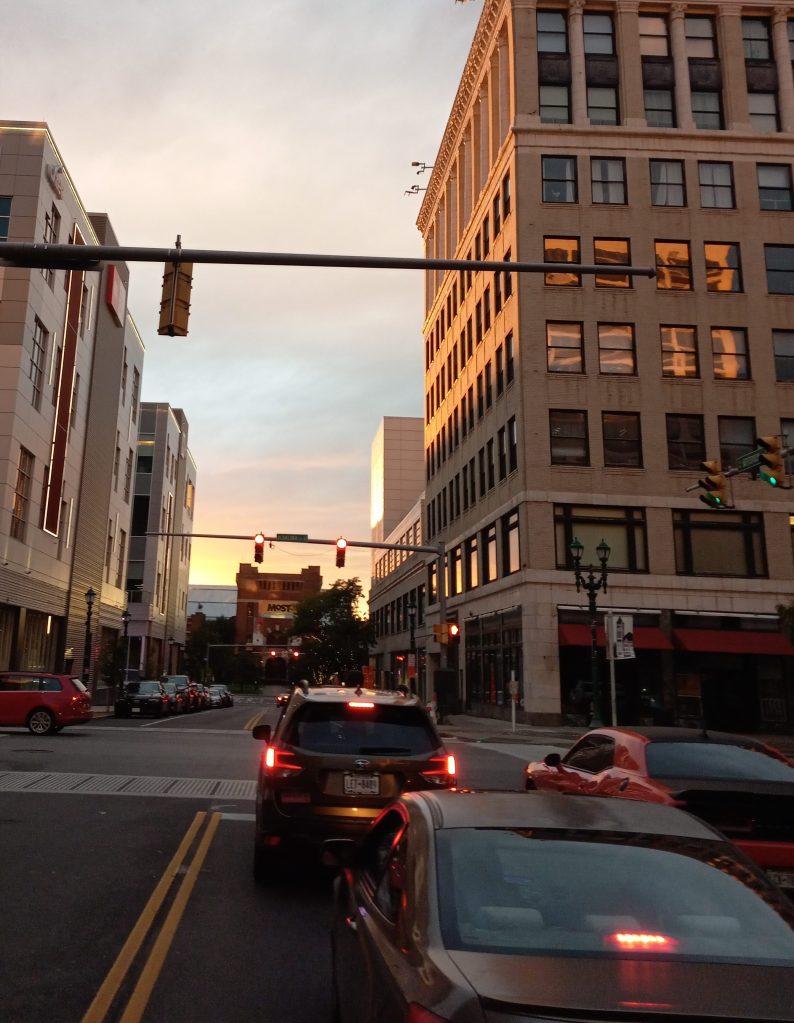
No owner-occupied Live/Work dwellings
For identical reasons to those described above, the City of Syracuse zoning code does not allow owner-occupancy of a Live/Work dwelling.
Missing Dimensional Requirements for new Residential-Commercial Uses
There are no lot width minimum or area minimum requirements for single-unit non-owner occupied, single-unit commercial conversion, two-unit non-owner occupied, or two-unit commercial conversion dwelling units anywhere in the ordinance as enacted.
This appears to be an oversight. When the City of Syracuse drafted the amended ordinance, they did not account for the fact that some existing dimensional requirements were use-specific and that newly created residential-commercial uses would not be subject to preexisting regulations.
Conflicting dimensional requirements for single-unit attached
The City of Syracuse zoning code was recently amended with the intention of reducing the minimum lot width required for attached single-unit dwellings in zones R1, R2, and R3 from 25’ to 20’. These lot width requirements are listed in two separate places—the subsections pertaining to each individual zone district and in the summary table of dimensional standards. The amended ordinance only changed the minimum lot width requirements for attached single-unit dwellings in the individual zone district descriptions, and it left the summary table untouched. As enacted, the code contains two different minimum lot width requirements for attached single-unit dwellings in zones R1, R2, and R3.
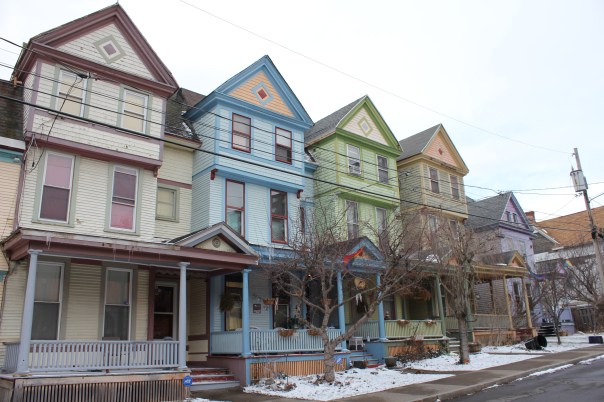
Renting two-unit non-owner occupied dwellings
The code does not allow the individual units in a two-unit dwelling to be rented separately unless the units have undergone ‘commercial conversion’ to add bedrooms to the original floorplan. The code’s definition of a two-unit non-owner occupied dwelling stipulates that the building must be rented in its entirety to a single tenant or tenant group:
“Dwelling, Two-Unit Non-Owner Occupied: the rental or leasing of a two unit dwelling in its entirety to a single tenant or tenant group for residential use.”
The definition of two-unit dwelling makes it clear that the term refers to the building itself and not to the individual units within it:
“Dwelling, Two-Unit: A single building containing two complete dwelling units.”
The definition of a two-unit commercial conversion is written differently and allows for the possibility that each unit might be rented separately, but even it contains language about all tenants sharing “common areas” including kitchens, living areas, bathrooms, and bedrooms that would not be shared by both units in a two-unit building.
The definition of two-unit commercial conversion also states that this use type also includes owner occupied single-unit dwellings when three or more of the bedrooms in the dwelling unit are rented separately. This is likely a typo as the exact same sentence appears in the definition of single-unit commercial conversions.
Attached/Detached distinction for Residential-Commercial Dwellings
The City of Syracuse zoning code divides owner-occupied single-unit dwellings into two different use types depending on whether the building is freestanding or attached to adjacent buildings via party walls. These two use types are referred to as attached and detached single-unit dwellings, respectively.
There is no similar distinction for rented single-unit dwellings. They are all classed as either non-owner-occupied or commercial conversion single-unit dwellings. If the distinction between attached and detached single-unit dwellings matters, then the code must make that distinction for residential-commercial use types. If the distinction does not matter, then there is no reason to make it for residential living use types.
This has practical implications. Interpreting rented single-unit dwellings to include both attached and detached buildings would mean that single-unit attached dwellings could be owned but not rented in zone districts MX4 and MX5. If, on the other hand, non-owner-occupied and commercial conversion single-unit dwellings are only detached, then it is impermissible as a matter of zoning to rent a townhouse.

Given all these problems, it’s worth asking why City Hall would choose to discriminate between renters and homeowners. The publicly stated reason is that this is necessary because they removed the old zoning code’s definition of ‘family.’ Before ReZone passed in 2023, the zoning code referred to ‘single-family’ and ‘multi-family’ dwellings, and it defined what a ‘family’ is in terms of both blood relations and household dynamics as a way to prohibit overcrowding in an individual house or apartment (no more than 1 family could live in a single-family dwelling). It was good to get rid of that definition because it’s not City Hall’s business to tell a household whether or not they’re really a family, but there was no reason to replace that bad piece of zoning with another discriminatory piece of zoning. NYS Building Codes already govern ‘overcrowding,’ and shoehorning that building code issue into the zoning code doesn’t add anything useful.
No other municipality in New York State discriminates between renters and homeowners as a matter of zoning. There is no good precedent for discriminating in this way, it doesn’t solve any problem, and it creates many new problems. City Hall should repeal the amendments that introduced this distinction to local zoning.


1 thought on “Discriminating between renters and homeowners in zoning”
Comments are closed.