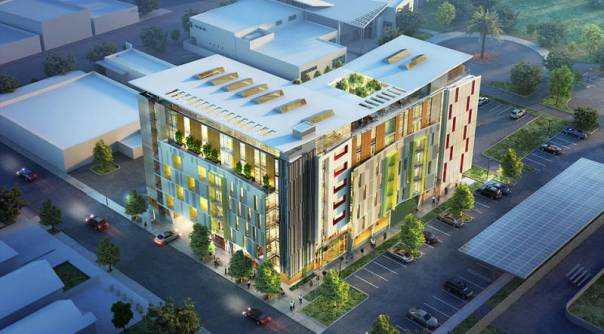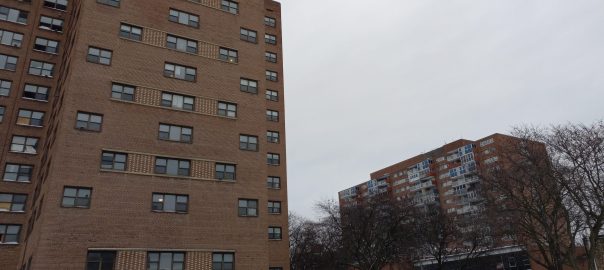
A disturbing trend is emerging among large midcentury apartment buildings in Syracuse. Buildings that used to provide quality housing for hundreds of people have fallen into disrepair and become uninhabitable. The Skyline and Vincent—both run into the ground by local slumlord Troy Green—are the highest profile examples of this trend in recent years, and a similar fate threatens Nob Hill and Parkside Commons. We need a way to stop the negative spiral of deferred maintenance and poor management leading to reduced cash flow through vacancies and rent abatements that leads to further deferred maintenance until these buildings fall completely out of the housing market.
Currently City Hall and the County Health Department only have enforcement tools. They can cite buildings for code violations or fine owners for health violations. In the high profile cases of Green National, the Attorney General eventually sued them out of owning property. The outcome of two of the largest of those buildings, the Vincent and Skyline? Every tenant was forced to move and the buildings are still totally vacant. Beyond the impact on individual tenants whose lives are upended and their homes are gone, I believe that the loss of these units is an underappreciated factor in why rents have increased so dramatically at the lower-cost end of the rental market.
Now we are seeing dramatic building decline at Nobb Hill, and Parkside Commons in a different way (buildings built with subsidy often have different funding streams/economic models). With our aging housing stock, it’s likely to happen again. Code and health enforcement are important tools, but obviously given the past failures described they are not sufficient. While discussing Skyline during its downward descent, a friend asked if the building could be seized by the city. My response: What would happen next? City Hall isn’t a property developer. It doesn’t currently have the capacity to finance or implement the kind of renovation these buildings need.
Given the frequency of this situation, I believe the “what next” should be built. An institution which has the capacity to take over distressed buildings, fix conditions crises, restore dignity to the lives of tenants, and stabilize the physical and financial health of buildings is sorely needed. If the landbank’s proposed Invest Syracuse gets started, this can be precisely that type of institution. The ability to acquire buildings, real estate expertise, a robust balance sheet and the ability to finance projects through its own capital and obtaining various subsidies.
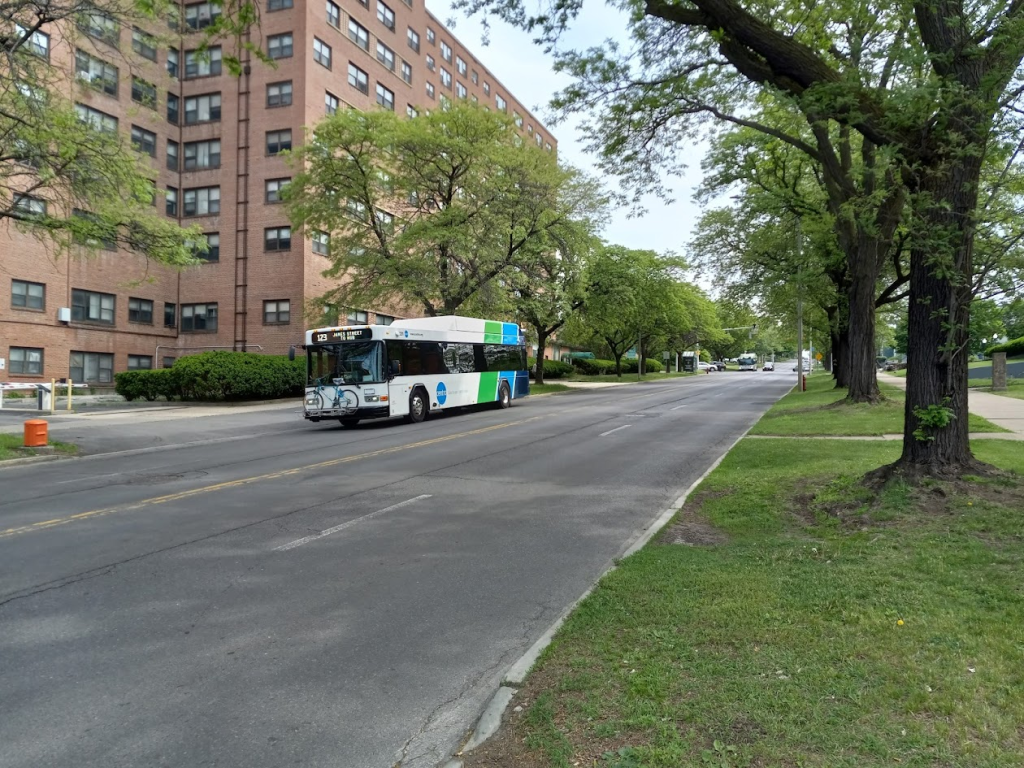
We know Syracuse’s big mid century apartment buildings can be successful. Right across the street from the Skyline is the Regency Tower—another large apartment building constructed in 1960. It houses hundreds of tenants without any of the kinds of problems that plagued its neighbor across the street, and it’s an asset to its neighborhood and the City at large. The Skyline and the Vincent and Nob Hill and Parkside Commons could all contribute to Syracuse in the same way, but when private ownership and market conditions put them on the path to disrepair, we need a public solution. Hopefully the owners of Nob Hill can turn things around for the good of the tenants. But no matter where, whether it is Invest Syracuse or something else, we need an institution that goes beyond just enforcement, and has the ability to turn things around at failing buildings for tenants.
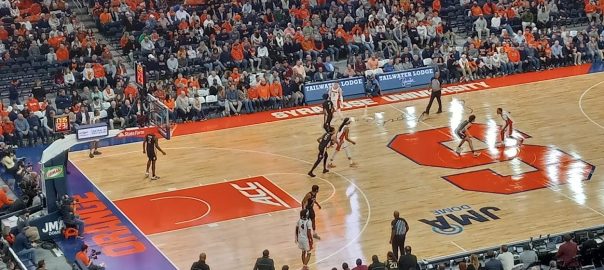
Syracuse is America’s premier second-tier sports town. In Spring and Summer we have the Syracuse Mets, in Fall it’s SU football, then in Winter through to Spring it’s the Crunch and Orange Basketball. With the Crunch, the Mets, and Orange football and basketball, we’ve got teams competing in the second-highest league of each of the ‘big four’ sports: the AHL, AAA baseball, Power Four college football, and Power Five college basketball. All twelve months of the year, you can catch a pretty well-attended game featuring a pretty high level of competition for a pretty reasonable price.
That’s pretty cool for a metro area this size, but what’s even cooler is that Syracuse is the only town in America where this is true. Of the more than 100 cities with a AAA baseball team, and AHL hockey team, a Power Four college football team, and a Power Five college basketball team, none besides Syracuse has all four.
Some come close. Bigger cities like Chicago and Los Angeles boast big universities and one or two minor league teams, but those are really major league towns. Others—like Columbus, OH—overshoot the mark by having one major league team alongside a few minor league and college programs. Places like Des Moines have a nearby neighbor like Ames that round out their complement of second-tier teams, but they can’t make it on their own.
The four other towns that come closest are Durham, Louisville, Tucson, and Austin. Durham has the Duke Blue Devils and the Durham Bulls, but no AHL team (the NHL Hurricanes play in nearby Raleigh). Louisville has the AAA Bats and the Cardinals competing in the ACC, and they used to have an AHL franchise too, but the Panthers left town in 2001. Tucson has the AHL Roadrunners and the University of Arizona Wildcats, but their pro baseball team plays in the Mexican Pacific League—well below AAA. Austin is home to the Texas Longhorns, and the Austin metro area includes the suburban municipalities of Round Rock, TX (with their AAA baseball team, the Express) and Cedar Park, TX (home of the Texas Stars).
Tonight, ESPN is televising the basketball game between the Tennessee Volunteers and the Syracuse Orange to a national audience, and you can still buy pretty cheap tickets to join fifteen to twenty thousand other people in watching that game in person. It’s a little thing, but it’s part of what makes this a fun place to live, and we are uniquely lucky to have it.
It can be difficult to have a frank, public, political conversation in Syracuse. We are often very polite and rarely direct. You hear things around town, but we don’t really have it out. Yet there are real issues facing our City where people sincerely disagree, and in those cases our civic discourse would really benefit from a blunt exchange.
Take one of the most controversial, and important, local governance issues of the past two years: Good Cause Eviction. Sure, there was a lot of discourse about it. People wrote op-eds, the Common Council invited interested parties to speak at committee meetings, the Post-Standard reported on all of it. But never was there a public confrontation between the parties who disagreed about the law. You’d hear landlords make their case, and then—at a separate time—tenants would make theirs. Even people who followed all this talking could be left confused about what Good Cause would actually do because there was never an opportunity for a back-and-forth discussion to clarify what disagreeing parties actually disagreed about.
To opponents of this incredibly common sense measure, I would like to ask a series of questions:
If a tenant calls codes/otherwise advocates for conditions to improve at their home, what is preventing a landlord from non-renewing their lease in retaliation the next time it is up? Should the landlord be able to do that? How would a tenant be able to prove this was retaliation and stay in their home? If this isn’t acceptable to you, how can you vote against good cause eviction?
Maybe they have good answers I haven’t thought of. Maybe they will realize the overwhelming error of their ways and come to have correct opinions. Either way, we will have had it out and clarified what it is we’re actually talking about when we talk about Good Cause.
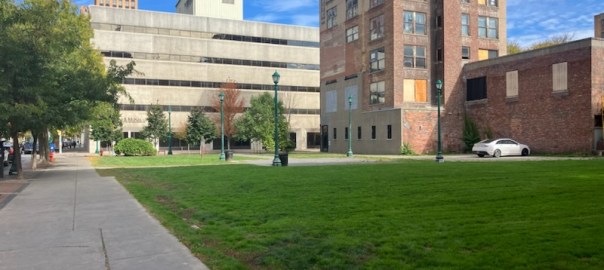
There are probably a bunch of different ways to facilitate more honest public conversations like that, but I have one idea that would also be a lot of fun. I call it The Square.
We get people together on a Friday around 5 PM in a public square-shaped space—Lemp Park, maybe—and hash out some disagreement in a very loosely structured way. The interested public are all invited, and encouraged to picnic, and maybe bring travel mugs filled with various beverages. It will be festive!
Some of the conversations would be confrontational, some may be more chill and informational, some might even end in agreement, but they would all help fix the issues in the town.
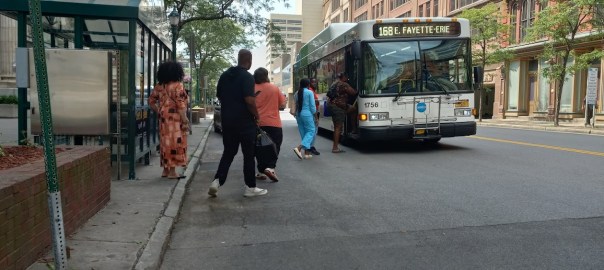
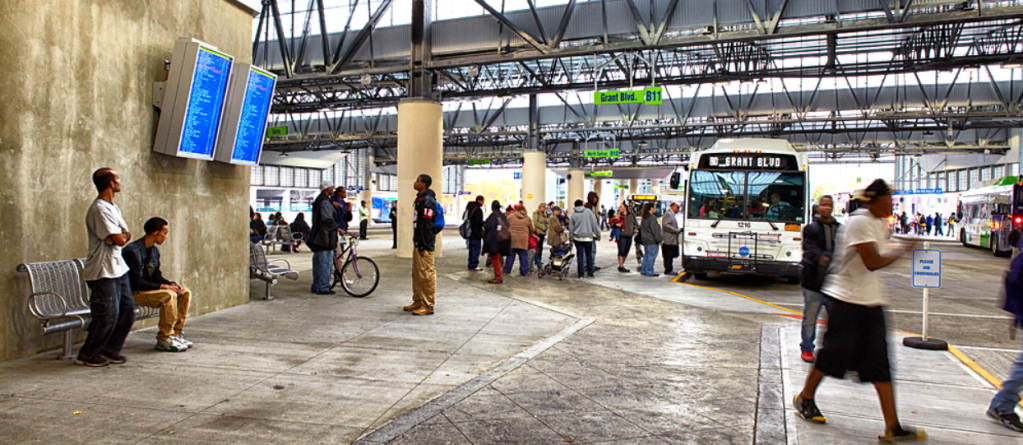
Centro just released the first draft of its proposed network redesign—Better Bus. The transit agency is proposing its first full network redesign in decades in response to changes in regional travel patterns (fewer riders need traditional Downtown-centric 9-to-5 rush hour service), changes in staffing (Centro has not been able to hire a full complement of bus operators since the depths of the pandemic, and this has forced service cuts), and changes in service type (planned BRT or Bus Rapid Transit lines and on-demand service similar to Uber pool will offer fundamentally different services that affect the entire network). This is just a first draft of the network redesign and will likely change in response to public feedback, but Better Bus is on track to go into service in early 2027.
Here’s a quick breakdown of the changes they’re proposing:
Better Service Frequency
The number one thing riders and non-riders alike want from Centro is for the buses to run more often. Existing service frequencies fluctuate across the system but rarely get better than 2 buses an hour. This makes transit a poor choice for most trips and wastes the time of the people who do ride the bus.
Better Bus significantly improves service frequencies along three planned BRT corridors. Lines operating along South Salina, James Street, South Ave, North Salina, and to University Hill will see buses running every 20 to 25 minutes all day every day. (These frequencies will get even better—10-15 minutes headways—once Centro implements BRT in 2028.)
Another two lines have significantly improved service frequencies that bear mention. The Grant Boulevard bus to Shop City will run much more frequently than it does now with 25 minute headways during the morning and evening rush and 40 minute headways midday and evenings. East Genesee Street will also see significantly improved service between Salt Springs Road and the Hub where two separate lines—the 76 and 62 buses—will each run every 45 minutes but be staggered so that they provide 22.5 minute headways where they overlap. These two corridors would be good candidates for future upgrades to BRT service when the resources become available.
Almost all other lines will run with headways between 30 and 60 minutes. Although this is still well below the service frequencies people need, they are a significant improvement over the status quo.
Expanded Night and Weekend Service
Right now, Centro runs buses once every 80 minutes on nights and only slightly more frequently on weekends. If you’re Downtown after 5 PM, you have the option of catching a bus home at 6:20, 7:40, 9:00, 10:20, or 11:40—if your bus even runs at all. This is a massive gap in service that makes public transit a poor option for both increasingly common non-traditional commuting and the non-work trips that make up so much of people’s social and family lives.
Better Bus would massively improve service frequencies on nights and weekends. 14 proposed lines run service at least once an hour into the evening, and 3 will provide service every 30 minutes or better. Many routes will also run later into the night. Better Bus proposes similar service improvements on Saturdays and Sundays for most routes.
Multiple Transfer Points
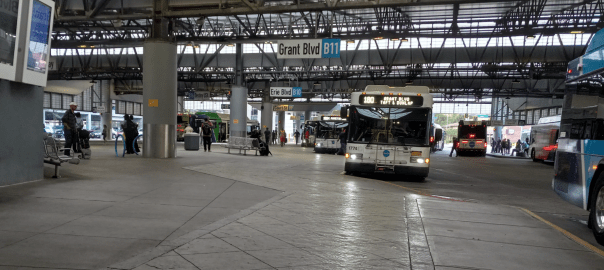
Currently, all connections between different bus lines occur at Centro’s Downtown Hub. The entire network is designed around bringing multiple buses to that single point at the same time to facilitate transfers, and there is no other spot in Onondaga County where route designs and timetables line up such that it would make sense to try and change buses. That allows Centro to provide seamless transfers between low-frequency routes, but it also reduces service frequency and requires many riders to ride all the way Downtown even when it’s well out of their way.
Better Bus proposes several changes to this system. The first and most obvious is that there will be several bus lines that do not run through the Hub. These include the crosstown 64 bus which will run through Downtown without stopping at the Hub, the 10 and 40 buses which act like extensions of Downtown-bound buses, and the 26 and City Loop buses which run circumferential routes connecting points outside of Downtown.
Beyond those route design changes, Centro is also amending its timetables to get away from the lineup. Proposed headways suggest that redesigned routes will take different amounts of time to complete, so it won’t be possible for all the buses to depart from and then return to the Hub at the same time. Instead of a series of lineups throughout the day, the Hub will see single buses running different routes arriving and departing almost constantly.
MOVE On-Demand Service
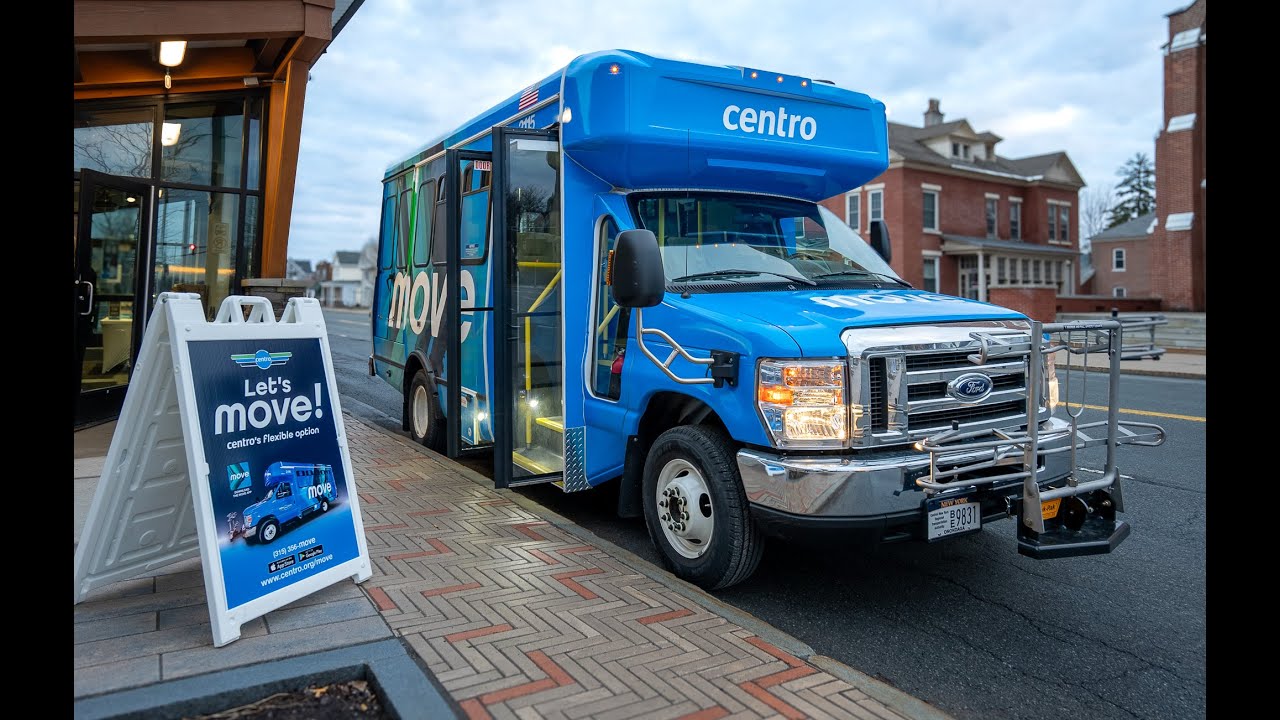
Centro hopes to find the operating resources for all of these service improvements by saving money on low-ridership corridors. In particular, it is replacing fixed-route service in three zones—Fayetteville/Manlius, Malloy Road/Carrier Circle, and Liverpool/Henry Clay Boulevard—with MOVE, a new-to-Syracuse on-demand transit service. MOVE will work like Uber Pool and dispatch small ADA accessible transit vans in response to real-time requests from riders. Centro has already launched this type of service in Rome where it has freed up resources to provide better frequency on remaining fixed-line service and led to substantial ridership gains across the system.
Service Cuts
Centro is also eliminating service in areas not covered by MOVE. In some cases, that means removing route deviations. Deviations on the current 64 bus to Western Lights, for instance, essentially mean that it is actually four different routes. All of those deviations add complexity and reduce frequency, and Better Bus proposes eliminating them on the 64 bus and many other routes to focus on one core line to provide better predictability and frequency.
In other cases Better Bus proposes removing routes entirely. The most notable is the 54 bus on Midland. Some portions of that route will be covered by other lines, and other portions are within walking distance of improved lines, but fewer people will be able to catch a bus on Midland if Better Bus is implemented as proposed. That’s the kind of tradeoff many current riders have expressed a willingness to make, but it is worth scrutinizing the tradeoff all the same.
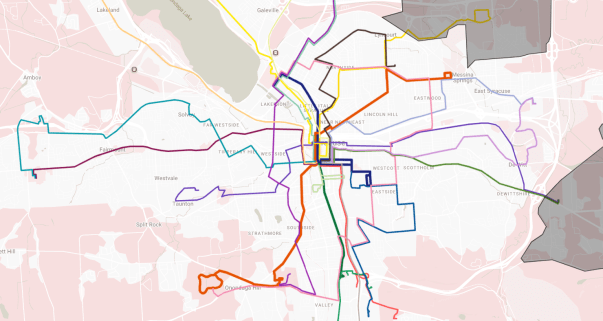
Centro released this draft proposal to get the public’s feedback, so let them know what you think! There are more tools to explore the proposed changes at the project’s website as well as an online survey that will allow you to make route-specific recommendations. You can also view the below map that shows the proposed lines in different colors. You can interact with this map and filter the system by frequency at this link.
Centro made a lot of small decisions in the process of redrawing these bus lines and reworking these timetables, and there is ample opportunity to point out places where any specific line’s zig might work better as a zag or where better midday frequency might be preferable to robust rush hour service. That’s all great feedback that should inform a second draft of the plan.
Keep in mind, though, the tradeoffs involved. Adding frequency to any line or making it longer necessarily requires reducing frequency somewhere else. Centro simply does not have enough bus operators to provide high frequency service in every neighborhood.
The good news is that Centro is moving in the right direction. The principles that lie behind Better Bus—focusing resources to improve service where it will help the most people and yield the highest ridership—are good ones. If Centro continues to follow them and if we can get them more operating resources, Syracuse will build the transit system we need and deserve.
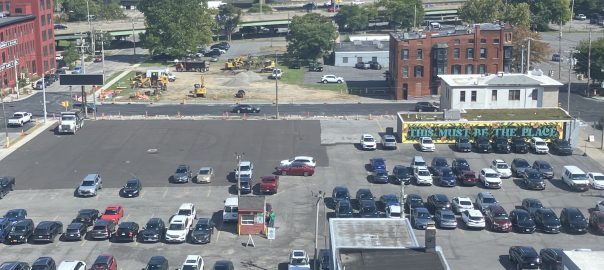
Must this be the place? It’s a good mural and a great song, but seeing such good public art surrounded by a sea of surface parking is….. depressing. Is this the highest and best use of a large lot Downtown, directly across the street from one of the highest rent apartment buildings in the region? Is the amount of property tax, or lack thereof, generated helping the fiscal health of the City? How can we encourage a better future for the block surrounding the mural?
Luckily, there may be a solution to this problem that generates more housing, economic development, and tax fairness. It’s also the policy with maybe the highest amount of internet fanatics: the land value tax.
An idea most associated with 19th century thinker and NYC mayoral candidate Henry George, a land value tax—also sometimes called a split-rate tax—assesses property taxes according to the value of a piece of land rather than the value of any building constructed on top of it. This means that underused land in high value places—like surface lots downtown—typically have a higher proportionate share in taxes while residential properties in lower land-value neighborhoods typically see their assessments go down. This incentivizes highest and best use in high value Downtown lots—if empty or underutilized parcels pay the same tax as fully developed land, then owners are more likely to build or sell to someone who can.
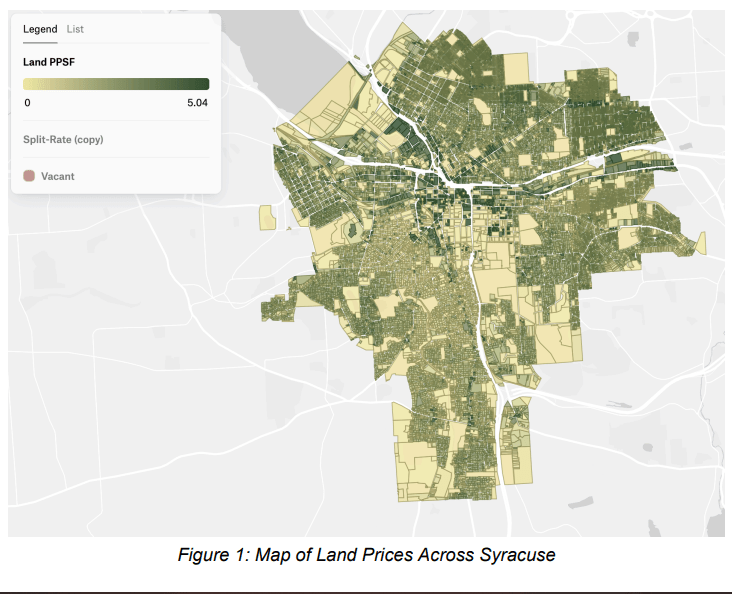
The Center for Land Economics recently published a study of how a hypothetical land value tax would affect tax rates in Syracuse. It found that most tax increases be downtown while the highest share of tax decreases would occur in the south and west sides. They also published this really interesting map charting land values in the city.
Greg Miller, author of the report, is coming to present his research as part of our In The Salt City Policy Happy Hours. October 8th at Harvey’s, we will gather starting at 5 with the presentation starting at 5:30. Please join us, the first two events have been a mixture of fun and informative with a good conversation, this should be the same!
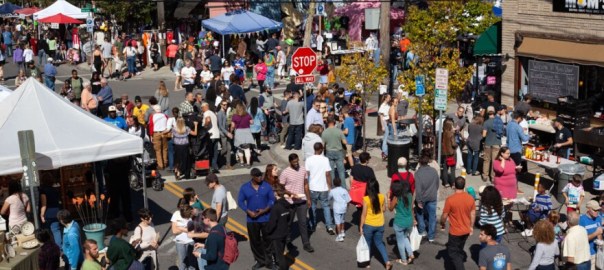
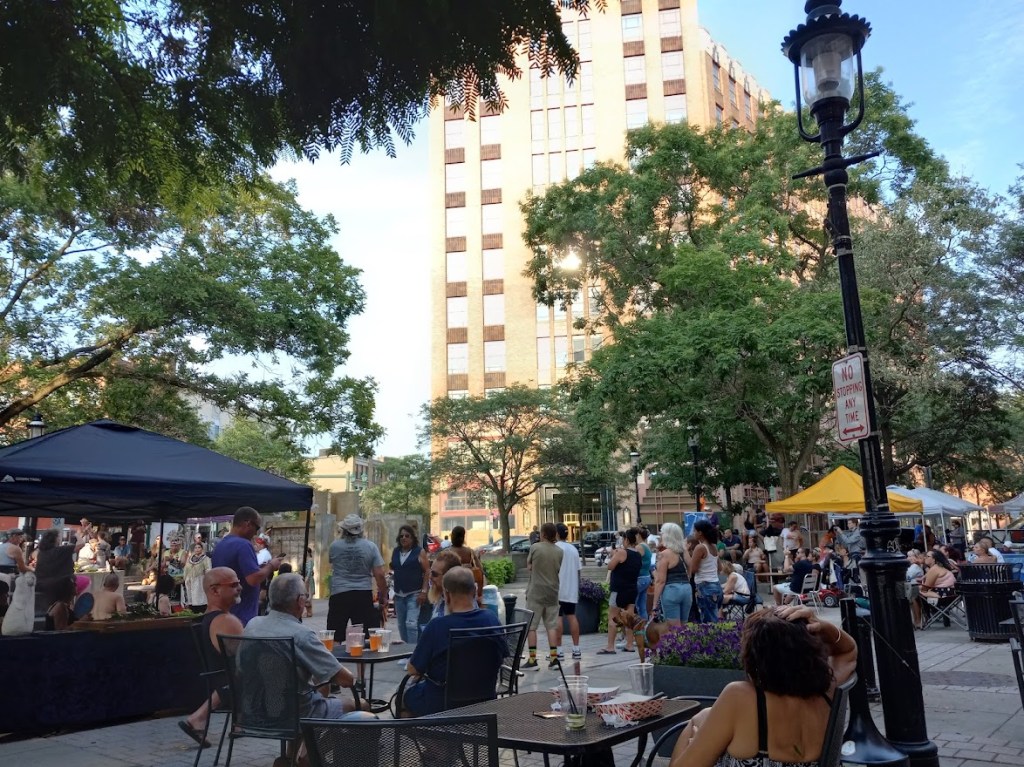
Every year the Westcott Street Cultural Fair opens Syracuse’s eyes to what a city street can really be. For a few hours, Westcott Street—normally a no-man’s land reserved for the operation of heavy machinery—is given over to the community and filled with people, and it’s great.
Streets are Syracuse’s primary public space. They take up 3,270 acres. That’s 23% of all the land in Syracuse, and it’s three times more space than all city-owned parkland. There’s plenty of room to pedestrianize a few blocks and improve the public space that’s right outside people’s front door.
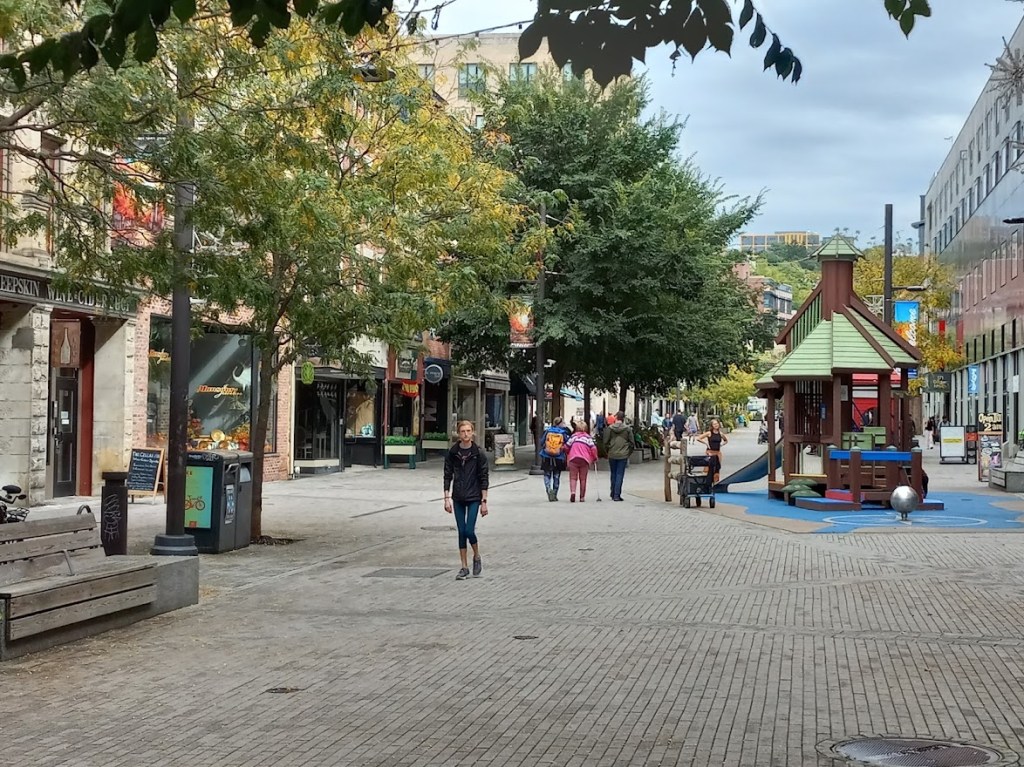
Streets in neighborhood commercial districts like Westcott are particularly well-suited to pedestrianization because surrounding businesses give lots of different people a reason to be in the space. This maximizes its use and fills it with the eyes and ears that are the best way to make public spaces feel safe. That’s what makes Hanover Square so successful, and it’s why City Hall should replicate this kind of public space across Syracuse in places like Walton Street, Amos Park, and Hawley-Green.
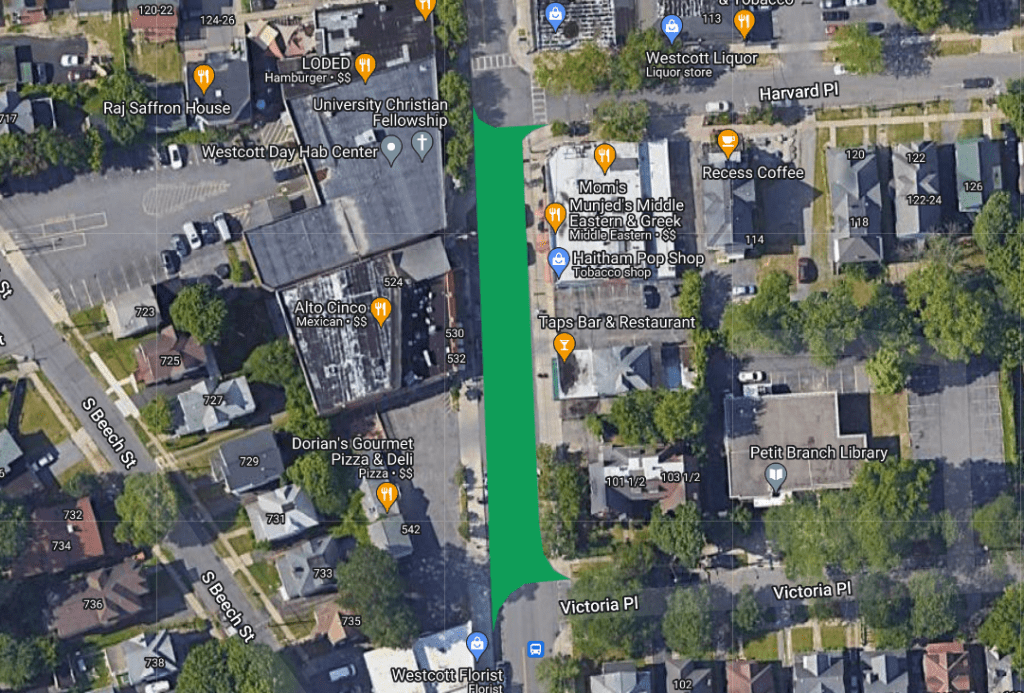
But pedestrianizing Westcott Street—between Harvard Place and Victoria Place, say—would differ from Hanover Square because it would make a much larger impact on traffic patterns in the surrounding blocks. The 100 block of East Genesee Street is—in terms of traffic circulation—redundant. Nobody needs that blocks to get from point A to point B, so closing it to cars didn’t really matter to most drivers. Hanover Square is a destination rather than a through-route.
Westcott Street is both a destination and a through-route. A lot of the traffic on Westcott is definitely bound for the business district and wouldn’t be particularly affected by pedestrianizing a single block. But Westcott is also part of a north-south route that links Teall Avenue, 690, and Colvin Street, so a lot of car drivers on Westcott Street are on their way somewhere else, and turning a portion of that route into better public space would change their behavior.
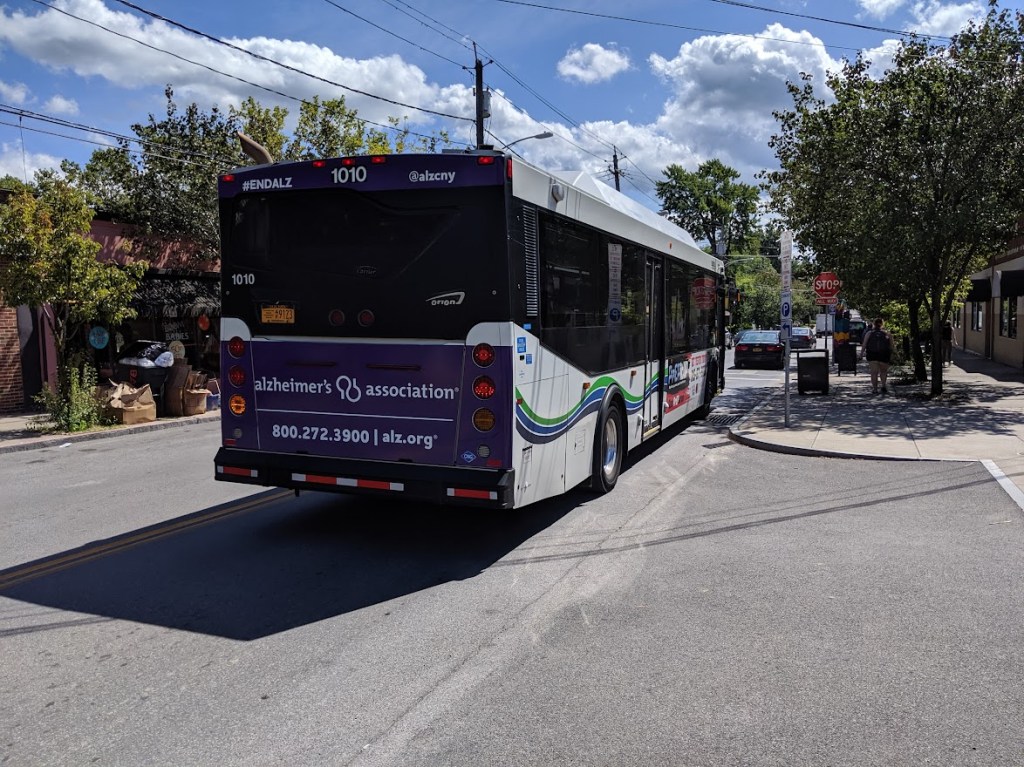
This makes pedestrianization on Westcott more complicated, but it also would make it more impactful. It would be more complicated because City Hall would need to account for changes in traffic patterns. It will be important to beef up traffic calming on surrounding streets like Columbus and Fellows Avenues so that they don’t see increases in the kind of speeding already so common on Westcott. Two Centro routes currently use this part of Westcott, and they would need to be accommodated as well. Those are solvable problems, but they present technical—not to mention political—challenges that would make pedestrianizing Westcott a harder lift than Hanover Square was.
But solving those challenges would have enormous benefits that go beyond what Syracuse has already seen in Hanover Square. Turning 1 single block of Westcott Street into public space would significantly reduce car traffic—and particularly high-speed through-traffic—on many surrounding blocks. This would make the neighborhood significantly safer, healthier, and livelier. Existing surface parking lots fronting the new pedestrian square would become much more valuable for new retail space and much needed housing, and the resulting increase in foot traffic would support more of the kinds of local businesses that make Westcott such a popular neighborhood.
This virtuous circle—walkability reduces car dependence, which allows increased residential density, which creates demand for neighborhood scale retail, which improves walkability, which reduces car dependence, which…—is the core of what makes urban neighborhoods successful and resilient, and City Hall should be doing all it can to jumpstart that cycle in neighborhoods across Syracuse.
Syracuse absolutely needs more quality public space, and the easiest way to build it is repurposing portions of our most common public property—city streets—into city squares. Existing projects like Hanover Square have tried to accomplish this without changing car traffic patterns too much, but Westcott Street shows how a bolder strategy could have a bigger impact and make our neighborhoods safer, healthier, and livelier.
Centro buses carried almost 10,000 fewer people in May 2024 than they did in May 2023. That’s the second time year-over-year ridership has declined in the last 3 months after 35 straight months of growth. With overall ridership still 25-30% below pre-pandemic levels, the causes of the drops need to be identified and addressed.
One obvious culprit for lagging ridership is insufficient service. May’s drop in absolute ridership (1.8%) was accompanied by an even bigger drop in service (2.7%), so ridership per revenue hour actually increased for the 36th month in a row. Syracuse’s transit service still hasn’t recovered from the drastic 2021 cuts caused by Centro’s inability to hire and retain bus drivers—scheduled weekday hub departures are down 17% compared to 2020—and fewer buses on the streets mean riders have fewer opportunities to catch a ride. It’s a fair bet that total ridership would have continued its post-pandemic recovery if service levels had remained stable or improved.
May’s ridership decline is complicated by the new service model in Rome. Centro combines Syracuse and Utica-Rome in its monthly reports to the Federal Transit Administration, and recent drops in overall ridership have coincided with Centro’s rollout of a new two-tiered service model that pairs higher frequencies through high-ridership areas with on-demand service for lower-ridership neighborhoods. In theory, that model could improve overall ridership by focusing service where it’s most likely to be ridden, but those service improvements might take time to generate increased ridership while cutting lines from lower-performing areas might have an immediate negative effect on ridership.
So it’s possible that the moderate declines in total ridership over the Syracuse-Utica-Rome area are the result of a transition to Rome’s new service model, or it might be the case that the new service model is improving ridership and covering up even greater losses in Centro’s other markets.
Whatever the explanation for May’s ridership declines, it’s a worrying sign. Syracuse needs and deserves better transit service—we punch above our weight nationally on bus ridership, walkability, and car-independence. All of that makes this a better place to live, and all those good things are only possible with a useful and reliable public transit system.
But the past few years of poor service are enough to push people into cars. When the bus runs less than once an hour, when it doesn’t run past 7pm, when it can’t get you where you need to go when you need to be there, people are going to look for other options to get around. A lot of the time that’s going to mean buying a car, and once someone has made that investment they’re not coming back to the bus even if service does eventually get better. In order to build a better Syracuse, we need to keep that from happening by getting buses back on the streets.
Centro’s bus network is built around the ‘lineup’—a tool that facilitates connections between bus lines but constrains Centro’s ability to provide the fast, frequent, reliable service that Syracuse needs and deserves. The lineup influences almost every service decision Centro makes, and so it is an extremely important principle for understanding why Syracuse’s transit operates as it does and how the system might be made better.
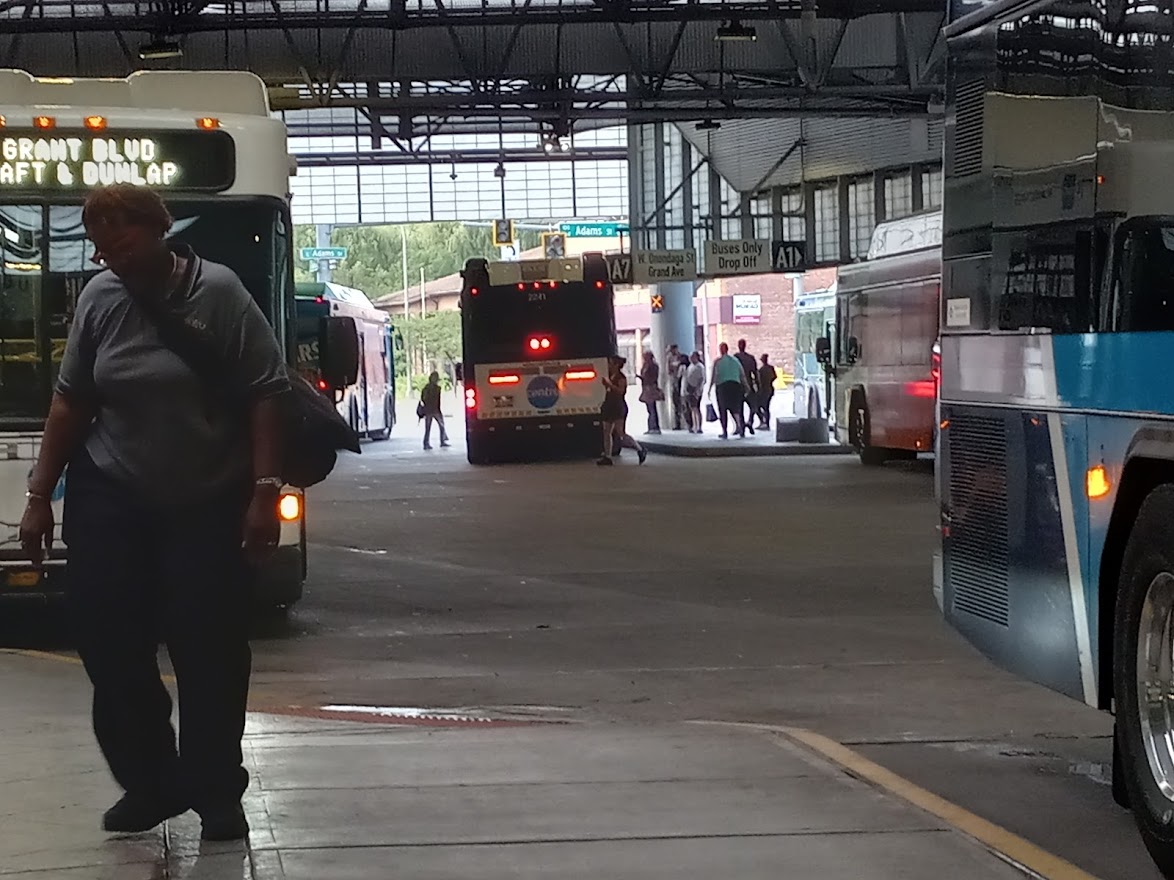
A lineup is when multiple buses—as few as 8 and as many as 20, but usually about 15—arrive at the Hub, layover, and then depart simultaneously. It’s an impressive sight as buses pull in one after another, riders speedwalk between connections, operators trade off shifts, and then all the buses leave together with a cacophony of honking, shouts, and revving engines. If you’ve ever seen a row of buses running north up Salina or State Streets, that’s the immediate aftermath of a lineup. On Centro’s current reduced (since 2021) service, 89% of runs begin at one of the 31 daily lineups. They are the organizing principle of Syracuse’s transit network.
Buses leave the Hub in bunches throughout the day
Lineups allow Centro to facilitate transfers despite its terrible service frequencies. Buses regularly run on 40 minute (or longer!) headways, so if the schedules weren’t timed to all arrive at the Hub simultaneously, then riders trying to make connections could be stranded at the transfer point. Anybody unwilling or unable to wait that long would be effectively confined to travel along whatever bus line was within walking distance from their home. Lineups avoid that problem by scheduling many different lines to meet up at one place at the same time so riders can easily transfer between a number of different lines. This gives riders access to a huge portion of Centro’s total network whenever they catch a bus heading to a lineup.
That’s the central promise of Centro’s service: the buses might not run very often, and they might not run very fast, but if you catch one headed Downtown, then you have access to a pretty large area of Onondaga County.
But to get this massive benefit, Centro has to give up a lot. Because the lineup requires scheduling every single bus line in relation to the entire system as a whole, and because it requires every line to start from a single point, it makes the transit network difficult to adapt and imposes huge efficiency costs. Here are three ways the lineup constrains Centro’s service
Two buses on their way from a lineup run back to back on James Street
Bunching
In a high frequency system, ‘bunching’ (when two buses on the same street run close together) is a huge problem that agencies spend a lot of time trying to solve. Bunching is bad because it effectively lengthens headways and makes some buses overcrowded while leaving others relatively empty. This wastes valuable operating capacity.
The lineup is basically one big intentional bus bunch. The buses all leave at once, and they travel in packs through the City’s center before eventually branching off to serve individual neighborhoods. The most egregious case of bunching occurs on James Street below Oak. There, the 80 and 20 buses run back to back 20 times a day. Centro spends enough operating money on this corridor to run 17 minute headways, but the lineup’s forced bunching wastes so many resources that Centro only manages 26 minute headways here. A similar example occurs on the Eastside where the 76, 62, and 68 have the resources to run on 16 minute headways from Downtown all the way to Westcott Street, but forced bunching doubles average headways on the Eastside to 32 minutes.
Inflexible route design
If every bus line is supposed to arrive at and depart from the Hub at the same time, then every line needs to take the same amount of time to make its run and return to the Hub for the next lineup. Look at Centro’s timetables and you’ll see that most buses take about 35 minutes to get from the Hub to their last stop, and another 35 minutes to get back to the hub.
But it doesn’t make sense for every bus line to go in one direction for exactly 35 minutes. To fit that rigid schedule, some buses crawl along meandering routes and others drive into low-ridership areas just to fill the time. This wastes valuable operating capacity that could be better used running more buses through high ridership areas.
The lineup forces bus lines to terminate Downtown instead of allowing riders to travel across town
No crosstown lines
If every single Centro bus line starts and ends its runs at the Hub, then no lines run through the Hub. That means every crosstown trip requires a transfer, and it makes many trips take longer than they really should.
Since every bus line starts at the Hub, it’s simple enough to imagine combining lines from opposite sides of the City—the 52 (Court Street) and 54 (Midland Avenue), say, or the 10 (South Salina) and 16 (North Salina) maybe—to reduce the need to transfer by giving people seamless crosstown rides. In fact, Centro does this in a way by interlining those routes; if you take the 110 to the Hub and just stay in your seat through the lineup, your bus will eventually turn into the 116 and take you up North Salina Street. But this doesn’t really give people the benefits of a crosstown route because they still have to hang out at the Hub through the whole lineup process. In effect, it imposes the time penalty of a transfer on every single crosstown rider even if they don’t have to transfer at all.
Without the need for a lineup-induced layover, a single bus could run straight through the Hub, and Centro could link routes from opposite sides of the City to give people seamless crosstown rides.
The lineup is highly effective at connecting a couple dozen different bus lines so that riders can make transfers relatively easily. But the lineup also stands in the way of Centro making the kind of service changes that riders have been demanding for years now. Above all else, riders want more buses running more often, and the lineup fundamentally reduces service frequency. Any realistic path towards providing the kind of high-frequency transit service that Syracuse needs and deserves leads away from total reliance on the lineup.
“Affordable housing” has at least three different meanings in Central New York right now, and as more and more people are talking about housing, those conflicting definitions are confusing our conversations on the topic.
The first and most common meaning is something like ‘reasonably priced housing.’ Housing costs were pretty low and pretty stable around here for decades before the pandemic. Most people who had a full-time job expected to be able to find housing where they wanted to live without breaking the bank. Our area’s ‘affordable housing’ meant people could comfortably find a place to live, and it has long been one of the first things people point to when talking about local quality of life. Maybe you couldn’t find a mansion, but there are plenty of starter homes, fixer uppers, and good deals out there for people to find housing they can afford.
At root, this is a first-person understanding of affordability. What’s ‘reasonable’ is what I’d be willing to pay, and a lot of people who paid a lot less for their housing a long time ago find today’s prices unreasonable. People who paid $75,000 for their house 30 years ago and might have thought they could sell for $150,000 in 2019 can’t believe similar houses in their neighborhood now go for $300,000. People who have paid $900 a month in rent for years are now seeing apartments listed for $1,500, $2,500, and $3,500. It’s shocking, and people reasonably ask “who can afford that?”
The second definition of ‘affordable’ attempts to answer that question. Banks and nonprofits and policy people consider housing to be affordable when it costs 30% or less of the occupying household’s income. The idea is that when a household spends more than 30% of their income on rent or the mortgage payment, that starts to squeeze out their ability to pay for other necessities like food and transportation. This is the standard government agencies use to come up with measures like “about half of all renters and one fifth of all homeowners in Onondaga County are cost burdened.”
This definition of ‘affordable’ is based on a relationship between the cost of individual homes and the incomes of individual households, so it’s impossible to say that any rent or mortgage payment is or isn’t affordable without knowing how much money the people who live in it make. According to this definition, those $3,500-a-month apartments in Downtown Syracuse or Cicero are ‘affordable’ to households making $140,000 a year, and they’re ‘unaffordable’ to households who do not.
Think of this as a way to universalize the first definition of affordability by creating a standard that accounts for all income levels. Like any universal standard, it has its exceptions—households who don’t spend as much on transportation can ‘afford’ to spend more on housing, for instance—but it establishes a definite, measurable goal for public policy to pursue.
The third definition of ‘affordable’ outlines the tools public policy can use to achieve that goal for households with lower incomes. ‘Affordable Housing’ (with a capital ‘A’ and a capital ‘H’) refers to subsidized, income-restricted housing. This kind of housing requires some level of government intervention that trades public money (or some other in-kind benefit like free land) for a developer’s or landlord’s agreement to set rents at levels that households with lower incomes can afford.
This definition of ‘affordable’ is based on any housing unit’s participation in a program that guarantees it will be occupied by a low-income household. These programs all determine who can live in a unit with a measure called the Area Median Income (AMI). The US Department of Housing and Urban Development calculates AMI every year for every metropolitan area in the country. In Syracuse, the 2023 AMI for a 3-person household is $84,000. HUD considers households that only make 80% of AMI ($67,200) to be low-income, households that make 50% of AMI ($42,000) to be very low-income, and households that make 30% of AMI ($25,200) to be extremely low-income. Different Affordable Housing programs restrict occupancy to these different levels.
These three definitions are all related and sometimes end up meaning the same thing. A person making $35,000 a year might think that $875 (30% of their monthly income) is a reasonable monthly rent for a 1-bedroom apartment, and that’s the rent you’d get in an apartment restricted to households earning 50% of AMI. In that situation, different people can use different definitions of the term ‘affordable’ and still understand each other.
Other times, these definitions do not line up so well. A reporter might ask a developer if their proposed apartment project will include affordable housing and really just be asking what the rents will be. The developer might respond ‘no’ because they don’t intend to apply for funding under any of the Affordable Housing programs that would require them to restrict occupancy to low-income tenants. A person reading about the project in the newspaper might then conclude that all of the apartments will be unreasonably expensive or unaffordable. In this situation, all three people understand the term ‘affordable’ to mean something slightly different, so they misunderstand each other.
Onondaga County is talking about housing a lot now. That’s good—this is a conversation we need to have—but it’s going to be a much more productive conversation if we can get a clearer understanding of what we all mean by key terms like “affordable housing.”
Centro’s newly announced service update for Rome offers a glimpse of how the transit authority might improve service in Syracuse. Rome’s new network features higher service frequencies on high-ridership routes, a clockface timetable, and on-demand service to cover lower-ridership areas.
Centro currently runs six bus lines in Rome. The routes with the highest ridership (accounting for more than half of all trips in the network) are the 2 and 6 buses. The next two highest performing lines (providing more than 1 out of every 4 rides) are the 5 and 9 buses. The two lowest performing routes (carrying fewer than 1 of every 6 passengers) are the 4 and 7 buses.
Under the new network, Centro will increase service frequency on the high-performing 2 and 6 buses by a whopping 41%. The 5 and 9 buses will also see a comparable service increase, although they will be combined as a single route.
These service improvements are also service simplifications. Centro’s current Rome schedules don’t follow a regular pattern—different buses run at different times of day, and headways range from 30 to 90 minutes depending on the route and run. That all makes it difficult to use the system without consulting the schedule.
The new timetable will be identical for all three lines, and it will run on regular 30-minute ‘clockface’ intervals all day. This makes it much easier to memorize each bus route’s schedule—they all leave Downtown at 10 and 40 minutes past the hour.
In order to provide all of this new service on high-ridership routes with existing resources, Centro is cutting fixed-route service from some low-ridership areas. The 2, 5, 6, and 9 buses are losing some of the zigs and zags that allow them to cover a greater area at the expense of speed. In the new network, these routes will run in straight lines, and buses will be able to complete each run in 30 minutes (compared to 40 minutes today). Centro is also cutting the 4 and 7 buses entirely.
Together, these changes will reduce fixed-route revenue hours (a major driver of operating costs) by 18% even as Centro increases service frequency on remaining bus lines. Those operating savings will fund a new on-demand service in areas losing fixed-route service. This new on-demand service will likely be similar to Uber pool, where riders request a ride via phone or an app, and Centro will dispatch a jitney-style vehicle to pick up multiple riders traveling in the same direction.
We still have to see how this plan works in practice. ‘Low-ridership’ areas might see a lot more demand after their spotty bus service gets replaced with a subsidized taxi. In that case, Centro will either have to divert more resources to its on-demand service—reducing or eliminating the projected cost savings that are supposed to make higher bus frequencies possible—raise the on-demand fare, or riders will have to deal with longer wait times for pickup.
But if Centro can manage that balance, this new service model can make a big difference in Rome, and it should be applied to Syracuse. The model’s principles—prioritizing high-frequency service on direct bus routes running through high-ridership areas—are exactly what planners and advocates have pushed for in Syracuse for years.