All posts by inthesaltcity

Plowable Bike Lanes

City Hall needs to figure out how to plow its bicycle infrastructure. No one will use even the best bike lane if it’s buried under six inches of snow.

Safe bike lanes aren’t easy to plow, though. The best ones are physically separated from car lanes—by a curb or some other barrier—so a plow can’t clear them at the same time as it clears a street’s car lanes, and the big city-plows are too wide to fit in a bike lane anyway.

The priority routes for City Hall’s (temporarily paused) sidewalk plowing program would make a very good bike network

City Hall’s popular (but paused) sidewalk plowing program is an opportunity to square that circle. It used smaller plows to clear snow off the sidewalks, and that same machinery could easily clear bike lanes too. That’s how SU keeps part of the University Ave cycle track clear.

The trick is to figure out how to do it efficiently. Giving the sidewalk plows entirely new work will make the program much more expensive. The sidewalk plowing pilot got cut to help shore up the municipal budget, so asking to have those small plows make extra runs down protected street-level bike lanes isn’t a great option.

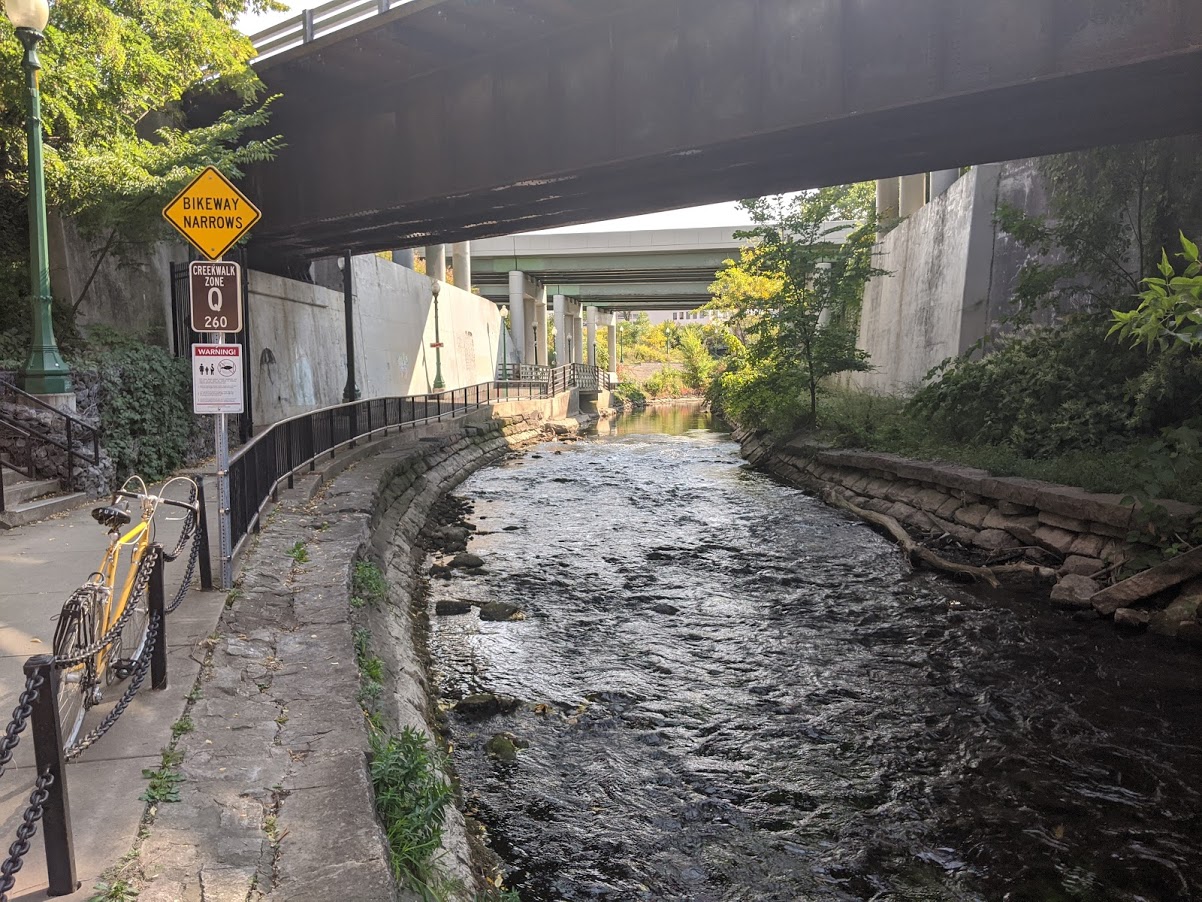
Some parts of the Creekwalk are level with the existing sidewalk

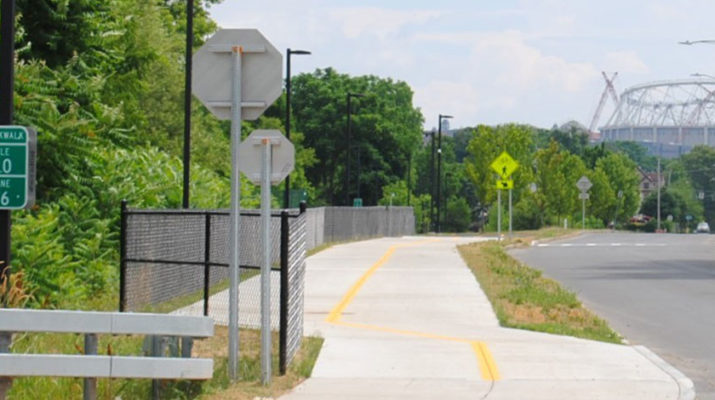
Some of Syracuse’s existing protected bike lanes—like those on Hiawatha where it crosses Onondaga Creek, or Franklin where the Creekwalk connects to the Empire State Trail—already do this. In those places, the bike lane is above the curb and level with the sidewalk. The pavement is wide enough to give pedestrians and bikers enough room, but there’s no physical barrier between their lanes, and so a single plow can clear the entire area at once.
The Franklin and Hiawatha bike lanes should be Syracuse’s preferred model for future bike infrastructure. They’re safer than painted lanes like those on Onondaga St, and they’re easier to plow than fully separated lanes like those on University Ave. And as a bonus, they provide more sidewalk space for people on foot or using a mobility device too. This is a solution that meets Syracuse’s specific needs.

Transit’s Network Effect

Public transportation works best as a network. When riders can transfer between multiple buses to access more of the city, the service is exponentially more useful than if it consisted of just a single line. And since additional service makes existing service even more useful, Centro should build out the biggest BRT network that it can as soon as it can.

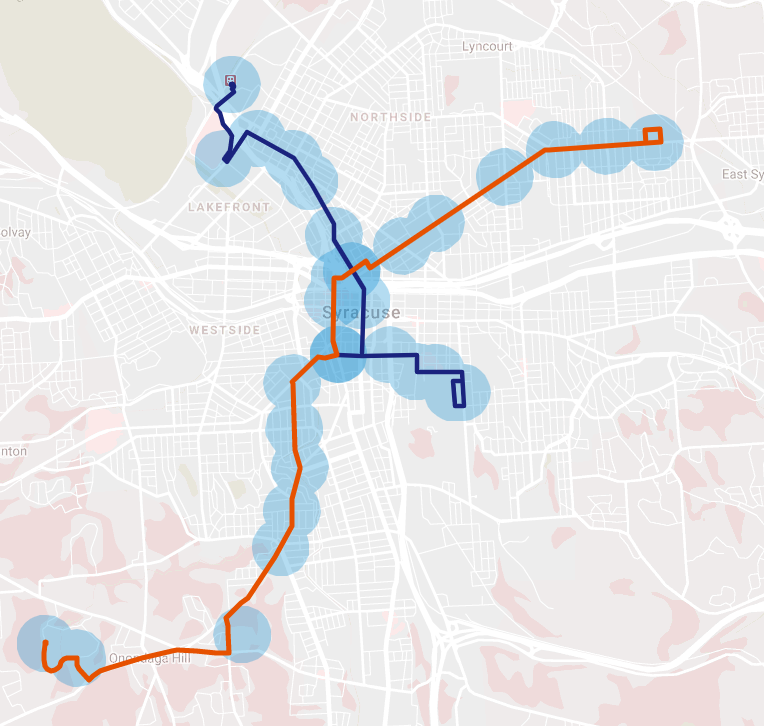
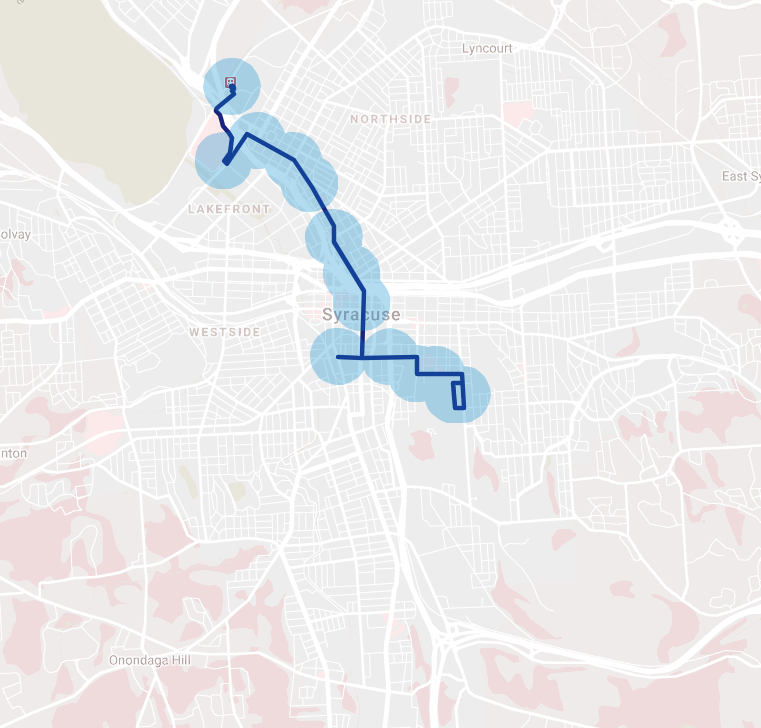
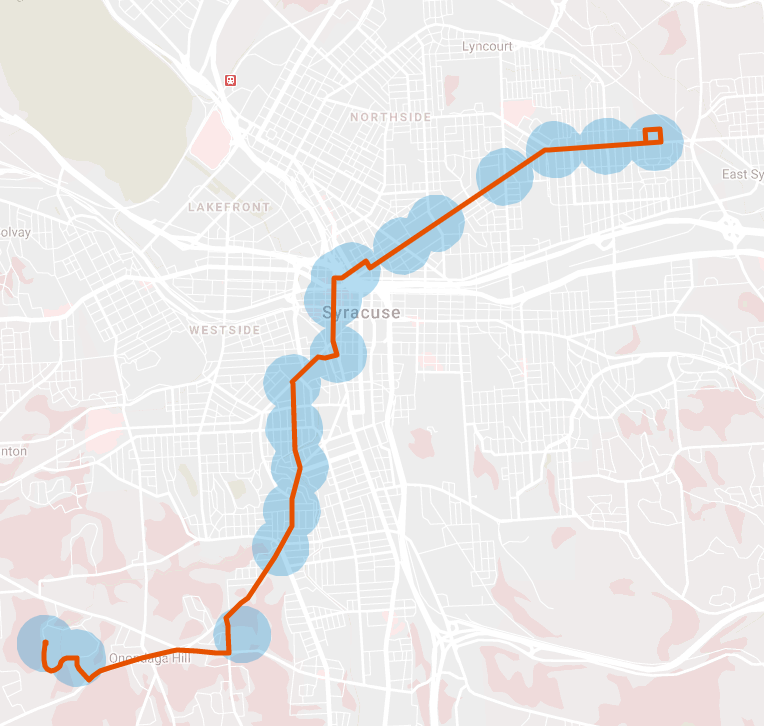
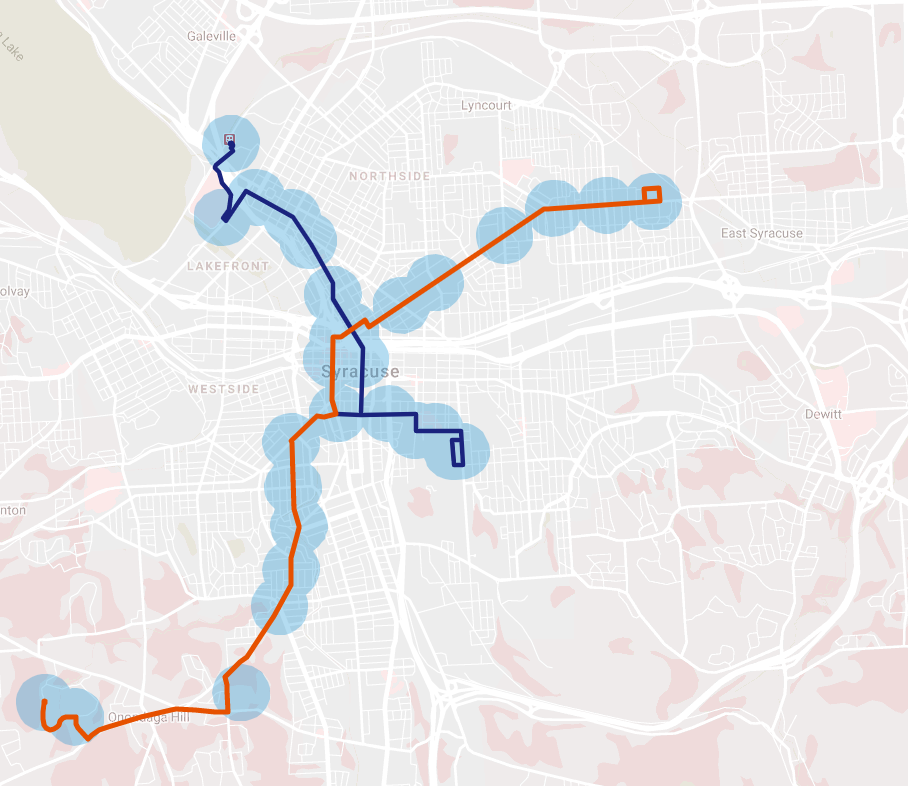
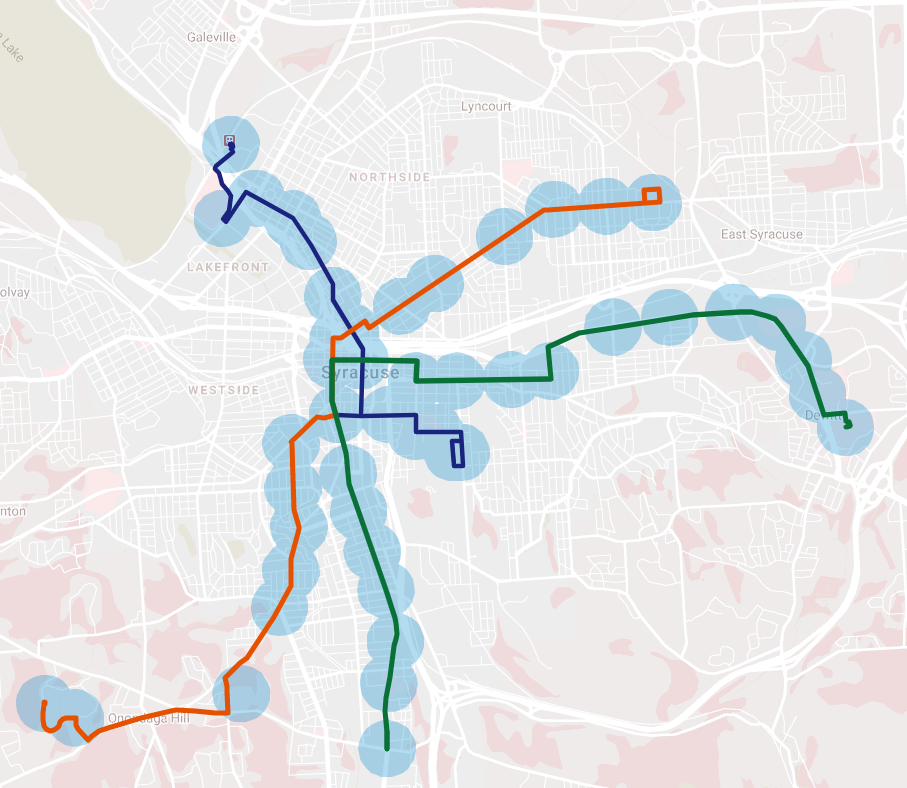
To see how this works, just look at the 2 lines that SMTC proposed in the SMART1 study. 3,912 workers live within a 5 minute walk of a station on the SU-RTC line. 512 of them (13%) also work within a 5 minute walk of a station. 7559 workers live within a 5 minute walk of the Eastwood-OCC line, and 1101 of them (15%) also work along that line.

If you account for the 552 workers who live within walking distance of both lines, about 1,500 workers (14%) could use one of these two lines to get to the jobs that they work now.

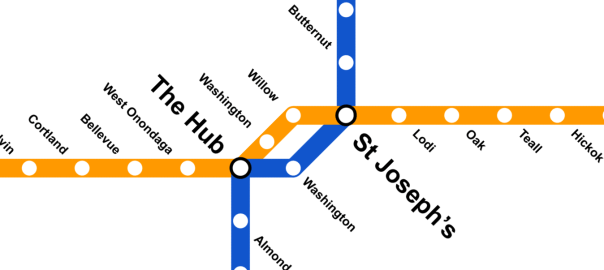
But good transit doesn’t work as a series of individual lines—it’s a network. These two BRT lines will intersect at both St. Joe’s and at the Hub, so anybody who lives along either line could use those connection points to change buses and access any job that’s located along the other line.

And when you account for that network effect, it turns out 2,407 of the 10,919 workers (22%!) who live within walking distance of a planned BRT station could use the service to get to the jobs that they already have. Some people who live along the SU-RTC work along the Eastwood-OCC line and vice versa, so when the two lines operate as a network, each one is more useful to more people.

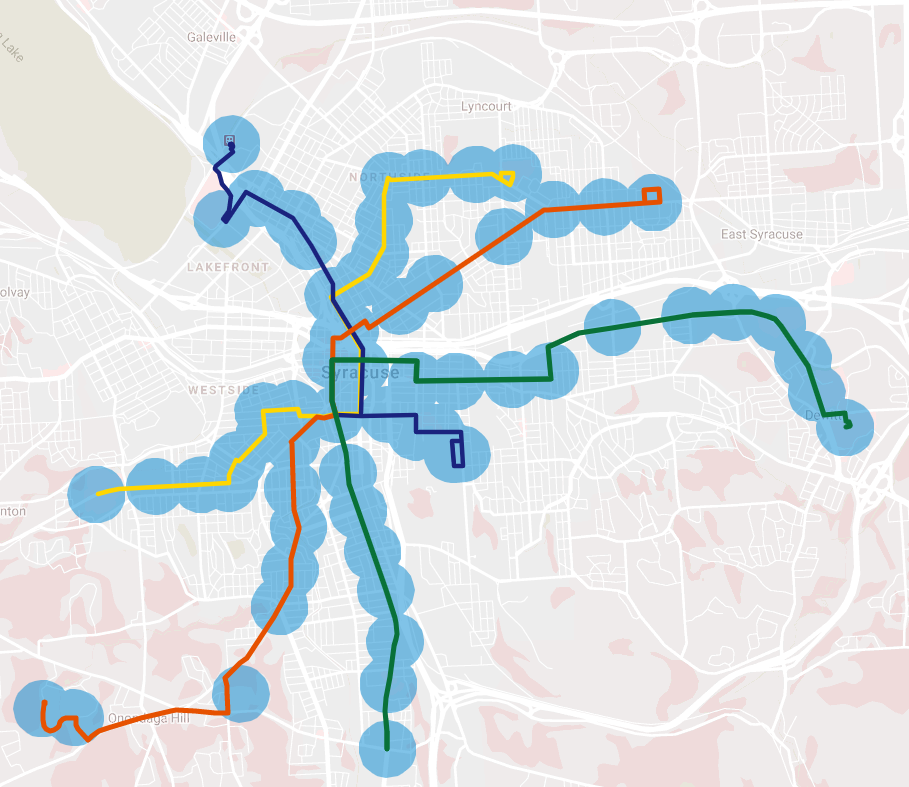
Add more lines, and those numbers will climb even higher. Run a line up South Salina and out Erie Boulevard to Shoppingtown, and 4,403 out of the 16,808 workers (26%) living within walking distance of a BRT station could commute to their current jobs by bus. Run another from Shop City to Western Lights through the North and West sides, and the number of potential bus commuters rises to 6,714 out of 23,969 workers (28%). That’s 1 out of every 10 people who work within walking distance of this 4-line BRT network.

And what’s true for commuters is true for people who ride the bus for any other reason too. Someone living just off North Salina might be able to use the SU-RTC line to get to the Mall, but they’d need to connect to the Eastwood-OCC line to get to school at OCC, or the Valley-DeWitt line to visit family in Salt Springs. More lines going more places make the network more useful to more people.

The network effect is what makes transit work. No individual line can be very useful all on its own, but any line gets more useful when it operates in tandem with another line. Every single line in a network gets more useful every time another one gets added to the network. That’s why Centro takes such pains to facilitate transfers at the Hub, and it’s why when Syracuse starts running BRT it should build out as many lines as quickly as possible.

The Syracuse University Bus Network

Walk west on Euclid Avenue, and from the time that SU’s campus comes into view to when you get to Comstock Avenue, you’re guaranteed to see at least a handful of buses pulling in and out of the University. SU operates as a sort of second Hub, and the buses that originate, terminate, and run through there constitute a sort of second bus system nested within Centro’s larger tri-county network.

every bus line that serves SU’s College Place bus stop

Although College Place acts as the hub where every single bus line meets, it’s possible to make transfers at other stops too. Lines that leave that College Place in different directions sometimes meet back up again at important points like the intersection of Genesee and Westcott or the corner of Westcott and Broad. This creates secondary transfer points that riders can use to move between different lines in the system without ever going through the main hub. Low service frequencies make that kind of transfer unlikely, but it is at least possible within the network design.

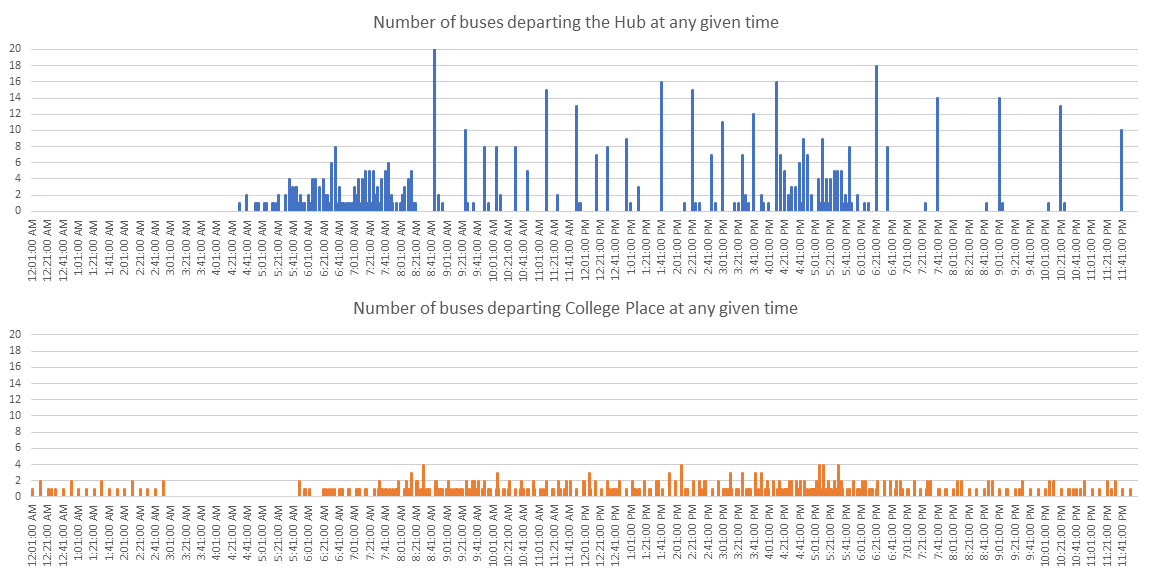
Every 40 minutes or so, a lot of buses leave the Downtown Hub all at once. One or two buses leave College Place every couple of minutes

And although College Place acts as a Hub, the network doesn’t rely on lineups to help riders transfer between different lines. This is partly because the overwhelming majority of riders are either trying to get to or from SU, so there’s no need for them to transfer. And it’s partly because some lines (like the South Campus/Connective Corridor) run right through College Place, so there’s no need to actually change buses to ‘catch’ that connection.

Ditching the whole concept of the lineup frees Centro to run significantly more useful service for SU. The South Campus line, for instance, makes 138 runs between 7am and 3am. That’s service every 8 to 10 minutes all day long, and it’s so useful that students living at South Campus simply don’t need to own a car in order to get back and forth between their housing and their classes. That kind of service is only possible at SU because they’re not concerned with fitting every single bus run into the rube-goldberg service model that is the lineup.

These are good lessons to apply to Centro’s main network. The Downtown Hub doesn’t have to be the network’s only transfer point—people travelling from Mattydale to Liverpool should be able to change buses at the Mall, say. And it shows that Centro can run both frequent service and pulse service simultaneously—frequent service on high-performance BRT routes, say, while maintaining pulse service for suburban coverage routes. Centro’s SU service offers a model for the kind of public transportation that the rest of the City needs and deserves.

What to do with Shoppingtown

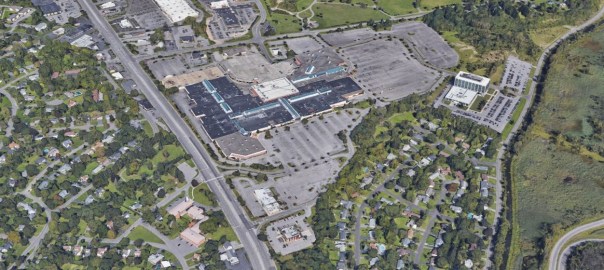
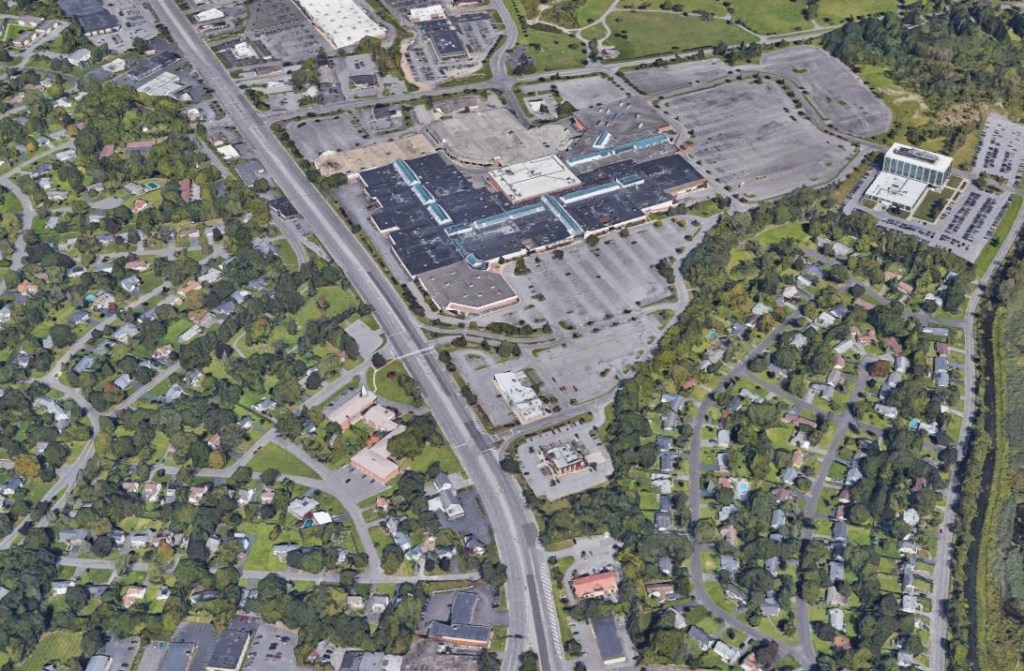
After losing out on millions of dollars in tax revenue and spending millions more in bankruptcy court, Onondaga County has gotten legal control of Shoppingtown Mall. Now the County’s just got to figure out what to do with that 70 acre property. Given the geographic location of the site and the demographic trends in the immediate area, the best thing to do with this property is to redevelop it as a residential neighborhood.

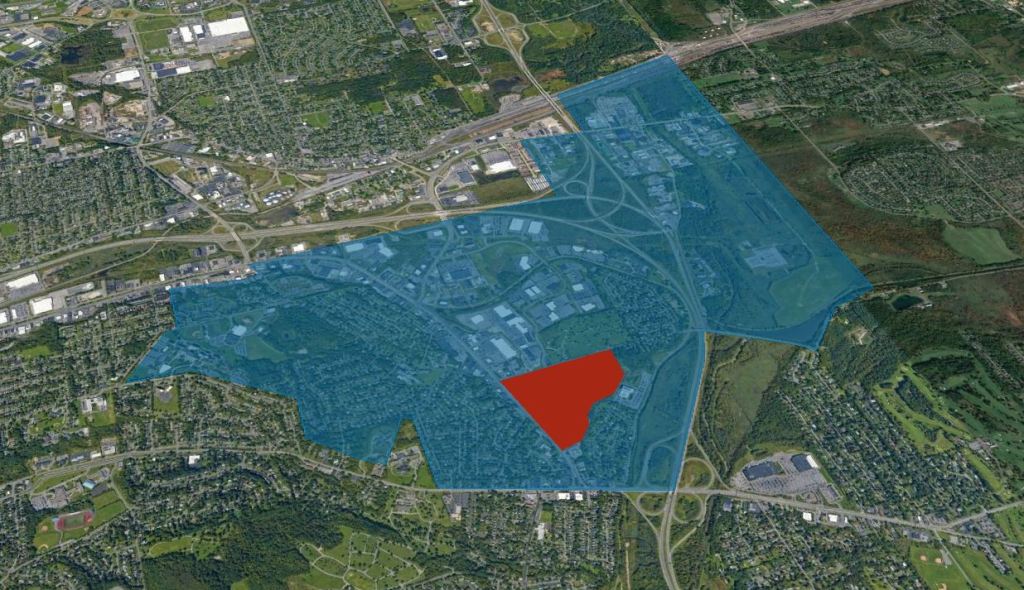
The Shoppingtown property (in red) sits at the center of census tract 146 (in blue)

The Shoppingtown property sits in Dewitt near the eastern end of Erie Boulevard. This part of Dewitt is booming. Between 2000 and 2014, the population of census tract 146 grew by 31%, and median household income rose by 12% more than in the county as a whole.

The Town of Dewitt is also a major employment center. One out of every six jobs in Onondaga County is in Dewitt, and more than one out of every five jobs in Dewitt is in census tract 146.  19% of workers who live in the town also work there—only the Town of Skaneateles and the City of Syracuse employ a greater share of their local population.

All of this indicates that Dewitt is a good place to live and that lots of people really do want to live there.

But Dewitt also has some real problems. The relatively low ratio of workers to jobs means that 19 of every 20 people who work in Dewitt commute from outside the town. That’s the highest ratio of any town in the County, and it means that tens of thousands of people are bringing their cars into Dewitt every day. All those people driving all those cars leads to traffic congestion and air and noise pollution—concerns that loom large as NYSDOT prepares to remove the Downtown 81 viaduct.

And at the same time, Dewitt’s population growth is stagnating. Since 2014, census tract 146’s population has actually dropped by 9%, and median household income has barely kept pace with the rest of the County. Over that same period the tract saw almost no new housing construction, and median rent increased by about 7% or $50 a month.


Dewitt is a good place to live, so people want to move there. There isn’t enough housing, so that demand translates to higher prices and a stagnant population. Combine that stagnant population with a robust job market, and you get lots of people commuting into the town, bringing traffic and pollution.

The solution is to build more housing, and that’s what should happen on the Shoppingtown parcel.

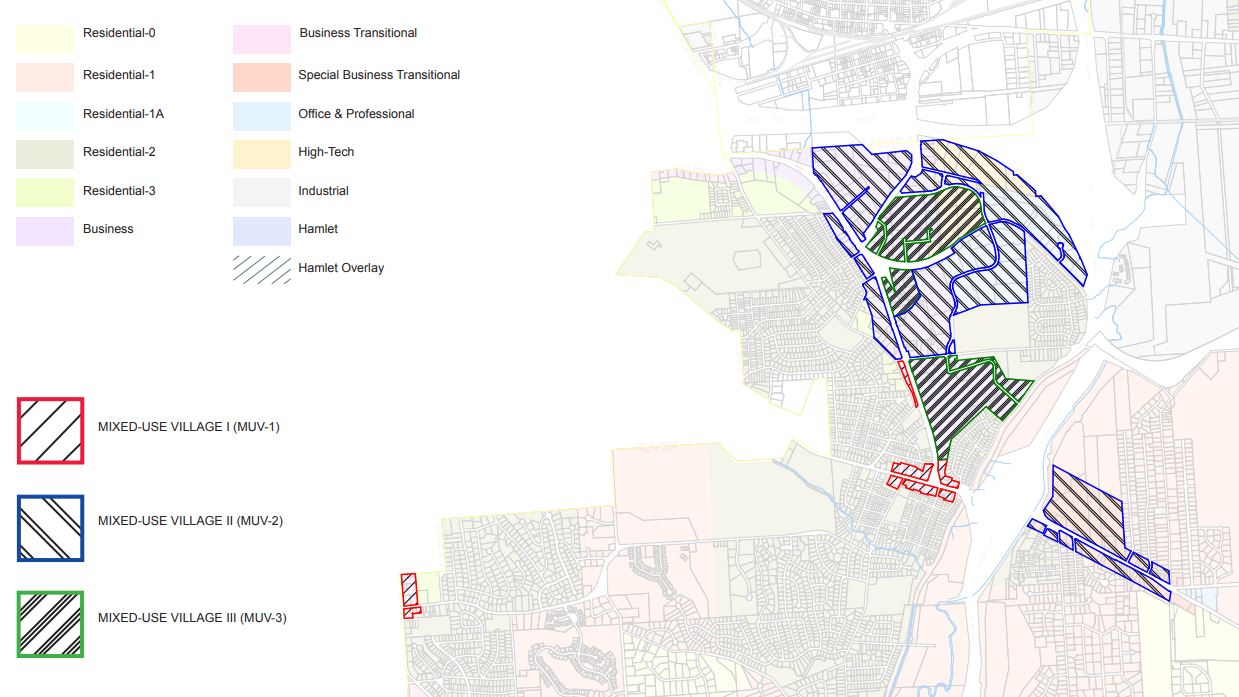
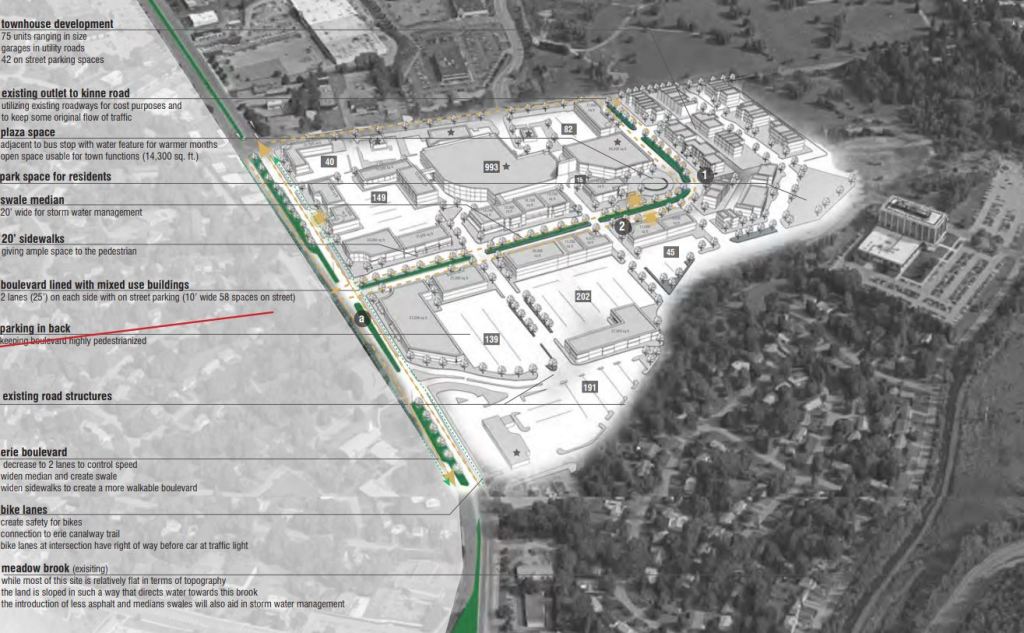
The town government already has a plan to do this. They recently created a zoning overlay that designated this parcel as ‘mixed-use village.’ That designation allows for the construction of housing, retail, and park space all in the same area.

The goal of this new zoning overlay is to “encourage the adaptive reuse of aging commercial strip developments” by creating “village centers” that provide both “a high level of amenities that creates a comfortable environment for pedestrians, bicyclists and other users” and “a sufficient density of employees, residents and recreational users to support public transit.”

In other words, exactly what the Town of Dewitt needs. 

Redeveloped this way, Shoppingtown could become a desirable neighborhood like so many others in this part of the County. It could allow more people to move into this attractive area in order to access all of the amenities and opportunities that already exist there. It could reduce traffic congestion and pollution by letting more people live close to the places where they work by letting them get to work on foot, on bike, and on public transportation. It’s would bring new life to this dead mall.

A greenway for the Westside

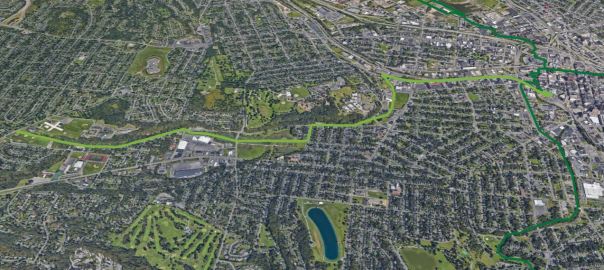
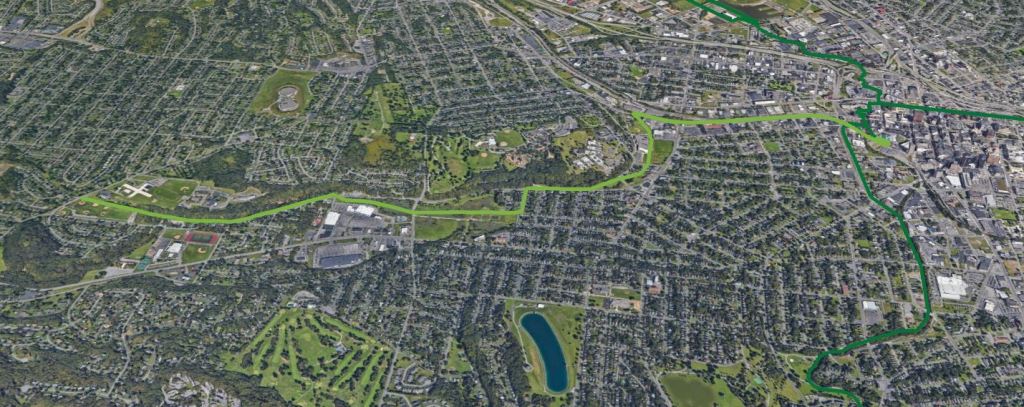
Soon, the Eastside, Southside, and Northside will all have access to a cross-county network of greenways running through two of the three big valleys that intersect at Downtown Syracuse. That third valley—stretching from the City Center to Split Rock through Syracuse’s Westside—should have it’s own greenway too.

Existing network in dark green, proposed Westside Greenway in light green

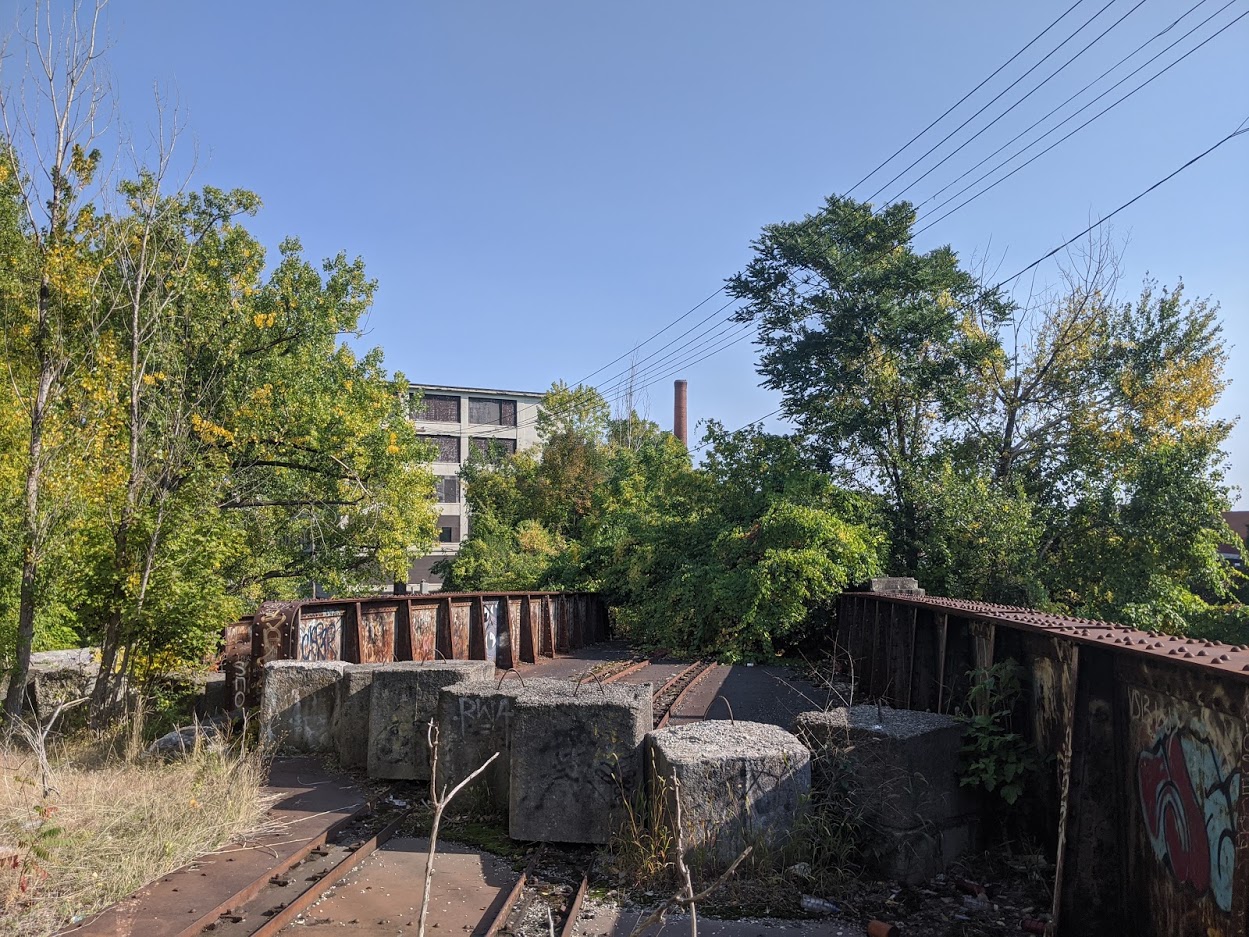
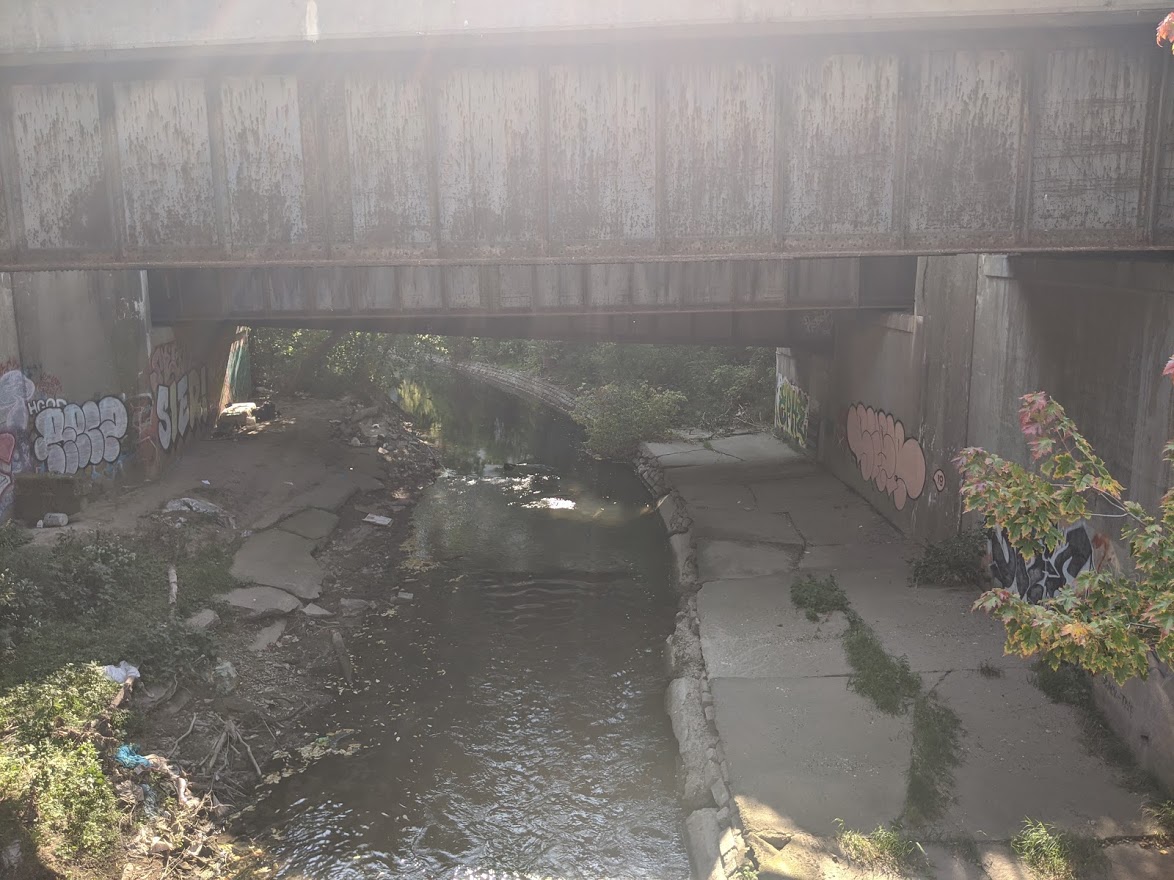
Abandoned train bridges, a channelized creek, and public parks all link up to provide a largely level and car-free route through the City’s Westside. Beginning at Fay Road on the northern edge of the Geddes athletic fields, the greenway would run east past Bishop Ludden, the Centers at St. Camillus, and Westhill High School. It would follow Harbor Brook along the north side of Grand Avenue to the back entrance to Western Lights Plaza. There it would cross Grand to continue following Harbor Brook across Velasko Road, past Providence House and the Harbor Brook Wetlands Project, and into the City.

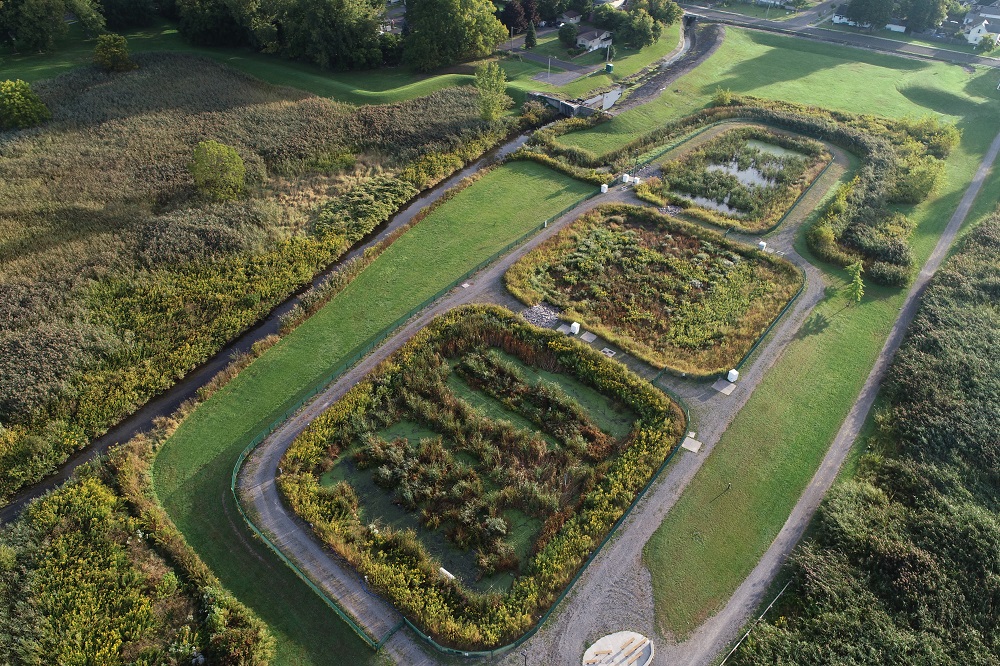
Harbor Brook as it enters Skunk City from the west

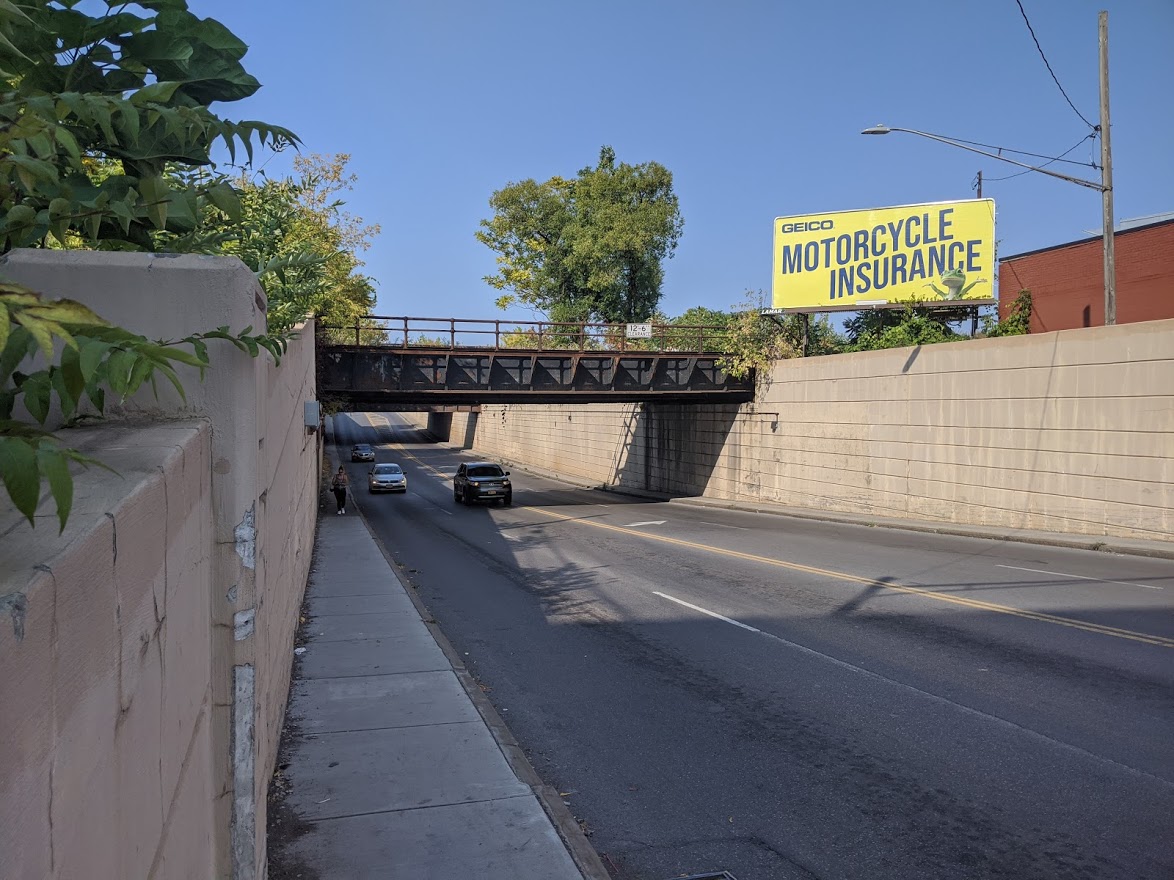
The greenway would cut through Skunk City to Grand Avenue, run along the edge of Burnet Park, and link back up with Harbor Brook where it crosses under Grand between Lydell and Herriman Streets. It would follow the brook and Amy Street to Seymour Street and then run across Fowler’s campus all the way to Fayette Street. It would cross Fayette on the existing abandoned train bridges, follow the County-owned abandoned railroad property to Geddes Street, cross that dangerous road on another abandoned train bridge, and then run along the north side of Fayette through Lipe Art Park.

A signalized crosswalk at Oswego Street—like the one on West Street at Otisco—would allow people to access the greenway from the Near Westside. The path would cross Fayette and West Streets with the existing rail viaduct and then come back down to street level on the existing rail siding that leads down into the parking lot behind the MOST. There, the greenway would link up with the Creekwalk and the rest of the metro area’s regional biking/walking network.

This greenway would connect major job centers, populous neighborhoods, three high schools, and three public parks. It would be almost entirely free from cars and almost perfectly level along its entire route. It would pass through one of the region’s most dynamic and least celebrated landscapes. It would be a very good addition to both Syracuse’s park system and its transportation network.

A new way to understand the City

Syracuse can be a hard place to navigate. The City is big, it’s streets intersect at weird angles, and it’s just very easy to get turned around and lost. In a place like this, it’s helpful to have a way of simplifying things—some mental tool that makes the City understandable and makes people feel comfortable and in control as they move around within it. BRT can provide Syracuse with just such a tool—the network diagram.

The highways already do this for car drivers. There are people who understand the City entirely in terms of highway exits.  Name any spot, and they can tell you how to get there from the nearest exit. Ask for directions to any location, and they’ll tell you how to get from where you are to the nearest onramp, how to take the highway from there to the appropriate exit, and then how to get from that exit to wherever you’re going. It may not be the shortest or fastest route, but for someone who understands the City through the highways it will be the most intelligible route.

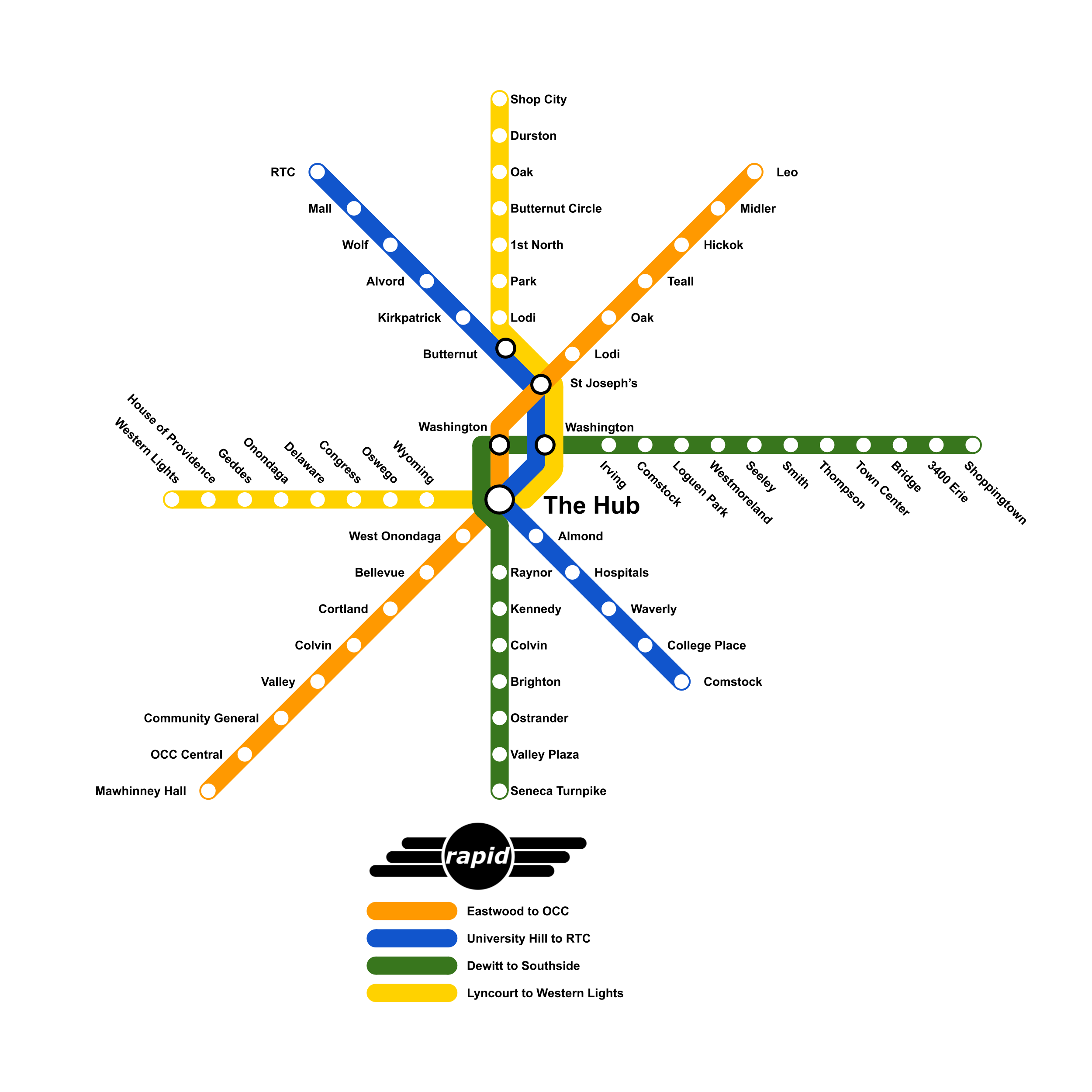
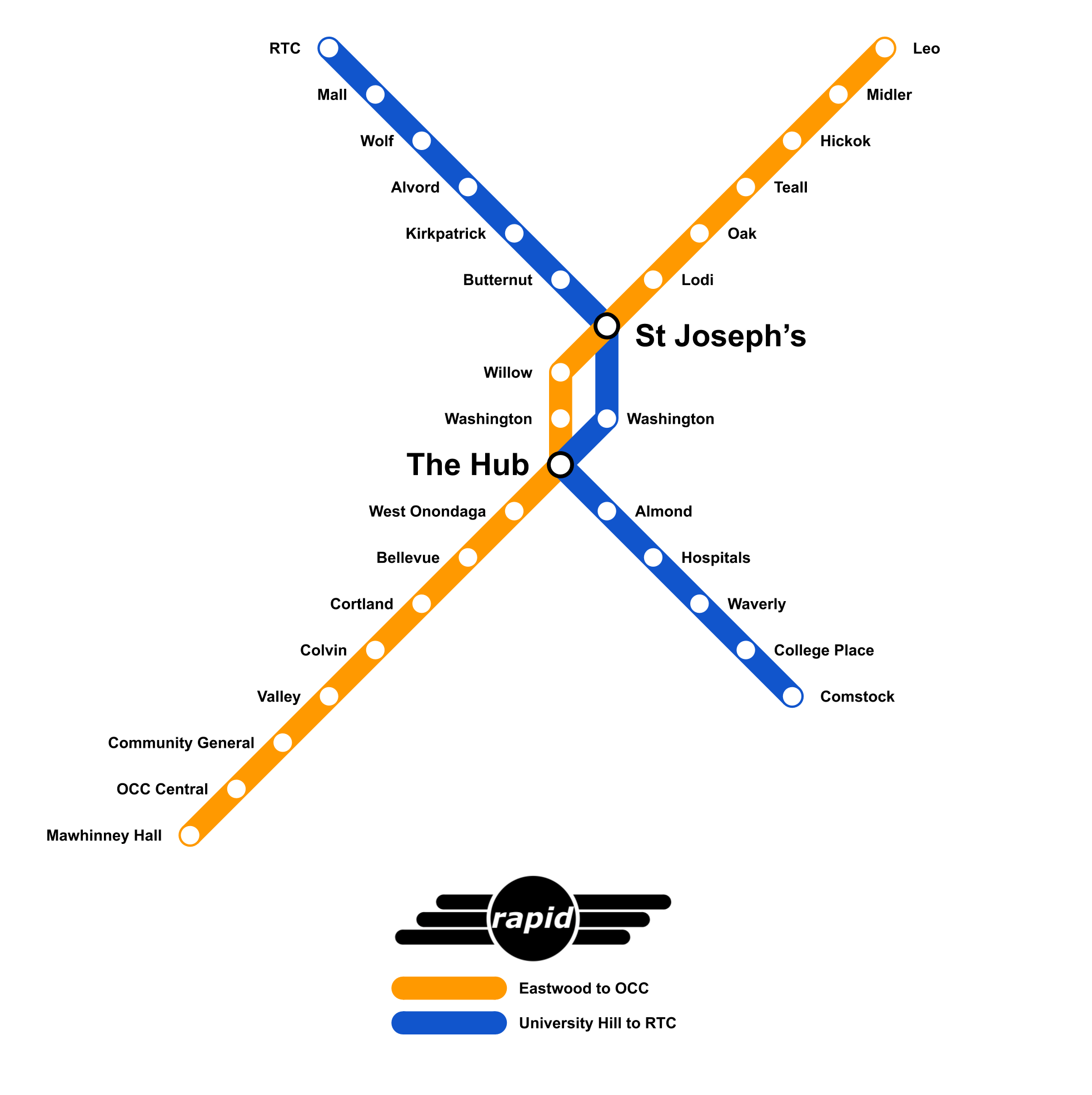
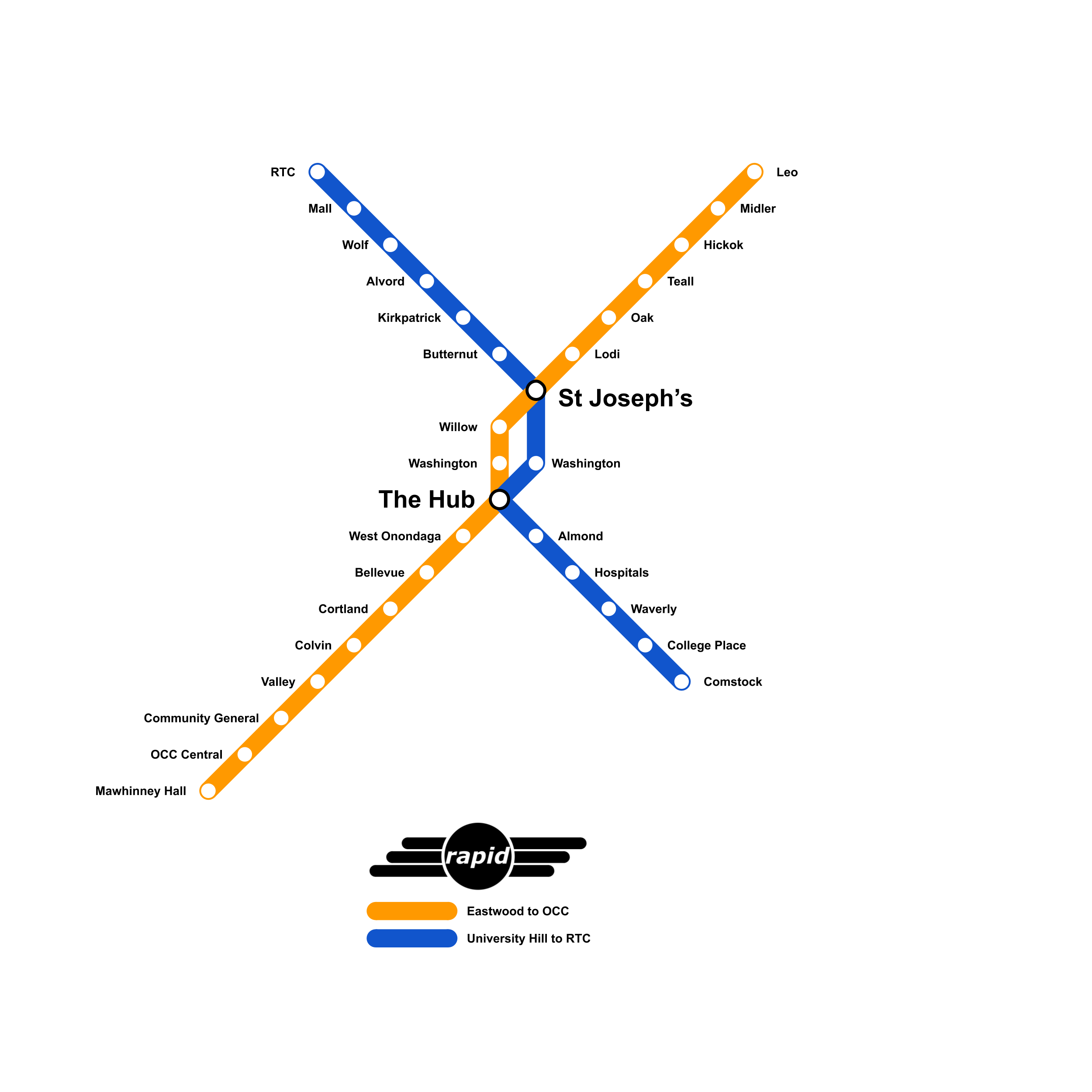
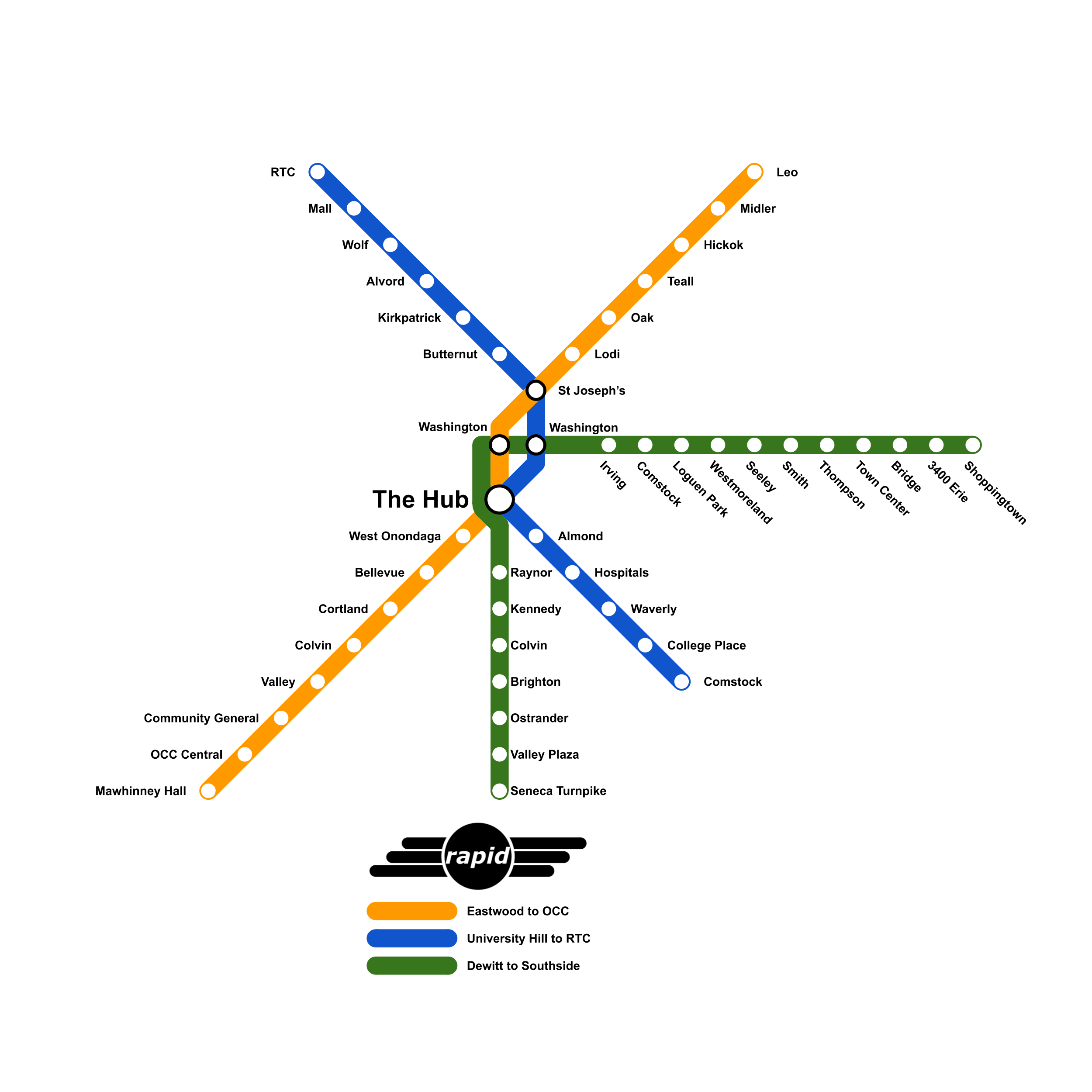
BRT could give us a similar simplifying diagram based on high frequency transit routes. Here’s an idea of how it could look:

It’s not actually so simple to get from the RTC to SU as this diagram suggests—the bus operator is going to have to make more than three turns—but from the perspective of a passenger on the Blue Line, it’s as easy as boarding and exiting the bus at the correct station stops.

If these transit lines are useful enough that people can ride them as their primary mode of transportation in the City, then knowing your way around town is as easy as remembering the relationships between the network’s different station stops. How to get from Eastwood to Crouse Hospital? Just catch an OCC-bound Orange bus, transfer to an SU-bound Blue bus at either St. Joseph’s or the Hub, and get off at the Hospitals station stop. This simple diagram becomes a key to understanding the City as a whole.

And after these two first lines prove their worth, Centro should extend BRT to more of the City, running new lines to different neighborhoods, making more of the City accessible and intelligible to people through public transit.

Dismantling Syracuse’s Inner Loop

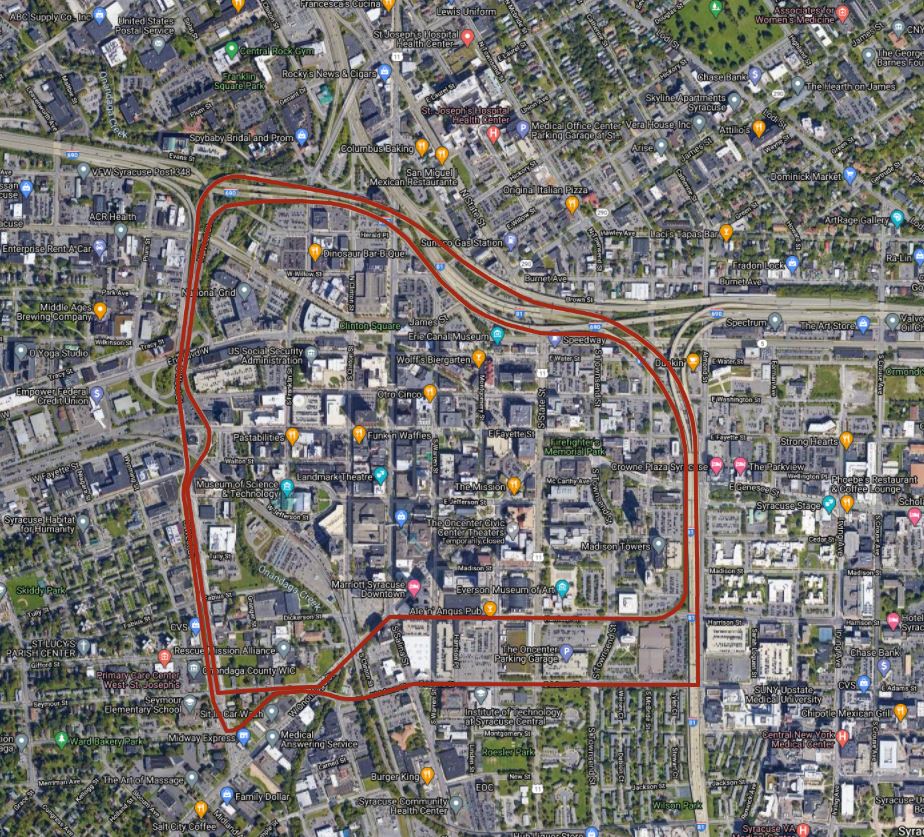
The I81 viaduct is part of the interstate highway system, but it’s also one piece of a high-speed traffic loop that encircles Downtown. Once it’s torn down, that loop won’t function the way that it’s supposed to, and that will give Syracuse a fantastic opportunity to reclaim West, Harrison, and Adams Streets as local streets rather than surface-level highways.

Early plans for Syracuse’s interstates included connecting highways on Townsend, West, and Adams Streets. These would have formed an Inner Loop like the one that Rochester is currently removing.

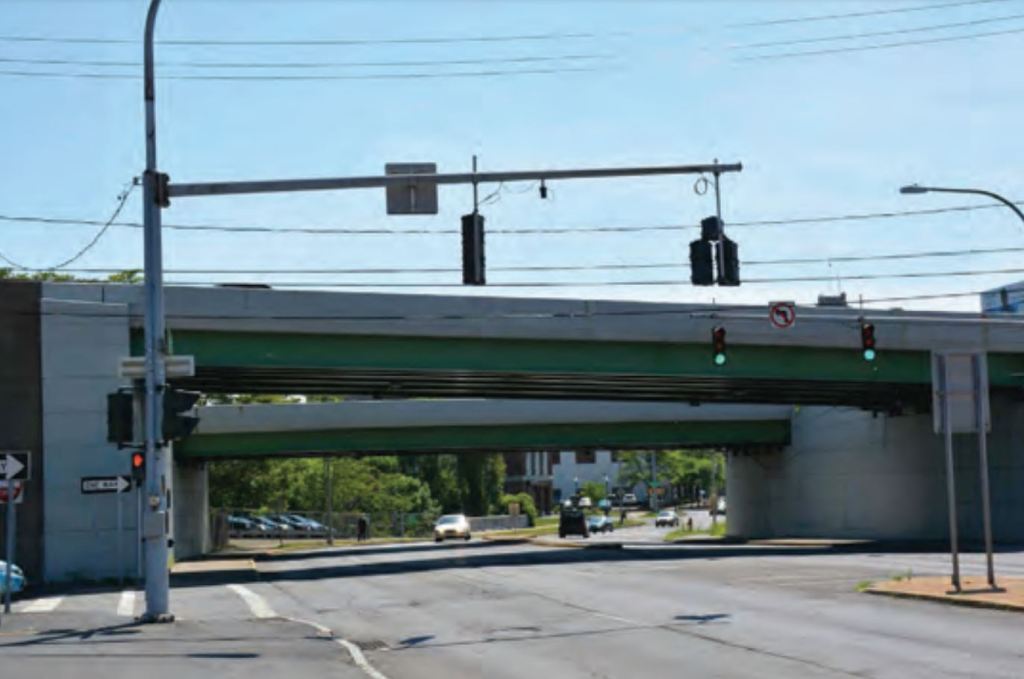
Syracuse never managed to build that full loop, but it came close. Coming off 690, West St feels one hell of a lot like an interstate until you hit the traffic light at Fayette. No buildings front the new curvaceous block of Shonnard Street that Connect West to Adams. Harrison and Adams are significantly wider than any city street should be—more than twice as wide as 81 in places—and people speed up and down them like they are highways.

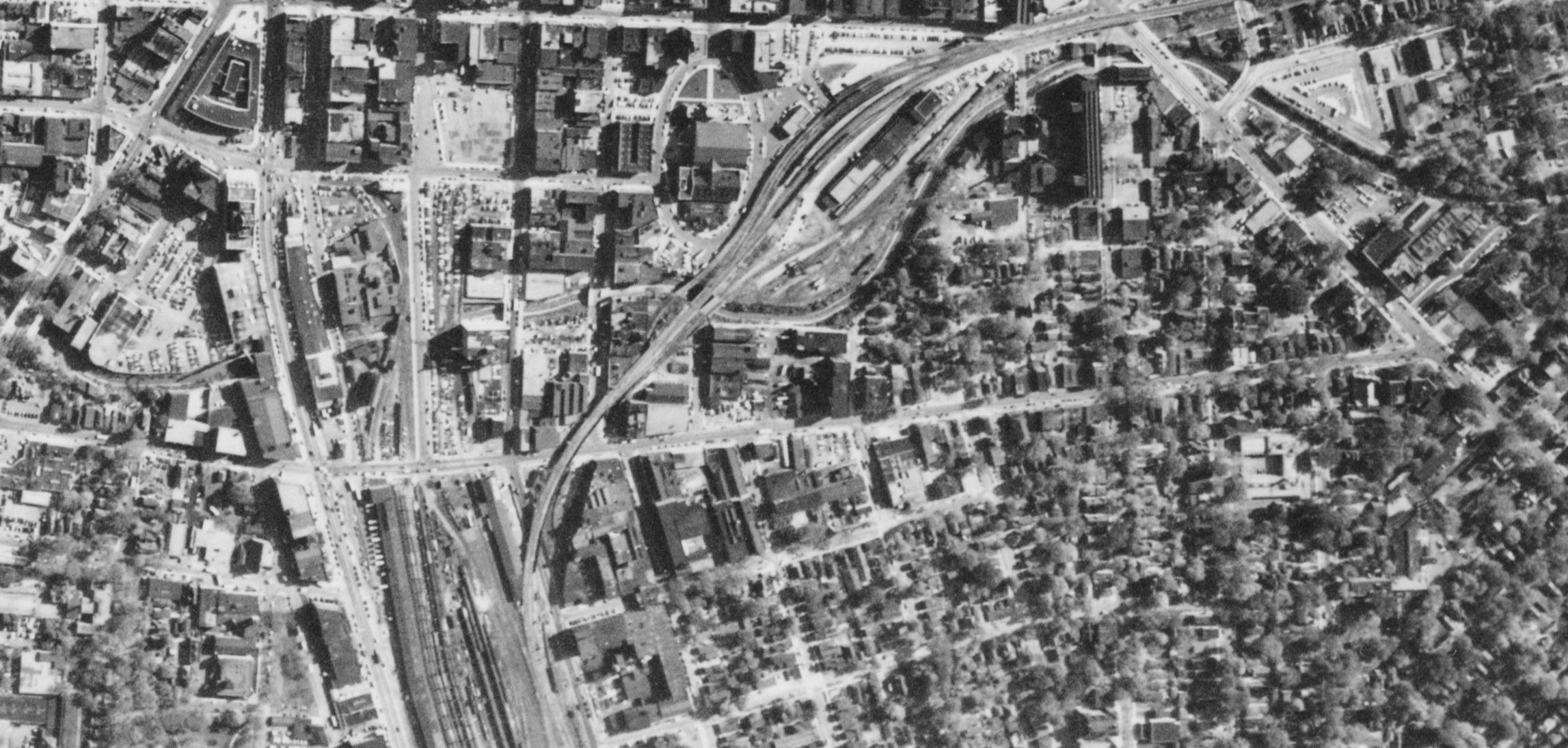
In 1955 businesses, factories, and homes lined West Street. In 2020 it’s a barren highway

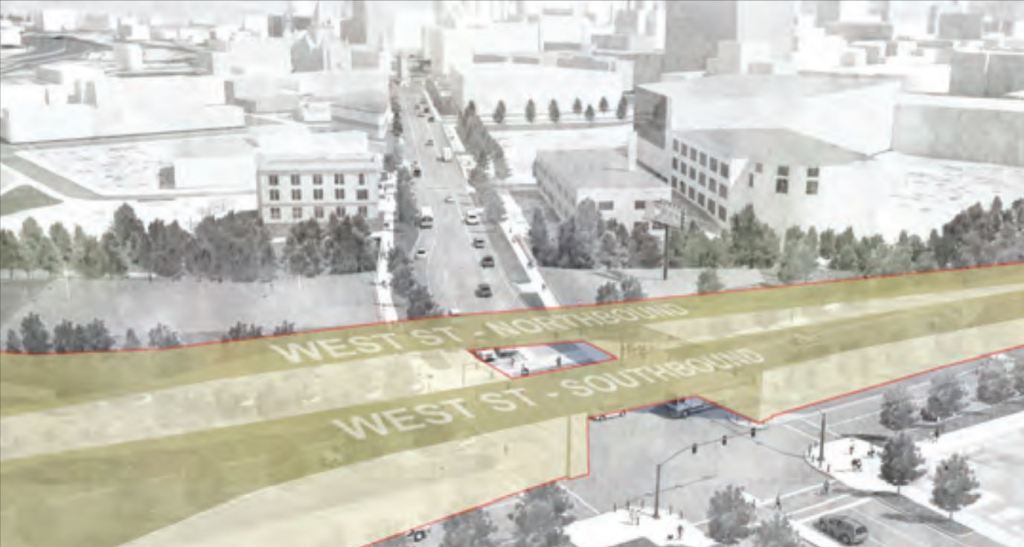
The thing is, this quasi-loop won’t make much sense after the viaduct’s gone. Harrison and Adams are 4 lanes wide because they handle all of the car traffic going to-and-from 81’s main Downtown exit. Pretty soon, that exit won’t exist, and those streets won’t get nearly enough traffic to justify their width. And if Harrison and Adams aren’t going to feed the interstate anymore, then it doesn’t make very much sense for West Street to feed them either, so it doesn’t need to be 6 lanes wide.

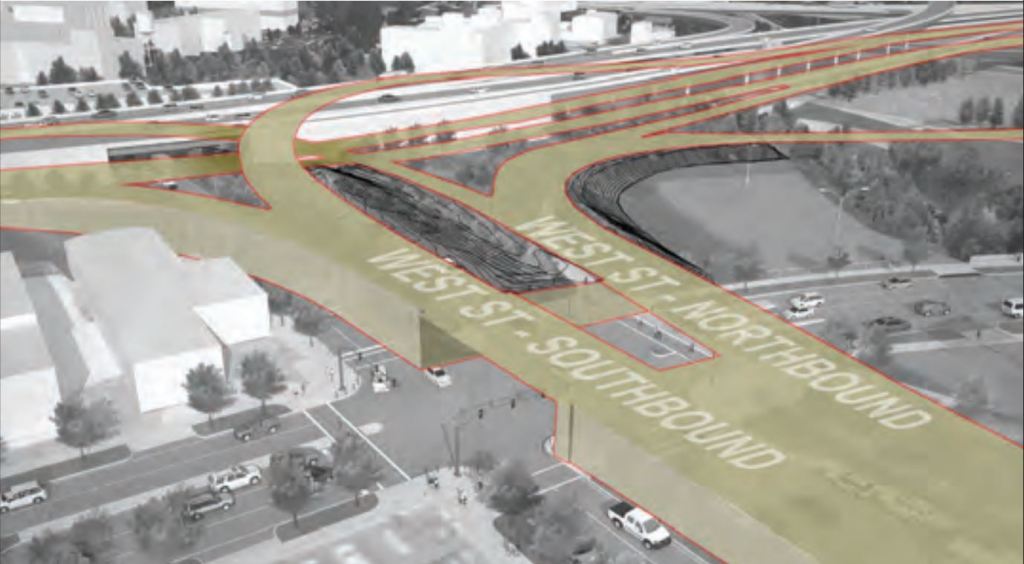
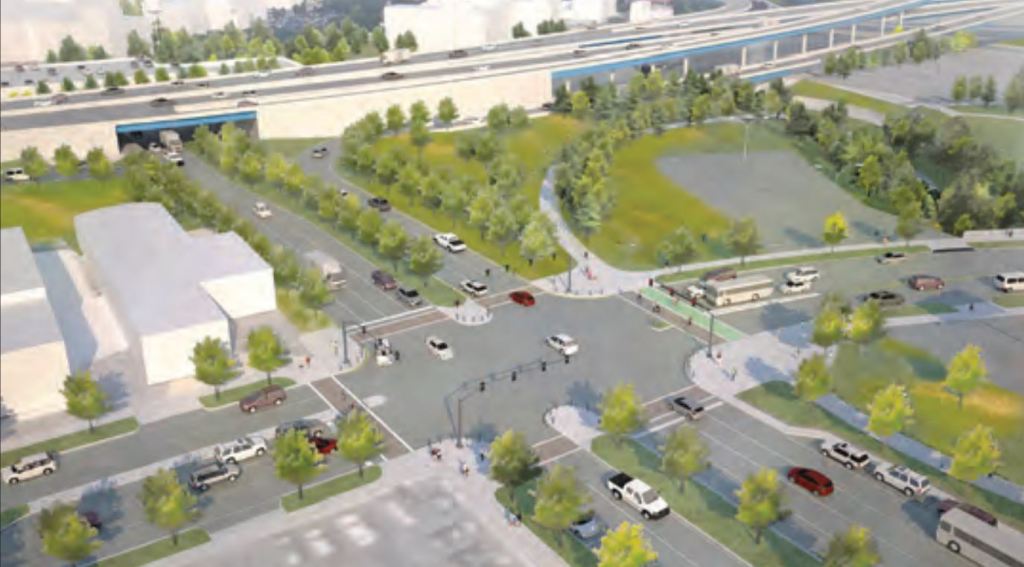
NYSDOT and City Hall both understand this, which is why the DEIS included some big changes to West, Harrison, and Adams Streets. The biggest is that they’re getting rid of the West Street onramps to 690. That will slow traffic on both West and W Genesee, and it will free up space for an extension of the Creekwalk. They’re also going to convert Harrison and Adams from one-way race tracks into two-way streets—an adjustment that will encourage car traffic to obey the speed limit and make those streets safer for people on foot and on bike.

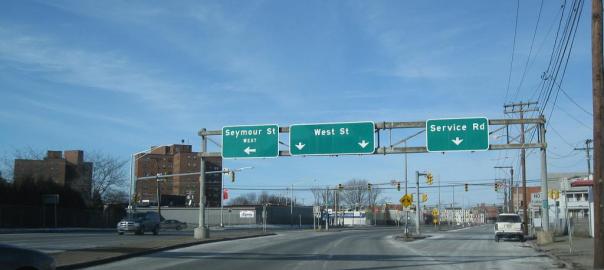
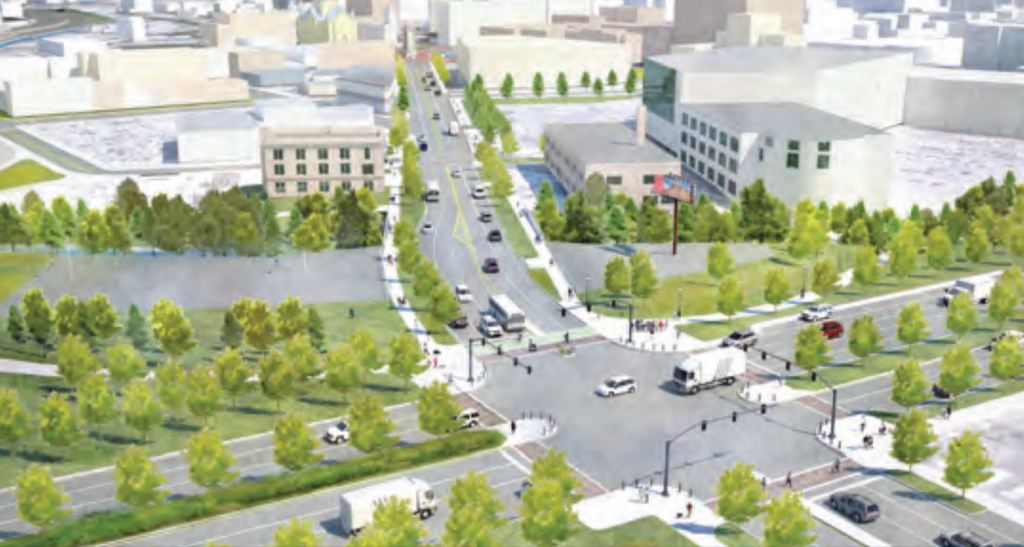
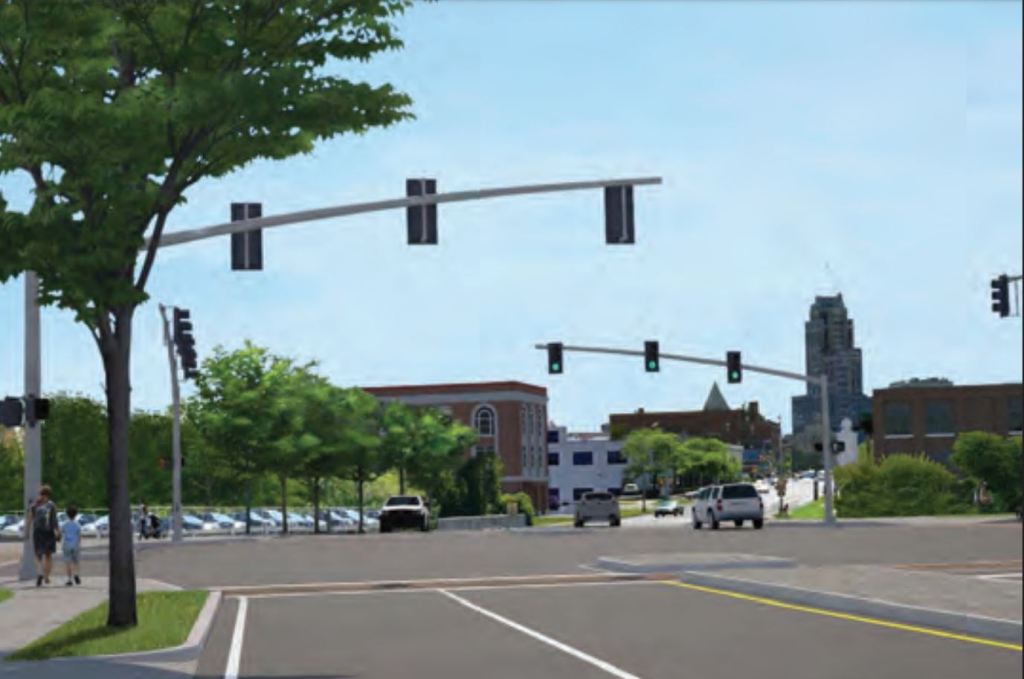
But they should go even further than that. If those streets aren’t going to feed the highways anymore, then there are plenty of other highway-like features that should also go away. West Street doesn’t need its full cloverleaf interchange with Erie Boulevard—one connecting ramp in each direction is plenty for low-speed traffic. West Street also doesn’t need to be a divided highway south of Fayette—it can go back to being a 2-lane street without any problem, and Marcellus, Jefferson, and Tully Streets can all get signalized crosswalks where they intersect.

Harrison and Adams should both be 2-way streets and they should be a lot narrower. And although they won’t lead to a highway onramp anymore, they will still lead to Centro’s Hub, so some of that extra space should go to bus lanes.

Imagine West Street’s extra lanes turned into park space, new buildings along Erie Boulevard where the cloverleaf used to be, a seamless transition from Armory Square to the Near Westside, and bus lanes linking Onondaga Street, Downtown, and University Hill

The highway-ization of Syracuse’s local streets has been a disaster for the City. West, Harrison, and Adams Streets all used to be thriving business districts that linked their neighborhoods to Downtown. Now all are asphalt moonscapes that no one wants to cross. Getting rid of the viaduct will change Syracuse’s street grid in a way that will allow the City to take those streets back, to make them function the way that they used to—connecting the City’s neighborhoods instead of dividing them. 

It’s time for an Independent Republican Conference

The New York State Senate will look a little different next year. Democrats will keep the majority, but Upstate will play a bigger role in that conference after key wins in Buffalo, Rochester, and another potential pickup in Syracuse. That’s got people asking whether there’s a way for Upstate to advocate for itself more effectively in Albany. There is: Upstate Republican State Senators need to form an Independent Republican Conference and caucus with the Democrats.

Republican State Senators are already familiar with the logic of this idea. From 2013-14 and 2015-16, they were this close to having a majority in the State Senate. They couldn’t control the chamber all on their own, so they allied with a few broad-minded Democrats (the Independent Democratic Conference) who were willing to provide the necessary votes to get over that important threshold in exchange for special favors and privileges.

Now the shoe’s on the other foot. There are still a lot of votes left to be counted, but it looks like progressive victories in a few key Upstate districts have will bring the Democrats this close to having a supermajority in the State Senate. With just a few extra votes, they (and the Assembly’s Democratic supermajority) could override the Governor’s veto and actually do the work that New Yorkers are calling on them to do. As it stands though, the Governor has the power to block a lot of that necessary legislation with a simple veto.

Even with their diminished numbers, there are enough Upstate Republican State Senators to provide that supermajority and override that veto. If they caucus with the Democrats and provide the crucial votes to reach that threshold, the legislature will be able to pass the laws that New York State needs without interference from the Governor.

And if those Republicans make it explicit that they’re providing their votes as Upstaters, they’ll be in a great position to secure all kinds of investment and legislation to meet Upstate’s specific regional needs: rural and urban broadband, high-speed rail, investment in the NYS Canals as a flood control system, enhanced public transportation for Upstate’s many small and mid-sized cities, residency requirements for police… the list goes on.

So there’s something to all of this talk about bipartisanship and Upstate’s growing political power. The best way to really act on it is for Upstate Republican State Senators to form an Independent Republican Conference, caucus with the Democrats, and provide the necessary votes to override the Governor’s veto in exchange for legislation that benefits Upstate.

National Elections are Local Too

The City of Syracuse is governed by City Hall, Onondaga County, New York State, and the Federal Government. Each level of government has jurisdiction here, and each one owes a responsibility to this community that goes beyond their duty to its residents as individual voters. National elections are local elections too.


Syracuse’s population loss is such a mammoth problem and is the result of so many different factors that it’s often hard to pin on any one cause, but if the 2020 Census declares that fewer than 145,270 people live in the City, it will be Donald Trump’s fault.

First, because he intentionally sabotaged the census count in a transparent effort to deny places like Syracuse the federal funding and political representation that they deserve.

Second—and more importantly—because this racist, xenophobic President and his congressional enablers have made it almost impossible to immigrate to America. For more than 200 years, Syracuse has grown and prospered because people have moved here from somewhere else. For the last 20 years, those people have been moving here from Burma, Bhutan, Somalia, Sudan. Keeping people from coming to America is keeping them from coming to Syracuse, and it’s killing the City.


Coronavirus destroyed the local economy, and—because local governments fund themselves with a direct tax on local economic activity—it has destroyed City Hall’s and Onondaga County’s municipal budgets. The Federal Government at least tried to help the economy, but—for purely ideological reasons—it has ignored local governments. Congressional Republicans—including Syracuse’s representative, John Katko—are denying City Hall the relief that it so obviously needs.

This is an ongoing disaster for Syracuse. It’s crippled the city libraries (but not the suburban ones), it closed the pools during a record-breaking heatwave, it’s making it even harder and more dangerous to walk anywhere in a town where more than 1 in 4 families don’t own a car.


I could go on. There are so many ways that local issues depend primarily on the action of the Federal Government, and so if you care about this community you have to care about national politics too. Syracuse depends on it.

Will the Inner Harbor become the new Central Business District?

White collar companies are building new office space at the Inner Harbor instead of Downtown. This could be the start of a tectonic shift that remakes the City’s economic and social geography.

Equitable’s plan to move from its landmark office building on Madison to a brand new building on Clinton Street is just the most recent (and most dramatic) example of this trend. BHG is building a brand new office to consolidate its workers in one facility at the Inner Harbor. Rapid Response Monitoring built a $22 million addition to its Inner Harbor office in 2018.

This is not what City Hall had planned when it hired Cor to redevelop the Inner Harbor. The plan was for a totally new neighborhood of mixed use buildings with retail at street level and apartments above, densely built townhomes, a college satellite campus—a ‘24-hour neighborhood.’ Instead, the Inner Harbor is getting huge office buildings sharing their enormous parcels with gigantic surface parking lots while Cor plans to build even more surface parking and even fewer apartments on the land that it controls.

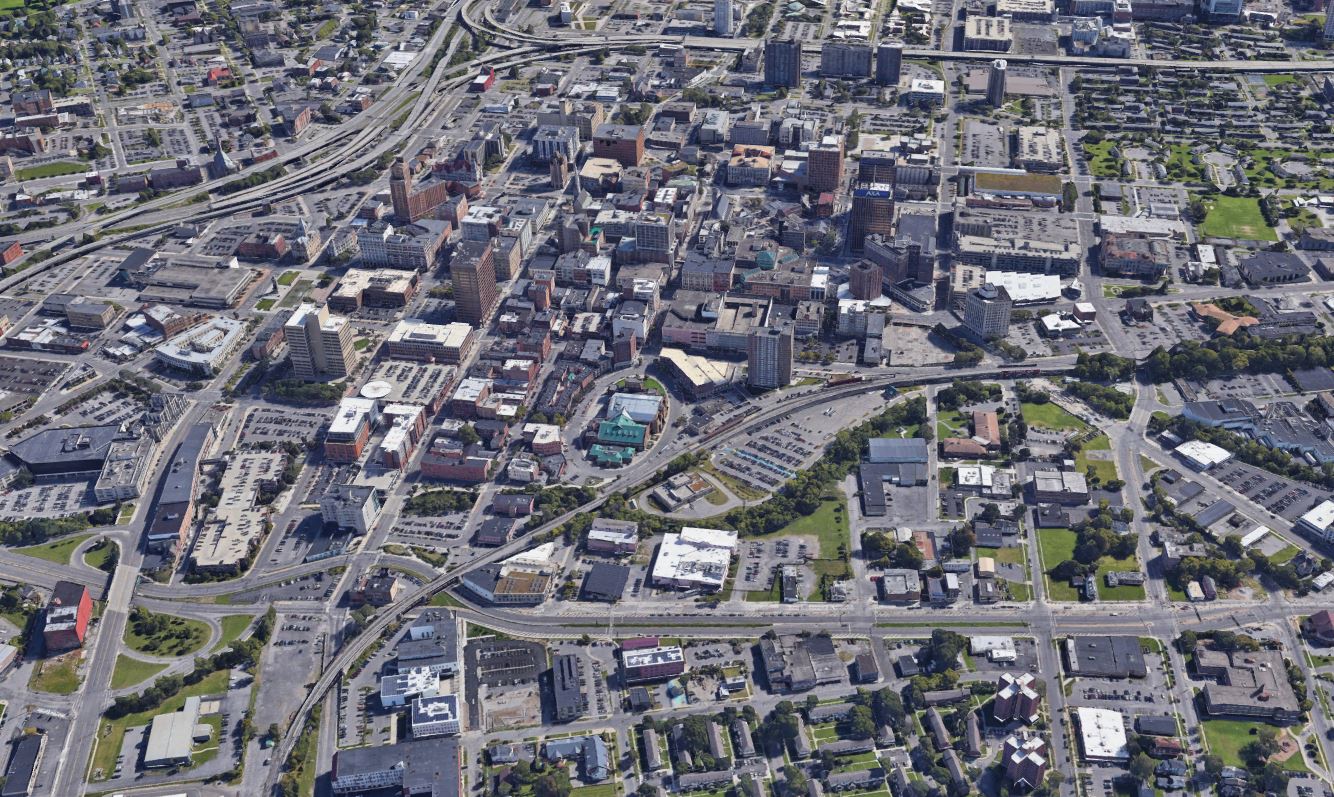
Syracuse has realized City Hall’s 1965 vision for a Downtown ringed by surface parking lots

In some ways, this is a real triumph for Syracuse. For 70 years, City Hall has been trying to figure out how to get companies that want new buildings and huge parking lots to stay Downtown. For most of that time, the plan has been to demolish enough of Downtown to provide parking spaces for everybody whose building was left standing. That policy failed to retain office jobs, and it turned a lot of Downtown into a moonscape. It was also one of the longer strands in the tangle of public policies that have made Syracuse one of the most economically and racially segregated cities in the nation.

In the Inner Harbor, City Hall has found a collection of empty building sites that it can pitch to companies like Equitable that might otherwise move to the suburbs and to those like BHG who might never consider moving Downtown. This is a good thing because it maintains the City’s property tax base while also keeping thousands of opportunities for employment centrally located where they are more accessible to more people.

But it can only work so many times. Companies moving to the Inner Harbor are gobbling up land pretty fast. Equitable’s new building and parking lot will occupy 6.9 acres all on their own. Downtown, that company was just one tenant among many in a high-rise tower that sat on a 4.7 acre block. There simply isn’t enough room to give every company a spot in the semi-suburban office park that’s getting built at the Inner Harbor.

It also poses some real challenges to Downtown’s small businesses. Downtown’s residential population is not nearly big enough to support all of the businesses in the neighborhood. Those restaurants and shops thrive because so many non-residents come Downtown every day for work, and while they’re there they eat lunch, buy clothes, grab drinks. Every time a company moves a few hundred employees out of the neighborhood, it reduces that customer base and makes it harder for those small businesses to succeed.

Spreading all of those jobs out over a larger area will also make it harder for people to get to work by bus. Centro’s bus lines are all designed to terminate Downtown so that it never takes more than one bus to get to work there. Only one bus line runs up Solar Street, though, so anybody with a job at the Inner Harbor will have to take two buses to get to work.

BHG’s new building will take up less space than its parking lot, and it won’t have a door facing the sidewalk.

The big question is whether or not continued development will be the result of new jobs moving into Syracuse or existing jobs moving around within the City. BHG is bringing new jobs, but Equitable is just moving them from Downtown. If the Inner Harbor just leeches people and jobs from Downtown, then its development is best understood as more of the same sad story of Syracuse’s decentralization. But if instead it’s all new growth, then the conversion of the Inner Harbor into a sort of urban office park—the ‘Central Business District’ that mid-century city planners tried so hard to build—is a remarkable and welcome innovation in Syracuse’s development.