All posts by inthesaltcity

Bus Rapid Transit for the Eastside

ReZone—City Hall’s complete rewrite of its zoning ordinance—assumes that Centro will run some kind of Bus Rapid Transit service in the future. The current draft ordinance includes special zoning around public “transportation terminals,” and the project’s guiding document refers to a “TOD overlay” within .25 miles of BRT stations. SMTC and Centro have planned two potential BRT lines already—and ReZone needs to account for those plans—but Centro needs to get a move on and finish planning the rest of its BRT network before City Hall adopts ReZone as law. Otherwise, Syracuse runs the risk that its new high quality bus service serves neighborhoods where restrictive zoning will limit its success.

The 2014 Syracuse Transit System Analysis identified four other potential BRT corridors, and Mayor Walsh’s transition team identified half of one of those (Downtown to Dewitt) as a priority for his administration.

transition team

BRT service running on Erie Boulevard out to Shoppingtown Mall would pass within walking distance of all the new housing along Genesee Street on the Near Eastside, it would run through other older Eastside neighborhoods, and it would connect those residential areas to major employment centers Downtown and along Erie Boulevard.

eo2jppm
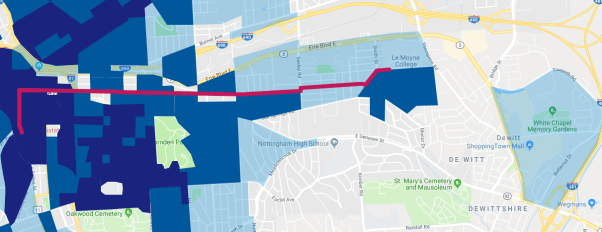
This map shows the potential BRT route in red, and it shows Jobs and Persons Per Square Mile—a measure that indicates how many people might use public transportation in an area—in shades of blue. Areas that are not shaded do not have enough people and jobs to support BRT service.

Lots of people already ride the existing 168 bus along Erie Boulevard, so that’s a good route to upgrade with shorter headways and faster runtimes. The Mayor’s transition team probably also chose to single out that route because a new BRT service could run in fully separated bus lanes in Erie Boulevard’s wide median.

But there are problems running BRT service on Erie Boulevard. There is no housing on any of the enormous parcels that line the street from Beech Street all the way out to DeWitt. All that land is zoned for commercial use only—no housing is allowed. Erie Boulevard runs down the middle of a deep valley, so anybody living in the housing that is nearby has to walk up a steep hill just to get home from the bus stop. Shoppingtown Mall—the line’s eastern anchor—is dying, and there are no concrete plans to turn it around. It might not even be possible to put bus lanes in the Erie Boulevard Median because of the State’s plans to use that space for the Canalway Trail.

Given all that, the City’s Eastside might be better off if that BRT service ran on Fayette Street instead. That would bring better bus service to neighborhoods where a lot of people don’t own cars. It would also connect LeMoyne College to the rest of Centro’s BRT network. Ending the line at LeMoyne instead of at Shoppingtown would also shorten the route by 35%, allowing Centro to run more buses more frequently for less money.

eo1jppm

Centro could also split the difference between these two options by running the line along Fayette to LeMoyne and then continuing it out to DeWitt along Erie Boulevard, say, or by turning onto Erie at Seeley or Columbus Avenue (like the existing 168 bus does). Those are decisions for actual transportation planners to make in consultation with Centro, the City, and the public, but let’s get them made.

Choose where the bus will go and where it will stop. Then, the ReZone team can make the changes it needs to—like lifting the ban on housing along Erie, or allowing more mixed-use development in Salt Springs—if that BRT service is going to succeed. The clock on ReZone is ticking, and Syracuse needs better bus service now.

The Promise of a Premier High School in the Heart of Syracuse

When in 2017 the Consensus Commission recommended that the City of Syracuse merge with Onondaga County, no one took the idea very seriously because no one could agree on what to do about the schools. Coordinated snow plowing, consolidated procurement, a single water board? Fine. That all was easy, any hint that city and suburban kids might go to school together was dead on arrival. They tried to fudge it by implying that some future commission could look into reforming Onondaga County’s balkanized education system, but Consensus’ comments on consolidating government debt told City residents all they needed to know:

“FIRST, the City’s pre-existing debt and long-term liabilities (e.g. post employment  benefits) should remain the City’s responsibility. It should not become the burden of the County or any other municipality in our community. New York State law provides clear precedent on this issue. In the case of a consolidation or dissolution, “debt districts” are typically used to pay any pre-existing debt until it is fully retired. In this way, even though two entities may combine functions and governance, separate tax rates can be established to segregate pre-existing debt.

“SECOND, under state law the Syracuse City School District is a “dependent” district of the City of Syracuse. This means that, unlike non-dependent districts, SCSD does not have the power to levy its own taxes. Nor can it issue debt on its own. Rather, it relies on the City to levy property taxes and do capital borrowing on its behalf… In the event the County and City combine, a legal accommodation would be required to ensure both a) the SCSD’s local property tax revenue / debt access remains and b) that property tax burden remains only in the former City (i.e. it does not extend to the rest of the County).”

This extraordinary passage calls the Syracuse City School District a “burden” that needs be “segregated” from the rest of the County as a “debt-district.” The County didn’t want to touch the City’s schools with a ten-foot pole.

So it was an incredible thing this week when the Onondaga County Legislature voted to request permission to issue debt in order to fund the creation of a County-wide STEAM high school at the corner of Warren and Adams Streets in Downtown Syracuse. It was incredible that this group—one dominated by the same suburban interests that absolutely refused to accept SCSD debt in the 2016 Consensus report—would borrow money to build a school where kids from the Northside would sit next to kids from North Syracuse.

This STEAM school is an opportunity to do something new in Syracuse. It’s an opportunity to provide city kids with the high-quality education that they deserve, and it’s also an opportunity to heal some of the wounds that prevent the City of Syracuse and Onondaga County from reaching their full potential. If this really does become a premier high school, if families from all across the County see their children’s best hope for a bright future in the heart of Syracuse, if that hope overpowers the fear and resentment and prejudice that divide the entire community now, then this community has a brighter future ahead of it.

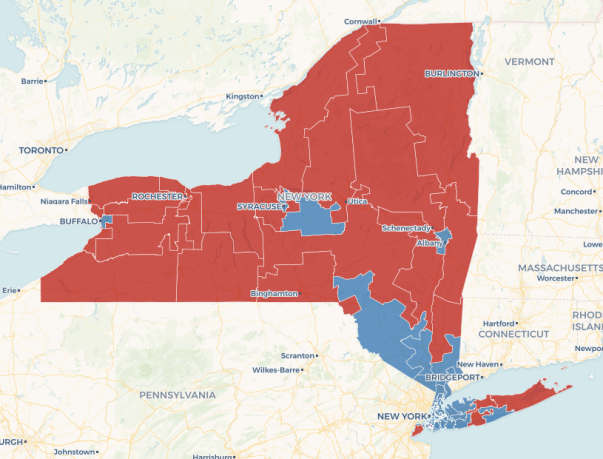
Upstate Cities Benefit From Proportional Representation in the State Senate

This week, a couple of upstate politicians from rural districts introduced legislation to give people living in rural areas more power in New York State’s government. Their plan is to redraw State Senate districts to match existing county lines. It’s being pitched and covered as a plan to “boost upstate new york political clout,” but that plan would also take political power away from cities like Buffalo, Syracuse, and Albany. It’s difficult to hold both of those facts in your head at the same time—you have to pretend that those cities aren’t part of Upstate. But those cities are part of Upstate, and they’re better off with the way New York elects its State Senators now.

The argument for giving Upstate more control by changing State Senate elections goes something like this: Upstate is Republican and Downstate is Democratic. The Republican-controlled State Senate was Upstate’s voice in Albany, and with Republicans out of power, Upstate has lost its voice:

“When Democrats gained majority control of the 63-seat New York Senate in November, only three members of the party represented Upstate New York. The other 24 senators north of Westchester County are Republicans.”

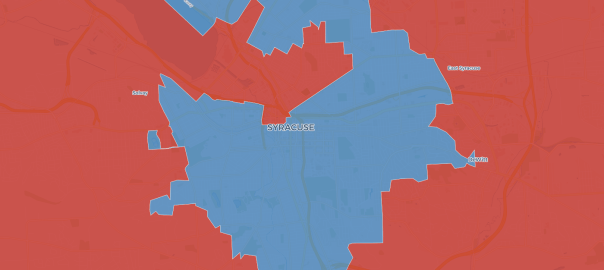
That analysis ignores why three upstate senate districts sent Democrats to Albany. It wasn’t some statistical anomaly. The three upstate Democratic state senators are from Buffalo, Syracuse, and Albany—three of Upstate’s four big cities (Rochester lost its representation in the State Senate to gerrymandering).

statesenateresults

Now that Democrats are in control of the New York State Senate, those upstate cities haven’t lost their voice—they’ve gained it. It used to be that rural upstate Republicans negotiated deals with downstate Democrats that left out Upstate’s cities—new spending on MTA and rural upstate roads and bridges, but not upstate transit authorities, that kind of thing.

With Democrats in charge of state government, senators from upstate cities are finally a part of the majority, and they’re in a position to advocate for Upstate’s urban communities. All three of those upstate Democrats are committee chairs. Tim Kennedy (D-Buffalo) chairs the State Senate’s Transportation Committee, meaning that Centro, NFTA, CDTA, and RTS finally have a shot at equitable funding this budget season.

This plan to elect State Senators by county would take power away from upstate cities in two ways. First, it would give the 80,317 residents of rural Cattaraugus County just as much say in the State Senate as the 465,398 residents of urbanized Onondaga County, or the 2,648,771 residents of Kings County (Brooklyn)—making rural votes more valuable than city ones. Second, and more importantly, this partisan power-grab would marginalize upstate cities by relegating their representatives in the State Senate to the minority and making New York State government less responsive to their concerns.


Upstate’s cities vote for Democrats. They do it mayoral races, gubernatorial races, assembly races, senate races, congressional races, and presidential races. In that way, upstate cities aren’t very different from downstate cities like New Rochelle, Yonkers, or New York City. That makes sense when Democratic candidates support policies that address city residents’ concerns while Republican candidates more often focus on rural issues.

When you try to conflate ‘Upstate’ with ‘Rural Republican’ and ‘Downstate’ with ‘City Democrat,’ you miss that. ‘Upstate’ isn’t out of power because Democrats control Albany—it’s just the sparsely populated rural parts of the State whose representatives are in the minority. Upstate’s cities are finally in power. It’s a Country/City issue, not an Upstate/Downstate issue. Anybody who says otherwise is ignoring Upstate’s cities.

Exclusionary Zoning in One Neighborhood Will Gentrify Another

With all the new apartment buildings going up on Syracuse’s Eastside, it seemed like a fluke that one planned for Westcott Street never got past the drawing board. It wasn’t. That apartment building didn’t get built because of exclusionary zoning policies that prohibit new housing in some places and concentrate it in others. As Syracuse grows, that imbalance will push people looking for housing into certain neighborhoods, driving up rents, gentrifying them, and displacing current residents. ReZone—City Hall’s comprehensive rewrite of the City’s zoning ordinance—is a once-in-a-generation chance to prevent this by creating housing opportunity in more city neighborhoods. That’s a chance City Hall needs to take.

City Hall enacts exclusionary zoning policies when vocal neighborhood groups like UNPA pressure it to do so. Those exclusionary policies—minimum lot sizes, required setbacks, limits on multi-family housing, parking requirements—make it difficult or impossible to build new housing in a neighborhood. The Westcott Street project—one that would have added 32 middle-income apartments to this well-off neighborhood—ran afoul of all of these.

4bpyf5fpavggfmawgcokksva5q

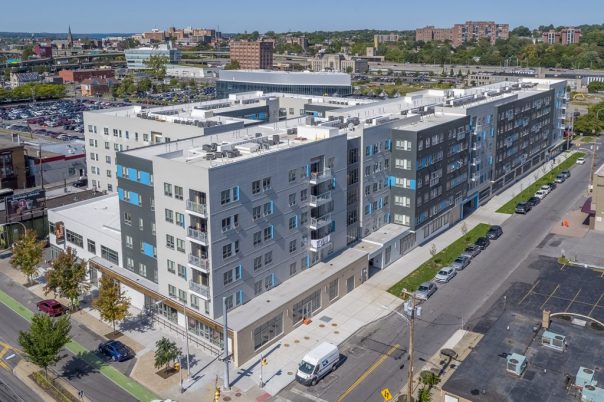
Meanwhile, about a mile away on Genesee Street, three enormous new buildings are adding hundreds of new apartments to the foot of University Hill. Each of those buildings is much larger than what had been planned for Westcott Street, but they’re going up without much of a fight. That’s because Genesee Street is already zoned to allow apartment buildings by right—something that wouldn’t be true if a powerful neighborhood association like UNPA was guarding that land. In fact, there is no neighborhood association worrying about what all that new housing will do to Genesee Street’s ‘character’ because there are hardly any people living near that part of Genesee at all.

dji_0412-1400x933-1024x682

For now, this works. People in Westcott get to keep their neighborhood to themselves, people looking for a place to live can move to Genesee Street, and everybody who relies on municipal services benefits from the new tax revenue. The same thing is happening across the City where the zoning is lax and there aren’t enough existing residents to block new residential construction—Franklin Square, East Brighton, University Hill, the Inner Harbor, and even Downtown. All that empty space has been a safety valve, allowing developers to build and market new housing without putting pressure on existing neighborhoods.

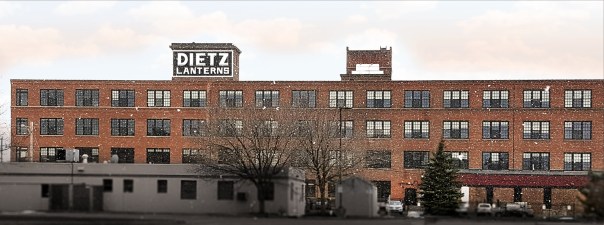
But Syracuse is running out of empty space. Three recent projects turned old factories into new apartments in established residential neighborhoods on the Westside. This month, City Hall and the Allyn Foundation announced that they want to build hundreds of new homes on land currently occupied by public housing on the Southside.

dietz-w-snow

New housing is not a bad thing. Too many older homes in Syracuse are poorly insulated, have roofs that leak, are painted with lead. New housing of good quality is an opportunity for current residents to live somewhere better. Similarly, too many older neighborhoods in Syracuse don’t have enough people. New neighbors pay taxes, shop at local businesses, bring up property values, and increase the neighborhood’s political power.

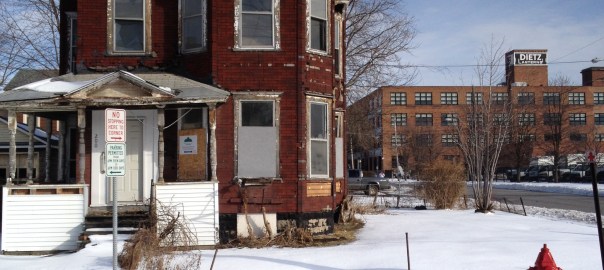
The problem is that limited supply and geographic concentration mean that a lot of this new housing isn’t affordable for the people who already live in the neighborhoods where it’s being built. Developers can’t build much new housing at all, so they’re pricing and marketing what little is allowed to attract the small pool of tenants who can pay $1,385 for a 1-br in the Dietz Lofts, say. That’s more than twice the median gross rent of the Westside neighborhood where the Dietz building sits—a neighborhood where half of tenants spend more than 30% of their monthly income on rent.

Converting empty factory buildings into expensive apartments won’t displace anybody, but the same zoning laws that made the Dietz Lofts possible also allow property owners to convert existing 1-family homes into multi-family apartments. The same economic pressure that set the Dietz’ rent at $1,385 will do the same to any newly renovated duplex. That will displace people.

People have to live somewhere, and developers are building new homes for them where it’s easiest—where the zoning already allows it. Because some neighborhood groups have been so successful at redrawing the City’s zoning map to exclude new residential construction, it’s concentrated in a select few neighborhoods. Because developers will always go after the highest rents first, they’re building homes that are often unaffordable for the people who already live in those neighborhoods. This is how exclusionary zoning in some neighborhoods causes gentrification in other neighborhoods.

Syracuse’s zoning map controls the supply and geographic concentration of housing in the City. City Hall needs to amend that map to allow more housing in more neighborhoods. City Hall needs to make those changes now—before Syracuse runs out of empty land for new residential development—in order to get ahead of the economic trends that have led to rising rents, displacement, and housing crises in other cities.

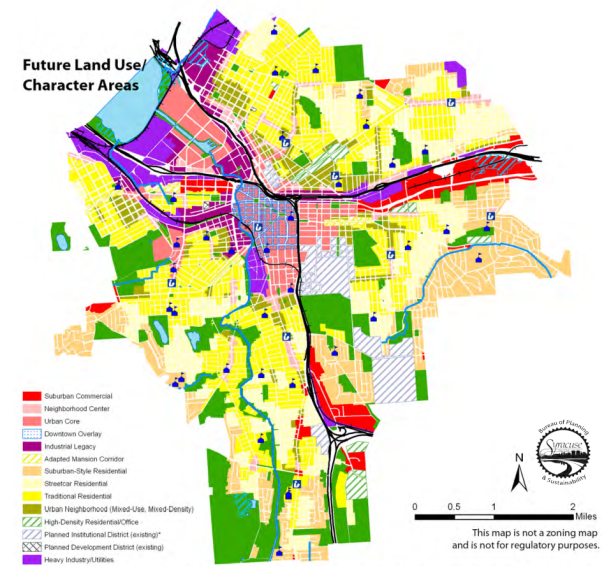
ReZone provides the opportunity to do just that. City Hall’s Land Use & Development Plan—the document that’s supposed to guide the ReZone project—contained a map that showed how to disperse new residential development and population growth across many city neighborhoods. It recommended zoning to allow 1 and 2-family homes (shaded bright yellow) in almost all of Westcott, the Northside, the Southside, the Westside, and in half of Eastwood. It recommended zoning to allow bigger apartment buildings (shaded olive green, magenta, and pink) along neighborhood main streets and in parts of all those same neighborhoods. If Syracuse was zoned this way now, that Westcott Street apartment building could have been built.

LUDP map

ReZone is now on its third draft zoning map. The first draft (February 2017) followed the LUDP’s recommendations to allow new residential construction in most city neighborhoods with three unfortunate exceptions. First, the February 2017 draft zoning map all but banned multi-family housing from Eastwood outside of James Street itself. Second, it significantly reduced the amount of multi-family housing that could be built in Westcott. Third, it significantly increased the amount of multi-family housing allowed on the South and West sides, particularly in an area where Onondaga Creek regularly floods.

Since that February 2017 draft, it’s only gotten worse. From the Northside, to Tipperary Hill, to Lincoln Square, each successive draft has limited the amount of housing that can go into certain Syracuse neighborhoods, effectively funneling future population growth into a select few others with predictable negative consequences. (Lots shaded yellow are zoned to exclude new apartment buildings).

Syracuse needs people. It needs for kids to grow up and make their lives here, and it needs for people to move in from out of town. It needs these people to pay taxes, ride buses, shop at local businesses, attend PTA meetings, vote, and invest in the community.

And those people need a place to live. As it stands, they’re going to have a hard time moving into some neighborhoods where exclusionary zoning policies have artificially limited their access to housing opportunity, and they’ll have an easier time moving into other neighborhoods where their presence will, at least in the short term, be a hardship on their new neighbors.

It shouldn’t be this way. That 32-unit apartment building should go up on that Westcott Street parking lot, and a few dozen people should be able to choose to live there, lowering demand for new housing in other neighborhoods and spreading out the effects of new residential development and population growth across the entire City. That’s the only way to equitably harness the population growth that Syracuse needs and ensure that it benefits everybody who lives in the City.

Blueprint 15 Needs More Affordable Housing

Blueprint 15 is a plan to remake the highly visible collection of public housing complexes just south of Downtown Syracuse. It’s a collaboration between Syracuse City Hall, the Syracuse Housing Authority, the Allyn Family Foundation, and Purpose Built Communities—a non-profit that has built similar projects in 21 other cities. The plan focuses on the neighborhood as a whole—it includes investments in education, businesses, integration, transportation and better housing. It’s a plan that promises to right some of the wrongs of Syracuse’s past—to fight structural racism and economic oppression. To do that equitably, though, Blueprint 15 will have to build enough housing include all of the people who live in the neighborhood now.

.   .   .

There are about 1000 affordable homes in Pioneer Homes, McKinney Manor, Central Village. Blueprint 15 plans to tear them all down and build between 1100 and 1400 new ‘mixed income’ homes. No one’s said exactly how much of that mix will be affordable units, but you can bet it won’t be 1000 (in Purpose Built’s other ‘mixed-income’ projects, the split is 50-50 between affordable and market-rate units), so Blueprint 15 will displace current residents.

In a front-page article on Sunday, the Post-Standard said that anybody displaced by the project would receive a Section 8 voucher. That’s hardly a fair trade. Source-of-income discrimination is rampant in Onondaga County and across the country. More perniciously, places like Skaneateles use zoning policies to exclude low-income renters. Even in places like Syracuse and Buffalo where such discrimination is illegal, it’s still common practice among the small-time landlords who control a lot of the cheaper rental housing.

Besides, if Blueprint 15 is going to make the area into such a great neighborhood anyway, why shouldn’t everyone who lives there now want to stay put?

So if Blueprint 15 is going to redevelop the neighborhood equitably, it can’t displace current residents. If it’s going to accommodate current residents, it will need to maintain the current number of affordable homes. If it’s going to increase the percentage of market-rate homes in the neighborhood without reducing the total number of affordable homes, it’s going to have to build a lot more new housing.

Some of that necessary new construction can happen on land that SHA already owns. According to SHA’s 2016 East Adams Street Neighborhood Transformation Plan, parking requirements limit the number of homes that can fit on that land. In other cities, Purpose Built uses a lot of land for off-street parking.

It makes no sense to let off-street parking limit who can find a home in a census tract where 53% of households don’t even own a car. The neighborhood is within walking distance of the Centro Hub, and Blueprint 15 specifically talks about being able to walk to work as one of the things that will make new market-rate housing attractive.

City Hall’s new draft zoning ordinance takes all that into account, and it reduces the off-street parking requirements for the neighborhood by 50%. That reduction will increase to 65% when Centro starts running its planned BRT service. City Hall and Centro need to hurry up and implement these reforms before Blueprint 15 gets stuck building parking lots where affordable housing should be.

IMG_2657
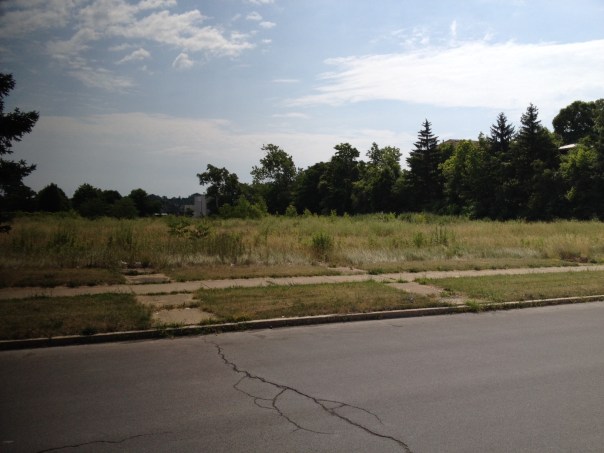
Sidewalks that used to lead to people’s front doors at Kennedy Square. SUNY owns this land now.

Making better use of what land’s available is a start, but Blueprint 15 should go one step further by building new housing on State-owned land on the Near Eastside. SUNY owns acres of vacant land over there (a lot of it is only vacant because they tore down Kennedy Square), and once the I81 viaduct comes down, New York State will have even more empty land on its hands. That area is also within walking distance of major employers, it also has good bus service, and City Hall is also upzoning it to allow the kind of dense, mixed-use development that Blueprint 15 plans for the Southside. It’s a perfect place to build new mixed-income housing.

Expanding Blueprint 15 like this will also make the entire project less disruptive. By building new housing on vacant land first, SHA’s tenants can move into their new homes before Blueprint 15 demolishes or renovates their current homes.

Blueprint 15 is an exciting idea. It’s an opportunity to restore a neighborhood and community that have weathered decades of segregation and exploitation. To do that equitably, though, Blueprint 15 has to provide enough affordable housing to accommodate the people who live in Pioneer Homes, McKinney Manor, and Central Village now. City Hall and Centro can help Blueprint 15 make better use of the land in its project area, and New York State can increase the size of that project area by handing over the land that it’s let languish for years. That’s how Blueprint 15 will make good on its promise for the whole community.

Smart City, SMART Buses

City Hall plans to buy all of Syracuse’s streetlights. That will save about $2 million every year, so it’s a no-brainer for a city government staring down bankruptcy. But City Hall will get more than just savings—it will also get control of a network of electrical outlets and poles that stretches across the entire City. City Hall can use this new resource to install a smart city technology called ‘signal priority’ that will improve Centro’s bus service. 

Signal priority lets a traffic light know when a bus is coming. Then, the traffic light can respond to that real-time information by making a minor adjustment to its cycle—staying green a few seconds longer, say, so that the bus can make it through the intersection—so that buses spend less time stuck at red lights.

This means a bus can get across town faster. Minneapolis started using signal priority, and its buses increased their average speed by 4-15%. In Portland, Seattle, and Los Angeles the buses got 8-10% faster. That allows riders to spend less time sitting on the bus and more time doing whatever it is they’re on their way to do.

Faster buses are also more frequent buses. Take the 168 bus. Its first run leaves Shoppingtown at 6:02 am and arrives at the Hub at 6:35 am before continuing on as the 364 bus. That’s a 33 minute trip, but with signal priority it might only take 30 minutes. Then, that same bus and driver can leave the Hub three minutes earlier to start the 364 run. If that run is 10% faster too, then the driver can turn around and come back to the Hub even earlier to start a new 168 run.

All that saved time means that the driver and bus are free to make more runs in a single shift. Since the biggest cost of any run is the driver’s pay, that means Centro can run more buses without spending hardly any extra money.

This isn’t to say that Centro should have to pay for all of its service improvements by scrimping and saving the money it’s already got. It—and every other public transportation authority in New York State—needs better dedicated funding in order to offer people the freedom to live without a car, to reduce our dependence on fossil fuels, and to build stronger communities.

But that’s up to New York State and the federal government. Transit signal priority is something that City Hall can do on its own to improve life in Syracuse now. It’s an innovative use of this new municipal resource, and it should be one of the very first acts that this new smart city takes.

Writing ReZone for Better Bus Service

Buses work best where there are lots of people, businesses, and institutions all within walking distance of each other. Zoning laws that allow a mix of people, businesses, and institutions work best in places with good bus service. Transportation planning and land use planning go hand in hand.

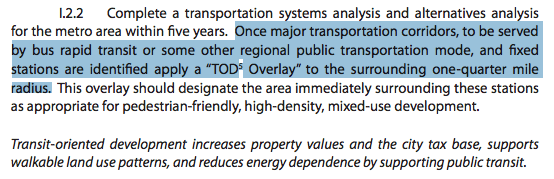
In Syracuse, the left hand doesn’t seem to know what the right hand is doing. Take ReZone, City Hall’s once-in-a-generation rewrite of the City’s zoning ordinance. It grants a 30% reduction in off-street parking requirements for lots within .25 miles of a public ‘transportation terminal,’ but it doesn’t define what a transportation terminal is. The 2012 Land Use & Development Plan—upon which ReZone is based—suggests that ReZone is talking about stations on a Bus Rapid Transit network:

Screen Shot 2019-02-01 at 6.35.31 PM

The 2014 Syracuse Transit System Analysis identified six “major transportation corridors” for improved bus service, but it did not identify any “fixed stations” along them. The Syracuse Metropolitan Transportation Council’s SMART1 report does identify station locations, but only for two BRT lines.


It’s anyone’s guess, though, when and if Centro will actually run that BRT service. The fixed stations identified in the SMART1 report don’t actually exist yet, and if the Common Council turned ReZone into law tomorrow, there would be no clear ‘transportation terminals’ in the City to trigger the ordinance’s 30% parking requirement reduction.


In the meantime, City Hall’s very reluctance to zone for transit is affecting Centro’s ability to offer the service. Centro is going to need money from the Federal Transportation Administration in order to build out this BRT network, and the FTA takes a city’s land use policies into account when it decides whether or not to fund a project there. According to the STSA, Syracuse’s current zoning policies hurt its chances of getting funding from the FTA.

Even worse, City Hall keeps revising ReZone in ways that will make Centro’s life harder. One glaring example is the area around the Regional Transportation Center. The RTC is supposed to be the last stop on one of SMART1’s BRT lines. The first ReZone draft would have allowed housing and businesses on all of the parking lots around there, but the current draft actually bans new housing in the area—how’s that for TOD?

Less obviously, each new draft of ReZone has reduced housing opportunity along the corridors that the STSA picked out for BRT service. Around N Salina, Solar, W Fayette, and W Genesee Streets, City Hall has amended its zoning map to either ban or minimize residential development in the very areas where SMTC and Centro are planning to provide better bus service.


The idea of a TOD-overlay makes sense, but it’s impossible to implement while planning for that BRT service is independent from the ReZone project—the overlay won’t come into effect until the BRT service starts running, and the BRT service is difficult to plan until the overlay comes into effect. It’s a catch-22.

City Hall, Centro, and SMTC can fix this with a little cooperation. All three organizations need to get together and narrow the STSA’s transportation corridors to specific streets. City Hall has already said that it wants the eastern half of the Camillus-Fayetteville corridor to run along Erie Boulevard. It shouldn’t be so hard to make similar decisions for the rest of the corridors—will that line’s western half run on Fayette or W Genesee? Will the Northside-Western Lights line run on Gifford or Onondaga? Where will the buses stop?

Once they’ve agreed on specific streets where BRT service would run, the ReZone project team will have enough information to write transit-supportive zoning policies into the new ordinance without relying on an unnecessarily complicated mechanism like the ‘proximity to transit’ parking reduction. That means making all lots within .25 miles of the planned BRT stations MX-4 or R-4—zoning classifications that allow enough housing to mix with businesses and institutions so that people can meet their daily needs on foot.

The project team should also eliminate all minimum parking requirements from ReZone.

These changes won’t cost a penny, they will make land more valuable, and they will lay the groundwork for better bus service in the future.

New York State Needs to Stand Up for Public Transportation

Since Democrats took full control of the state government in Albany on January 9, they have been working overtime, already passing the Reproductive Health Act, GENDA, and voting reform. All of these major pieces of progressive legislation are necessary to push back against the regressive policies coming out of the federal government. They’re part of an agenda that will make New York State a progressive beacon for the nation, and that agenda needs to include better support for public transportation across the State.

In more normal times, the federal government gives money to local transit agencies for capital improvements like new buses, shelters, and bus lanes. When the Syracuse Metropolitan Transportation Council recommended that Centro run a new Bus Rapid Transit service, it picked out Small Starts—a Federal Transportation Administration program designed exactly for this kind of project—as the best place to get the money to build it.


Of course, these aren’t normal times. The current FTA is acting in bad faith, holding back money that it had already promised to local transit agencies:

“FTA’s position for next year’s budget is that the pipeline of transit projects should grind to a halt completely, leaving cities and communities on their own to raise yet more local funding than they already have to complete their projects.”

Because public transportation empowers poor people, because it’s most useful in cities, because it’s environmentally responsible, regressive federal politicians are defunding it in cities across the country.

Clearly, Centro isn’t going to be able to work with this administration’s FTA to provide the kind of bus service that Syracuse really needs—multiple high-frequency routes connecting the City’s most populous neighborhoods to its centers of employment, signal priority at stop lights, new shelters that tell riders when the next bus is coming, dedicated bus lanes.

brt map

And so the same logic that has made it necessary for New York State to pass a law like the Reproductive Health Act also makes it necessary for New York State to increase its support for public transportation. Good bus service is necessary for a progressive society, it’s under attack from a regressive federal government, and New York State has the power and the responsibility to protect and advance it.

I81’s Environmental Impact

Last week, Onondaga’s Town Supervisors—a group of people without any governmental responsibility for the City—got together to again let everybody know that they would like for I81 to stay in the middle of Syracuse. They want that, in part, because they’re concerned about the ‘environmental impacts of removing the I81 viaduct.

On the face of it, that’s a stupid concern. The environment will be better off with one fewer piece of obsolete, overbuilt, car-only transportation infrastructure. Get rid of the viaduct, and there’s room for new housing within walking distance of major employers, making it more possible for more people to drive less.

But those supervisors were never really concerned about the environment. They’re concerned about upending the status quo where all of the County’s environmental problems get dumped in the City. Ed Michalenko doesn’t care that vehicular exhaust is giving kids asthma so long as those kids don’t live in DeWitt. Jim Lanning doesn’t care that trucks are driving through Onondaga County so long as they go through Syracuse instead of Skaneateles.

That’s the danger of shoving all of the County’s problems onto one communityit lets these suburban supervisors believe that if a problem doesn’t exist for them, then it doesn’t exist at all. It’s telling that their ‘compromise‘ for I81  is to bury it through the middle of Syracuse, as if putting those cars out of sight is the same thing as taking them off the road.

The only way that this project will do anything positive for the environment is if it makes Onondaga County into a place where fewer people have to drive to run every single errand. That’s the promise of the Grid—more walkable neighborhoods that can support better bus service, fewer miles of highway subsidizing and necessitating car ownership. That’s an environmental impact to be excited about, and by making car ownership less necessary in Onondaga County, it might just reduce the traffic in places like Skaneateles and DeWitt.

The Green New Deal, Housing, and Transportation in Onondaga County

Congress is full of new members talking about a Green New Deal—a “broad and ambitious package of new policies and investments in communities, infrastructure, and technology to help the United States achieve environmental sustainability and economic stability.” The ideas for those new policies include regulations on carbon emissions, subsidies for alternative energy, and wetland reclamation. Less has been said about the relationship between housing and transportation, but Onondaga County’s experience shows that the Green New Deal needs to focus on that link in order to grow environmentally sustainable communities.

For 70 years, almost all new settlement in Onondaga County has contributed to global climate change. New housing has been built on former farms, it has been built too far away from jobs and schools for people to meet their daily needs on foot, and it has been built with big yards and cul-de-sacs that make public transportation ineffective and inefficient.

At the same time, people have been leaving Onondaga County’s older settlements—its City and its villages—where it was possible to live without a car. Syracuse, Liverpool, Solvay, and East Syracuse have all lost about ⅓ of their population since the 1950s and 1960s. That depopulation has drawn jobs and schools out of those older communities, it has made it more difficult for the people who remain to meet their daily needs on foot, and it has made established bus and train routes less effective and less efficient.

The result has been that many families living in Onondaga County can’t live their daily lives without the help of cars, and they drive those cars to run every single errand, attend every single church service, and visit every single friend. This is a terrible result for the environment.

It’s also reversible. In fact, the City’s Land Use and Development Plan anticipates that Syracuse’s neighborhoods will see exactly the kind of population growth that would allow Onondaga County residents to drive less often and burn less carbon:

“Several of Syracuse’s neighborhoods have borne the brunt of population loss and economic decline as regional population has shifted dramatically toward the suburbs since the 1960s. Despite this, Syracuse is uniquely positioned within the Central New York region in light of increased national and statewide focus on Smart Growth and widely renewed interest in urban living. The City of Syracuse possesses a concentration of interesting historic architecture, which dates from periods of dense urban settlement and is arranged in walkable neighborhoods. Many neighborhoods which currently possess high vacancy rates are poised to accept population growth, particularly among young professionals and families who desire a traditional urban environment and who may take advantage of Syracuse’s affordable historic housing stock and walkable, urban neighborhoods. Commercial corridors with low levels of activity and density today are dispersed through Syracuse’s neighborhoods in a connective, multi-nodal network which, when better utilized, are suited to provide centers of activity within walking distance of homes and support efficient mass transit.”

The document refers to the City specifically, but what it says is true of Onondaga County’s villages too. They all have relatively affordable houses. They all have neighborhoods where people can meet their daily needs on foot. They all have better bus service than their surrounding suburbs. They are all places where people can live more environmentally sustainable lives free from cars.

Affordability and sustainability sometimes work against each other, though. If a house is too cheap, then it’s difficult to get ahold of the money necessary to make major repairs. Banks won’t lend out the money to replace the roof on a house that isn’t even worth enough to be collateral for the loan. That situation—which exists in so many of the neighborhoods where the houses need new roofs but the residents don’t need cars—makes it financially impossible for many people to move into the communities where they can live environmentally sustainably.

The Green New Deal can remove this financial barrier by awarding grants for the renovation and/or construction of housing in neighborhoods where people can live without a car.

There are challenges to writing that kind of a policy well. To be effective, it will have to actually determine which communities offer the chance to live without a car—a determination that Syracuse’s City Hall has struggled to make as it rewrites the City’s zoning ordinance. To be efficient, the policy should limit its grants to those projects that wouldn’t happen without government subsidy—a limitation that both SIDA and OCIDA routinely ignore.

The effort of overcoming those challenges is worth the reward of creating a climate policy that makes it possible for people to live in communities where daily life burns less carbon—communities where people can walk to meet their daily needs, where Centro can provide quality bus service—communities like Syracuse, Liverpool, Solvay, and East Syracuse. That’s a policy that recognizes the link between housing and sustainable transportation, that addresses the difficulties of creating more of both, and it is exactly the kind of thing that needs to be a part of the Green New Deal.