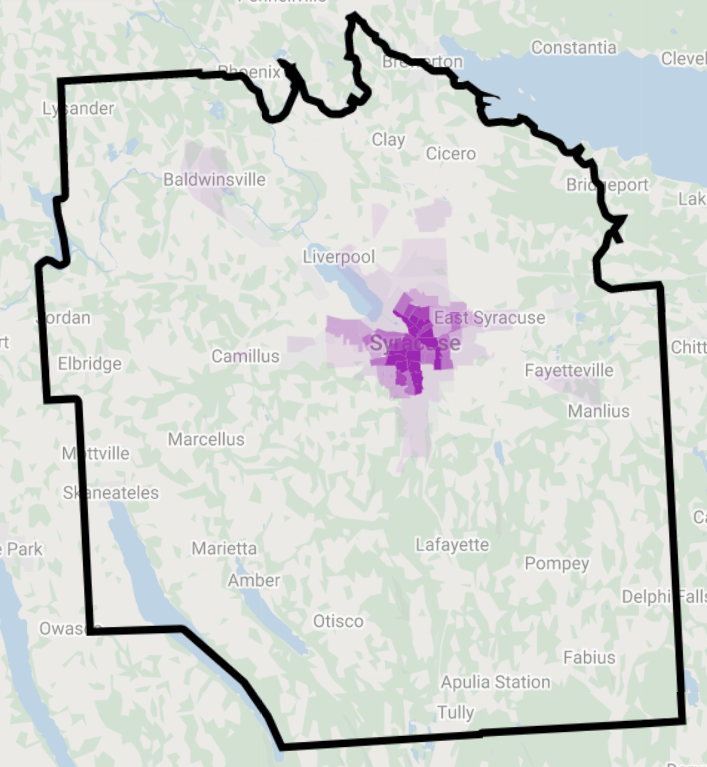
Central New York’s highways remade the geography of where people live in Onondaga County. A new dataset makes it possible to track change in the number of housing units in each of the County’s census tracks from 1940-2019. These numbers show heavy housing losses in the few highway-adjacent neighborhoods that had lots of housing in 1940, and they also show thinly spread housing construction in previously rural census tracts now served by the highways.
The maps above show housing units per square mile by census tract in Onondaga County and the City of Syracuse in 1940. Housing was highly concentrated in the center of the County. There were some suburban pockets of moderate density in villages like Baldwinsville, Fayetteville, and North Syracuse—and also in some early inner ring suburbs like Mattydale and Westvale—but the vast majority of the County’s land was rural, and most of its people lived in city neighborhoods at the County’s center.
By 2019 that sharp division between city and rural had blurred. Suburban subdivisions sprawled out from Syracuse and covered the northern half of Onondaga County with tract developments that are much denser than the countryside but nowhere near as tight-knit as traditional City neighborhoods. This new kind of in-between neighborhood now accounts for the vast majority of Onondaga County’s urbanized area.
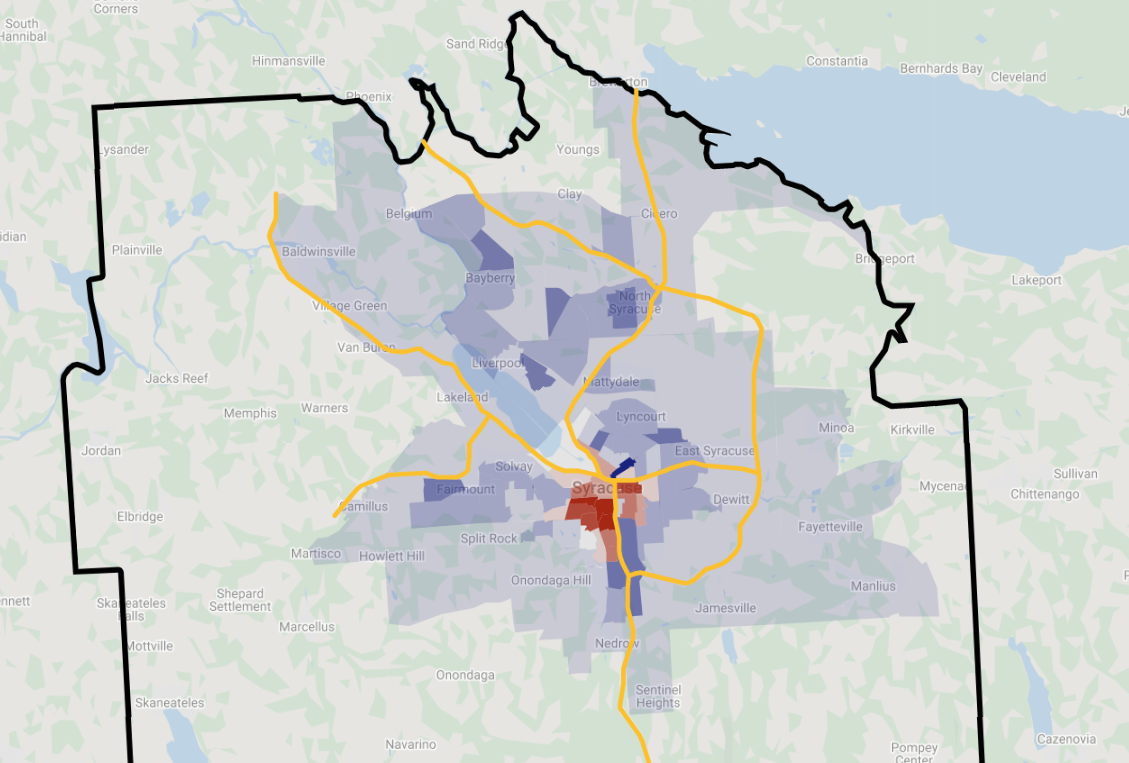
The highways caused these changes. These maps show the change in housing unit density between 1940 and 2019. Tracts shaded blue saw a net increase in the number of housing units, tracts shaded red lost housing. The yellow lines trace Onondaga County’s limited-access freeways.
Housing growth followed the freeways out of Syracuse and into the suburbs. In general, rural areas where highways were built transformed to sprawl while rural areas without highways remained rural. City neighborhoods immediately adjacent to the highways lost housing through urban renewal and targeted disinvestment, while neighborhoods away from highways gained housing.
For eighty years, the highways drove sprawl towards the County’s edges. Today, the northern and eastern suburbs have just about passed over into Oswego and Madison Counties. If this sprawl continues, it will leave Onondaga County with huge infrastructure maintenance bills, and little tax base to pay them. The County’s biggest challenge in the 21st century is figuring out how to grow without sprawling ever outward.
Removing the City’s highways is a good first step. They left a gaping hole in the County’s center and decimated neighborhoods that were built to accommodate growing communities through the 19th and early 20th centuries. Once the highways are gone, those same city center neighborhoods will provide better homes for our growing community today.
Our long experiment of running a freeway through Onondaga Lake Park has failed. The Parkway doesn’t even function properly as a high-speed arterial, and it blights the County’s premier public park. The I-81 project presents an opportunity to shift traffic to a safer corridor and restore public access to Onondaga Lake Park itself.
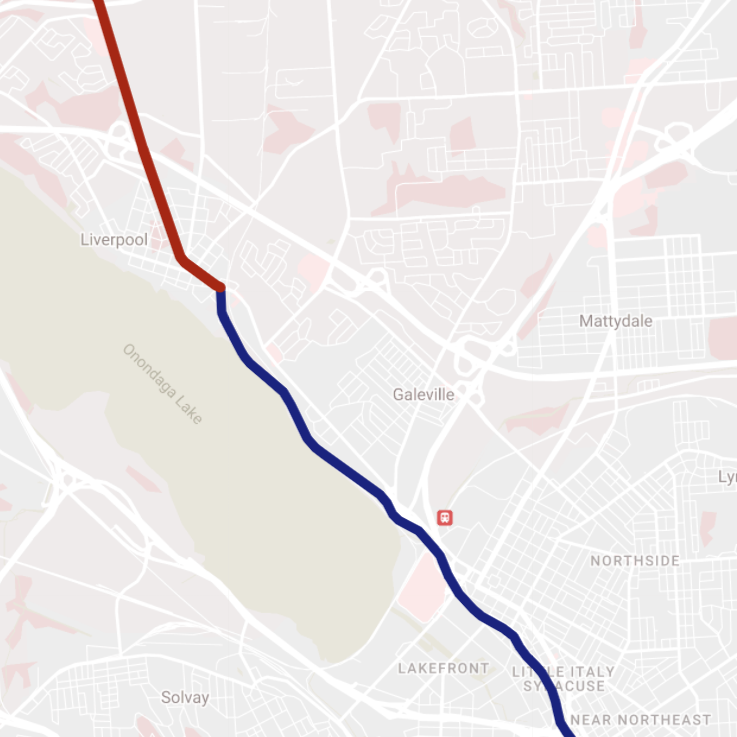
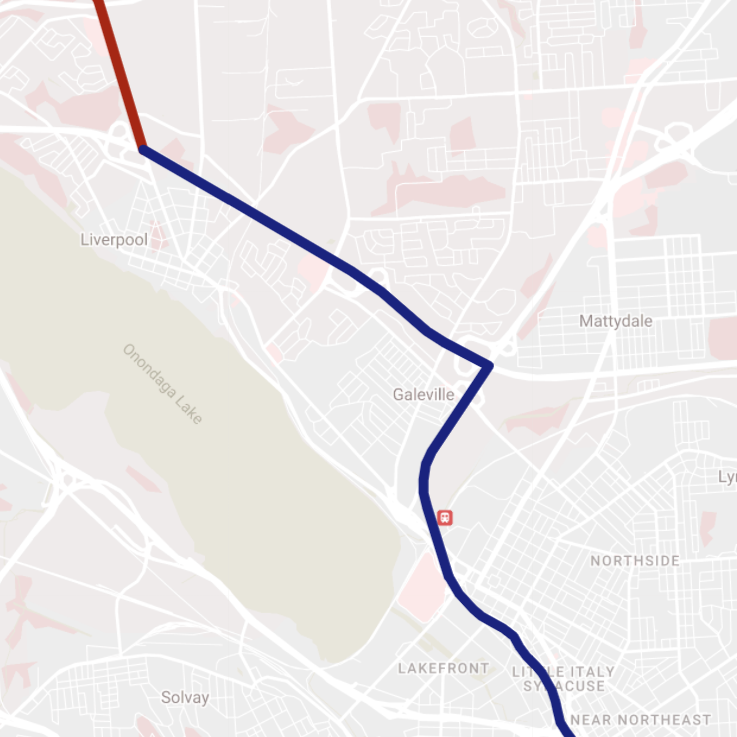
Right now, the Parkway functions as a limited access highway—like 690 or 81. Car drivers use it to get between 81 and the heavily populated northern suburbs in Salina and Clay.
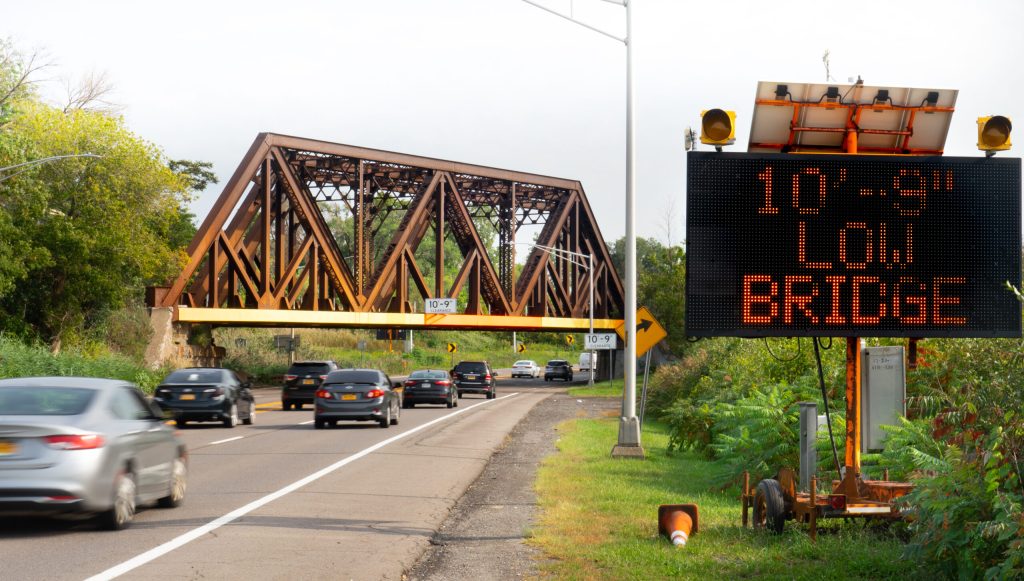
But the Parkway was never designed to serve that purpose. There is no center median, so fast-moving cars hit each other head-on. Instead of exits, the Parkway has unsignalized intersections, so traffic backs up behind cars trying to turn left into and out of popular destinations like the Butterfly Garden, Ska-Nonh Center, and the Onondaga Lake Park’s main entrance. The rail bridge was built to accommodate canal boats rather than commercial vehicles, so trucks and buses crash into it, and people die.
The I-81 project will make the Parkway redundant as a highway. Removing the Downtown viaduct will free up room shift through-traffic away from the part of 81 between Salina and Downtown, and NYSDOT also intends to increase car-capacity on that stretch. The upshot is that Onondaga County is about to get a lot more highway capacity between the northern suburbs and Downtown Syracuse, so the Parkway won’t be necessary to handle commuter traffic anymore.
(drivers unwilling to use the Thruway to reach 81 can just take Old Liverpool Road, another underused route with a comparable travel time).
This is a perfect opportunity for City Hall, the Town of Salina, Onondaga County, and New York State to solve the Parkway’s problems by redesigning it to function more like a park-road and less like a high-way. The first step is to reduce (and enforce) the speed limit on the Parkway. Car drivers looking for high-speed through-routes will use 690 or 81 instead, and far fewer cars will travel the Parkway.
Then, the Parkway needs to be rebuilt more in line with those low traffic volumes and low speeds. The lanes can be a little narrower, and there can be fewer of them. County Parks can use the left over right-of-way to bring the Loop the Lake Trail down this side of the Lake where it will be a stone’s throw from the Creekwalk (the County should also extend the Beartrap Creek trail to connect with Loop the Lake here).
NYSDOT should also implement Salina Town Supervisor Nick Paro’s idea to replace the asphalt squid at the Parkway’s southern end with a roundabout connecting it with Buckley Road, Old Liverpool Road, and Park Street. This would protect the Parkway from highway traffic, and the Parkway off of this roundabout should be landscaped to create a formal entrance to Onondaga Lake Park. Another roundabout at Griffin Drive will allow drivers to make left-hand turns into and out of the main park without backing up traffic. At the Parkway’s northern end, the intersection with Oswego Street should be simplified, shrunk, and landscaped to make it easier to walk to Heid’s and to create a decent-looking entrance to the Village of Liverpool.
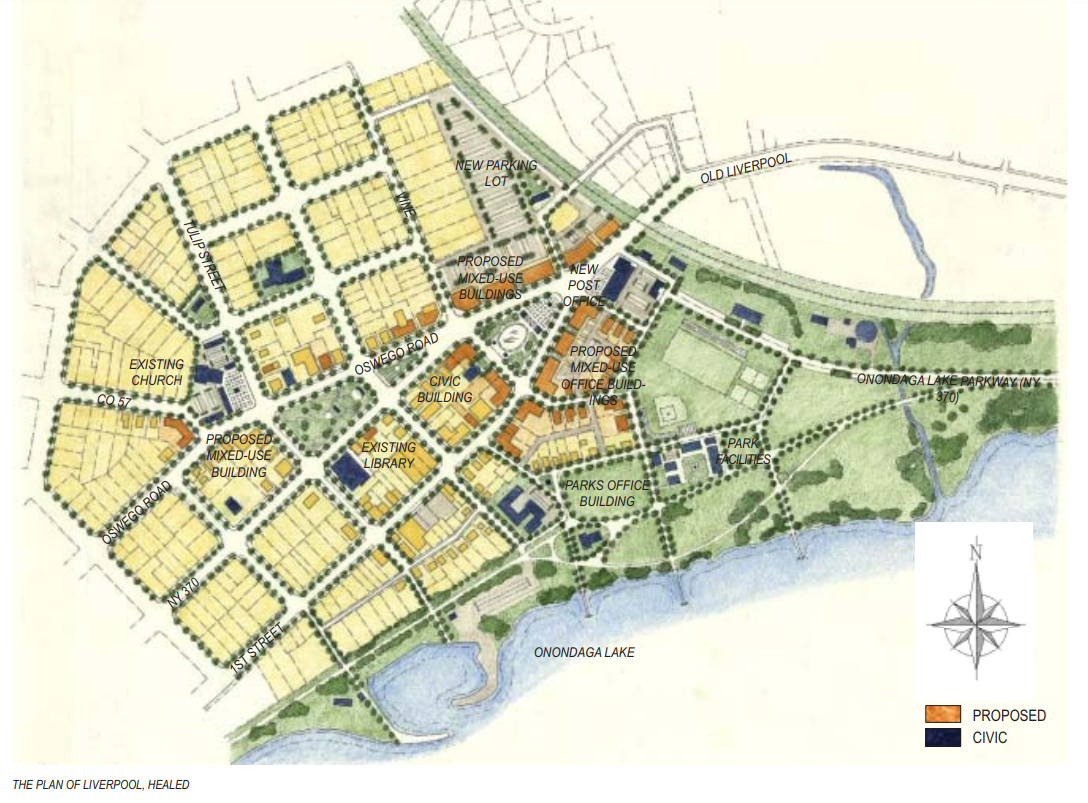
Onondaga County’s 2001 settlement plan proposed narrowing Onondaga Lake Parkway and simplifying its intersection with Oswego Street
These changes are a long time coming. Onondaga Lake Parkway has long been one of the least reliable, most dangerous freeways in Central New York, and it ruins a huge section of the County’s most popular public park. The Community Grid will make this freeway totally unnecessary, and we should seize the opportunity to tear it out and build vision of the Parkway.
Before urban renewal, tight-knit neighborhoods right next to Downtown provided housing and opportunity for tens of thousands of people. Now, most of those neighborhoods are mostly parking lots and home to very few people. In order for the Community Grid to succeed, Syracuse must restore those neighborhoods.
Urban renewal hit the 15th Ward/Near Eastside worse than any other neighborhood. That’s a product of City Hall’s racism (the 15th Ward was home to 8 of every 9 Black people living in Syracuse at midcentury), and it’s important to note that Urban Renewal wasn’t a one-time event. City Hall began mass demolition of Black families’ homes in the 1930’s, and it’s continued into the 21st century with the willful neglect and destruction of Kennedy Square.
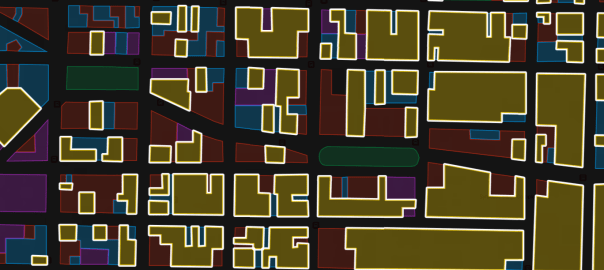
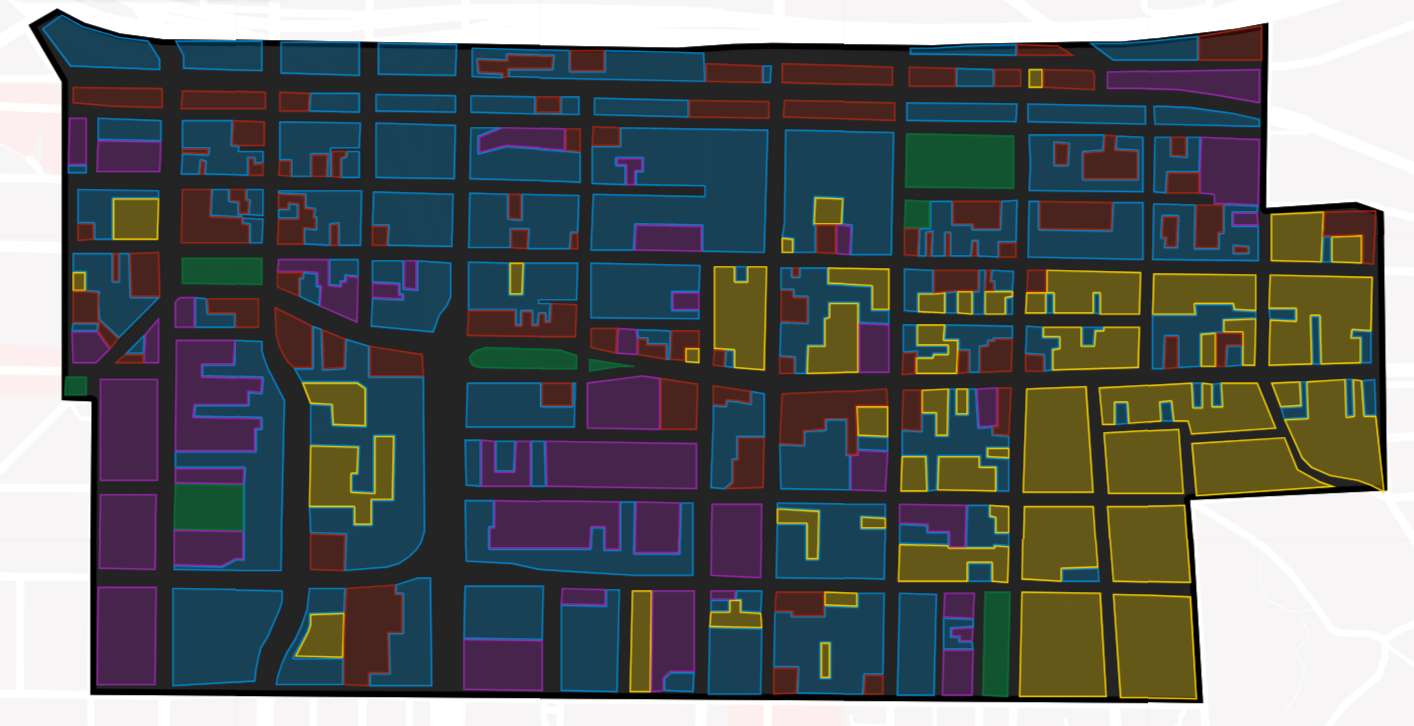
These maps show how land uses changed just east of Downtown between 1953 and 2021. Areas shaded yellow are housing (including mixed-use buildings), red are commercial, purple are institutional (churches, schools, hospitals, etc), blue are parking and vacant land, and green are parkland.
In 1953, the vast majority of this neighborhood was covered in housing, but it was also served by many small businesses, schools, churches, and synagogues. Small streets laid out before the Civil War cut the land up into small blocks, making the neighborhood easier to get around on foot.
By 2021 the neighborhood was dominated by vacant land and parking lots. Entire blocks of housing have been demolished, and many small streets have been either eliminated (Renwick, Washington, Irving, Cedar, McBride, Jefferson, Madison) or widened (Harrison, Adams, Almond, Townsend) in order to make the area easier to drive around at the expense of people on foot.
As a result of all these changes, the population of the Near Eastside fell from 14,646 in 1950 to 5,656 in 2020—a drop of 61%. With that huge loss of people, the neighborhoods has lost most of its character as well. Few children mean there are no more schools, most houses of worship have either closed or followed their congregants to some other neighborhood, and the local businesses that sustained the neighborhood’s permanent residents have been replaced (if at all) by office buildings staffed by commuters.
This neighborhood has transformed from a place where people can make a good life into a space that serves residents of other neighborhoods who come and go in cars.
The Community Grid is Syracuse’s opportunity to unmake these mistakes. We’re removing the highway, and the new street grid can be designed in a way that supports walking, biking, and transit, small businesses, new housing, and repopulation. It’ll take more than transportation planning to right urban renewal’s wrongs, but if Syracuse pursues that goal intentionally, we can restore these neighborhoods and create good places for people to make their lives in the City.
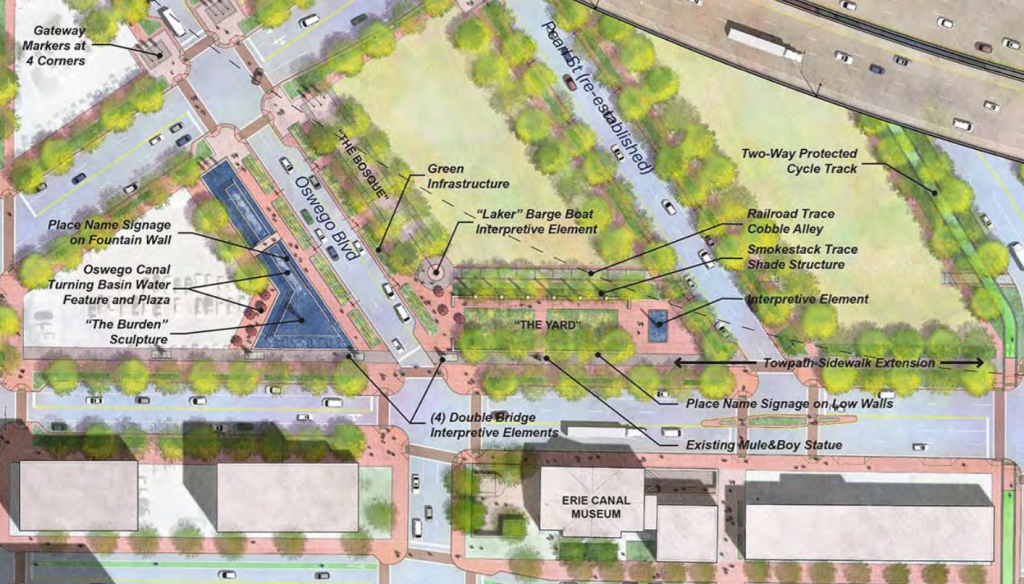
NYSDOT’s idea for a “canal-themed district”—a combination of fountains, public art, and parklets centered around the spot where Oswego and Erie Canals used to intersect—is a good one. It would create a new public space in the center of town, and it would restore the canal’s place in people’s lived experience of the City. However, the DEIS’ designs for this space would scatter it around the edges of a high-traffic highway where very few people will ever want to be.
The City of Corning’s experience with a similar project shows how Syracuse could take advantage of new traffic patterns by extending the Canal District west to cover Erie Boulevard between Clinton and Montgomery Streets and create a public space where people will want to be.
The main problem with the current design for the Canal District is its location. The DEIS shows a new fountain, sculptures, benches, and park space lining Pearl Street and Oswego Boulevard near their intersections with Erie Boulevard. These streets are going to be de facto off- and on-ramps—like Harrison and Adams today—and they are going to carry a lot of car traffic, and 690 will still be running by just a block away. These intersections are going to be noisy and difficult to navigate on foot, and that won’t make for a pleasant place to hang out and look at a fountain.
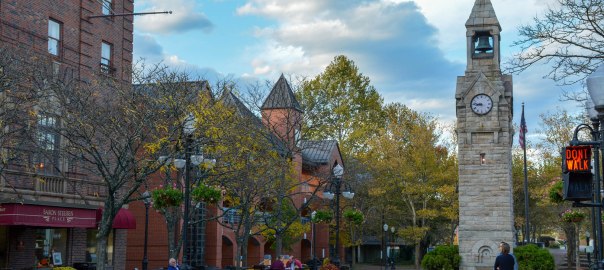
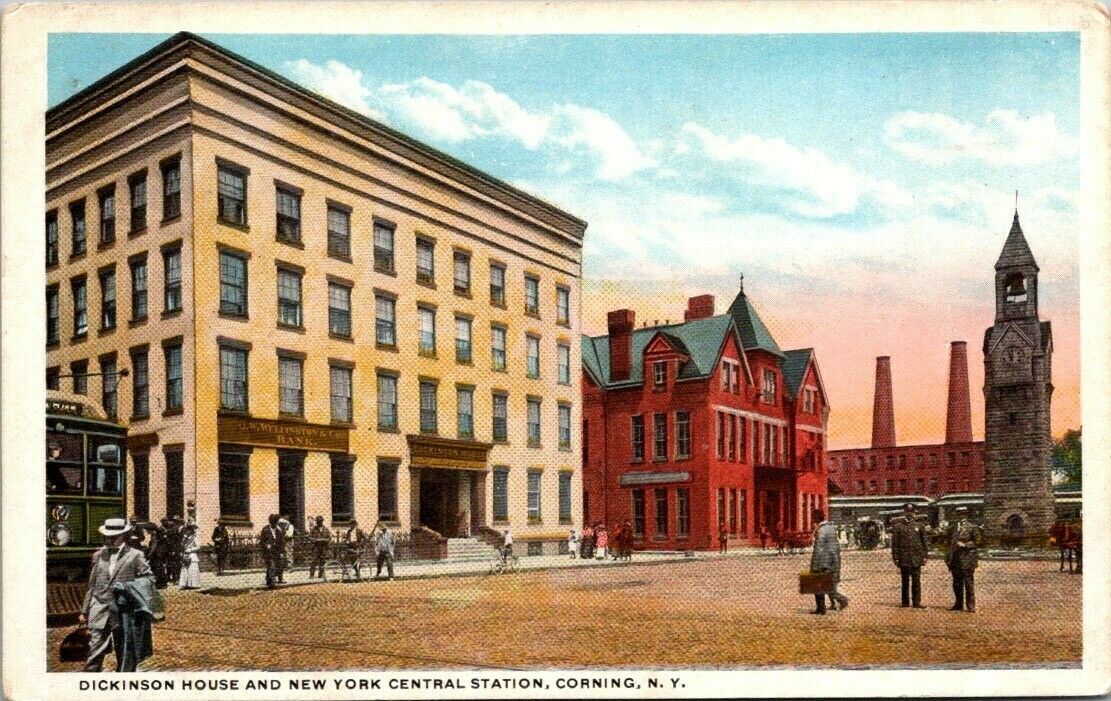
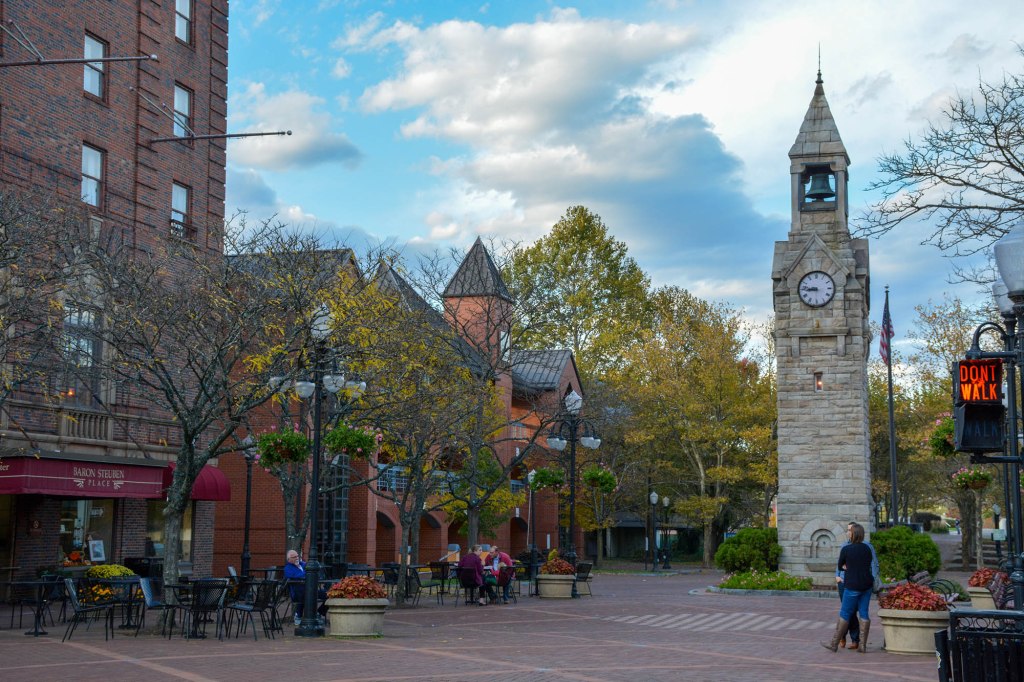
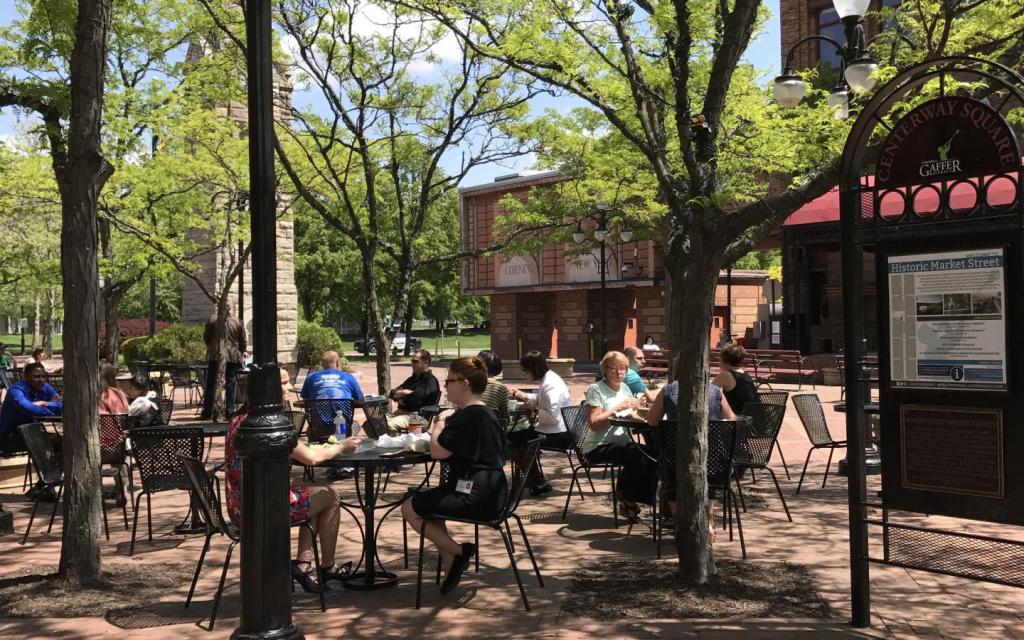
Corning’s Centerway Square shows a better way to reclaim public space made available by changes in transportation infrastructure. In the late 19th century, the square was a civic gateway—it was the site of the New York Central Station, and it was many travelers’ first impression of the city. Corning built a monumental clock tower in the square, and capitalists surrounded it with the city’s most impressive commercial buildings.
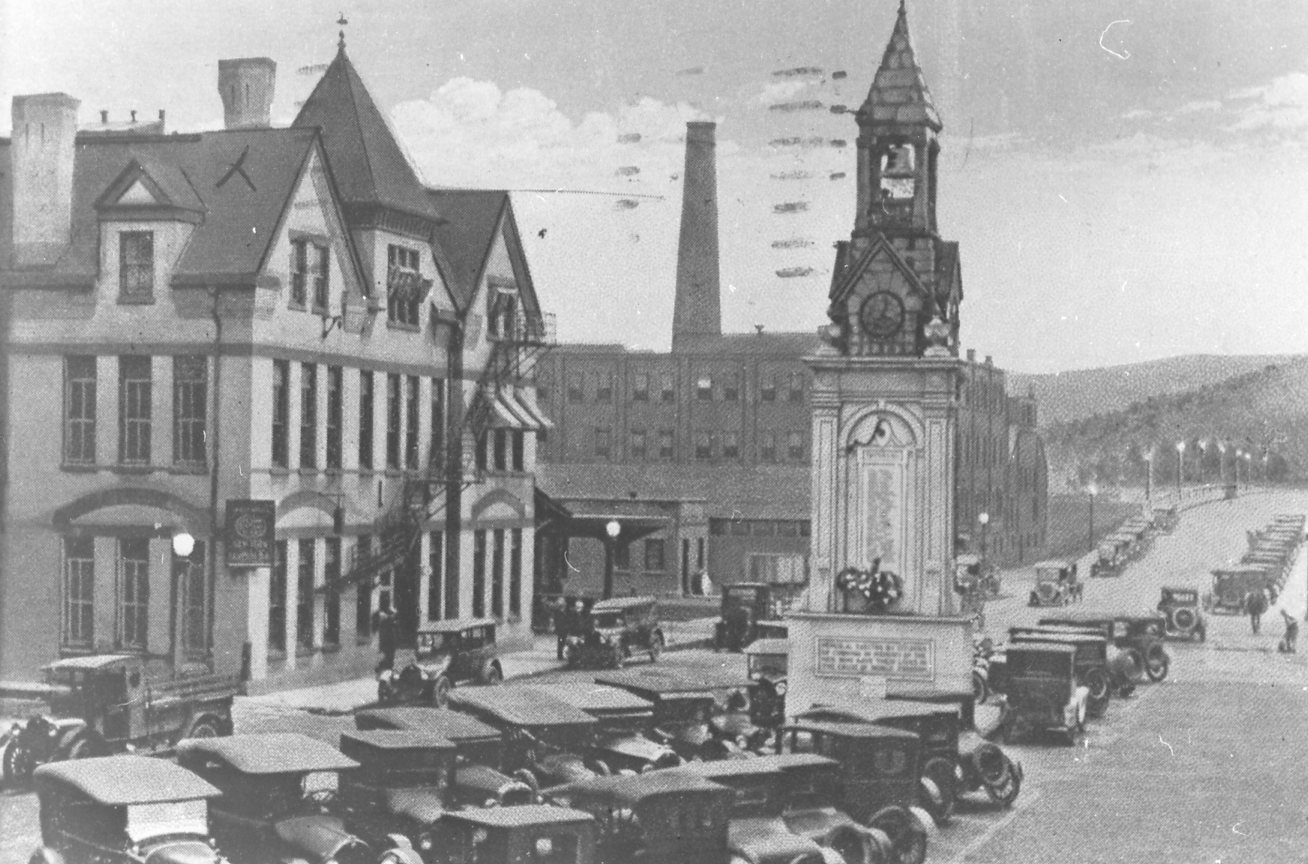
In 1921 when it became clear that the city needed a new bridge to handle all of the new traffic travelling across the Chemung River, Corning built the Centerway Bridge to bring car traffic through the square for the first time. Within a short time, the city’s main civic square got turned into a parking lot.
By 1981, though, all that car traffic had overwhelmed the Centerway Bridge, and Corning needed yet another crossing over the Chemung River. The new Bisco Bridge could handle far more car traffic, and it was designed to avoid the busy public square with the confusing clock tower in the middle of its intersection. Car traffic left the Centerway Bridge, and Centerway Square was once again a primarily pedestrian space.
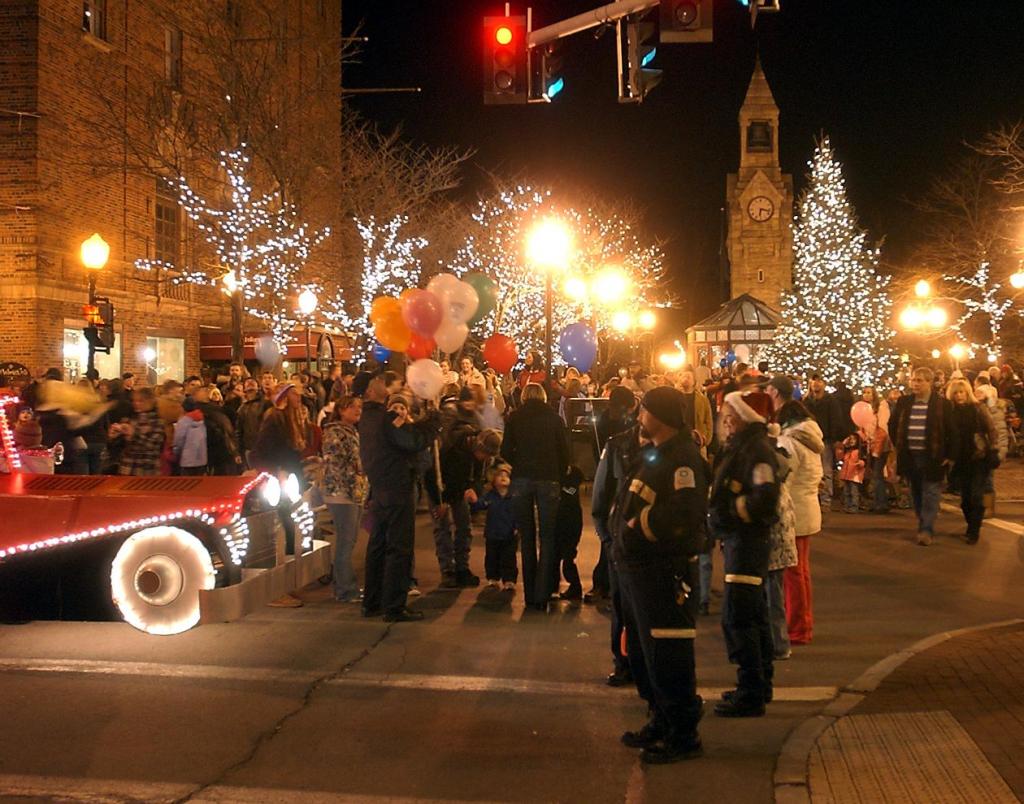
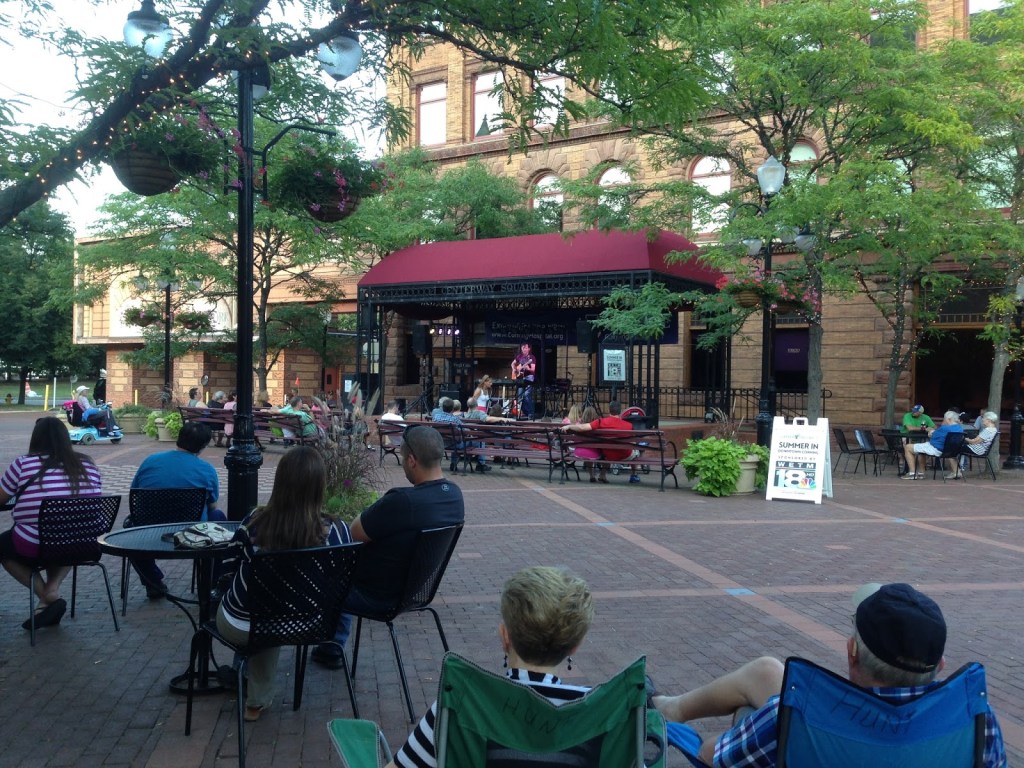
Today, the Centerway Bridge is an award-winning example of adaptive reuse, and the fully pedestrianized Centerway Square has regained its function as a public space. It’s the gateway to the Market Street Historic District for people walking from the Museum of Glass. It’s a place for rallies and public performances. It’s a place where people can just sit and enjoy the city.
The key to Centerway’s success is that new transportation infrastructure diverted car traffic away from the square and made space for people instead. When NYSDOT built the Bisco Bridge to accommodate lots of car traffic, they didn’t try to make its entrance to downtown Corning into a new public place—they revived the already existing space that the new bridge freed from car traffic.
The lesson for Syracuse and the Canal District is clear: don’t try to make BL-81’s new off- and on-ramps into pleasant public spaces—that’s impossible. Instead, look at where that new infrastructure will remove cars, and make those places into good public spaces.
Start thinking that way, and it’s pretty obvious where the Canal District can work best: Erie Boulevard between Clinton and Montgomery Streets. That’s the canal’s original path through the middle of town, and it would be a great place to replicate something like Buffalo’s Canalside or Providence’s Waterfire by rewatering the canal from Clinton Square all the way to the new fountain being planned as part of the Canal District. It’s also a space that will see a lot less car traffic after the Community Grid removes the I-81 offramp from Salina Street, the onramps from State Street, and after the Pearl Street extension provides a new route for getting to the onramp at Belden.
Syracuse should seize this opportunity to create a new public space that will celebrate the City’s history and give people a new way to enjoy Downtown. Here’s how:
Bring the canal back to Erie Boulevard by running fountains down the center of the street. The fountains should connect to the “turning basin” water feature that NYSDOT has planned for the intersection of Erie and Oswego Boulevards. The surface of the water should be below street level to capture the feeling of the canal, and the street surface should be textured to slow what little car traffic does still use the street.
Convert Warren Street to two-way traffic and make it narrower north of Erie Boulevard. Give Salina a road diet so that there is only one lane of traffic travelling in either direction. Put in raised intersections where these two streets cross Erie, and install metal fences reminiscent of period-correct truss bridges to prevent cars from turning into the fountains.
NYSDOT’s plan to create a new canal-themed public space downtown is good, but their plan to center it on a busy highway offramp is bad. NYSDOT should extend the Canal District concept to rewater the canal along Erie Boulevard between Clinton and Montgomery Streets. Instead of trying to create a new public space in a place where it’s doomed to fail, this would center the Canal District where it has the best chance to succeed. This area is directly adjacent to two of Downtown’s most successful pedestrian spaces—Clinton Square and Hanover Square. There is clearly already the demand for this kind of public space in this part of the City, and when the Community Grid removes highway-bound traffic from these streets, people will flock to well-designed pedestrian places.
The I-81 Draft Environmental Impact Statement put a lot of effort into explaining exactly how many minutes it would take to drive a car between different points in the County depending on what NYSDOT ultimately decides to do with the I-81 viaduct. NYSDOT estimates, for instance, that in 2056 during the morning rush it’ll take 27 minutes to get from Cicero to Lafayette if they leave the viaduct as it is, 23 minutes if they build a brand new viaduct, and 27 minutes if they build the Community Grid.
But the I-81 project’s biggest transportation impact won’t have anything to do with how long it takes to drive a car between Cicero and Lafayette. Instead, the I-81 project is going to decrease the number of car trips between such far flung locations and replace them with much shorter carless trips by changing the geography of where people can live in Onondaga County.
In general, if you were to walk from the edge of the Syracuse metropolitan area to its center at Clinton Square, each area you passed through would be more densely populated than the one you saw last. Onondaga County is more densely populated than predominantly rural Madison and Oswego Counties. Onondaga County’s inner ring suburbs are more densely populated than its newly built exurbs. The City’s neighborhoods are more densely populated than most all of its suburbs. The City’s older closer-in neighborhoods are more densely populated than the more recently developed neighborhoods at its edge.
And this makes a good deal of sense because it’s good to live near the center of things, so that’s where lots of people choose to live. It’s good to have ready access to hospitals and schools and places to work and places to socialize and lots of people to socialize with. Syracuse is the only place in all of Central New York where a person could step out their front door and be within walking distance of 50,000 jobs.
But once you reached the very center of the city, this pattern of increasing population density would all of a sudden reverse. Downtown Syracuse and the area that immediately surrounds it is significantly less densely populated than neighborhoods like the Northside and the Southside.
This is a real paradox, because the City’s center is one of the best places to live in order to enjoy the benefits that cities bring—being near stuff—and it’s obvious that people want to live in this area since the few that do pay exorbitant rents for the privilege.
People want to live near the center of town, but they can’t because the highway takes up too much space. The highway makes it so that the most desirable areas to live instead are on the exurban fringe. So people move out to the exurban fringe, but everybody’s moving to a different part of that fringe whether it’s Camillus or Lysander or Clay or Manlius. The community gets dispersed over an enormous area, and that’s how people find themselves in situations where they regularly need to get from Cicero to Lafayette for book club or work or their kid’s soccer game.
Tearing down the I-81 viaduct is a huge step towards fixing this transportation failure. The viaduct covers 18 acres of land, and tearing it down will free up a lot of space where people could find a good place to live. It will also make a lot of currently vacant land much more suitable for housing because there won’t be a big ugly polluting noisy highway right nearby anymore.
With more people living closer together, more of the places they need to go and the things they need to do will be located in a smaller area, so the post office and the pharmacy will be a 5 minute walk from home rather than a 5 minute car ride. As more people move to the center of town, there will be less need for all that parking and all those arterials, and there will be even more room for more people.
This trend is already underway. The five census tracts that surround the I-81 viaduct grew by 26% between 2010 and 2020. The people who accounted for that growth are not going to have to drive nearly as often or nearly as far as they would if they had instead moved to someplace like Fabius. When NYSDOT tears down the viaduct and replaces it with the Grid, they will make it more possible for more people to live similarly. That’s going to be the Grid’s biggest transportation impact.
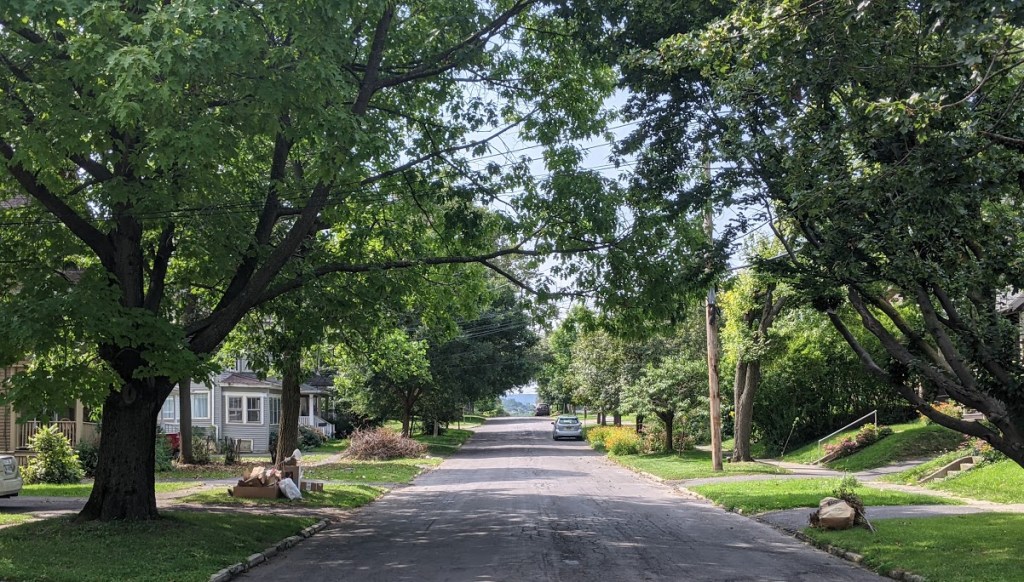
This should have gone without saying, but the municipal sidewalk program should preserve as many existing street trees as possible. Tall trees with full foliage shade the sidewalk and make walking around the City more bearable in Syracuse’s steamy summers. A sidewalk—even a brand new perfectly level one—will not be a good place to walk if it’s fully exposed to the elements.
So it’s really very bad that City Hall is trying to fix the sidewalks by cutting down a bunch of decades-old trees. There may be cases where a tree is so close to the sidewalk and its roots are so disruptive that it’s truly necessary to remove the tree in order to build a new ADA-compliant sidewalk. In those rare instances, fine, cut down the tree, but make sure to replace it immediately to avoid the same problem in the future.
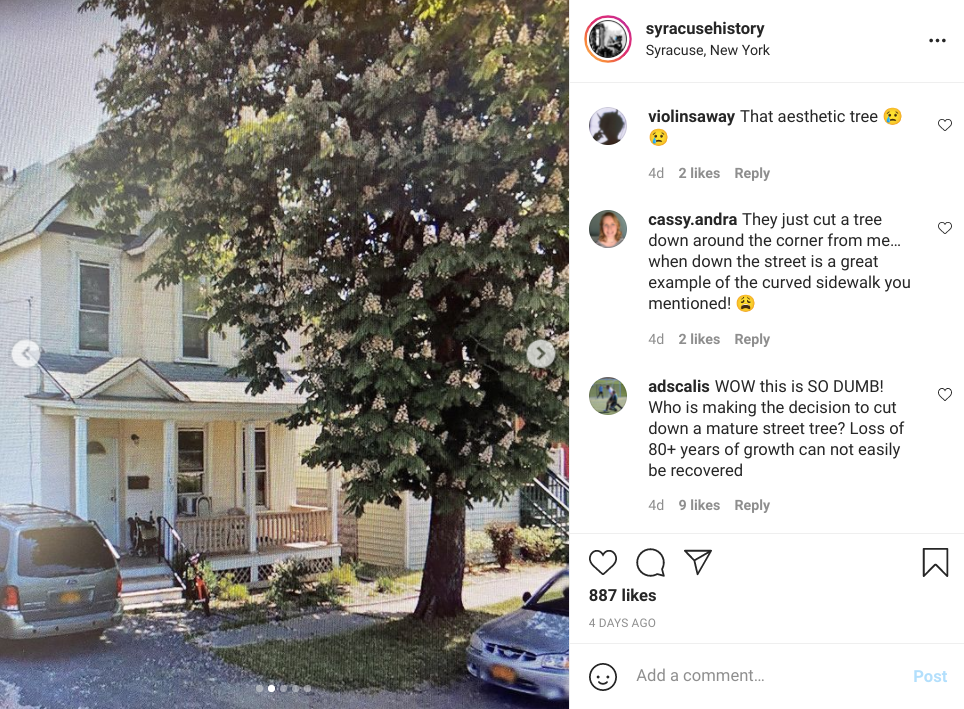
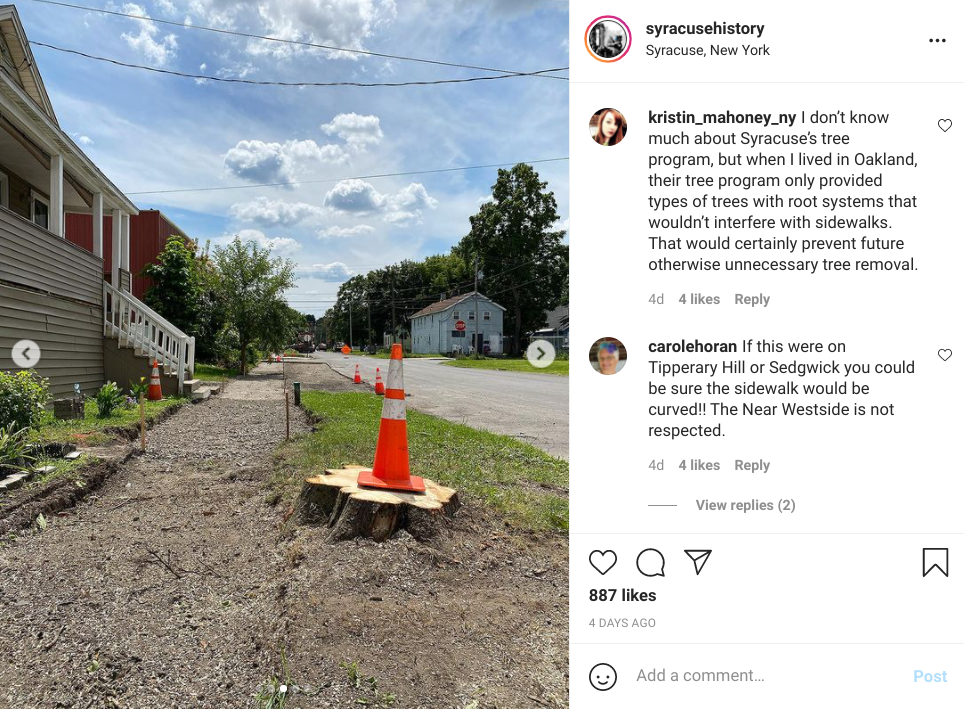
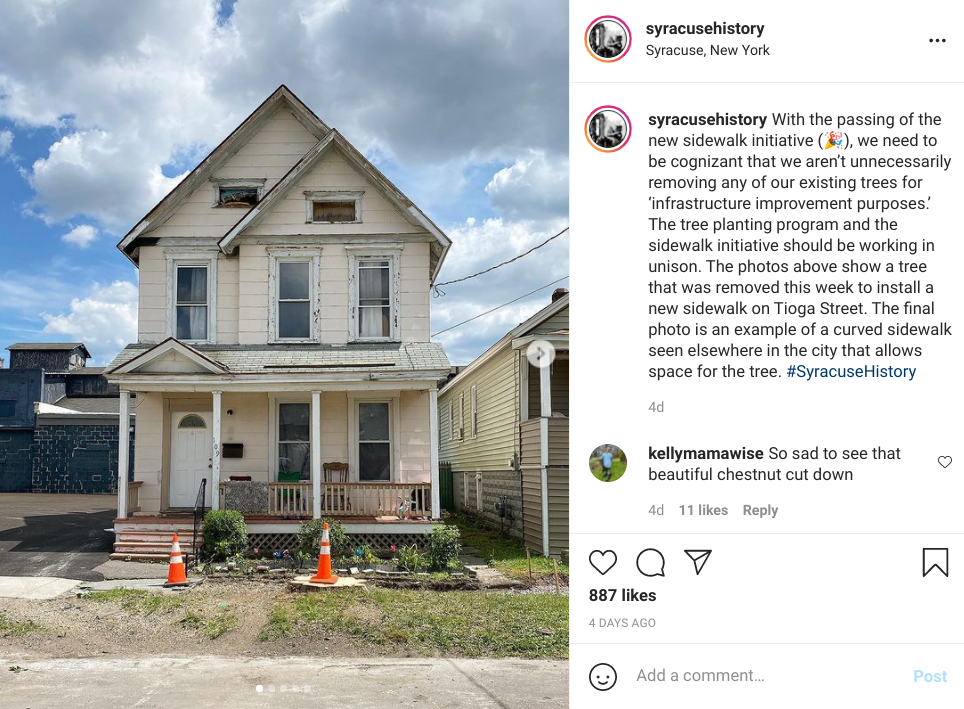
But, as Syracuse History has pointed out, City Hall is choosing to cut down trees even when it’s not really necessary. It was probably easier, cheaper, and faster to just cut down this fully grown tree, but it wasn’t necessary. The sidewalk could have curved around the tree, it could have been raised over the roots, they could have removed just a single root. There are plenty of ways to build a decent sidewalk and preserve the mature trees that make walking safer, healthier, and more pleasant.
The Mayor has been making the case that Syracuse needs more trees. He’s using covid relief money to plant a bunch and wants to increase the City’s canopy by about 25%. That’s a good goal, but he will never reach it if he starts by removing the trees we already have.
Cutting down fully-grown street trees in order to lay new sidewalks is penny-wise and pound-foolish. Street trees take decades to grow tall enough to provide all of their benefits. The trees we have now are gifts from previous generations that we can’t quickly replace. City Hall needs to figure out how to lay new sidewalks and preserve these treasures.
Sidewalks and street trees both make it easier, safer, and more comfortable to get around town on foot, so Syracuse’s new municipal sidewalk program and Urban Forestry Master Planshould make life better for pedestrians. But these two programs might work against each other if they’re not coordinated.
One side of the problem is that the sidewalks need fixing—in many cases—because tree roots have messed them up. Trees planted too shallow send their roots out near the surface, and they lift individual pavers to make the sidewalks impassable for people with wheelchairs, a headache for parents with strollers, and a hazard for anyone on foot. In many cases, fixing the sidewalk will mean removing a poorly planted tree.
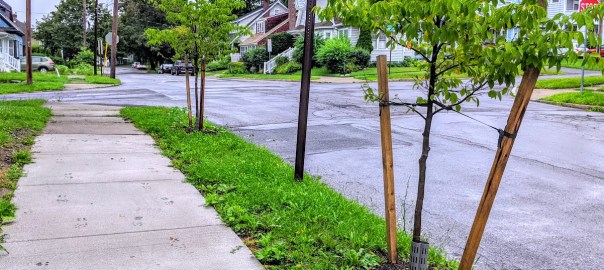
The other side of the problem is that planting a new tree the right way often requires tearing up the sidewalk. Trees wont send their roots through the sidewalk if they’re given enough room, and on streets where there’s only a little space between the sidewalk and the curb that means planting the root ball deeply and partially underneath the sidewalk. Of course, that’s only possible if you tear the sidewalk up to plant the tree.
It’s not hard to imagine where this could lead: a tree gets cut down to fix the sidewalk, then a little while later, the sidewalk gets torn up to plant a new tree. The end result is less tree cover and a newly-busted sidewalk, and City Hall’s spent a lot of money to make the street worse.
Luckily, we have a model for doing this right. The Dig Once program coordinates pavement reconstruction with utility maintenance on Syracuse’s streets to minimize construction disruptions, save money, and to preserve the new smooth street surface for as long as possible. Basically, whenever DPW rips an entire street up in order to repave it, they fix everything underneath the street before laying new asphalt back over top. This is the kind of common sense coordination that delivers better municipal services without any extra cost to the public.
City Hall should take the same ‘Dig Once’ approach with its municipal sidewalk program. Tearing up a sidewalk in order to lay down a brand new one? Check with the City Arborist to see if that block is in line to get new trees, and let them get planted nice and deep before pouring the new concrete surface. It’s that simple.
Syracuse is used to hearing that it can’t have nice things because we can’t afford them, but a lot of times it’s less a matter of money and more a problem of just doing things efficiently. That’s the case with rebuilding our pedestrian infrastructure. We have the money for sidewalks, and we have the money for new trees—we just need to spend that money intelligently in order to buy a better City for people who get around on foot.
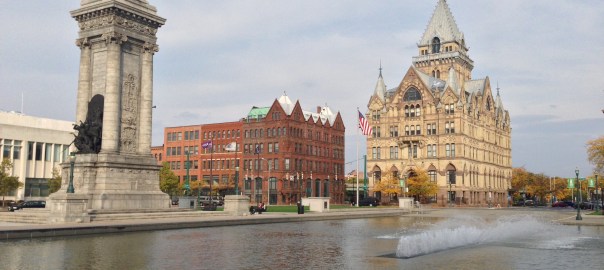
Clinton Square is Syracuse’s premier civic space. Bob Haley calls it “the center of the center of the center.” It’s the spot where the City of Syracuse started. It’s the site of our biggest city festivals. It’s where we gather as a community.
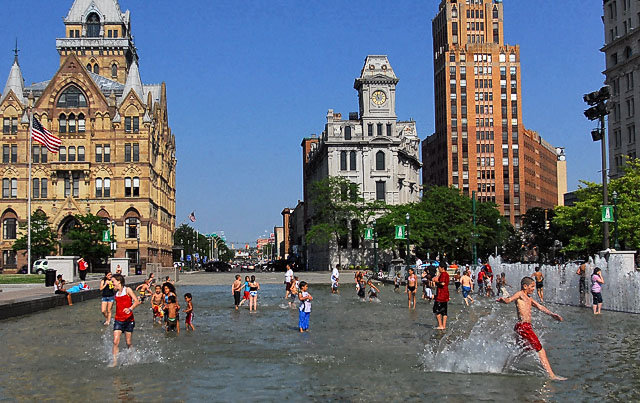
City Hall has always taken special care of the space. It’s been rebuilt several times since the Erie Canal defined the square 200 years ago, and the most recent renovation from 2001 added a beautiful fountain that recalls the canal’s original path through Downtown and provides a great place for kids to cool off in Syracuse’s increasingly hot summers.
But spend much time in Clinton Square, and it’s obvious how much better the space could be. While people gather in the fountain and the paved area along Water Street, they shun the northern part of the square along Genesee. It’s not hard to see why: sitting at one of the picnic tables near the Soldiers and Sailors monument is basically unpleasant. You’re stuck in the hot sun, and it’s hard to maintain a conversation over the noise of nearby car traffic. The too-open space feels more like a parking lot than a park, so people stay away.
Like so many unpleasant things Downtown, this is the result of car-first 20th century urban renewal. West Genesee Street is designed for much faster traffic than it used to handle, and the Post-Standard building sits much farther back from the street than the buildings it replaced. So instead of a quiet, comfortable space like you can find along Water Street, the north side of Clinton Square feels noisy and exposed.
But fixing those problems is a pretty heavy lift. City Hall plans to completely reconstruct Genesee Street without making any meaningful changes to its design, and the Post-Standard building’s new owners just announced that they intend to redevelop it without making any significant changes to the exterior.
Fortunately, there’s a much simpler short-term solution for Clinton Square: plant trees—lots of them—on the grassy lawns on either side of the Soldiers and Sailors Monument. Trees would solve most of the problems with that side of the square. They’d provide shade, they’d slow cars, they’d deaden traffic noise, and they’d make the space cooler in summer.
Trees would also make the rest of the square feel more comfortable by ‘enclosing’ the space. Right now, there’s so much empty space north of Clinton Square that you can see clear to St. Joseph’s hospital. Lots of trees along the fountain’s northern edge would block that view of parking lots, highways, and potholes, and they would make the entire square feel much more protected and intimate.
City Hall’s recently released Urban Forestry Master Plan calls for planting 3,500 new trees in the City every year in order to increase quality of life and decrease urban heat islands. That’s exactly what Clinton Square needs, and when City Hall starts planting those new trees they should make the community’s premier civic space a top priority.
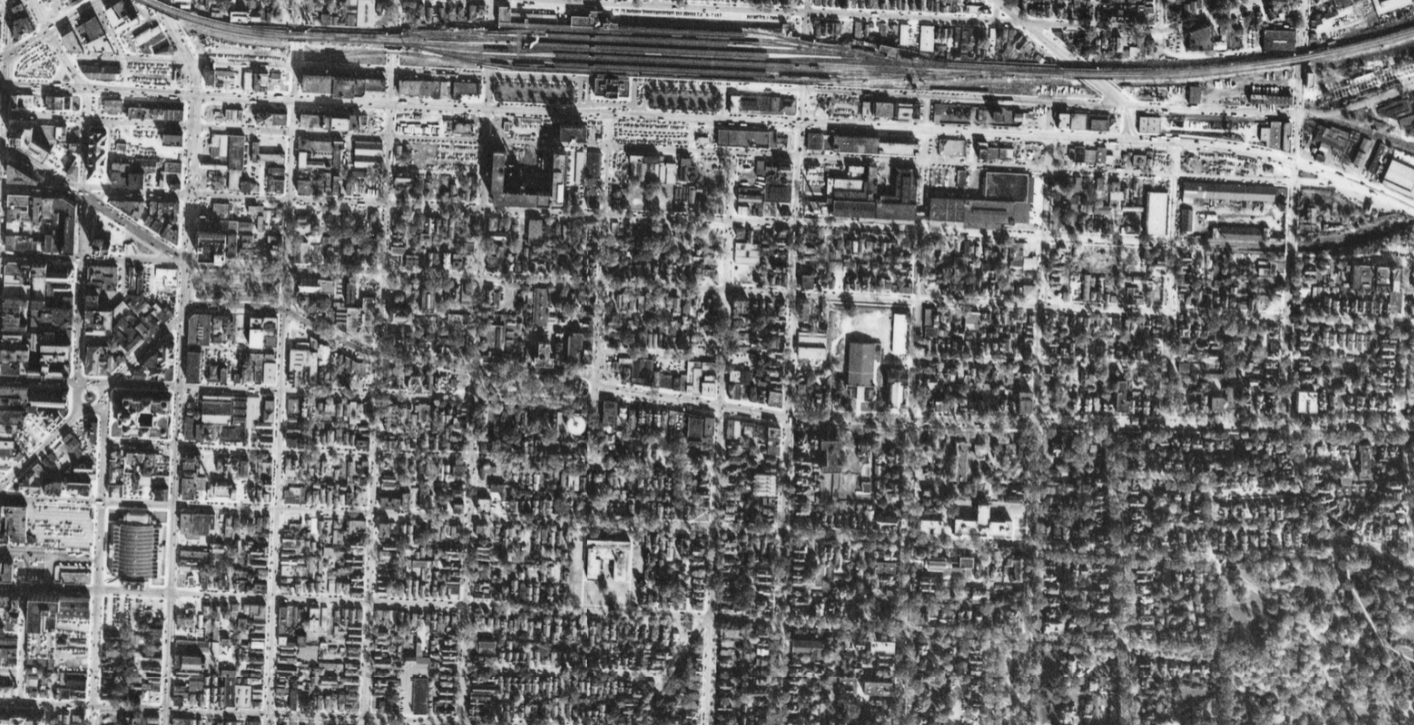
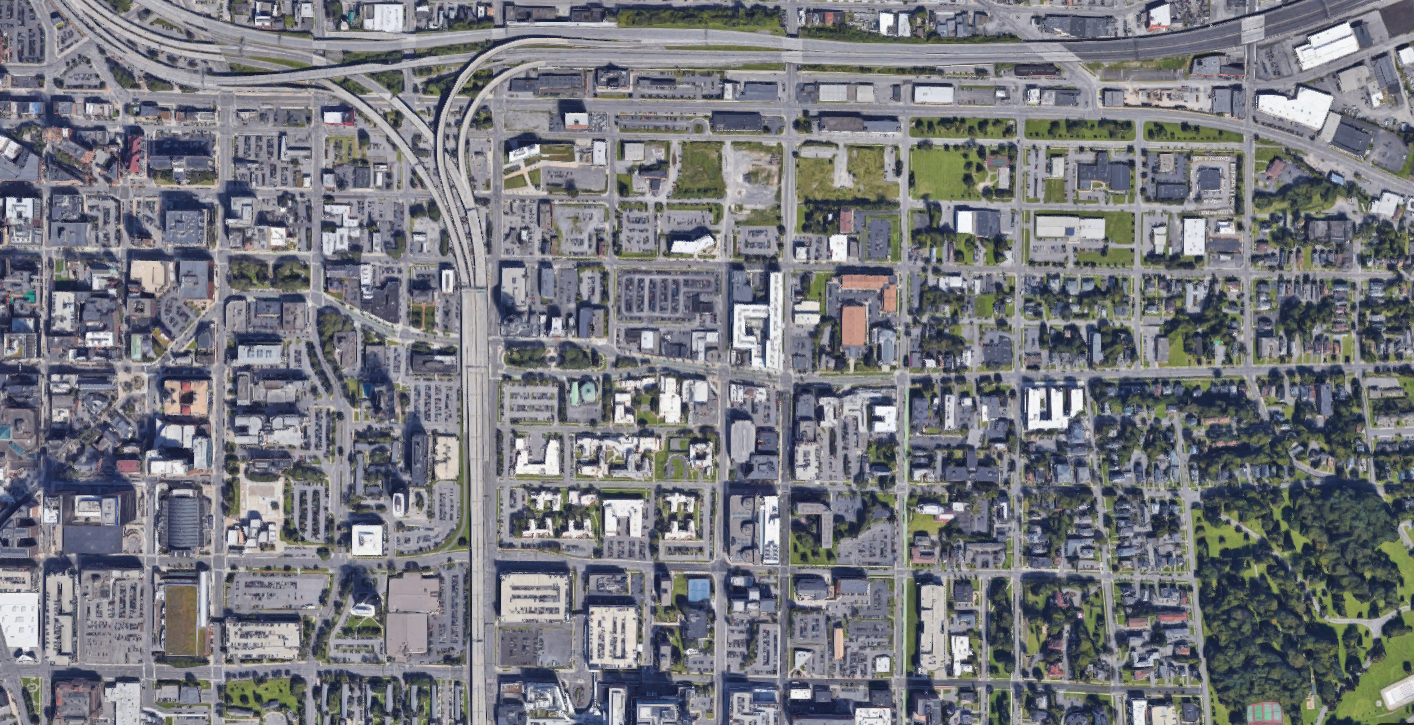
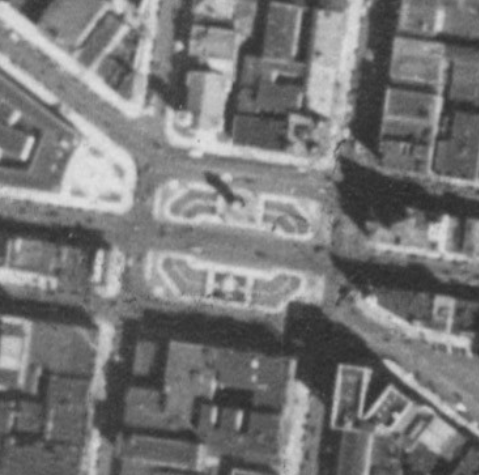
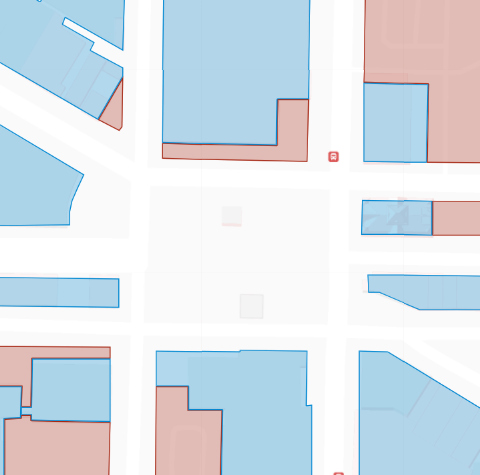
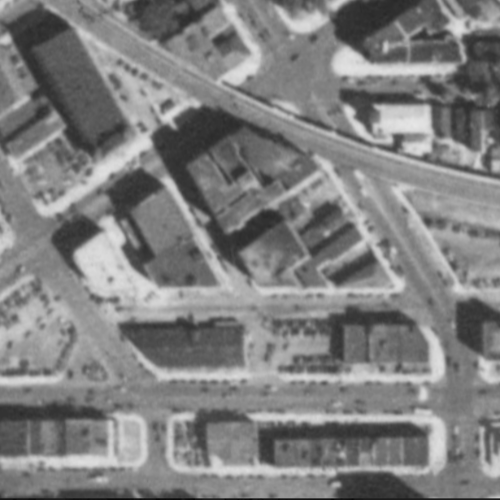
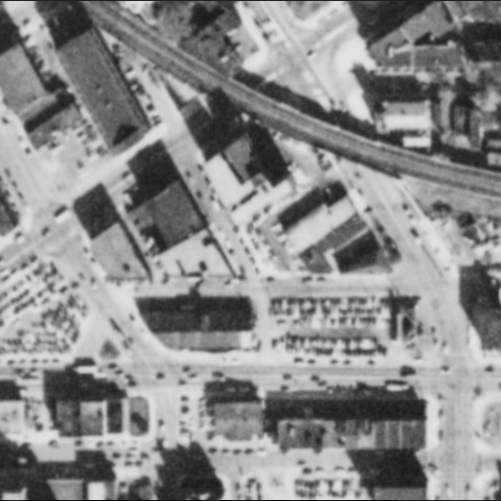
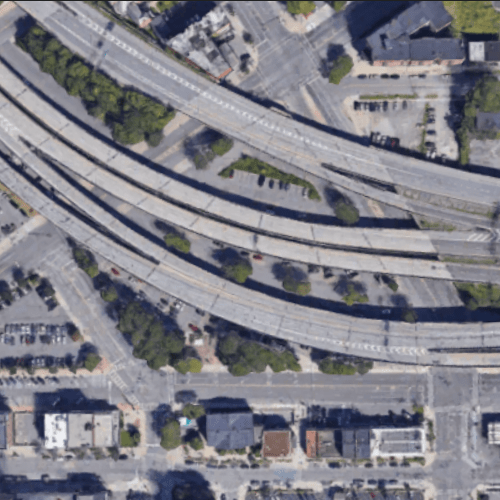
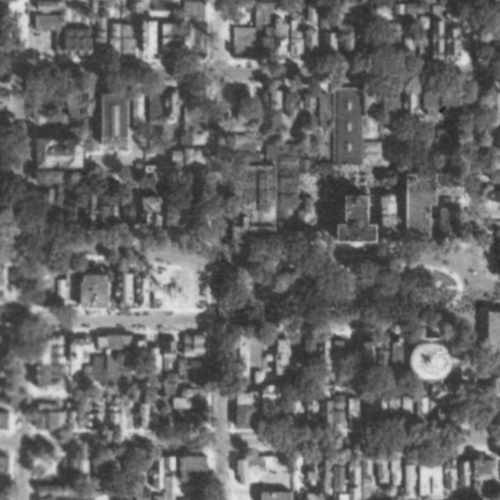
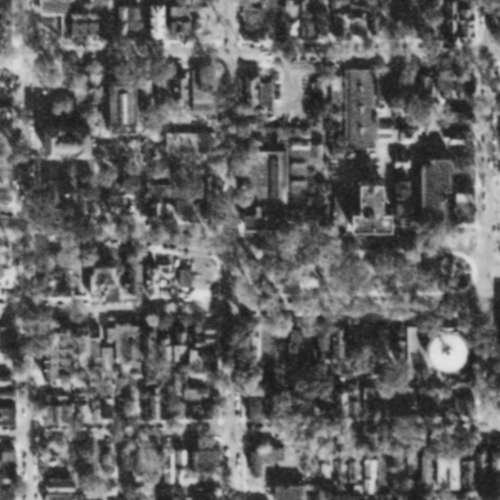
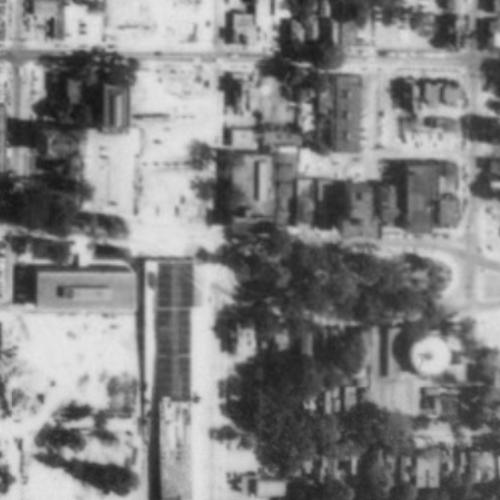
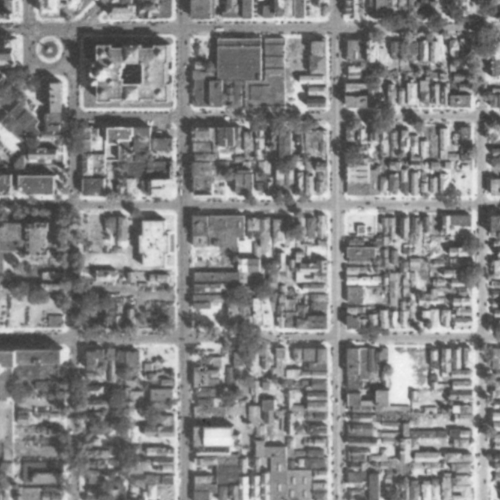
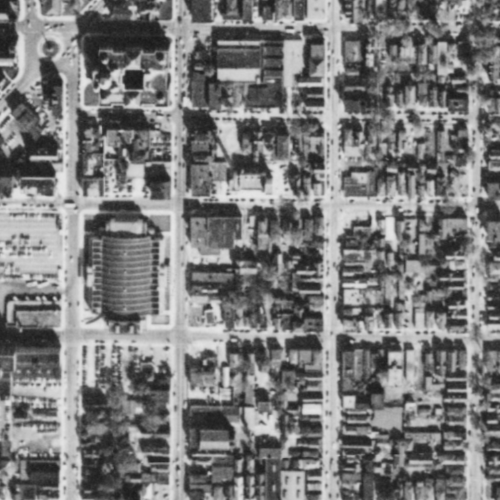
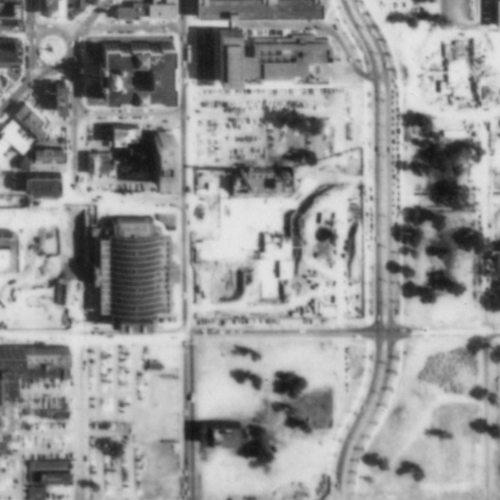
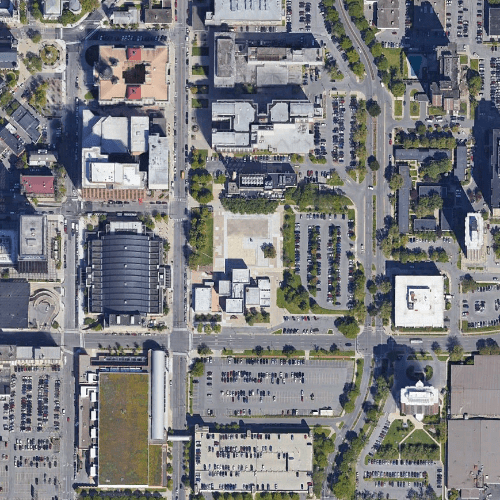
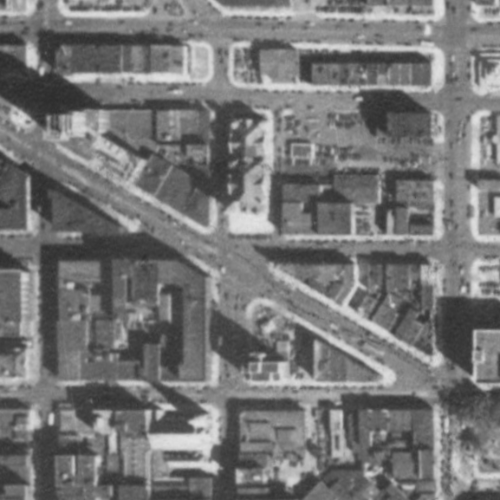
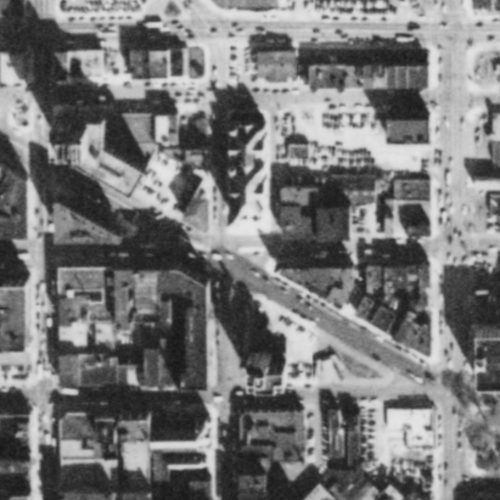
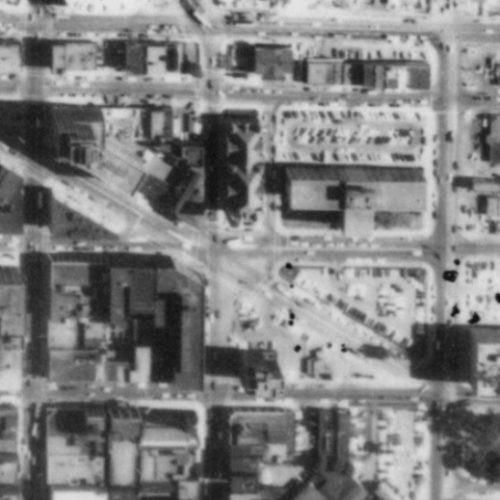
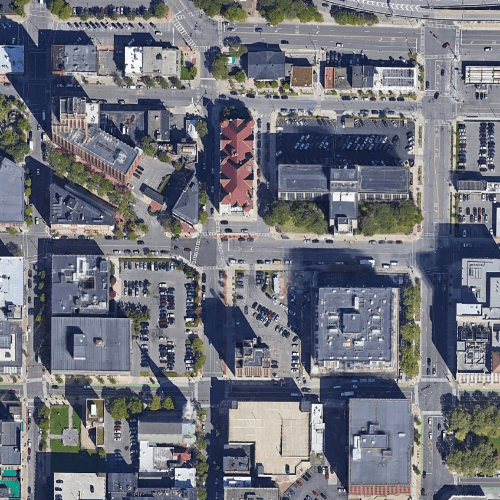
81’s construction was a cataclysmic event in Syracuse’s history. Building the highway—and 690 soon after—meant tearing down dozens of city blocks and demolishing hundreds of homes. But although that event stands out for the scale of its destruction, it was neither the beginning nor the end of Syracuse’s campaign to demolish itself. Aerial images from 1938, 1951, 1966, and 2021 show how the area now known as Downtown has been gradually turned to asphalt in order to make room for cars over the course of decades. As NYSDOT prepares to remove the I81 viaduct from Downtown, they must account for the broader damage done to Syracuse by all of these cars.
To see some of the highways’ most direct devastation, look at the corners of Pearl and Canal Streets. That intersection used to be the northern edge of Downtown—now it doesn’t even exist. The three city blocks that surrounded it are completely covered by the 81/690 interchange.
But even through the interchange wouldn’t destroy these blocks until the 1960’s, the car had already started degrading the area by 1951. Compare the image from that year (second in the series) to the one from 1938 (first in the series). A handful of buildings and some green space from the 1938 image are gone just 13 years later, all replaced by surface parking lots.
The highways accelerated this degradation elsewhere in the City. 81 did less direct damage around Forman Park, but it preceded a similar scale of destruction by creating an enormous need for car storage that Syracuse supplied by demolishing dozens families’ homes.
Two church buildings survived this demolition derby, but their congregations didn’t. According to the logic of the day, I-81 should have made AME Zion and First Christian Scientist more accessible (by car) than ever, but destroying their neighborhood meant emptying the church buildings. Both congregations are still active in 2021, but they have had to build new houses of worship closer to their congregants’ new neighborhoods.
A little further south, Syracuse has tried to create institutions that can withstand the destruction of the surrounding neighborhood. The War Memorial, the Everson Museum, and the OnCenter are all supposed to capitalize on the highways by drawing people from the entire region. No one needs to live near these attractions because the car makes them accessible from any home in the County. There just needs to be enough space to store everybody’s car once they get Downtown, and Syracuse found that space by demolishing people’s homes (specifically, Black people’s homes).
City Hall cleared much of this land at the same time NYSDOT was building 81, but the War Memorial (and its parking lot) came before any of that wholesale destruction, and the OnCenter (and its parking garage) came much later.
Even places not directly affected by the highway construction program have seen this same pattern of car-driven demolition. The area around City Hall has been losing buildings—and even whole streets—to car storage since the 1920’s. The small park in front of City Hall is now car storage. So is the Yates Hotel and most of what used to be Genesee Street between Montgomery and State. All of this happened between 1961 and 2021, after the construction of the highways.
The highways aided, abetted, and accelerated Syracuse’s destruction, but they did not cause it. The City has been destroying itself ever since the first people bought cars, moved out of town, and demanded that Syracuse remain completely accessible to them.
So it’s been alarming to watch NYSDOT justify the Grid by pointing out how little it will affect driving conditions for suburban commuters, or to see their plans for replacing the West Street interchange with parking lots. Just removing the highway (or 1.1 miles of it) won’t fix the basic problem. We also have to make it so that people don’t feel the need to bring (and store) their cars Downtown.
That means deconstructing the system of arterial streets that feed the highways. It means building the grid so that it can’t carry the same amount of traffic that runs over the viaduct today. It means making it safe, easy, and pleasant to bike or bus across the City. It means building new housing on all of those parking lots so that more people can live in the City Center and get around it on foot.
Syracuse is a city, and cities are for people. For 90 years, our City’s leaders have been trying to replace people with cars, and they’ve done a pretty thorough job of it. The 81 project is a real chance to change course, but we have to make sure that NYSDOT understands that opportunity and acts on it. When they release their final Environmental Impact Statement this summer, watch to make sure that it goes beyond just removing the viaduct and puts Syracuse on a path to rebuild itself.
Too many people living in too many neighborhoods have too hard a time getting fresh food. In part, this problem has to do with the fact that grocery stores won’t open in poor neighborhoods—so-called ‘food deserts.’ But, because food deserts are only ‘deserts’ for people without cars, it also has to do with how accessible grocery stores are to pedestrians.
If food deserts were just about the presence or absence of a grocery store in any particular neighborhood, then just about every suburban subdivision would warrant the name. Fairway East in Clay is not a food desert even though the nearest grocery store is 2 miles away because the people who live in Fairway East have easy access to food. They own cars and can easily drive to any number of grocery stores.
A food desert isn’t just a neighborhood without a grocery store. It’s also a neighborhood where people don’t have cars. That’s why, last summer, Last Chance For Change walked to Green Hills Grocery to show how hard it is for a lot of people on the Southside to get to fresh food. Driving from the Southside to Green Hills (or to the Nottingham Tops, or to the Western Lights Wegmans, or to the South Ave Price Rite, etc) is easy—walking there is hard, and that’s what matters.
And if the goal is to get more grocery stores within walking distance of more people, then not all grocery stores are created equal. Some—like the Route 31 Wegmans out near Fairway East—are designed to be driven to. They’re huge buildings that sit back behind huge parking lots, and they have to draw a huge number of customers from a huge area in order to survive.
This kind of design is bad for pedestrians because it’s unpleasant to walk across parking lots, but it’s also bad for food deserts because those huge parking lots could be full of housing for people who need to live within easy walking distance of a grocery store.
Take the Pond Street Tops on the Northside. It’s a 32,000 square foot store with a 85,000 square foot parking lot. Its front door is about 50 feet from the sidewalk on Pond Street and about 500 feet from the sidewalk on 1st North. That means the closest houses are actually pretty far away from the front door, and it means that fewer houses are within walking distance of the fresh food for sale in this store.
Compare that to the Co-op in Westcott. It has no parking lot, and it’s front door is right at the sidewalk. The nearest houses are just next door. In fact, if you tally up all of the street frontage around these two stores, the Co-op is within walking distance of 22% more land than is the Pond Street Tops.
Neighborhood-scale grocery stores—like the Co-op or Dominick’s in Hawley-Green—are highly accessible to people who get around on foot. That makes them really effective at putting fresh food within walking distance of lots of people. If more grocery stores in Syracuse were like them—if less land around the grocery stores we already have was wasted on parking—more people in more neighborhoods would have an easier time getting fresh food.