Tag Archives: Centro

Centro’s Better Bus Proposal

Centro just released the first draft of its proposed network redesign—Better Bus. The transit agency is proposing its first full network redesign in decades in response to changes in regional travel patterns (fewer riders need traditional Downtown-centric 9-to-5 rush hour service), changes in staffing (Centro has not been able to hire a full complement of bus operators since the depths of the pandemic, and this has forced service cuts), and changes in service type (planned BRT or Bus Rapid Transit lines and on-demand service similar to Uber pool will offer fundamentally different services that affect the entire network). This is just a first draft of the network redesign and will likely change in response to public feedback, but Better Bus is on track to go into service in early 2027.

Here’s a quick breakdown of the changes they’re proposing:
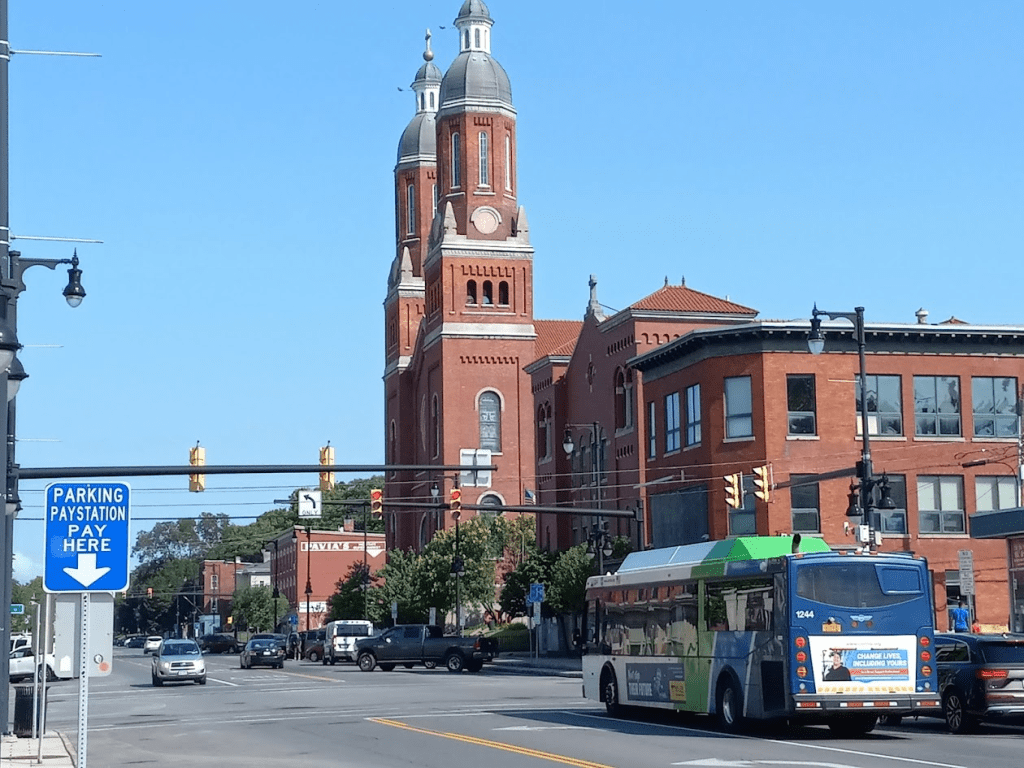
Better Service Frequency

The number one thing riders and non-riders alike want from Centro is for the buses to run more often. Existing service frequencies fluctuate across the system but rarely get better than 2 buses an hour. This makes transit a poor choice for most trips and wastes the time of the people who do ride the bus.

Better Bus significantly improves service frequencies along three planned BRT corridors. Lines operating along South Salina, James Street, South Ave, North Salina, and to University Hill will see buses running every 20 to 25 minutes all day every day. (These frequencies will get even better—10-15 minutes headways—once Centro implements BRT in 2028.)

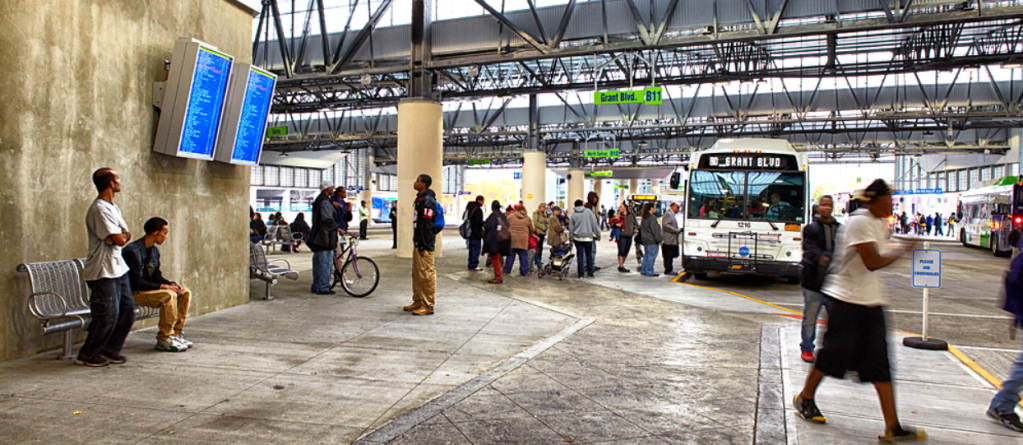
Another two lines have significantly improved service frequencies that bear mention. The Grant Boulevard bus to Shop City will run much more frequently than it does now with 25 minute headways during the morning and evening rush and 40 minute headways midday and evenings. East Genesee Street will also see significantly improved service between Salt Springs Road and the Hub where two separate lines—the 76 and 62 buses—will each run every 45 minutes but be staggered so that they provide 22.5 minute headways where they overlap. These two corridors would be good candidates for future upgrades to BRT service when the resources become available.

Almost all other lines will run with headways between 30 and 60 minutes. Although this is still well below the service frequencies people need, they are a significant improvement over the status quo.
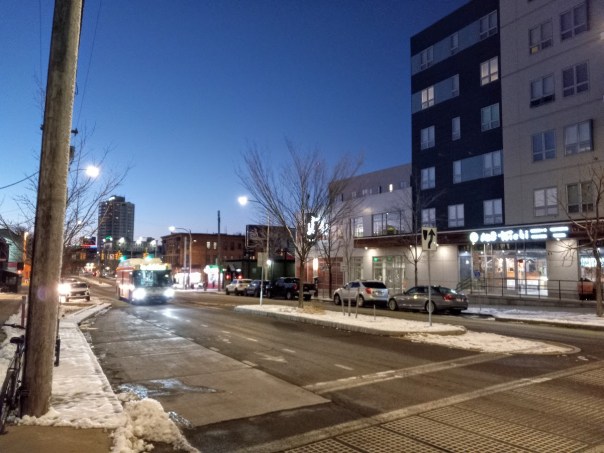
Expanded Night and Weekend Service

Right now, Centro runs buses once every 80 minutes on nights and only slightly more frequently on weekends. If you’re Downtown after 5 PM, you have the option of catching a bus home at 6:20, 7:40, 9:00, 10:20, or 11:40—if your bus even runs at all. This is a massive gap in service that makes public transit a poor option for both increasingly common non-traditional commuting and the non-work trips that make up so much of people’s social and family lives.

Better Bus would massively improve service frequencies on nights and weekends. 14 proposed lines run service at least once an hour into the evening, and 3 will provide service every 30 minutes or better. Many routes will also run later into the night. Better Bus proposes similar service improvements on Saturdays and Sundays for most routes.
Multiple Transfer Points

Currently, all connections between different bus lines occur at Centro’s Downtown Hub. The entire network is designed around bringing multiple buses to that single point at the same time to facilitate transfers, and there is no other spot in Onondaga County where route designs and timetables line up such that it would make sense to try and change buses. That allows Centro to provide seamless transfers between low-frequency routes, but it also reduces service frequency and requires many riders to ride all the way Downtown even when it’s well out of their way.

Better Bus proposes several changes to this system. The first and most obvious is that there will be several bus lines that do not run through the Hub. These include the crosstown 64 bus which will run through Downtown without stopping at the Hub, the 10 and 40 buses which act like extensions of Downtown-bound buses, and the 26 and City Loop buses which run circumferential routes connecting points outside of Downtown.

Beyond those route design changes, Centro is also amending its timetables to get away from the lineup. Proposed headways suggest that redesigned routes will take different amounts of time to complete, so it won’t be possible for all the buses to depart from and then return to the Hub at the same time. Instead of a series of lineups throughout the day, the Hub will see single buses running different routes arriving and departing almost constantly.
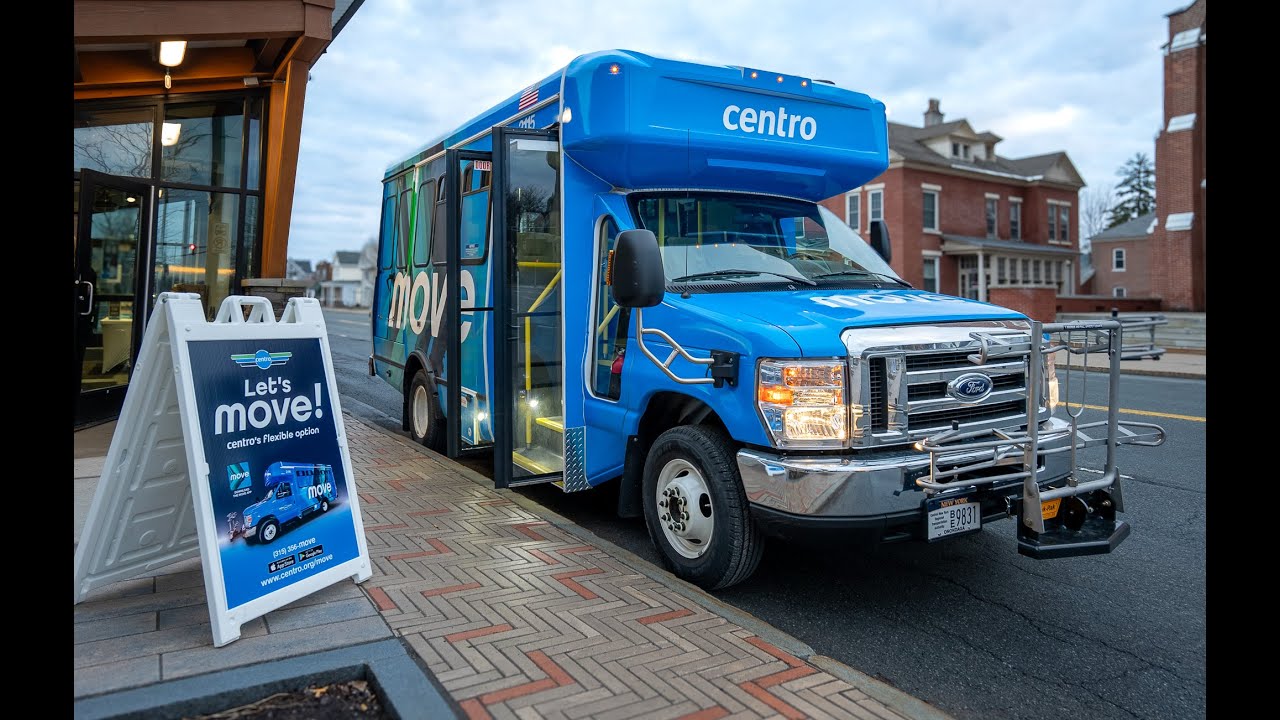
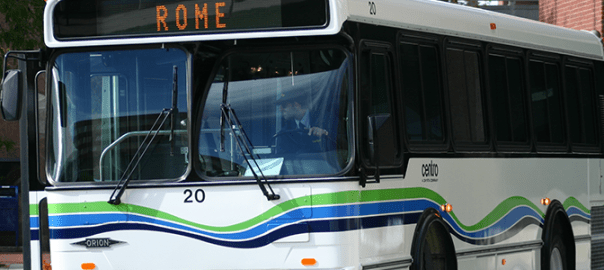
Rome MOVE

MOVE On-Demand Service

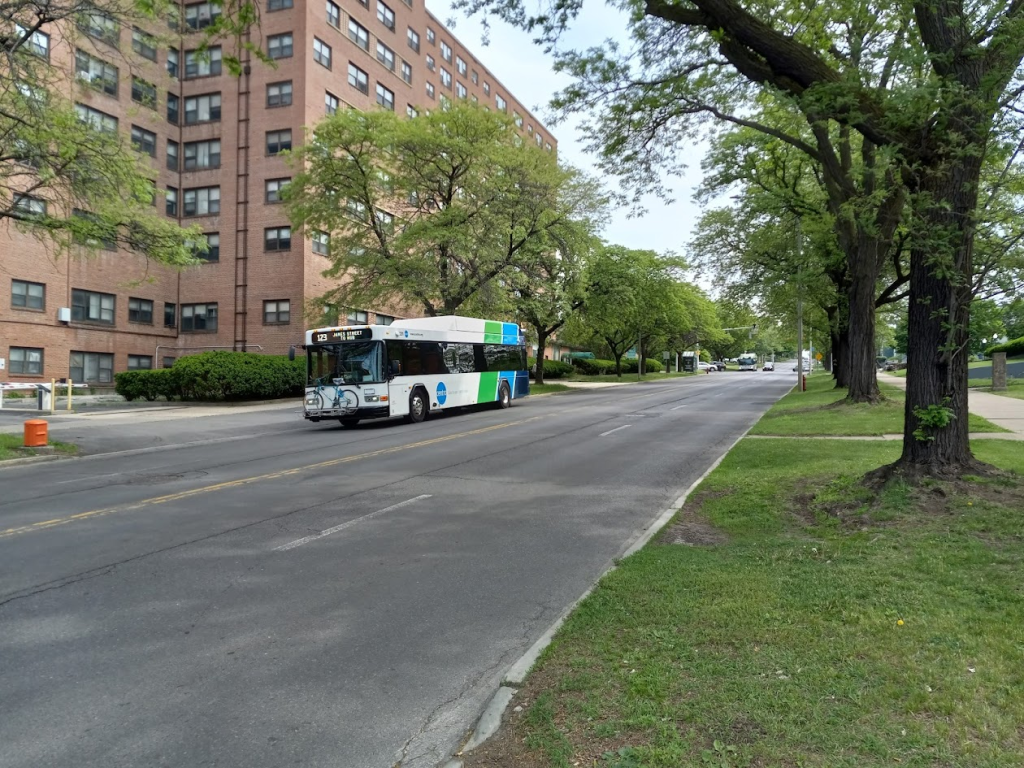
Centro hopes to find the operating resources for all of these service improvements by saving money on low-ridership corridors. In particular, it is replacing fixed-route service in three zones—Fayetteville/Manlius, Malloy Road/Carrier Circle, and Liverpool/Henry Clay Boulevard—with MOVE, a new-to-Syracuse on-demand transit service. MOVE will work like Uber Pool and dispatch small ADA accessible transit vans in response to real-time requests from riders. Centro has already launched this type of service in Rome where it has freed up resources to provide better frequency on remaining fixed-line service and led to substantial ridership gains across the system.
Service Cuts

Centro is also eliminating service in areas not covered by MOVE. In some cases, that means removing route deviations. Deviations on the current 64 bus to Western Lights, for instance, essentially mean that it is actually four different routes. All of those deviations add complexity and reduce frequency, and Better Bus proposes eliminating them on the 64 bus and many other routes to focus on one core line to provide better predictability and frequency.

In other cases Better Bus proposes removing routes entirely. The most notable is the 54 bus on Midland. Some portions of that route will be covered by other lines, and other portions are within walking distance of improved lines, but fewer people will be able to catch a bus on Midland if Better Bus is implemented as proposed. That’s the kind of tradeoff many current riders have expressed a willingness to make, but it is worth scrutinizing the tradeoff all the same.


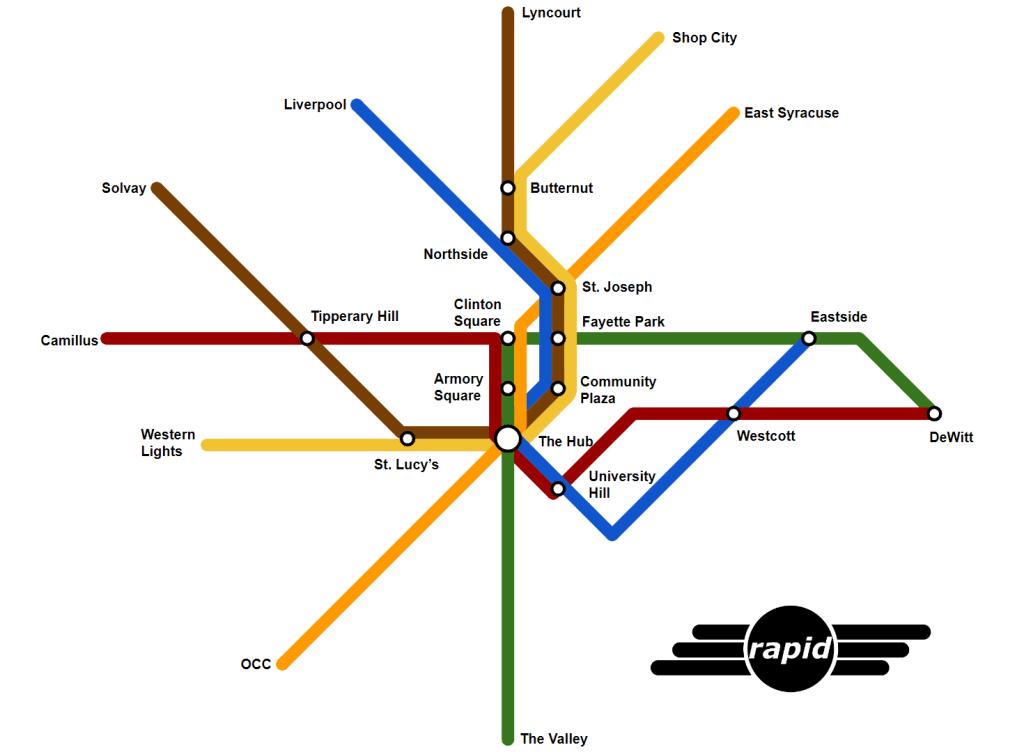
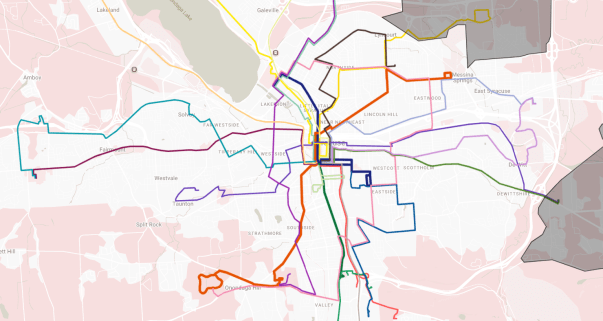
Centro released this draft proposal to get the public’s feedback, so let them know what you think! There are more tools to explore the proposed changes at the project’s website as well as an online survey that will allow you to make route-specific recommendations. You can also view the below map that shows the proposed lines in different colors. You can interact with this map and filter the system by frequency at this link.

Centro made a lot of small decisions in the process of redrawing these bus lines and reworking these timetables, and there is ample opportunity to point out places where any specific line’s zig might work better as a zag or where better midday frequency might be preferable to robust rush hour service. That’s all great feedback that should inform a second draft of the plan.

Keep in mind, though, the tradeoffs involved. Adding frequency to any line or making it longer necessarily requires reducing frequency somewhere else. Centro simply does not have enough bus operators to provide high frequency service in every neighborhood.

The good news is that Centro is moving in the right direction. The principles that lie behind Better Bus—focusing resources to improve service where it will help the most people and yield the highest ridership—are good ones. If Centro continues to follow them and if we can get them more operating resources, Syracuse will build the transit system we need and deserve.

Building Bus Ridership Back

Centro buses carried almost 10,000 fewer people in May 2024 than they did in May 2023. That’s the second time year-over-year ridership has declined in the last 3 months after 35 straight months of growth. With overall ridership still 25-30% below pre-pandemic levels, the causes of the drops need to be identified and addressed.

One obvious culprit for lagging ridership is insufficient service. May’s drop in absolute ridership (1.8%) was accompanied by an even bigger drop in service (2.7%), so ridership per revenue hour actually increased for the 36th month in a row. Syracuse’s transit service still hasn’t recovered from the drastic 2021 cuts caused by Centro’s inability to hire and retain bus drivers—scheduled weekday hub departures are down 17% compared to 2020—and fewer buses on the streets mean riders have fewer opportunities to catch a ride. It’s a fair bet that total ridership would have continued its post-pandemic recovery if service levels had remained stable or improved.

May’s ridership decline is complicated by the new service model in Rome. Centro combines Syracuse and Utica-Rome in its monthly reports to the Federal Transit Administration, and recent drops in overall ridership have coincided with Centro’s rollout of a new two-tiered service model that pairs higher frequencies through high-ridership areas with on-demand service for lower-ridership neighborhoods. In theory, that model could improve overall ridership by focusing service where it’s most likely to be ridden, but those service improvements might take time to generate increased ridership while cutting lines from lower-performing areas might have an immediate negative effect on ridership.

So it’s possible that the moderate declines in total ridership over the Syracuse-Utica-Rome area are the result of a transition to Rome’s new service model, or it might be the case that the new service model is improving ridership and covering up even greater losses in Centro’s other markets.

Whatever the explanation for May’s ridership declines, it’s a worrying sign. Syracuse needs and deserves better transit service—we punch above our weight nationally on bus ridership, walkability, and car-independence. All of that makes this a better place to live, and all those good things are only possible with a useful and reliable public transit system.

But the past few years of poor service are enough to push people into cars. When the bus runs less than once an hour, when it doesn’t run past 7pm, when it can’t get you where you need to go when you need to be there, people are going to look for other options to get around. A lot of the time that’s going to mean buying a car, and once someone has made that investment they’re not coming back to the bus even if service does eventually get better. In order to build a better Syracuse, we need to keep that from happening by getting buses back on the streets.

What is Centro’s Lineup

Centro’s bus network is built around the ‘lineup’—a tool that facilitates connections between bus lines but constrains Centro’s ability to provide the fast, frequent, reliable service that Syracuse needs and deserves. The lineup influences almost every service decision Centro makes, and so it is an extremely important principle for understanding why Syracuse’s transit operates as it does and how the system might be made better.

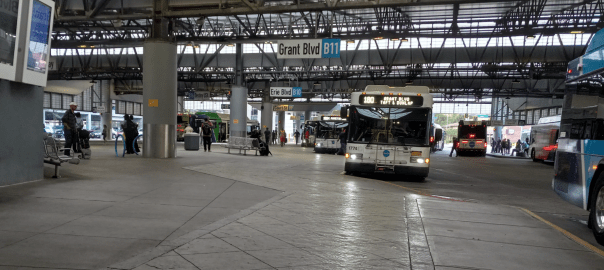
A lineup is when multiple buses—as few as 8 and as many as 20, but usually about 15—arrive at the Hub, layover, and then depart simultaneously. It’s an impressive sight as buses pull in one after another, riders speedwalk between connections, operators trade off shifts, and then all the buses leave together with a cacophony of honking, shouts, and revving engines. If you’ve ever seen a row of buses running north up Salina or State Streets, that’s the immediate aftermath of a lineup. On Centro’s current reduced (since 2021) service, 89% of runs begin at one of the 31 daily lineups. They are the organizing principle of Syracuse’s transit network.

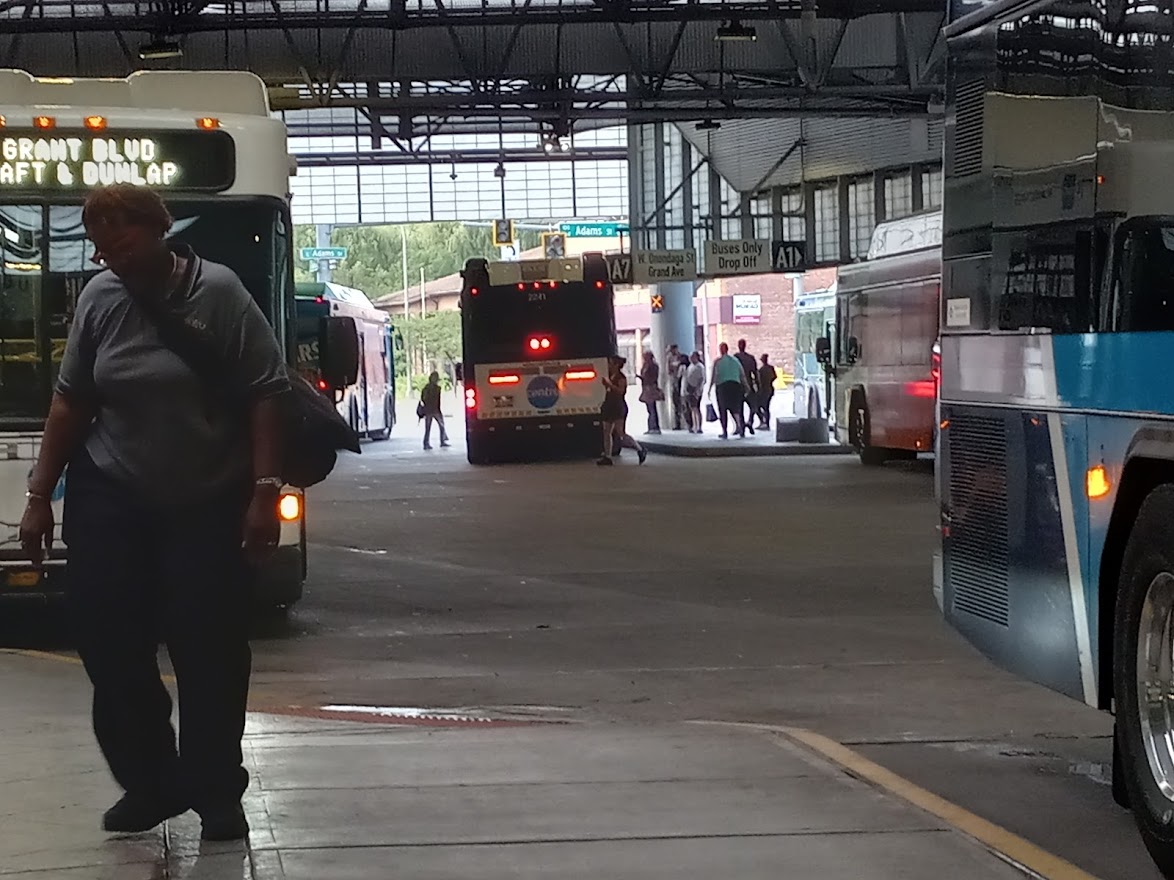
Buses leave the Hub in bunches throughout the day

Lineups allow Centro to facilitate transfers despite its terrible service frequencies. Buses regularly run on 40 minute (or longer!) headways, so if the schedules weren’t timed to all arrive at the Hub simultaneously, then riders trying to make connections could be stranded at the transfer point. Anybody unwilling or unable to wait that long would be effectively confined to travel along whatever bus line was within walking distance from their home. Lineups avoid that problem by scheduling many different lines to meet up at one place at the same time so riders can easily transfer between a number of different lines. This gives riders access to a huge portion of Centro’s total network whenever they catch a bus heading to a lineup.

That’s the central promise of Centro’s service: the buses might not run very often, and they might not run very fast, but if you catch one headed Downtown, then you have access to a pretty large area of Onondaga County.

But to get this massive benefit, Centro has to give up a lot. Because the lineup requires scheduling every single bus line in relation to the entire system as a whole, and because it requires every line to start from a single point, it makes the transit network difficult to adapt and imposes huge efficiency costs. Here are three ways the lineup constrains Centro’s service

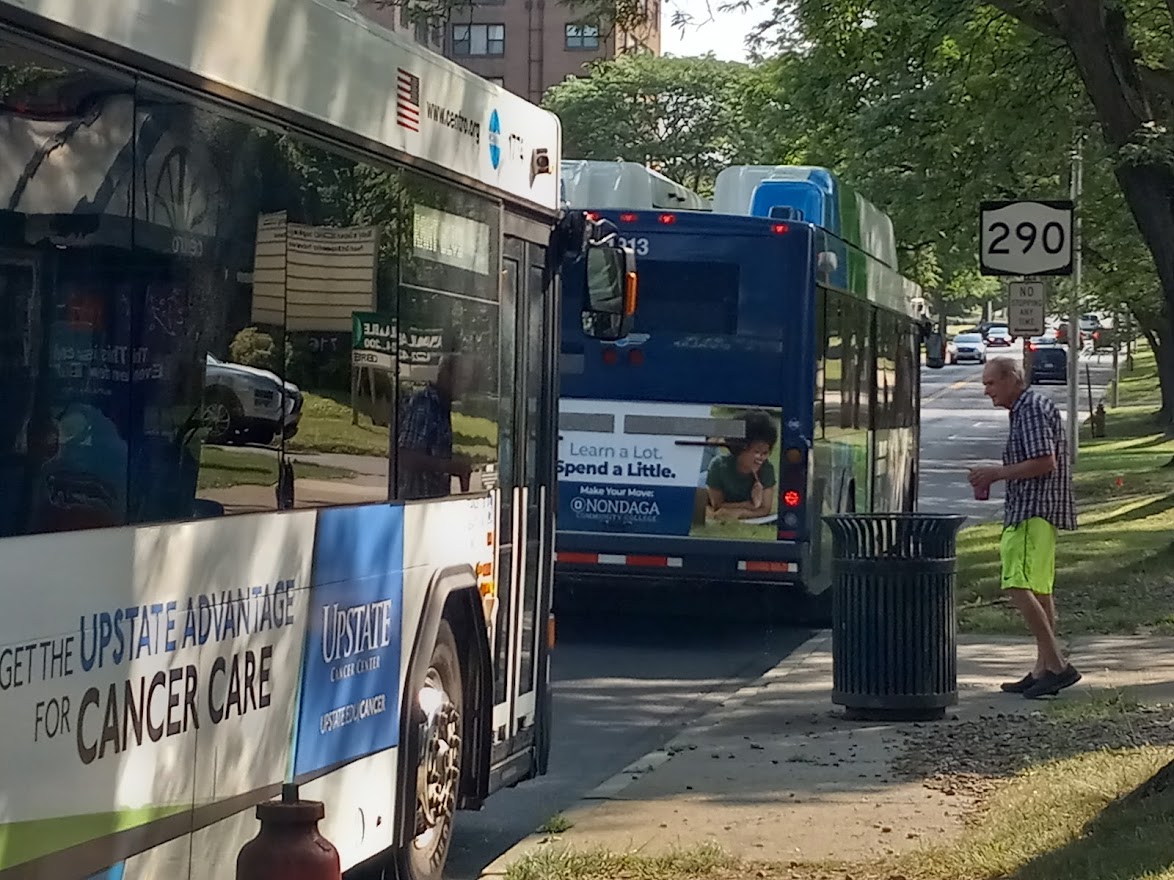
Two buses on their way from a lineup run back to back on James Street

Bunching

In a high frequency system, ‘bunching’ (when two buses on the same street run close together) is a huge problem that agencies spend a lot of time trying to solve. Bunching is bad because it effectively lengthens headways and makes some buses overcrowded while leaving others relatively empty. This wastes valuable operating capacity.

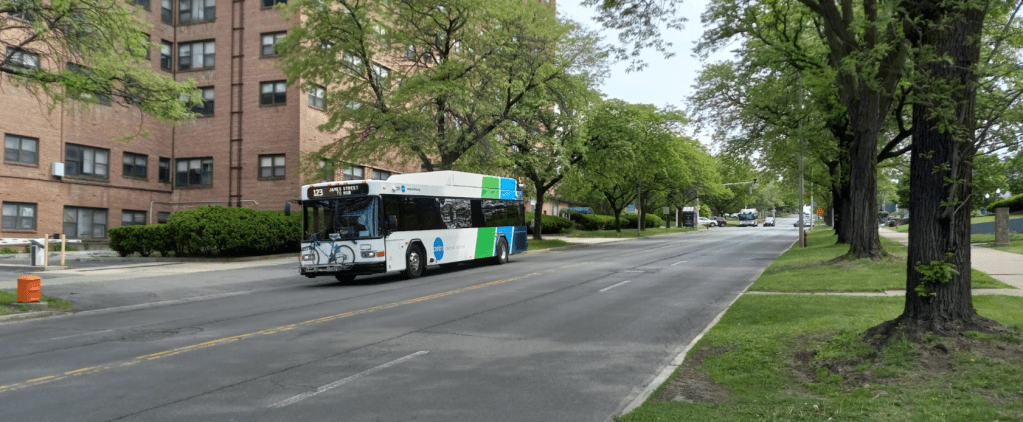
The lineup is basically one big intentional bus bunch. The buses all leave at once, and they travel in packs through the City’s center before eventually branching off to serve individual neighborhoods. The most egregious case of bunching occurs on James Street below Oak. There, the 80 and 20 buses run back to back 20 times a day. Centro spends enough operating money on this corridor to run 17 minute headways, but the lineup’s forced bunching wastes so many resources that Centro only manages 26 minute headways here. A similar example occurs on the Eastside where the 76, 62, and 68 have the resources to run on 16 minute headways from Downtown all the way to Westcott Street, but forced bunching doubles average headways on the Eastside to 32 minutes.

Inflexible route design

If every bus line is supposed to arrive at and depart from the Hub at the same time, then every line needs to take the same amount of time to make its run and return to the Hub for the next lineup. Look at Centro’s timetables and you’ll see that most buses take about 35 minutes to get from the Hub to their last stop, and another 35 minutes to get back to the hub.

But it doesn’t make sense for every bus line to go in one direction for exactly 35 minutes. To fit that rigid schedule, some buses crawl along meandering routes and others drive into low-ridership areas just to fill the time. This wastes valuable operating capacity that could be better used running more buses through high ridership areas.

The lineup forces bus lines to terminate Downtown instead of allowing riders to travel across town

No crosstown lines

If every single Centro bus line starts and ends its runs at the Hub, then no lines run through the Hub. That means every crosstown trip requires a transfer, and it makes many trips take longer than they really should.

Since every bus line starts at the Hub, it’s simple enough to imagine combining lines from opposite sides of the City—the 52 (Court Street) and 54 (Midland Avenue), say, or the 10 (South Salina) and 16 (North Salina) maybe—to reduce the need to transfer by giving people seamless crosstown rides. In fact, Centro does this in a way by interlining those routes; if you take the 110 to the Hub and just stay in your seat through the lineup, your bus will eventually turn into the 116 and take you up North Salina Street. But this doesn’t really give people the benefits of a crosstown route because they still have to hang out at the Hub through the whole lineup process. In effect, it imposes the time penalty of a transfer on every single crosstown rider even if they don’t have to transfer at all.

Without the need for a lineup-induced layover, a single bus could run straight through the Hub, and Centro could link routes from opposite sides of the City to give people seamless crosstown rides.

The lineup is highly effective at connecting a couple dozen different bus lines so that riders can make transfers relatively easily. But the lineup also stands in the way of Centro making the kind of service changes that riders have been demanding for years now. Above all else, riders want more buses running more often, and the lineup fundamentally reduces service frequency. Any realistic path towards providing the kind of high-frequency transit service that Syracuse needs and deserves leads away from total reliance on the lineup.

Rome’s Bus Network Redesign

Centro’s newly announced service update for Rome offers a glimpse of how the transit authority might improve service in Syracuse. Rome’s new network features higher service frequencies on high-ridership routes, a clockface timetable, and on-demand service to cover lower-ridership areas.

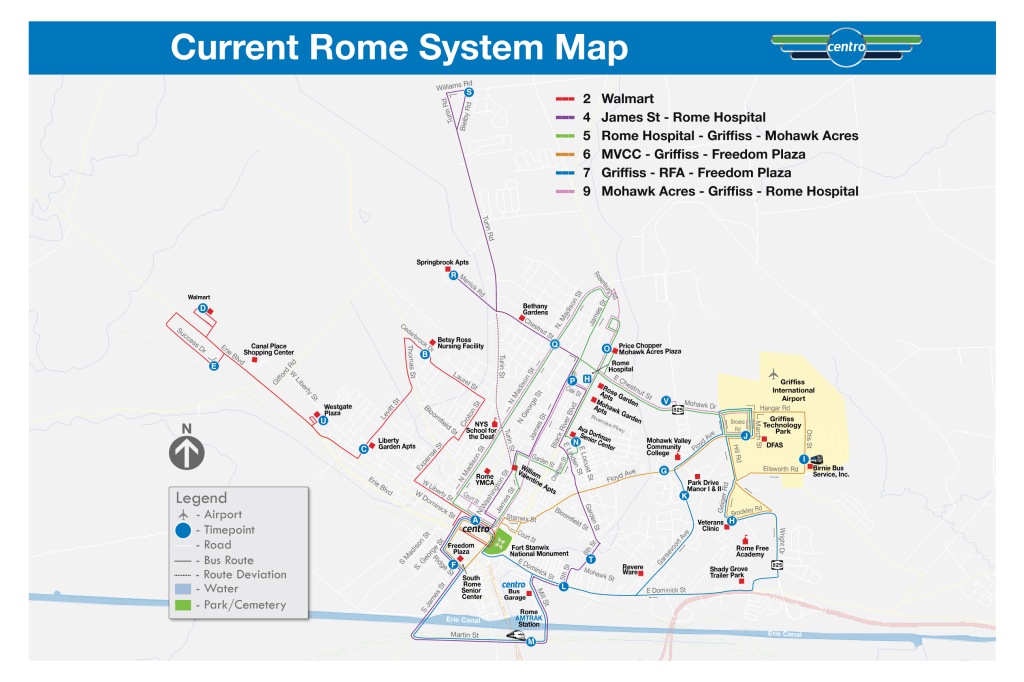
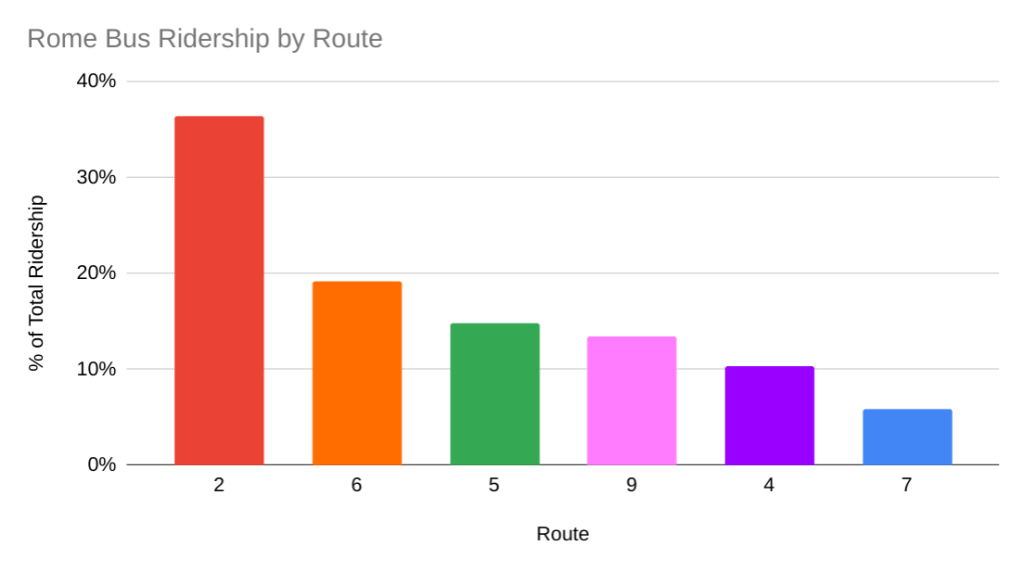
Centro currently runs six bus lines in Rome. The routes with the highest ridership (accounting for more than half of all trips in the network) are the 2 and 6 buses. The next two highest performing lines (providing more than 1 out of every 4 rides) are the 5 and 9 buses. The two lowest performing routes (carrying fewer than 1 of every 6 passengers) are the 4 and 7 buses.

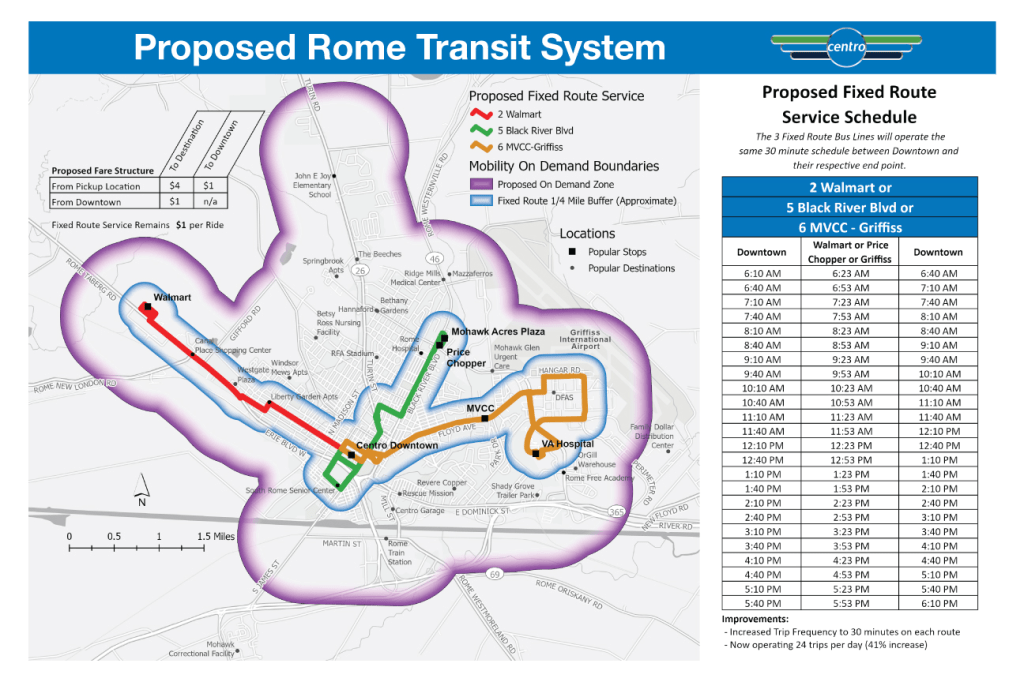
Under the new network, Centro will increase service frequency on the high-performing 2 and 6 buses by a whopping 41%. The 5 and 9 buses will also see a comparable service increase, although they will be combined as a single route.

These service improvements are also service simplifications. Centro’s current Rome schedules don’t follow a regular pattern—different buses run at different times of day, and headways range from 30 to 90 minutes depending on the route and run. That all makes it difficult to use the system without consulting the schedule.

The new timetable will be identical for all three lines, and it will run on regular 30-minute ‘clockface’ intervals all day. This makes it much easier to memorize each bus route’s schedule—they all leave Downtown at 10 and 40 minutes past the hour.

In order to provide all of this new service on high-ridership routes with existing resources, Centro is cutting fixed-route service from some low-ridership areas. The 2, 5, 6, and 9 buses are losing some of the zigs and zags that allow them to cover a greater area at the expense of speed. In the new network, these routes will run in straight lines, and buses will be able to complete each run in 30 minutes (compared to 40 minutes today). Centro is also cutting the 4 and 7 buses entirely.

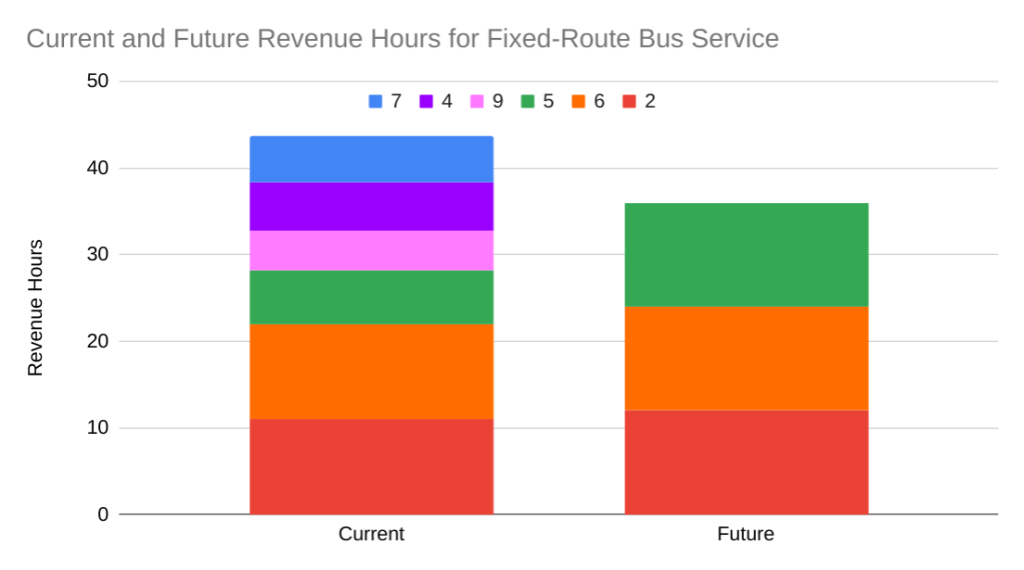
Together, these changes will reduce fixed-route revenue hours (a major driver of operating costs) by 18% even as Centro increases service frequency on remaining bus lines. Those operating savings will fund a new on-demand service in areas losing fixed-route service. This new on-demand service will likely be similar to Uber pool, where riders request a ride via phone or an app, and Centro will dispatch a jitney-style vehicle to pick up multiple riders traveling in the same direction.

We still have to see how this plan works in practice. ‘Low-ridership’ areas might see a lot more demand after their spotty bus service gets replaced with a subsidized taxi. In that case, Centro will either have to divert more resources to its on-demand service—reducing or eliminating the projected cost savings that are supposed to make higher bus frequencies possible—raise the on-demand fare, or riders will have to deal with longer wait times for pickup.

But if Centro can manage that balance, this new service model can make a big difference in Rome, and it should be applied to Syracuse. The model’s principles—prioritizing high-frequency service on direct bus routes running through high-ridership areas—are exactly what planners and advocates have pushed for in Syracuse for years.

Centro’s post-pandemic ridership recovery

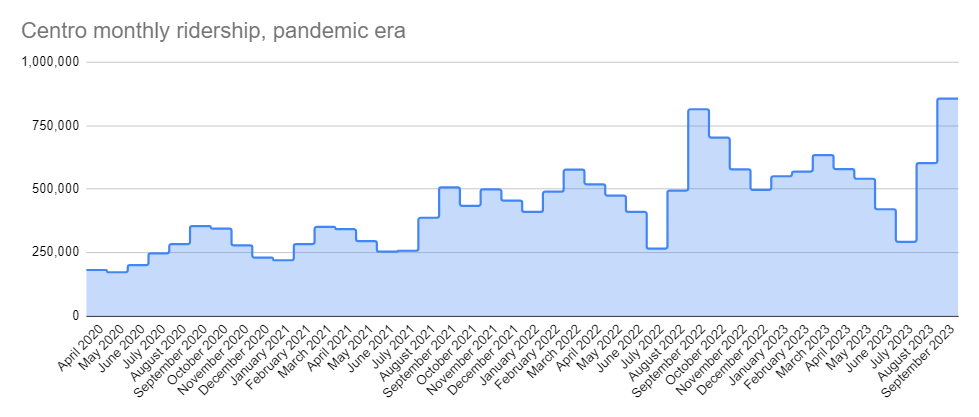
More people rode a Centro bus in September 2023 than in any month since October 2019. That marks the first time post-pandemic monthly transit ridership in Syracuse has exceeded any pre-pandemic mark.

This is good news for Centro, but the ridership trends leading up to September tell a slightly more complicated story about the state of transit in Syracuse. We still have a ways to go just to get back to our pre-pandemic (and barely adequate) status quo, but Centro is changing its service in ways that put them on the path to providing the quality transit service Syracuse needs and deserves.

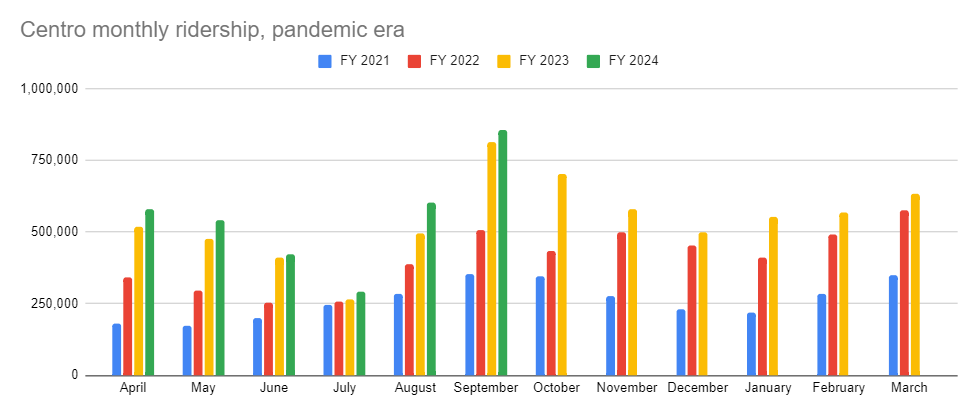
In the five years leading up to the pandemic, Centro’s monthly ridership averaged about 850,000. In the first months of lockdown, ridership dropped to about 200,000. Ridership has grown steadily—with allowances for seasonal variation—since then. Every single month since April 2021 has seen higher ridership than the same month of the previous year, and in September 2023, monthly ridership hit 857,415—higher than the pre-pandemic average, and the highest monthly total since October 2019.

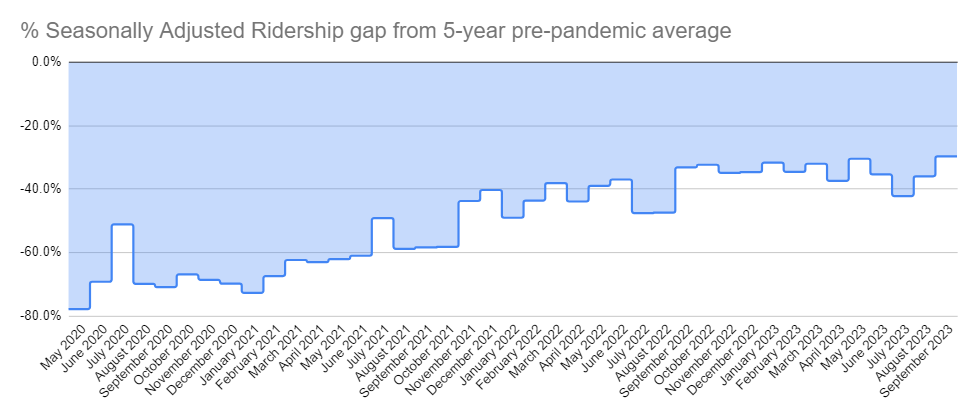
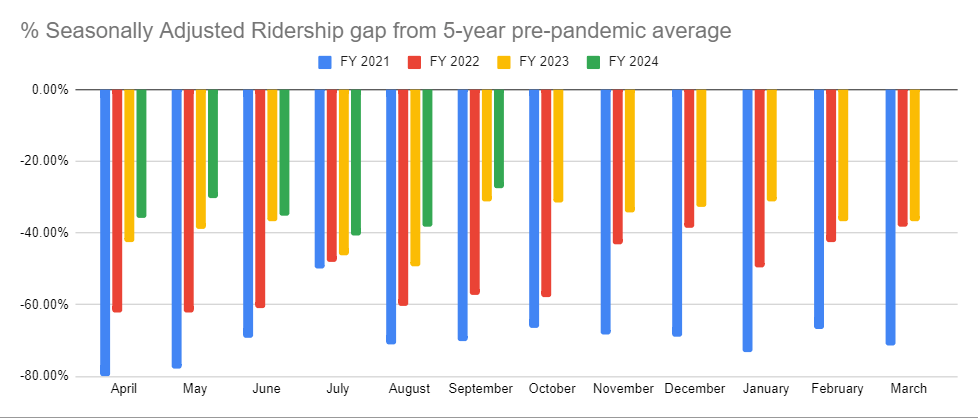
However, Centro’s monthly ridership follows a pretty regular cycle, and September has always been the highest ridership month of the year (the NYS Fair and the beginning of the academic year both bring a lot of riders). In the five years before the pandemic, average September ridership was just over 1,200,000, so if we’re comparing apples-to-apples, September 2023’s ridership was 30% below the pre-pandemic norm. That’s still smaller than any other post-pandemic month’s seasonally adjusted gap (or, the percentage difference between current ridership and the average ridership for that same month in the five years preceding the pandemic), but it’s far from a full recovery.

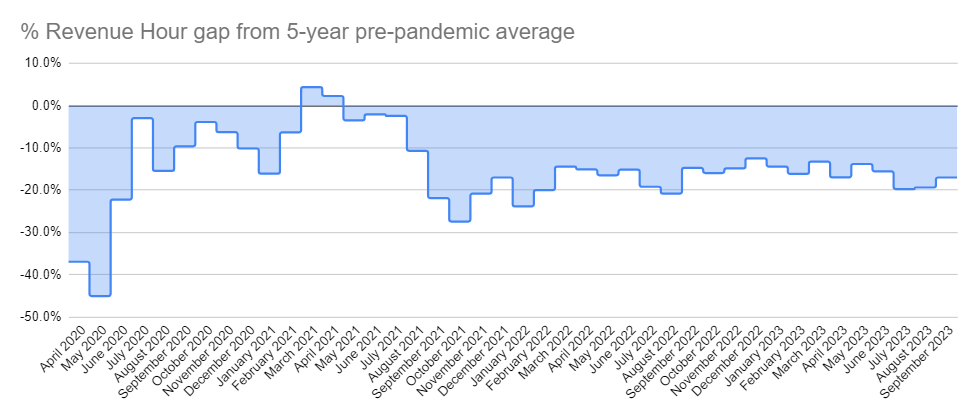
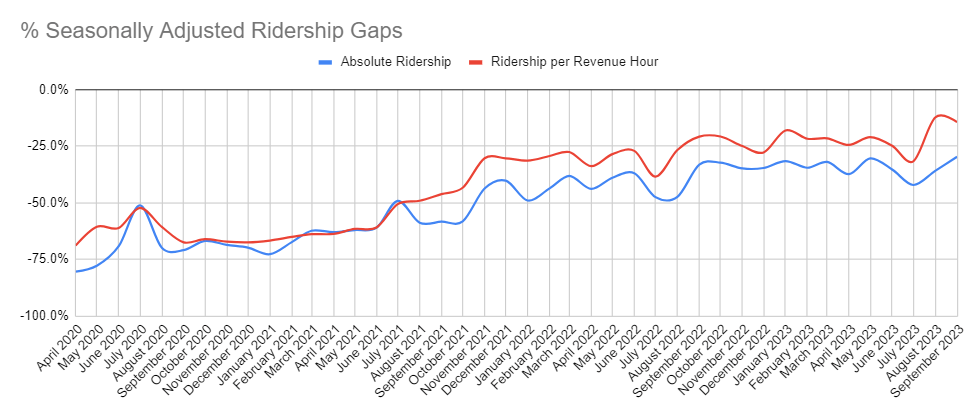
It’s not totally fair to compare today’s absolute ridership to pre-pandemic months, though, because Centro has fewer buses on the streets than they used to. Ever since the Summer of 2021, Centro has not been able to hire enough operators to run its regular service. Revenue hours (the total amount of time Centro buses are available to riders) are consistently 1/8 to 1/5 below the pre-pandemic norm, and that decrease in service has depressed total ridership. Better to compare ridership per revenue hour (a measure of transit efficiency) to get a sense of how much the service is being used. That measure shows September 2023 at just 14% below the pre-pandemic norm.

Ridership per revenue hour has outperformed total ridership because Centro has focused its scarce resources on high-ridership routes. When the staffing crisis hit, the first service cuts came from low-ridership lines. That allowed Centro to preserve more service on higher-performing lines through populous neighborhoods. If Centro had simply cut service evenly across the board, today’s total ridership would be even lower.

The same logic should guide Centro’s approach to its network redesign: enhance service in the places where people ride the bus most to get the biggest increases in ridership.

outline of a citywide high-frequency BRT system

Centro still has a ways to go to get ridership back where is was before March of 2020. It has even farther to go to provide Syracuse with the kind of transit service we really need. But the system’s steady recovery, and Centro’s commitment to focusing resources where they’ll do the most good, gives hope that they’re on the right path.

BRT, a Timeline, and a Network Redesign

Centro’s recent Bus Rapid Transit announcements are fantastic news for Syracuse. We need better bus service to better connect people and neighborhoods, and BRT is the best way to make that happen.

The actual content of these announcements confirms a lot of what we’ve known for a long time. Centro’s first two BRT lines will run on the routes identified in the SMART1 study, they will run faster by stopping less, riders will board at stations rather than just a pole in the ground. This is all good.

But the announcements also contained two new pieces of information worth highlighting: a timeline for the service to start, and Centro’s intention to pair BRT with a network redesign.

A timeline

While it’s always seemed inevitable that Centro would do something like BRT sometime, there’s never been an actual timeline on it. Ever since SMTC published its SMART1 study, Centro has been dealing with a series of crises (a funding gap, Covid, hiring problems, etc), and designing and implementing a new service has never been the top priority. It was always a part of the long range plan, and Centro was always working on it, but the service was never imminent.

Now we know these buses will be on the streets by 2026. It is a big deal for Centro to say this publicly because they wouldn’t commit to a timeline if they weren’t confident they could keep it. Now that Centro’s made that promise, it is clear for the very first time when we can expect to actually board a BRT bus.

Network redesign

But BRT isn’t all they’re promising. Centro’s doing that and “the most comprehensive review of our Syracuse route system in more than 20 years.” This is also very good.

Centro’s bus routes follow lines laid out for the streetcars back in the 1800’s. They’ve been extended and stretched and kinked to try and keep up with changes in the community since then, and the results have not always been pretty. Buses slowly zig and zag across neighborhoods, they make detours, they run at irregular infrequent intervals. The whole system is so complicated and so fragile that people rarely try to understand how to use it to go more than one or two specific places.

A network redesign will allow Centro to look at the whole system and rework it to be faster, more frequent, more reliable, and more understandable.

Taken together, both these pieces of new information are great news for Syracuse and Central New York. We need better public transit, and that need is only more urgent since the Micron announcement. Centro has a real vision of the transit system this community needs and deserves, and they are ready to build it.

Where to spend the marginal transit dollar

If you gave Centro one dollar to improve service, where would you get the most bang for that buck? Where would a marginal improvement in service—more frequency, more speed, better reliability, new service—have the greatest positive impact for the greatest number of people? Where would better bus service result in the greatest increase in ridership?

This is a good clarifying question when talking about how to improve Centro, because it confronts the reality that there are a lot of ways Centro needs to improve, but a constrained budget means Centro can’t fix all of its problems at once.

We need a public transit system that connects every major employment and population center in the County with fast, frequent, reliable service in order to make public transit a truly viable option for people. That means hugely improved service on Centro’s core routes through BRT, and it means decent service to big suburban destinations like Micron and the airport. But since Centro doesn’t have the resources to do all of that right now, which service improvement is most important? Choosing to solve one problem means leaving others unsolved, so we’ve got to prioritize and make the fixes that will improve the most people’s lives first.

The answer to this question—and it’s an obvious answer when the question is framed right—is that Centro would do the most good by investing any new funding to improve service on high-ridership corridors like James Street and South Salina. Those are the places where lots of people already ride the bus, where a lot more people could easily walk to a bus stop, where homes and destinations are relatively close together and easy to connect with a bus line. Run BRT-style service every 10 minutes in places like those, and Centro would get a lot of new riders and existing riders would ride a lot more (more than you could ever hope to get from a new bus line to the airport).

So as Onondaga County prepares for new population growth and thinks about how its transportation system can accommodate a few thousand more people moving around, keep this in mind: of the many steps we need to take to get from where Centro is now to where it needs to be, the first one should be investing in the communities where bus ridership works best—densely populated, mixed-use, city neighborhoods.

Transit, Traffic, and Growth in the Northern Suburbs

Micron’s proposal to build a large factory on Route 31 in Clay has a lot of people talking about public transit in the northern suburbs, but Onondaga County will need better planning to guide population growth so that public transit can actually work out there.

The northern suburbs can’t accommodate much more population growth with their current transportation network. These areas were almost entirely rural until pretty recently, and their road network doesn’t have the capacity for much more than a rural population. There are only a small handful of roads that cross the enormous area between Syracuse and the Oneida River, and as single-family development has converted farms to suburban sprawl where every adult makes every single trip in a car, those roads have gotten very congested. Onondaga County predicts another 4,000 homes will be built in this area in the next few years, and if every adult living in all of those new homes also makes every single trip to the grocery store, to work, to school, in a car on those same overtaxed rural roads, the traffic is going to be terrible.

Public transit can help. With fast, frequent, reliable transit service, people won’t need to use their car every time they leave the house. That gives people the option to avoid dealing with traffic, and it reduces traffic by taking cars off the road. Giving people this decent option is the only way to accommodate significant population growth without strangling the northern suburbs with car traffic.

But public transit needs population density to really work. There are a lot of different factors that influence transit ridership—the street grid, household income, building form, land use—but population density is one of the biggest. As a rough estimate, the land within walking distance of a transit stop needs at least 10,000 people per square mile in order to generate enough ridership to justify useful high frequency transit service.

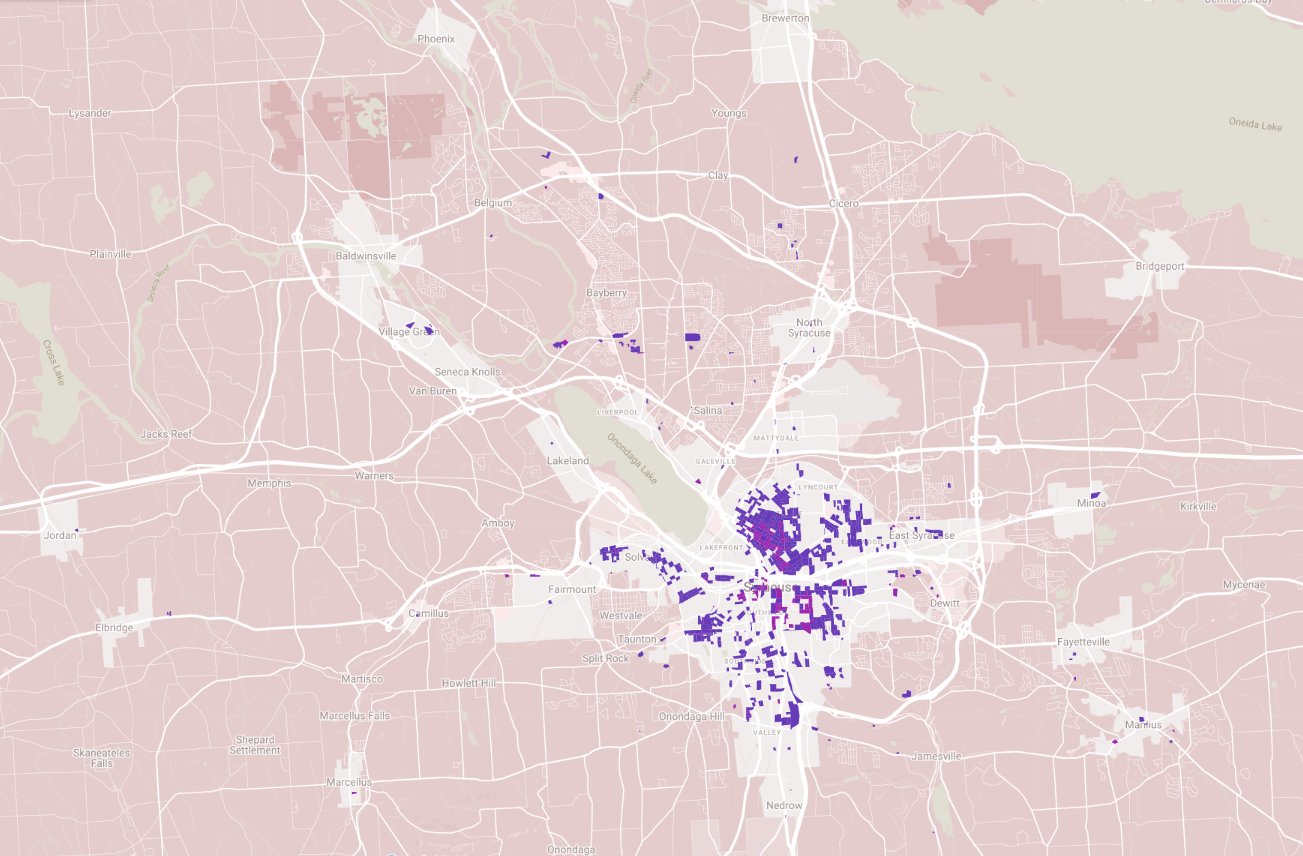
Here are all of the blocks in Onondaga County with that level of population density. The overwhelming majority are in the City, and just a few are in the northern suburbs. Right now, there just aren’t enough people living near enough to any bus stop to justify high frequency bus service up there.

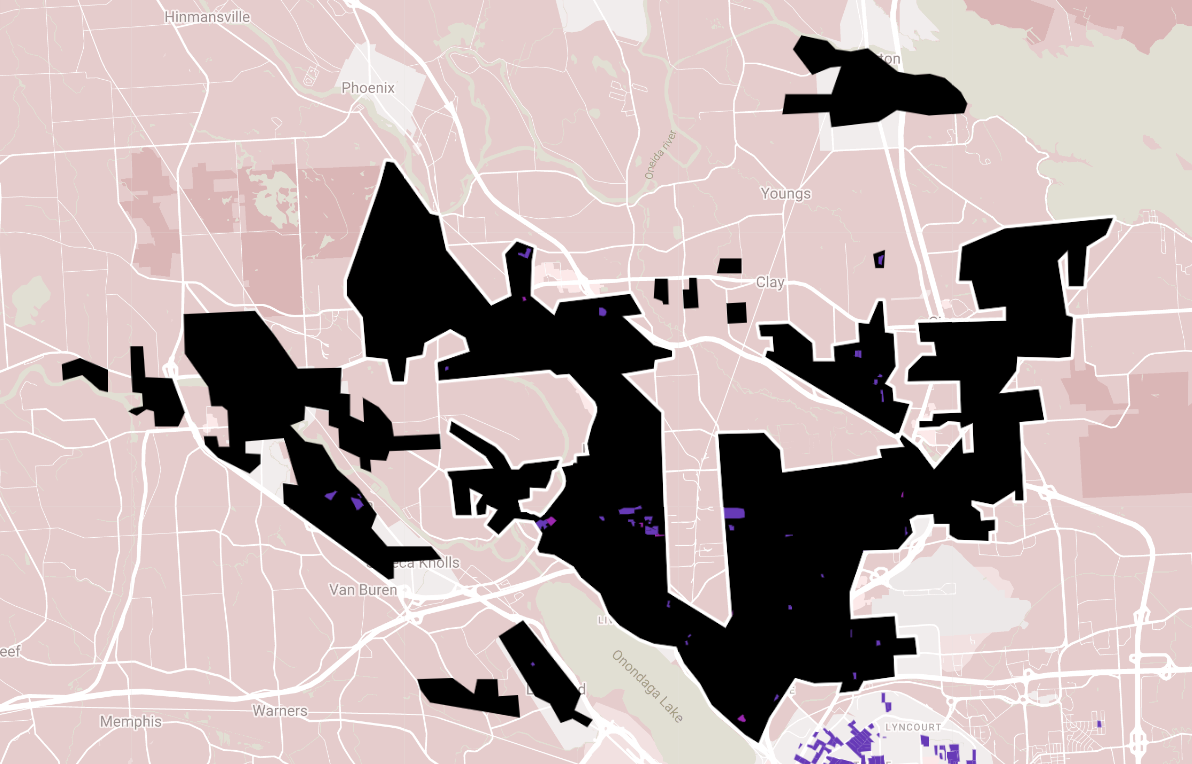
This isn’t a problem that goes away just by increasing the County’s population. The northern suburbs are already pretty heavily populated—way more people live in Clay than in high-bus ridership city neighborhoods like the Northside—but that population lives in sprawling suburban development that can’t support decent public transit. The map below shows the rough extent of existing residential development in the northern suburbs in black with transit supportive densities in purple. Thousands of acres have already been developed in a way that simply cannot support decent transit service. Huge yards separate neighbors from each other, apartment bans force small households into huge houses, single-use zoning makes it impossible for people to walk to neighborhood shops. This is car-only, traffic-causing development.

There’s still a lot of space up there to build homes for a lot more people, but the kinds of neighborhoods and the kinds of homes that get built in the next 50 years have to be different from those that have been built in the last 50 years if the northern suburbs are going to avoid the kind of terrible traffic that you see in sprawling cities like Atlanta. The northern suburbs need mixed-use neighborhoods where people can walk to neighborhood businesses and community institutions. They need a diverse mix of housing types like apartments and rowhouses and walkups and single-family homes of different sizes. That’s the only way to make transit work, and it’s the only way to accommodate population growth without creating terrible traffic.

BRT on South Salina

Centro’s recent announcement that they are planning Bus Rapid Transit service along South Salina Street is great news for public transportation in Syracuse.

Since 2017, pretty much all discussion of BRT in Syracuse has been confined to the two lines  described in SMTC’s SMART1 report, but SMART1 itself assumed the eventual BRT system would include more lines. South Salina is a perfect place to run Centro’s next BRT line, and it will make the system more useful to three groups of people.

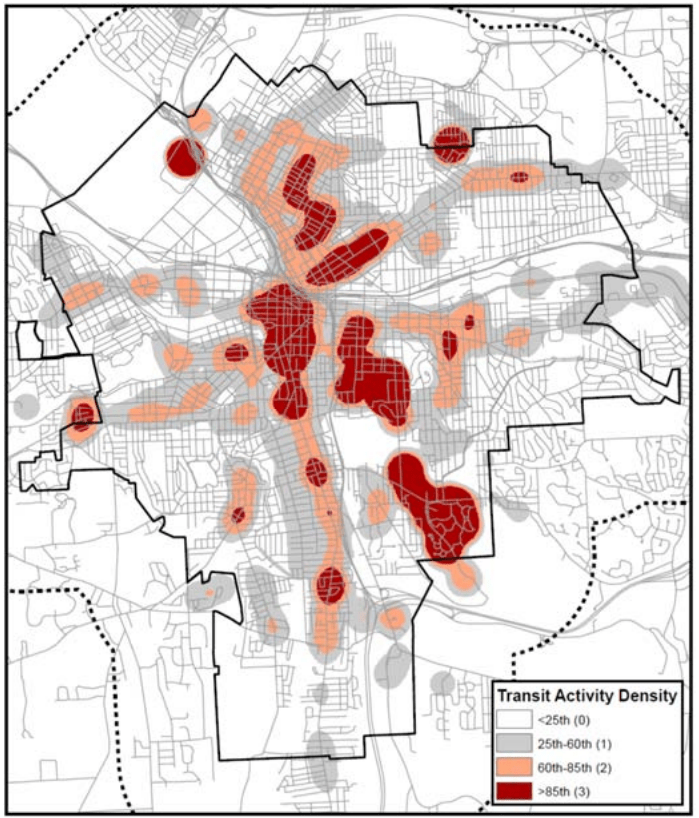
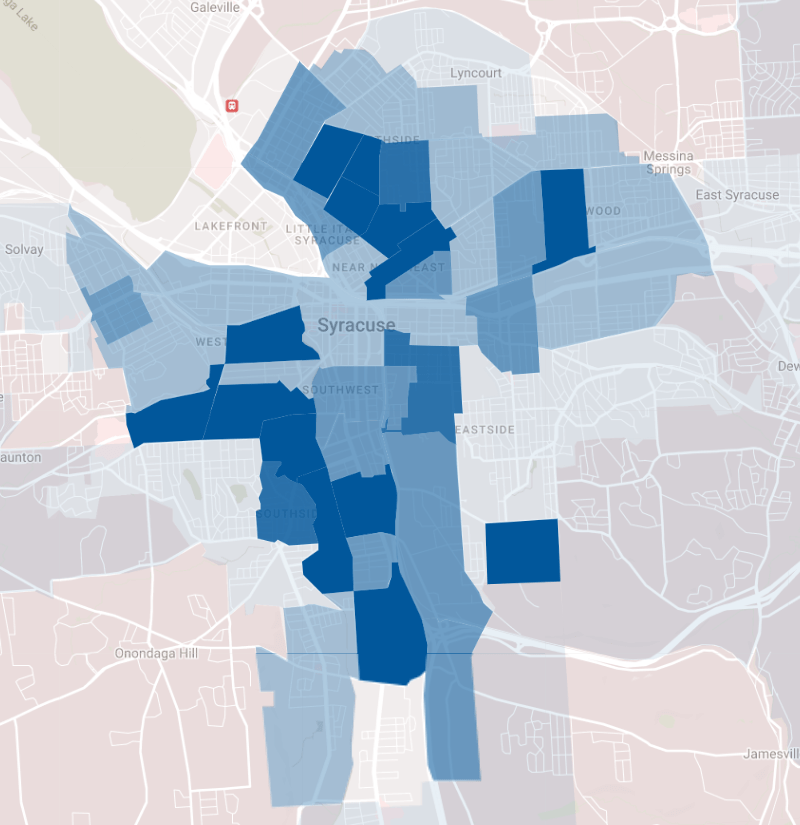
First, better bus service on South Salina will serve more people who rely on the bus. South Salina has always been one of Centro’s top performing bus lines—both in terms of overall ridership and ridership per service hour. That’s because lots of people who live along South Salina ride the bus. Look at a heat map of bus boardings, or a population map showing where people who commute by bus live, and it’s clear that the South Salina corridor is one of Syracuse’s strongest transit corridors. Adding frequency there will allow lots of current bus riders to take more trips immediately.

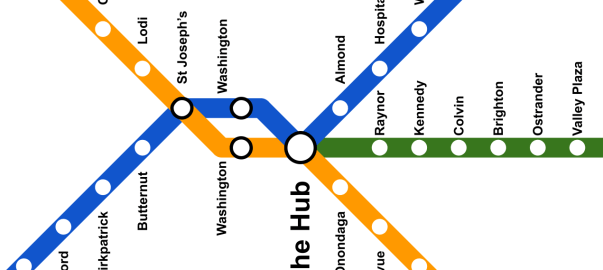
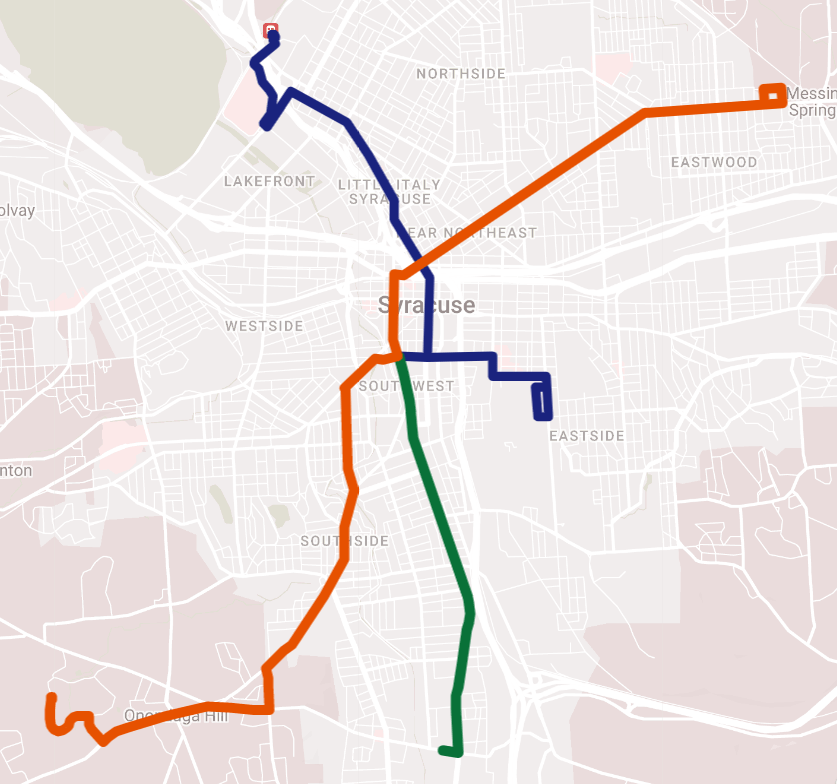
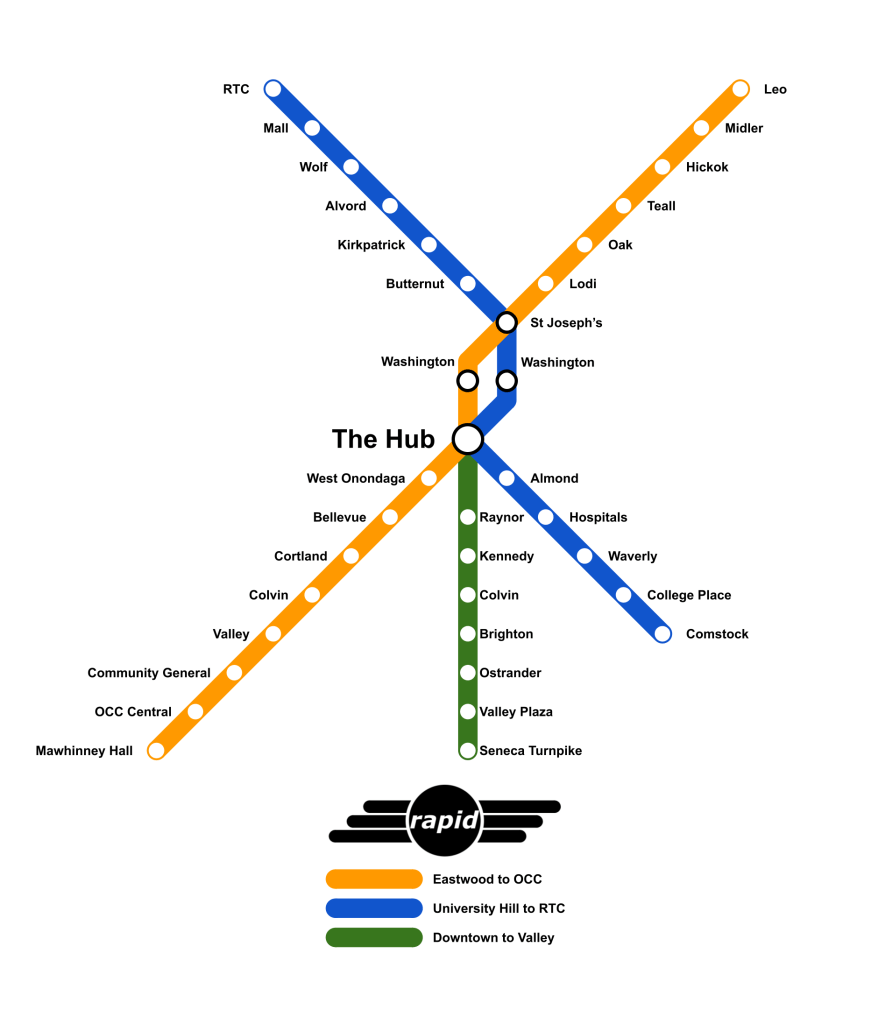
Second, transit’s network effect means this additional BRT line will benefit people who live along the original SMART1 lines too by increasing the system’s service area. BRT uses high service frequencies to facilitate connections between multiple lines, so no matter where you board a BRT bus, you can easily get anywhere else in the system. That means every new line increases the number of places existing riders can go, and that will make the two original SMART1 lines (shown in blue and orange below) more useful for more people.

note: Centro has not officially stated where the South Salina line will terminate. These maps are guesses.

Third, this network effect also benefits neighborhoods as a whole along each line. Shops, businesses, libraries, and church’s sitting on either of the two SMART1 lines will have a larger pool of customers, workers, patrons, and congregants with the addition of the South Salina line. That network effect puts existing businesses and institutions in a better place to succeed, and it will strengthen neighborhoods by attracting even more businesses and institutions and making more opportunity accessible within the City.

For all these reasons, it’s a very good thing that Centro is looking for ways to expand its plans for BRT service beyond the two lines described in the SMART1 study. We need to upgrade every high-performing Centro bus line—including South Salina but also those serving high-ridership corridors like Butternut, Genesee, and Onondaga—to BRT service in order to create a citywide network. That’s the transit system Syracuse needs and deserves, and Centro is committed to building it.

The chronic financial stress of car ownership

Assemblymember Pamela Hunter’s and State Senator John Mannion’s proposal to subsidize car driving by defunding public transit will entrench the very problem they want to solve. They are right that household budgets are getting squeezed by a sharp and unexpected increase in the costs of operating a car. But they offer the same solution that local politicians have been offering to this same problem for decades with no positive effect: a small subsidy for drivers at the cost of true alternative transportation options.

Gas costs more today than it did last year. That’s a real problem for people who drive a lot and don’t have a lot of extra room in their household budget to handle that new unexpected expense. The people who drive the most are mostly pretty well off financially, and many of them probably do have enough money on hand to cover the rise in the price of gas. But there definitely are also a lot of other people less well off who have to drive every day and who are really hurting because of this rise in the price of gas.

In a recent Op Ed, Assemblymember Hunter explained the immediate causes of this gas price spike: oil corporations produced less gas during Covid lockdowns, and Russia’s invasion of Ukraine disrupted global oil supply chains. The result is that there’s less gas available right now, so oil companies raised prices. Assemblymember Hunter’s (and Senator Mannion’s) answer is to shift money from road maintenance and public transit to subsidize gas purchases by 8 cents per gallon.

(For what it’s worth, this temporary price shock is already fading away. According to AAA, the price of gas in New York peaked early last month at $4.46 and has fallen steadily since).

There is nothing new about any of this. I’m 31 years old, and some part of the world has been at war over oil for more than half my life. Gas was more expensive when I was in high school than it is today, and it’s going to get a lot more expensive before I die. OPEC may try to manipulate the price of gas by increasing or decreasing production, but there’s nothing they can do about the fact that they will exhaust their reserves in the not too distant future.

And beyond all that, even if the New York State legislature could somehow protect car drivers from sharp unexpected increases in the price of gas, it wouldn’t do much at all to make driving more affordable. Huge unpredictable expenses are a guaranteed experience for every car owner. Your brakes give out and have to be replaced. You get in an accident and your insurance goes up. You drive through a speed trap and get a ticket. All of these absolutely normal events in the life of a car owner have exactly the same impact on household budgets as last month’s gas price spike.

The simple fact is that car ownership imposes unpredictable expenses on too many households hardly able to afford it. It requires people to have a reserve of money—whether that’s personal savings, or friends or family willing and able to lend money—at all times to deal with these emergency expenses. That may work out for people making decent money and people with family wealth, but it’s a disaster for anybody living paycheck to paycheck. These daily disasters are so common that we hardly even think of them as problems for public policy. But just as people who depend on cars need relief from high gas prices, they also need relief from the chronic financial stress of car ownership.

But instead, public policy in Onondaga County has always pushed poor people to buy cars. The old Wheels-for-Work program provided loans for people to buy a car if they got a job—saddling workers with a debt they could only pay off by keeping a job that depended on the source of their debt. The Rides-to-Work program—and its successors, JOBSPlus! and Providence Services—subsidized taxi rides for carless commuters with the explicit expectation that workers would save their first paychecks to buy a car.

Transit austerity hangs behind all these efforts to get poor people driving. Public transportation is the obvious alternative for people who can’t afford—or don’t want to deal with—the enormous and unpredictable expense of driving. But the Federal Government, New York State, and Onondaga County have bled Centro dry, so Syracuse’s bus service is just a pale imitation of the fast, frequent, reliable transit system that this community needs and deserves. Compare the urgency behind this gas subsidy with the silence from Syracuse’s legislative delegation last Fall when Covid forced Centro to cut its service to the bone.

The Hunter/Mannion proposal sits squarely in this long line of failed transportation policies. It’s a small subsidy that makes driving a little less painful for poor families, but it gets that money by raiding the State’s transit budget. This would further degrade Centro’s service, push more people to purchase a car, and expose more families to the unpredictable budget-breaking expenses that are a normal feature of car ownership.