All posts by inthesaltcity

Transit is not a Tool of Social Control

At its best, public transportation expands access to opportunity, but recent local examples show how it can also be used to do the exact opposite. Instead of creating a transit system that gives its riders more choices, options, and freedom, people with power have tried to use transit as a tool of social control.

Take the video that just came out of kids fighting at the Hub. After it made the news, Centro CEO Rick Lee promised to “put and end to this.” His simplest option is to run more buses. All those kids end up stuck at the Hub at the same time because they all have to wait a pretty long time between each run. If buses left the Hub more often, fewer kids would be there at any given time, and they wouldn’t have to waste so much time just waiting around bored.

And this wouldn’t just solve the ‘problem’ of having so many high school students at the Hub at any time—it would actually make the bus work better for those students and for everybody else who rides it.

But that’s not what anybody’s talking about doing. Instead, Centro is looking to run buses directly to the schools without ever going through the Hub. Never mind that this would cut students off from the rest of Centro’s network and limit their opportunities to work, participate in community activities, or access childcare after school. Concerns like that don’t matter when what you really want is to use the buses to make kids behave.

.   .   .

Or look at the perennial problem of the spatial mismatch—the fact that many employers looking to hire are only accessible by car while many people looking to work don’t own cars.

The most obvious solution is to run better bus service. In the short run, that’d make more jobs accessible by bus. In the long run, it would build Centro’s ridership and attract more employers to the places with the best bus service where they’d be accessible to all those potential bus-riding customers and employees.

The County could also use its economic development powers to encourage employers to locate along bus lines or within walking distance of communities with low rates of car ownership.

Instead, Onondaga County came up with a plan to subsidize Lyft rides for people who find work through a specific employment agency, don’t have access to a car, and can’t get to their jobs on the bus. The workers themselves will have no control over their rides—the employment agency “will monitor employees’ work schedules and pay Lyft each month for the transportation.” Eventually the County hopes that employers themselves will pay Lyft directly, giving managers direct control over workers’ transportation to and from work.

That will give employers just one more piece of leverage over their workers, one more pressure point to press, one more method of exploitation. But of course none of that matters when you think, like a manager, that workers should just be happy to have any job at all and you can’t imagine how it would be a good thing for them to have the ability to travel to places other than the worksite at sometime other than the beginning of the shift.

.   .   .

The proposed solutions in both cases use transportation to constrain people’s choices so that they do what they’re supposed to and nothing else. Students are supposed to just go directly home at the end of the school day—they’re not supposed to hang out somewhere they could get into trouble. Workers are supposed to just travel between their homes and their current jobs—they’re not supposed to have the opportunity to travel to some other job that might offer better pay or working conditions.

Transit should do the exact opposite. It should expand people’s choices. It should give them the ability to go where they want when they want. It should make people more free.

We Shouldn’t Widen Highways in the Suburbs Either

This week it came out that NYSDOT wants to take land away from people living in Cicero and the outskirts Syracuse in order to widen 481 as part of the plan to get the viaduct out of Downtown.

That’s bad. Highways are loud, they’re ugly, and they blacken people’s lungs. People who live next to the highway out in Cicero know this. That’s why a lot of them plant a thicket trees at their property’s edge to shelter their homes from the highway. Now that’s the very land where NYSDOT wants to build a bunch of drainage ditches so that it can make the highway even wider and more noxious.

It’s not so different from NYSDOT’s original plans to rebuild the viaduct Downtown. They were going to make it wider and straighter so that more cars could fit on it and so they could make even more noise. NYSDOT was going to knock over dozens of buildings and put the highway even closer to so many people’s homes.

For what? To double down on 1965’s idea of the future? To attract more cars, accidents, and congestion? We don’t need any of that. We don’t need it in the middle of Syracuse, which is why we’re getting rid of the viaduct there. We also do not need it in Cicero, which is why we shouldn’t be widening the highway out there.

The Very Idea of a New Neighborhood

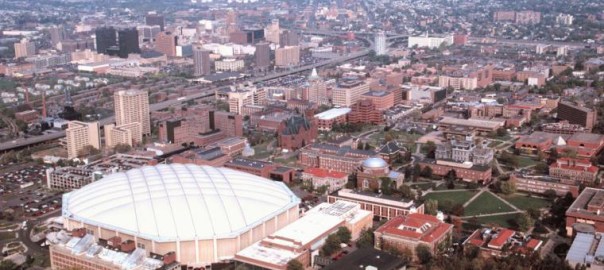
Tired of taking on Syracuse’s seemingly intractable problems, a lot of people in positions of power throw their hands up and say ‘let’s just start over.’ Segregation, poverty, and exclusion are all so systemic in so much of the City, and depopulation and deindustrialization have combined to leave so much cheap empty land, that it seems easier to just build new neighborhoods than to try and make life better in the ones where people already live. But those very conditions mean that building a ‘new neighborhood’ entails a lot of those same systemic problems in ways that are rarely confronted.

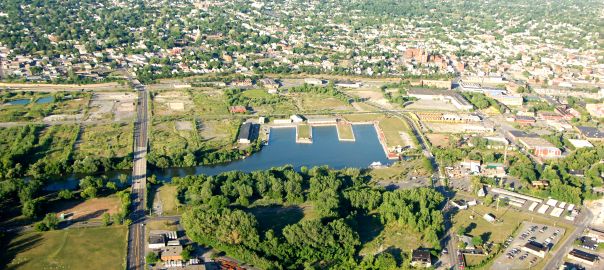
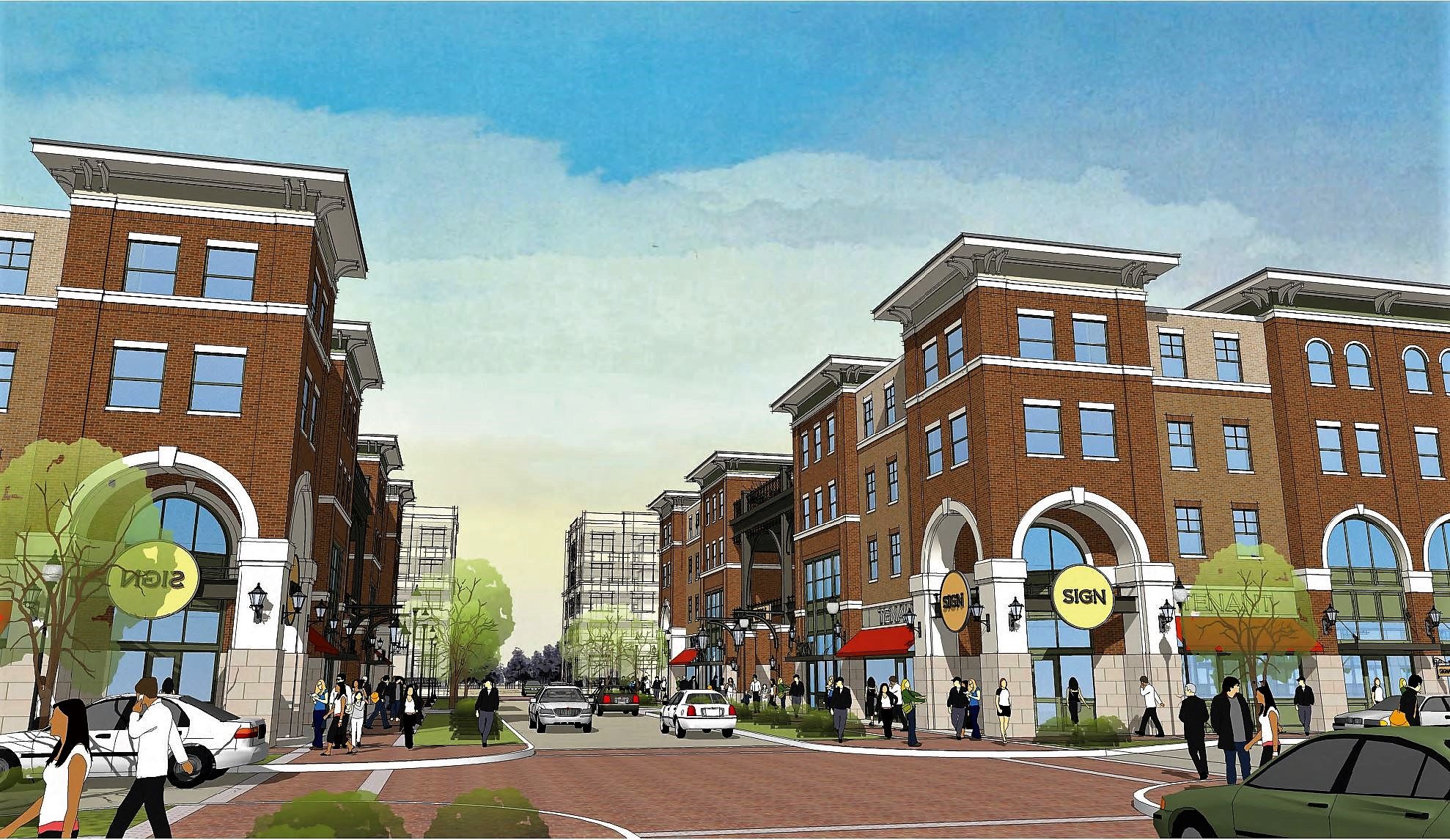
Take the Inner Harbor. The plans call for all different kinds of housing within walking distance of businesses and institutions where people can work, run their errands, and socialize.

But it’s hard to build that from scratch. The whole idea relies on there being lots of different things to do and lots of different places to live, so it won’t work until it’s mostly finished. All of the buildings will be new, so their owners will have to charge high rents to cover the initial construction costs. There aren’t so many people and businesses moving into Syracuse, so there’s not a whole lot of demand for all of those new expensive apartments and storefronts. The result is a place with a few buildings designed to be totally self-sufficient and separated by surface parking lots. An exclusive place where only few can afford to live, and no one can make a full life.

None of that is a problem in Syracuse’s older neighborhoods—places where there is already a supportive mix of businesses and residents, where a variety of buildings offer housing options at a variety of price points, where even a little population growth would be enough to fill whatever brand new high end building a developer might find room to put up. 

How much simpler, then, to focus on the places where people already live, to ask what people need to make life in those places better, and to make those things happen. That’s what’s going on on the Northside, where a range of non-profits, religious institutions, and commercial developers are building on the variety and strength that already exists in the neighborhood with new housing, adult education, and small business support. The same approach would put more a greater variety of housing types in Westcott, bring fresh groceries to the Southside, and renovate Blodgett on the Near Westside—all things that would cost so much less and do so much more than any ‘new neighborhood’ ever could.

Bike Lanes in Winter

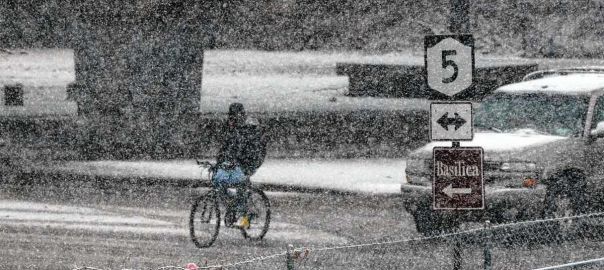
A lot of people are concerned that Syracuse is wasting its time making the streets safe for bikes. ‘It snows here,’ they say, ‘three months of the year no one’s going to be on a bike.’ This do-nothing stance treats bikes as recreation, and it treats all the people who ride them as fitness buffs. It fails to address the reality in Syracuse, which is a lot of people don’t have access to a car, and bikes can and should be a safe, convenient way for them to get around town.

First, let’s get over this ‘no biking in winter’ thing. If we all just stopped using a transportation option because snow made it harder, then no one would drive in the winter either. The slick roads, white outs, and potholes make driving in the winter miserable, but people keep on doing it anyway. It’s not so fun biking in that weather either, but if that’s how you get to work, then you’re going to keep on biking regardless of the weather. Plenty of people on bikes aren’t out there for fun—they ride because it’s the most practical economical way to get around town. It’s more dangerous for them to do that in winter, sure, but that’s exactly why Syracuse needs more bike lanes to keep them safe.

There are people who won’t bike in winter—they weigh all their options and decide that it’s not worth the extra danger to keep biking through winter with all that snow, ice, and all those lousy drivers. How do they get around town during the winter? Not in their own personal cars, that’s for sure. If these people had a spare car lying around, it’s how they’d travel all year. No, they’ve either got to walk or ride the bus when they put the bike up.

But if there are so many bike riders making this decision, then how come we’re not doing more to make walking or riding the bus safer and more convenient in winter? Why did it take so long to plow even a few sidewalks? Why aren’t there more buses? Why aren’t the people so concerned that we not waste money on bike lanes because of ‘winter’ asking these same questions too?

It’s because they don’t really see who uses bikes and what for. These people are car drivers who might understand the idea of taking a Saturday bike ride for fun or whatever, but they’d never mix that up with the real business of getting to work or buying groceries or taking a child to school. They think Syracuse is for people in cars because everybody has one.

But plenty of people don’t have a car, and Syracuse is for them too. Those people need wider sidewalks, they need better bus service, and they also need more bike lanes—especially in the winter

The Promise of the 20-Minute City

Ask some people, and they’ll tell you that the best thing about Syracuse is that it’s a ‘20-Minute City.’ They mean that you can get between any two points in Onondaga County—from Fayetteville to Fairmount, from Liverpool to Lafayette—in 20 minutes or less. This was part of Syracuse’s pitch to get Amazon’s HQ2, it’s part of how the City’s suburbs keep making ‘Best Places to Live’ lists, it’s a big part of the debate around the Downtown I81 viaduct.

Because it’s quick and easy to get to anywhere from anywhere, the 20-Minute City provides people with opportunity. No matter where you work, you can choose to live in any neighborhood. No matter where your live, you can attend any church, your kids can go to any school that will take them, you can visit any attraction. In the 20-Minute City, distance can’t constrain people making those kinds of decisions.

But—and this rarely ever gets acknowledged—all of that is only true if you own a car. Syracuse has been sprawling out for decades, and now everything is so spread out that a lot of people travel twenty or thirty miles just to run their daily errands. No one could reasonably walk or bike those distances, and buses don’t even run to much of the County. In the 20-minute City, opportunity requires a car.

And that means that the 20-minute City doesn’t offer equal access to opportunity. Kids don’t own cars, and as a result are totally dependent on their parents for rides to school, practice, friends’ houses. Plenty of adults don’t own cars either—they don’t have a license, they don’t want the expense, they can’t drive. There are thousands of people in Syracuse in the same situation for all kinds of different reasons, and none of them are free to fully participate in the 20-minute City.

For years, local government has responded to this problem in two different ways. The first—and most direct—response has been to get those people into cars. Onondaga County’s Rides-to-Work program subsidized cab fare for people commuting to work, and its Wheels-for-Work program actually bought cars for people who couldn’t bus, bike, or walk to work in the 20-Minute City. The same idea motivated the County’s support for Providence Services, it inspired a pilot program to subsidize Lyft rides for certain commuters, and it lurks behind the Post-Standard’s position that app-taxis should replace Centro.

All of these ideas have had some success—some people did get to own a car, some people do ride to work with Providence Services, and some people do use Uber to get around town—but none of them has ever been able to provide everybody with the car-dependent-opportunity that the 20-minute City promises. Onondaga County cancelled it’s direct car-subsidy programs because of cost, Providence Services gives rides to 45 people, and Uber is simply too expensive for the poorest people to use everyday (even with billions of dollars of private subsidy from venture capitalists).

The second and more widespread response has been to shoehorn pedestrians, bikes, and buses into spaces designed exclusively for cars. That’s how you get a new crosswalk at the intersection of 57 and John Glenn, bike lanes on the shoulders of the Onondaga Lake Parkway, and buses that loop through the parking lots of strip malls in the suburbs.

None of the new pedestrian or bike infrastructure is any good. That John Glenn crosswalk doesn’t connect to a sidewalk on one side, and bikers on the Parkway have no real protection from speeding cars.

More to the point, that infrastructure does nothing to change the land-use patterns that make life so difficult for people who get around without a car. In the 20-Minute City, homes, schools, churches, and workplaces in a community can all be miles away from each other—separated by distances that no person could cover on a bike, much less on foot, even with the very best bike lane or sidewalk.

It’s not any better for buses. Centro’s system map makes it seem like just about the whole County is accessible by bus, but just try to actually get to Jordan, or Central Square, or Lafayette. Those places only see a couple of buses a day, so it’s not actually practical to reach them except at a few very specific times. That constraint means that people often can’t actually get to work from those places, and so they don’t really have the opportunity to live in those places.

At the same time, the very fact that Centro is running buses all the way out to those little villages means that there are fewer buses running on the lines where people could actually use them. Even Centro’s best bus lines stop running for about an hour during the middle of the day. The vast majority see that kind of service gap all the time. Centro’s existing insufficient budget just can’t buy enough vehicles and pay enough operators to run buses all over the County and to provide quality service in the neighborhoods where lots of people really do ride the bus. People rely on this barely passable service, and starving it of resources robs them of opportunity.

The 20-minute City fails to actually provide the opportunity that it promises. Opportunity, but only if you own a car. Anybody who can’t or won’t accept that ridiculous condition is stuck in a city that ignores their needs, that treats them like a problem to be fixed, that asks why they can’t just get with the program and start driving around like everybody else.
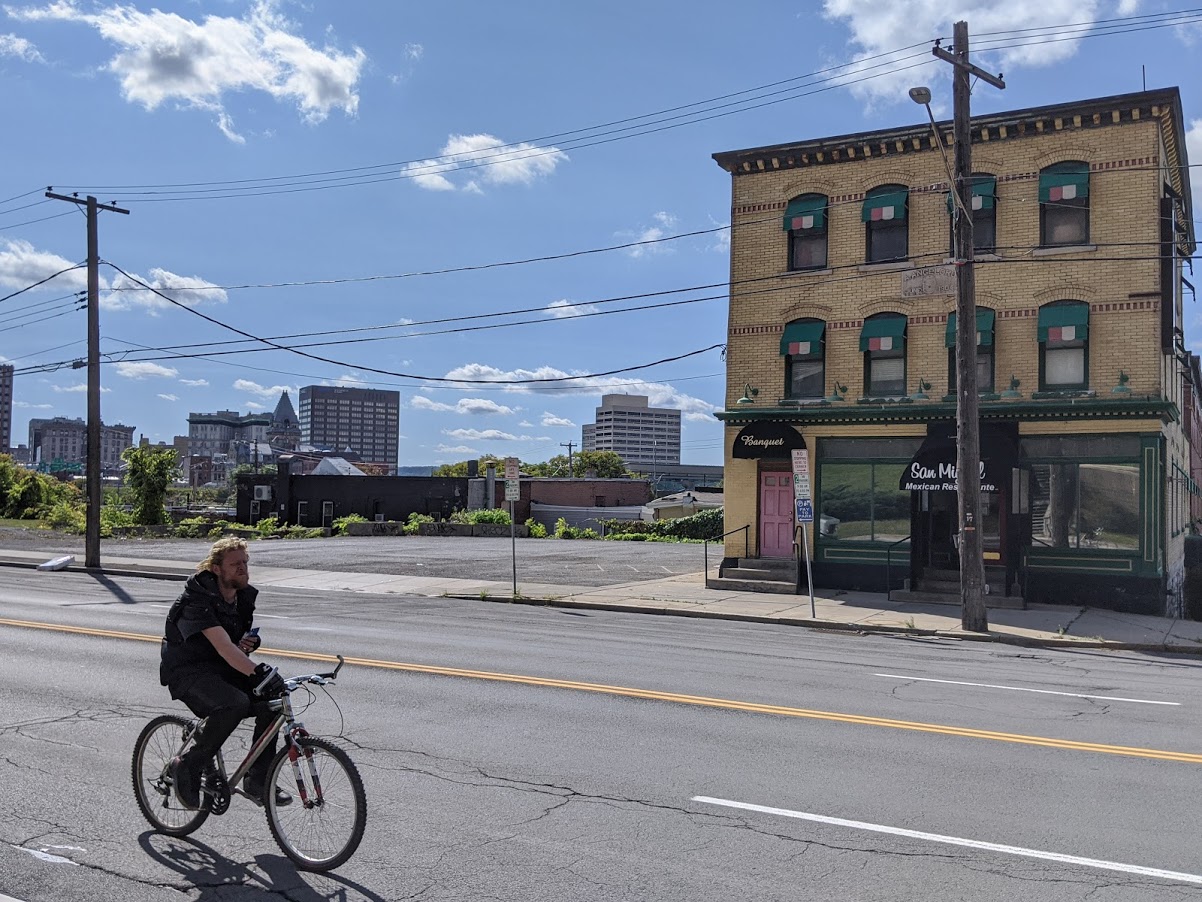
Syracuse needs a better idea of what opportunity should look like and what that means for the 20-minute city. Instead of a place that can get a car anywhere in the county in 20 minutes or less, Syracuse needs to be a place where everybody is within 20 minutes of all their daily needs, no matter how they choose to travel.

This new orientation emphasizes location, distance, and variety where the current 20-minute city ignores all of that in favor of parking lots and wide roads. It’s the difference between a neighborhood like Eastwood where people can walk to the drug store, post-office, and library, bike to the grocery store and school, and catch a bus to work, and a neighborhood like Radisson where all of those same things are perfectly accessible, but only after a 5, 10, or 20 minute drive.

If Syracuse is really going to be a City where everybody has equal opportunity, then it needs more neighborhoods like Eastwood and fewer like Radisson. More neighborhoods where businesses mix with homes, more neighborhoods where small lots and apartment buildings make it so lots of people can live within walking distance of those businesses and the bus stop, more neighborhoods where lots of buses actually serve that bus stop all day, and more neighborhoods where it’s safe, convenient, and pleasant to walk or bike around at all.

None of this should be controversial. It’s what so many people want for their neighborhoods already. We just have to actually make it happen. That means zoning reform, road redesign, and better bus service in those neighborhoods where the new 20-minute City is possible. It also means that when Syracuse builds new neighborhoods—like it’s trying to do at the Inner Harbor, under the viaduct, and at Pioneer Homes—those places need to be places of opportunity for all people from the very beginning.

The promise of the old 20-minute City dominates a lot of people’s hopes for Syracuse. It’s a place where people enjoy boundless opportunity, boundless choice—where no one decision about where to live or where to work or where to shop has any effect on any other decision because all things and all places are equally accessible from anywhere. But that version of the 20-minute City is, at its root, exclusionary. It only works for people who have achieved or accepted car-dependency, and so it only works for some of the people who actually live in Syracuse. The new 20-minute City modifies that promise and makes it equally accessible to all people—no matter where you are and no matter how you get around, you will have the opportunity to make a full life in Syracuse.
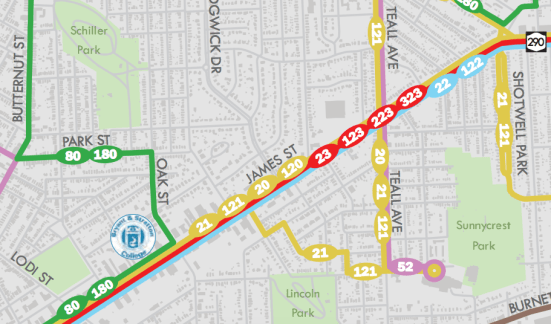
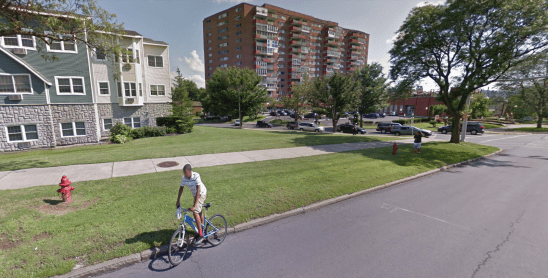
Working with Students for a Better City

University students and people living in Syracuse long-term face a lot of the same problems and should be natural political allies, but some structural barriers keep them from working together to make the City a better place to live.

Take this garbage pickup proposal. City Hall collects trash from small residential properties but not from big apartment buildings. Right now, the cut-off between ‘small’ and ‘big’ is 10 apartments—they’ll pick up the trash from a 10-unit buildings but not from an 11-unit building. City Hall was talking about moving that cut-off to 4 apartments—any building with 4 or fewer units would still get free trash pickup, but now buildings with between 5 and 10 units would need to pay a private company to haul away their trash.

It’s pretty obvious that the result of this would have been to raise the rents on people living in buildings with between 5 and 10 apartments. Contracting out trash pickup would have cost those buildings’ owners money, and landlords would have passed that cost along to their tenants in the form of higher rents.

You can find those buildings (outlined in red) in most parts of the City, but they’re concentrated in Syracuse’s poorest neighborhoods (mapped in yellow). On the face of it, this is a bad policy that would take money out of the pockets of the people who can least afford it.


But a lot of people will look at this map, see that a lot of the affected properties are on University Hill and say something like ‘well that’s student housing, they’re not really poor, they can afford it, screw them.’

A lot of students, if they even ever see this map, will probably ignore it.

Both responses are short sighted. Students really are affected by what happens in the City—this law really would have raised their rent—and for that very reason, they are potential allies in the fight for a better Syracuse. 

But there are structural obstacles that stand in the way of that alliance. The most obvious is students’ transiency. Say this change to garbage pickup had gone through, and several thousand people ended up paying more in rent. Give it a few years, and no university students will be around who would remember the change. Longer term residents can help students understand the small histories, like this one, that have shaped Syracuse over decades.

Another obstacle is the University’s ability to do for students what government should do for everybody. A lot of the time it’s easier for students to get the University to fix a problem than to go through local government—that’s how Syracuse has ended up with parallel segregated quasi-public services like the University’s transit system and police force. These services are insufficient, though, and ultimately fail to protect students from the same threats that people face throughout the rest of the City everyday. Students can improve their own lives by working with the rest of Syracuse to advocate for the kinds of positive change that the entire City needs.

Syracuse’s problems affect every single person living in the City. They are the result of an inequitable distribution of power that can only exist when the people most affected by those problems are kept from working together to solve them. So people in Syracuse hate on students, students ignore people in Syracuse, and both groups continue to face the same pressures day in and day out. If they organized together, they would have the power to make the entire City a better place to live.

Centro at the Fair: 2019

Public transportation allows a lot of people to all get together in one place at one time. That’s a good thing, like when Centro carried a quarter of this year’s record breaking crowd to the New York State Fair. It can also be a good thing in Syracuse every day by getting enough people together to create the kinds of places the City needs.

People ride Centro to the Fair for the convenience—not because it’s cheaper (it’s not), not because they don’t own cars (they do), and not because it’s the environmentally conscious thing to do (no one cares).

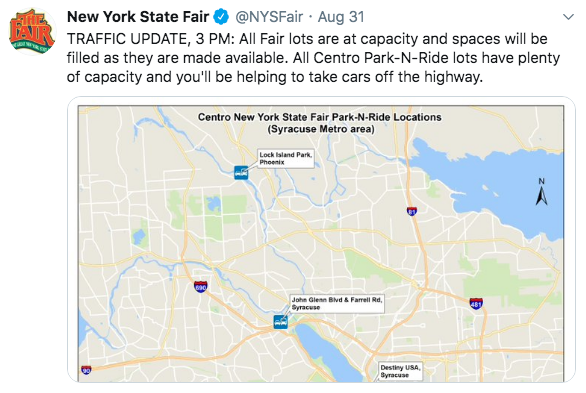
People ride the bus because there’s simply not enough room for 150,000 people and their cars to all fit at the fairgrounds. On Saturday August 31 when the Fair set its all-time daily attendance record, the parking lots were totally full by 3pm. At that point there was plenty of room left for more people, but no more room for cars. Centro squared that circle by getting thousands more people to the Fair without needing any room to store all of their personal vehicles.

The Fair could take a different tack. It could demand that everybody come in their own car, and it could increase attendance by clearing out more space for all those extra cars. The problem there, though, is that when you make more space for cars that means less space for people. The Fair already parks cars on just about all the extra land it’s got, so at this point bigger parking lots would have to take space from the Fair itself—kicking out the RVs or paving over the amphitheater or the midway. That obviously defeats the purpose, though, because then fewer people would want to come to the Fair in the first place.

Compare that to the City itself. A lot of those same people riding the bus to the Fair would never take Centro around town. Syracuse has empty highways and plenty of parking—more than enough to accommodate everybody trying to get there, so why not just drive?

The Fair’s example shows just how damaging that is. Every surface lot, every highway interchange, every parking lane, every driveway is space where someone could run a business, go to school, or make a home. The reason that there’s enough space to accommodate all the cars of all the people who want to be in the City is that excess pavement has crowded out all of the other possibilities that could make enough people want to come to Syracuse to actually fill its space.

So Blueprint 15 will displace people because of parking minimums, Walton Street is going to be a walker’s paradise that you have to drive to, and we can’t get enough space to walk or bike because so much of the street is wasted on car storage. City Hall, developers, everybody plans for cars first, makes enough room for them, and then doesn’t leave enough to accommodate people. The predictable result is empty places without enough neighbors, businesses, or institutions to thrive.

The alternative is to rebalance the City’s transportation options to look more like the Fair’s. Sure it’s possible to drive to the Fair—it’s just a hassle. Anybody who doesn’t want to deal with that can take Centro’s frequent, predictable, convenient buses. Imagine that in Syracuse. Parking lots and interchanges turned into parks, homes, schools, stores, and libraries, curbside parking lanes turned into wider sidewalks, bike lanes, outdoor cafes, and gardens, and bus service that makes it easy to get around town so that people don’t even miss all that empty pavement.
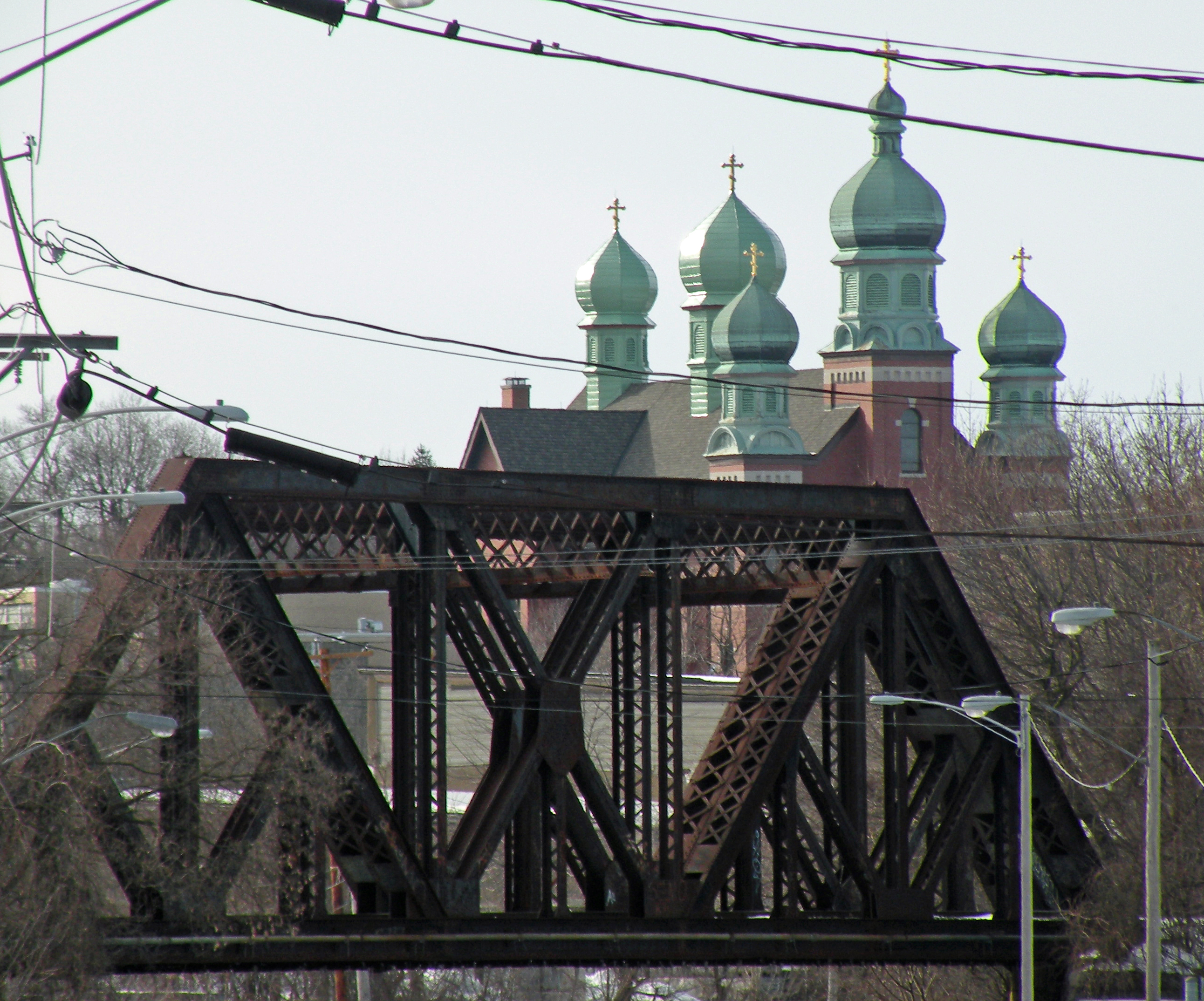
OnTrack’s Shadow

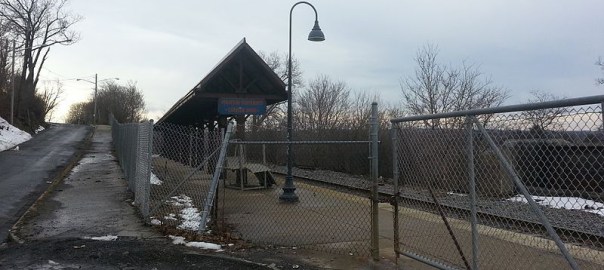
Sometimes it feels like this City can’t get past OnTrack. When Centro is working to run better bus service, people just say ‘bring back OnTrack.’ When I81 is making Syracuse totally rethink what kind of city it wants to be and what that means for public transportation, people just say ‘bring back OnTrack.’ That rail service was a great experiment, but Syracuse needs to move on if public transportation is ever going to do what it needs to do in this town

.   .   .

Syracuse needs better public transportation between the University, Downtown, and the Mall. That’s common sense, and it’s one of the big recommendations from the Syracuse Transit System Analysis. After weighing all the options, the Syracuse Metropolitan Transportation Council drew up a plan to serve that corridor with a new high-frequency bus line.

OnTrack used to do that same job, but a bus could do it better for the simple reason that a bus could do it faster. OnTrack ran on rails that zigged and zagged through the City, tracing a 4.5-mile squiggle from the University to the Mall. Trains took 20 minutes to make that trip. That’s no faster than what Centro’s buses already do running on 3.75 miles of city streets, and SMTC’s plan includes a few tricks that will make those buses go even faster.

Despite that simple fact, people still ask why Syracuse should settle for a fast bus when it could have a slow train instead. That mindset—trains or nothing—deprives bus service of its natural political allies, and it keeps Centro from making even incremental changes to improve the state of public transportation in Syracuse.

At the same time, OnTrack is a poor model if you’re trying to imagine what a truly transformational transit system would look like. It was a half-hearted budget-minded proposal that barely even tried to improve the lives of people who actually rely on public transportation.

Train tracks criss cross Syracuse and its suburbs. The rail lines left over from the City’s pre-car period still run through the walkable villages and neighborhoods where public transit works best, and they extend to major regional population centers like Oswego, Auburn, and Cortland. A true regional rail service could connect all those places, making it possible to get around the entire metropolitan area quickly and conveniently without ever having to step foot in a car.

Existing rail infrastructure

And that’s not the only way to liberate people from automotive dependency. Syracuse has ceded its streets entirely to cars. Take just a fraction of that space back, and the City could have a true rapid transit network with buses running in dedicated transitways through villages and neighborhoods, and in separated lanes on the highways that connect those population centers.

Despite these possibilities, too many ideas about what’s possible in this town start and end with OnTrack—a solitary, short, single-tracked rail line that served too few destinations too slowly and too infrequently. If Syracuse ever builds the political will to spend the money necessary to build a transformational public transportation system, we’ll need to think bigger than that.

.   .   .

OnTrack was a bold experiment. The City needed better public transportation, and instead of tinkering with bus routes Syracuse went big and built an El. As a passenger train service OnTrack failed, but as an experiment it succeeded in showing the City what wouldn’t work and in suggesting new possibilities that could work. That should be OnTrack’s legacy—a visionary investment in public transportation that points the way towards a better future Syracuse.

The Canal in the City

The Erie Canal is maybe the most important thing that ever happened to Syracuse, but there’s hardly any trace of it left in the City. That’s bad—it makes it harder for people to tell their City’s story, and that makes it harder for them to place themselves within that story. Anything that restores the canal’s place in people’s lived experience of the City also strengthens the community by making that shared story more accessible.

Where the canal has been obliterated, symbols can refer to its place in the City. Brickwork on J Ryan’s patio shows where canal boats used to wait to enter the weighlock across the street, the Arterie project painted part of Erie Boulevard blue to mimic water, and Erie Boulevard’s name itself refers to the canal that used to run in its place. The best of these symbols is the fountain in Clinton Square—look at it from certain angles, and it actually looks like the canal still runs through Downtown.

But there are also places where parts of the canal still exist, and we don’t need symbols to mediate our experience of it. Just outside the City in Camillus and Dewitt, the canal itself still runs through public parks. In Syracuse, the old weighlock building is now the Erie Canal Museum, and City Hall recently carefully restored the aqueduct that used to carry the canal over Onondaga Creek.

Right now, Syracuse has an opportunity to do more of all of this. NYSDOT’s DEIS includes a plan for a ‘Canal District’ around the intersection of Oswego and Erie Boulevards. At the same time, the Reimagine the Canal’s taskforce is working to make the canal more culturally relevant to Upstate communities. Syracuse can harness that energy to do something big to restore the Erie Canal’s place in the heart of Downtown.renderingconfluence

That could take a lot of different forms, but here’s one suggestion. Close Erie Boulevard from Clinton Square to Oswego Boulevard—those blocks are basically a parking lot anyway. Excavate the original canal walls—the Clinton Square fountain revealed a small section of the wall, but without context it’s turned into a trash pit. Fill that entire two-block section with water, extending to the wide area where the Erie Canal intersected with the Oswego.

This would essentially extend the idea of the Clinton Square fountain over three full blocks, creating an artificial body of water that’s more recognizable as a canal because of its length. It’s an idea that works in Buffalo, where Canalside recreates a portion of the piers and slips that made that city into an artificial archipelago.

Syracuse doesn’t make sense without the canal. By obliterating it so totally, we have scrambled our relationship with the past and thus with each other, unable to answer the community’s existential question ‘why are we all here?”

An enormous part of the answer to that question is ‘the canal.’ Restoring it, bringing it to the surface, making it a familiar part of people’s daily lived experience in the City is a good thing.

Buses Without Traffic

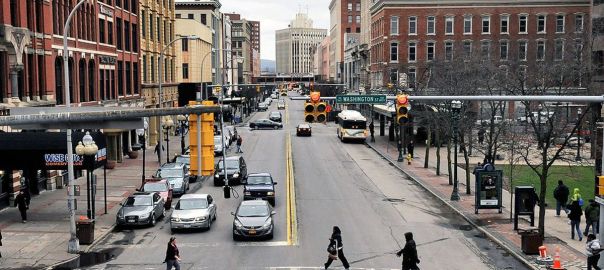
You’re riding the bus when a mother with her two kids rings the bell. The bus pulls over, they get off, and the operator waits for a few cars to pass before he can get back into the travel lane. During those few seconds the light turns yellow and then red. The bus rolls up to the light, and then you sit there, waiting for it to turn green, hoping to avoid a similar delay at the next intersection.

The problem is traffic. The cars running parallel to the bus keep it from pulling away from the curb, and the cars running on the cross street keep it stuck at the intersection. The only sure way for the bus to avoid that kind of delay is to get it out of traffic.

Bus lanes can fix half the problem. They clear a straight path down the street so that buses can pickup, transport, and drop off passengers in a single unobstructed line.

Transit signal priority deals with the other half of the traffic problem. Smart stop lights sense approaching buses, holding a green or shortening a red so that all those riders can get through the intersection quickly.

Bus lanes Downtown and signal priority at key intersections like Park and Harborside Drive would immediately relieve choke points where buses get slowed down now. Expanding those smart technologies throughout the City would improve service across the system, allowing for faster frequent service everywhere.

Eventually, Centro could build a true bus rapid transit line of crosstown bus-only streets with transit signal priority. Imagine riding Downtown on a street reserved for buses. There aren’t any cars, so the lanes are narrower, the sidewalks are wider, and the bus runs right at the curb. When someone has to get off, the bus only pauses long enough for them to step out before it continues down the block, and you never get stuck at a red light.