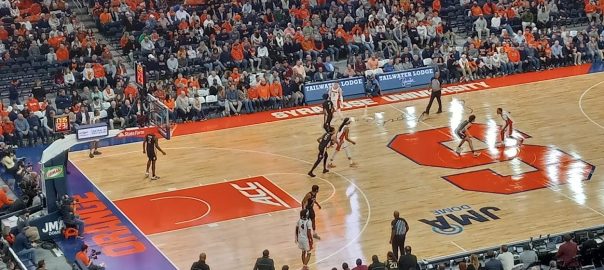
Syracuse is America’s premier second-tier sports town. In Spring and Summer we have the Syracuse Mets, in Fall it’s SU football, then in Winter through to Spring it’s the Crunch and Orange Basketball. With the Crunch, the Mets, and Orange football and basketball, we’ve got teams competing in the second-highest league of each of the ‘big four’ sports: the AHL, AAA baseball, Power Four college football, and Power Five college basketball. All twelve months of the year, you can catch a pretty well-attended game featuring a pretty high level of competition for a pretty reasonable price.
That’s pretty cool for a metro area this size, but what’s even cooler is that Syracuse is the only town in America where this is true. Of the more than 100 cities with a AAA baseball team, and AHL hockey team, a Power Four college football team, and a Power Five college basketball team, none besides Syracuse has all four.
Some come close. Bigger cities like Chicago and Los Angeles boast big universities and one or two minor league teams, but those are really major league towns. Others—like Columbus, OH—overshoot the mark by having one major league team alongside a few minor league and college programs. Places like Des Moines have a nearby neighbor like Ames that round out their complement of second-tier teams, but they can’t make it on their own.
The four other towns that come closest are Durham, Louisville, Tucson, and Austin. Durham has the Duke Blue Devils and the Durham Bulls, but no AHL team (the NHL Hurricanes play in nearby Raleigh). Louisville has the AAA Bats and the Cardinals competing in the ACC, and they used to have an AHL franchise too, but the Panthers left town in 2001. Tucson has the AHL Roadrunners and the University of Arizona Wildcats, but their pro baseball team plays in the Mexican Pacific League—well below AAA. Austin is home to the Texas Longhorns, and the Austin metro area includes the suburban municipalities of Round Rock, TX (with their AAA baseball team, the Express) and Cedar Park, TX (home of the Texas Stars).
Tonight, ESPN is televising the basketball game between the Tennessee Volunteers and the Syracuse Orange to a national audience, and you can still buy pretty cheap tickets to join fifteen to twenty thousand other people in watching that game in person. It’s a little thing, but it’s part of what makes this a fun place to live, and we are uniquely lucky to have it.
It can be difficult to have a frank, public, political conversation in Syracuse. We are often very polite and rarely direct. You hear things around town, but we don’t really have it out. Yet there are real issues facing our City where people sincerely disagree, and in those cases our civic discourse would really benefit from a blunt exchange.
Take one of the most controversial, and important, local governance issues of the past two years: Good Cause Eviction. Sure, there was a lot of discourse about it. People wrote op-eds, the Common Council invited interested parties to speak at committee meetings, the Post-Standard reported on all of it. But never was there a public confrontation between the parties who disagreed about the law. You’d hear landlords make their case, and then—at a separate time—tenants would make theirs. Even people who followed all this talking could be left confused about what Good Cause would actually do because there was never an opportunity for a back-and-forth discussion to clarify what disagreeing parties actually disagreed about.
To opponents of this incredibly common sense measure, I would like to ask a series of questions:
If a tenant calls codes/otherwise advocates for conditions to improve at their home, what is preventing a landlord from non-renewing their lease in retaliation the next time it is up? Should the landlord be able to do that? How would a tenant be able to prove this was retaliation and stay in their home? If this isn’t acceptable to you, how can you vote against good cause eviction?
Maybe they have good answers I haven’t thought of. Maybe they will realize the overwhelming error of their ways and come to have correct opinions. Either way, we will have had it out and clarified what it is we’re actually talking about when we talk about Good Cause.
There are probably a bunch of different ways to facilitate more honest public conversations like that, but I have one idea that would also be a lot of fun. I call it The Square.
We get people together on a Friday around 5 PM in a public square-shaped space—Lemp Park, maybe—and hash out some disagreement in a very loosely structured way. The interested public are all invited, and encouraged to picnic, and maybe bring travel mugs filled with various beverages. It will be festive!
Some of the conversations would be confrontational, some may be more chill and informational, some might even end in agreement, but they would all help fix the issues in the town.
“Affordable housing” has at least three different meanings in Central New York right now, and as more and more people are talking about housing, those conflicting definitions are confusing our conversations on the topic.
The first and most common meaning is something like ‘reasonably priced housing.’ Housing costs were pretty low and pretty stable around here for decades before the pandemic. Most people who had a full-time job expected to be able to find housing where they wanted to live without breaking the bank. Our area’s ‘affordable housing’ meant people could comfortably find a place to live, and it has long been one of the first things people point to when talking about local quality of life. Maybe you couldn’t find a mansion, but there are plenty of starter homes, fixer uppers, and good deals out there for people to find housing they can afford.
At root, this is a first-person understanding of affordability. What’s ‘reasonable’ is what I’d be willing to pay, and a lot of people who paid a lot less for their housing a long time ago find today’s prices unreasonable. People who paid $75,000 for their house 30 years ago and might have thought they could sell for $150,000 in 2019 can’t believe similar houses in their neighborhood now go for $300,000. People who have paid $900 a month in rent for years are now seeing apartments listed for $1,500, $2,500, and $3,500. It’s shocking, and people reasonably ask “who can afford that?”
The second definition of ‘affordable’ attempts to answer that question. Banks and nonprofits and policy people consider housing to be affordable when it costs 30% or less of the occupying household’s income. The idea is that when a household spends more than 30% of their income on rent or the mortgage payment, that starts to squeeze out their ability to pay for other necessities like food and transportation. This is the standard government agencies use to come up with measures like “about half of all renters and one fifth of all homeowners in Onondaga County are cost burdened.”
This definition of ‘affordable’ is based on a relationship between the cost of individual homes and the incomes of individual households, so it’s impossible to say that any rent or mortgage payment is or isn’t affordable without knowing how much money the people who live in it make. According to this definition, those $3,500-a-month apartments in Downtown Syracuse or Cicero are ‘affordable’ to households making $140,000 a year, and they’re ‘unaffordable’ to households who do not.
Think of this as a way to universalize the first definition of affordability by creating a standard that accounts for all income levels. Like any universal standard, it has its exceptions—households who don’t spend as much on transportation can ‘afford’ to spend more on housing, for instance—but it establishes a definite, measurable goal for public policy to pursue.
The third definition of ‘affordable’ outlines the tools public policy can use to achieve that goal for households with lower incomes. ‘Affordable Housing’ (with a capital ‘A’ and a capital ‘H’) refers to subsidized, income-restricted housing. This kind of housing requires some level of government intervention that trades public money (or some other in-kind benefit like free land) for a developer’s or landlord’s agreement to set rents at levels that households with lower incomes can afford.
This definition of ‘affordable’ is based on any housing unit’s participation in a program that guarantees it will be occupied by a low-income household. These programs all determine who can live in a unit with a measure called the Area Median Income (AMI). The US Department of Housing and Urban Development calculates AMI every year for every metropolitan area in the country. In Syracuse, the 2023 AMI for a 3-person household is $84,000. HUD considers households that only make 80% of AMI ($67,200) to be low-income, households that make 50% of AMI ($42,000) to be very low-income, and households that make 30% of AMI ($25,200) to be extremely low-income. Different Affordable Housing programs restrict occupancy to these different levels.
These three definitions are all related and sometimes end up meaning the same thing. A person making $35,000 a year might think that $875 (30% of their monthly income) is a reasonable monthly rent for a 1-bedroom apartment, and that’s the rent you’d get in an apartment restricted to households earning 50% of AMI. In that situation, different people can use different definitions of the term ‘affordable’ and still understand each other.
Other times, these definitions do not line up so well. A reporter might ask a developer if their proposed apartment project will include affordable housing and really just be asking what the rents will be. The developer might respond ‘no’ because they don’t intend to apply for funding under any of the Affordable Housing programs that would require them to restrict occupancy to low-income tenants. A person reading about the project in the newspaper might then conclude that all of the apartments will be unreasonably expensive or unaffordable. In this situation, all three people understand the term ‘affordable’ to mean something slightly different, so they misunderstand each other.
Onondaga County is talking about housing a lot now. That’s good—this is a conversation we need to have—but it’s going to be a much more productive conversation if we can get a clearer understanding of what we all mean by key terms like “affordable housing.”
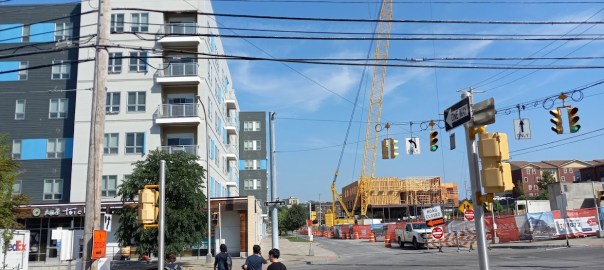
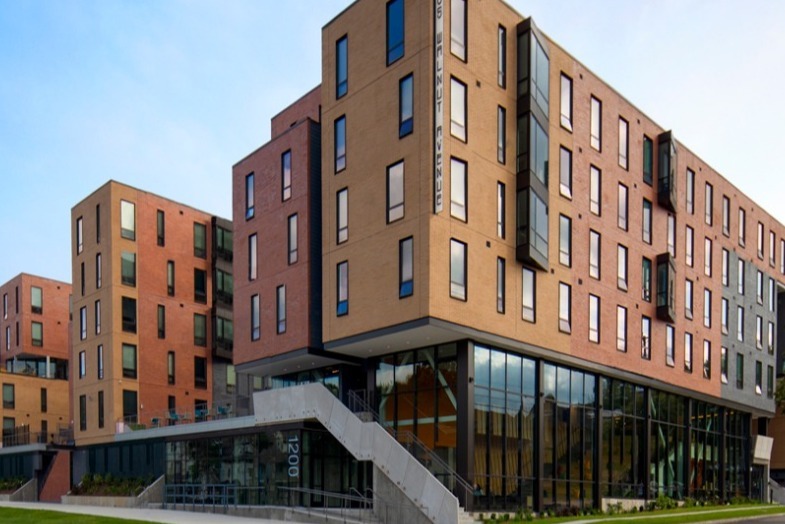
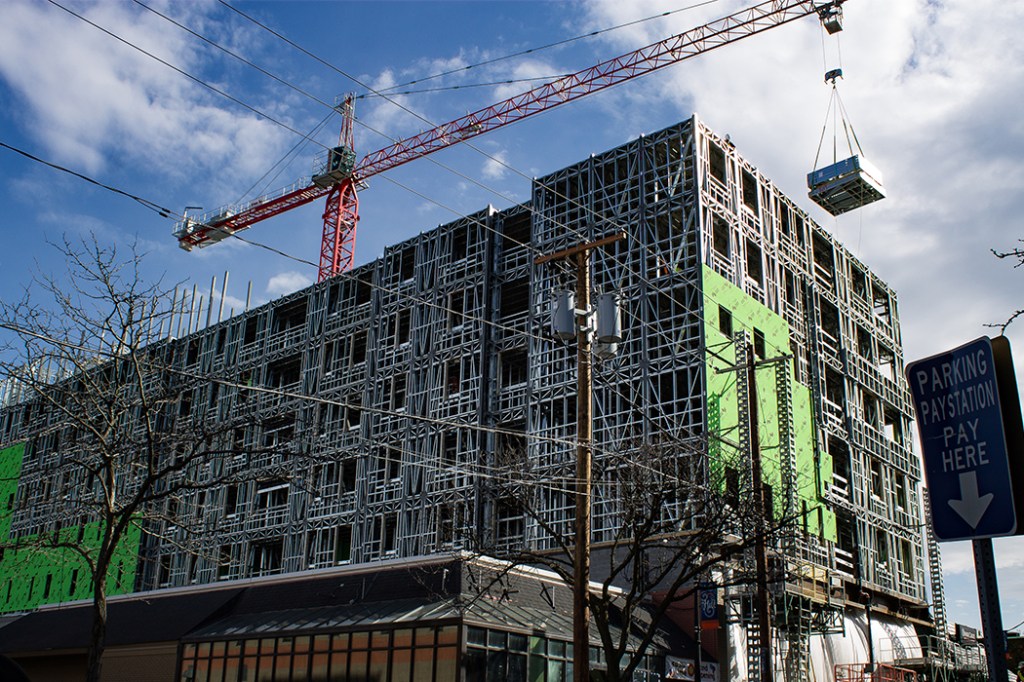
The large apartment buildings going up around University Hill expand housing opportunity in surrounding neighborhoods, and that’s a good thing.
These buildings—505 Walnut, Theory Syracuse, The Marshall, UPoint, etc—attract a lot of scorn because they’re big, new, expensive, and primarily marketed to university students. ‘Why’ a lot of people ask ‘do we need more luxurystudent apartments when so many people in this town struggle to pay the rent?’
The short answer is that we don’t need them—students do. Students are people, and they need housing just like anybody else.
A more complicated answer is that we (anybody trying to secure housing in Syracuse) need these new apartments because students need them. To see why, it’s helpful to think about how university students differ from other tenants in the City.
First, they are often willing and able to pay more in rent than many other Syracuse tenants. Syracuse University and LeMoyne College charge students between about $900 and $1,550 per bedroom per month for on-campus housing. Student loans and/or family savings cover that cost, but those sources of income can also be used to rent off-campus housing too. Compared to the on-campus options, splitting the $4,500 rent on a 6-bedroom apartment with five other roommates is a pretty good deal—even though that’s well out of reach of any large family that might also want an apartment that size—and a lot of student tenants jump at the opportunity.
Second, they are geographically constrained. A good number of students move to Syracuse for school, don’t have much information about the City, and don’t have the time or ability to chase down Craigslist leads all over town. Students tenants also often need to be able to get to their campus without a car, and that means finding housing within walking or biking distance or on a bus line that goes to campus. All of this means that student tenants are a sort of captive market for University-area landlords, and that gives those landlords the power to set their rents at prices student tenants will pay.
Third, they evict themselves. Landlords value the ability to get rid of tenants who can’t pay high rent or are loud or demand basic maintenance or need reasonable accommodations for a disability or whatever. Landlords cherish easy evictions, but tenants who want long-term housing stability have some—not enough, but some—rights that allow them to fight off eviction and stay in their homes. Student tenants, however, often voluntarily move every year and are almost guaranteed to vacate the apartment after two years, so landlords who exclusively rent to student tenants never get ‘stuck’ with someone they consider to be a ‘problem tenant.’
If you’re a tenant looking for a relatively inexpensive, long-term home, you do not want to be competing with student tenants for an apartment. Lot of landlords would prefer to rent to student tenants, and they can usually screen you out by just charging more than you can afford.
This is also a problem for prospective homebuyers. When building new housing isn’t an option, landlords looking to rent to tenants will simply buy existing housing—including 1 and 2-family homes commonly purchased by owner-occupants—and operate it as rental units. If you’re trying to buy a house for yourself, you do not want to be competing with landlords who rent to student tenants. They often have better access to financing and are often willing to pay more because the rent can cover a pretty big mortgage payment.
So it is a very good thing for most Syracuse tenants and prospective homebuyers that a few big landlords are building big new apartment buildings specifically for student tenants, and lots of student tenants are choosing to live in those buildings. Because of those big new buildings, fewer student tenants are competing with non-student tenants for apartments in the older neighborhoods around Syracuse University, and fewer landlords are competing with prospective homebuyers to purchase older housing to rent to students in those neighborhoods too.
Clearly, Syracuse’s housing problems are a lot bigger than “student tenants shape the rental market in ways that increase housing purchase and rental prices on and around University Hill,” and while big new student-targeted buildings can help solve that problem, they can’t solve every housing problem in the City.
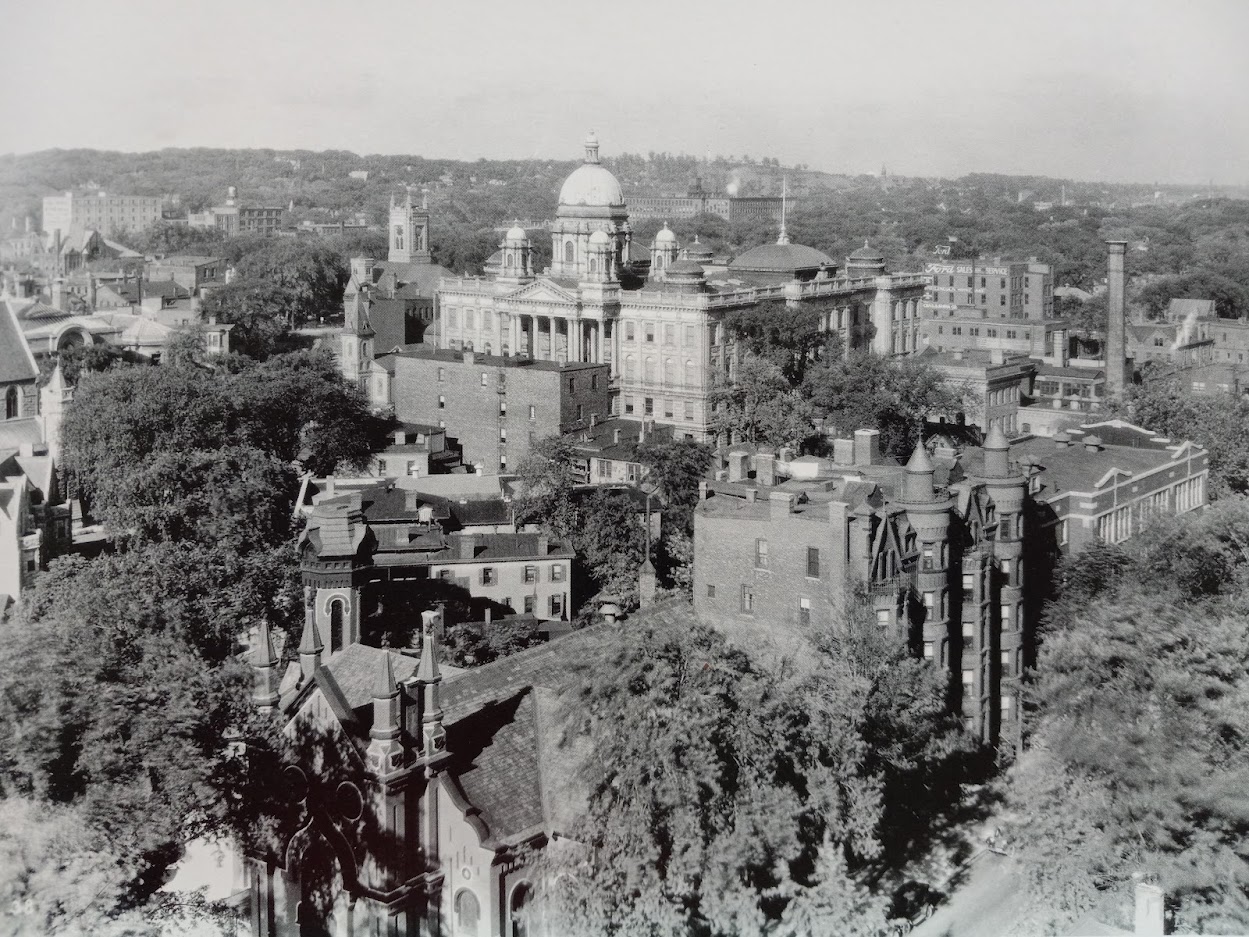
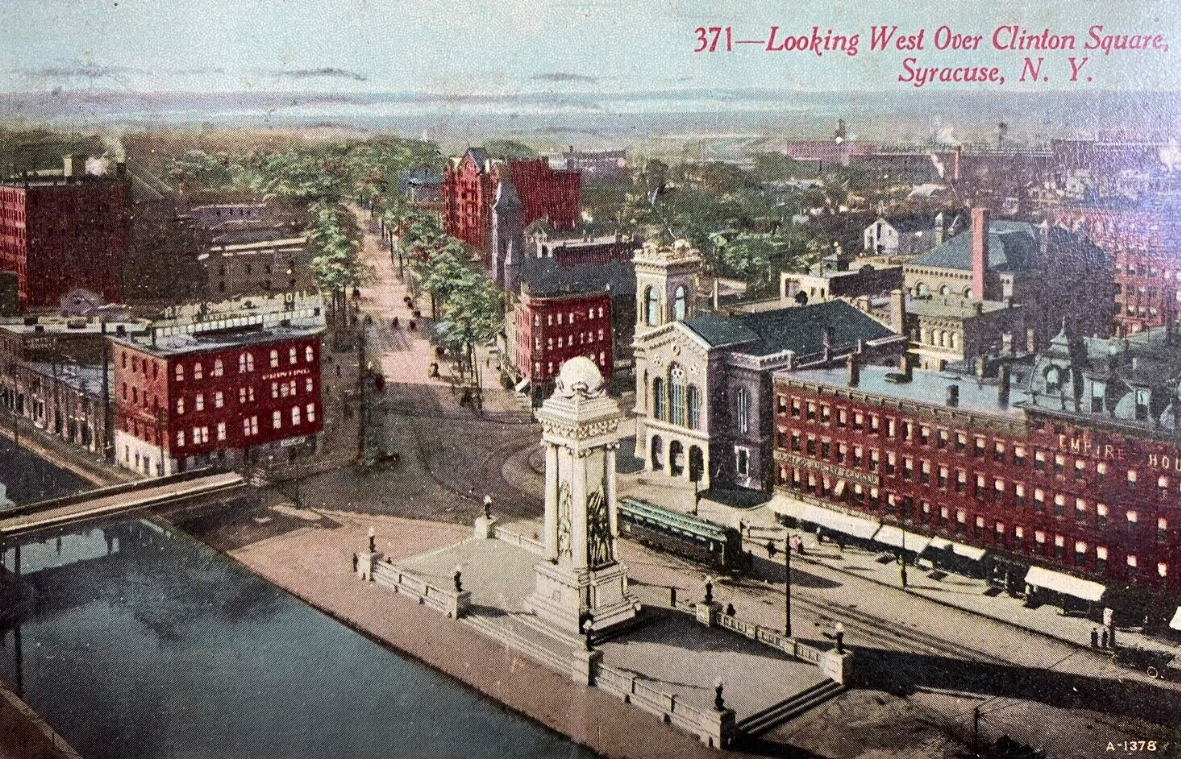
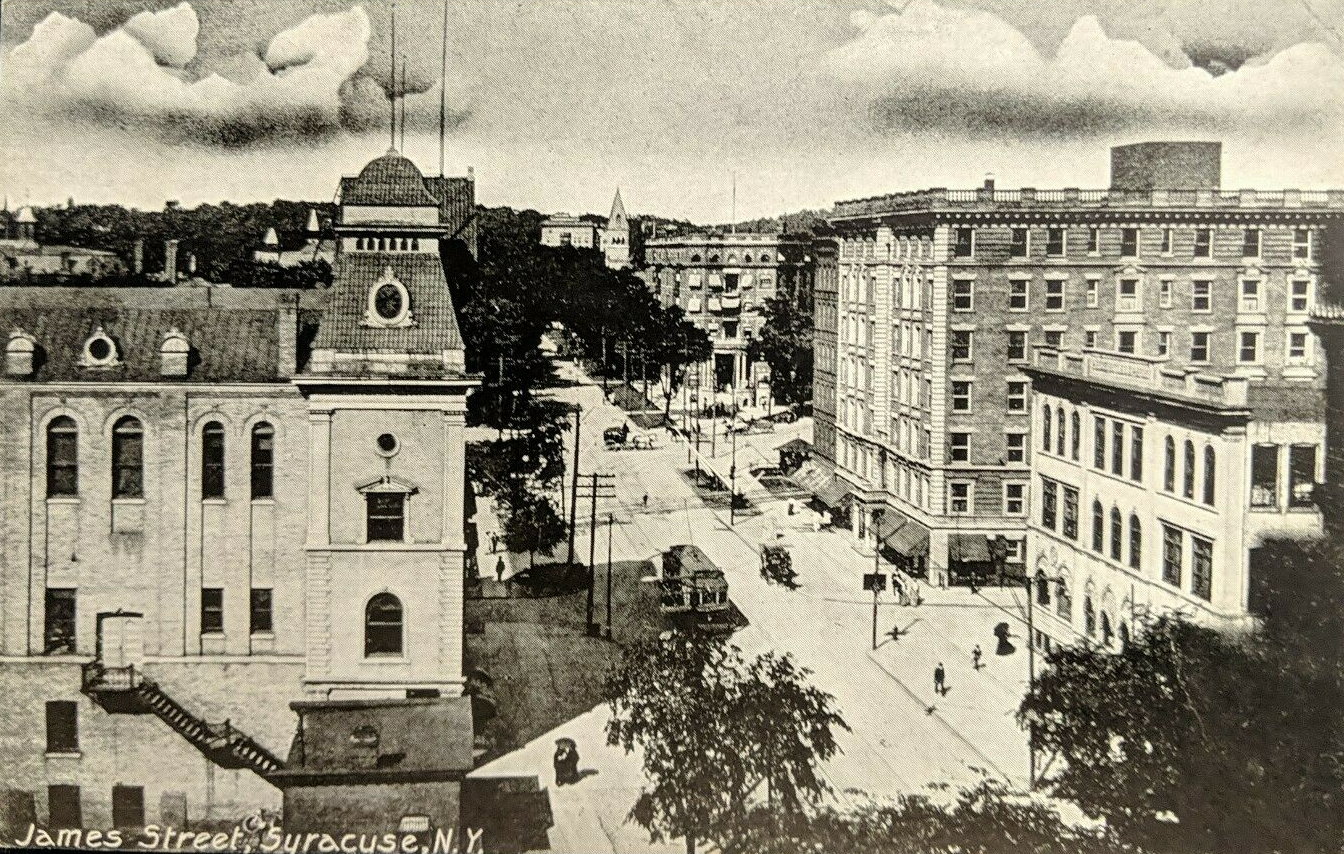
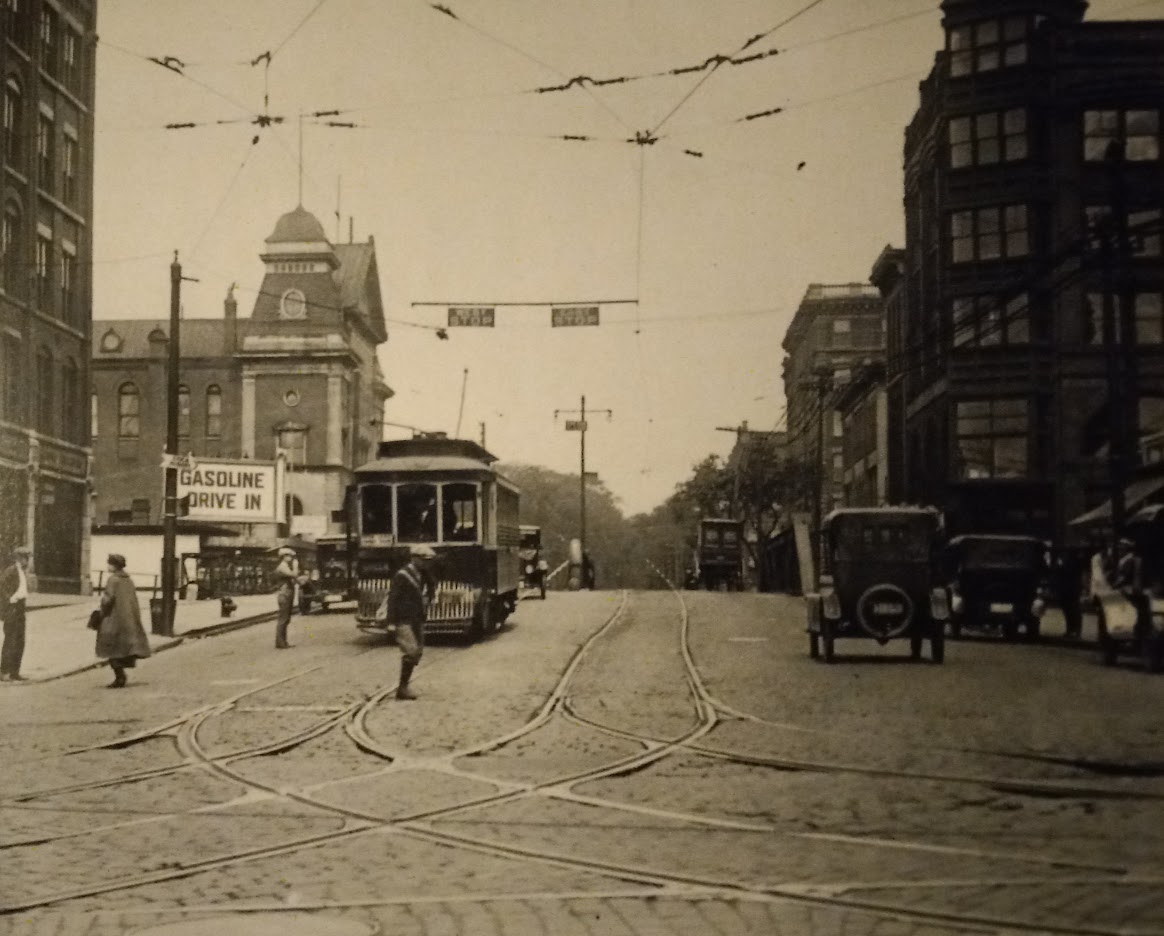
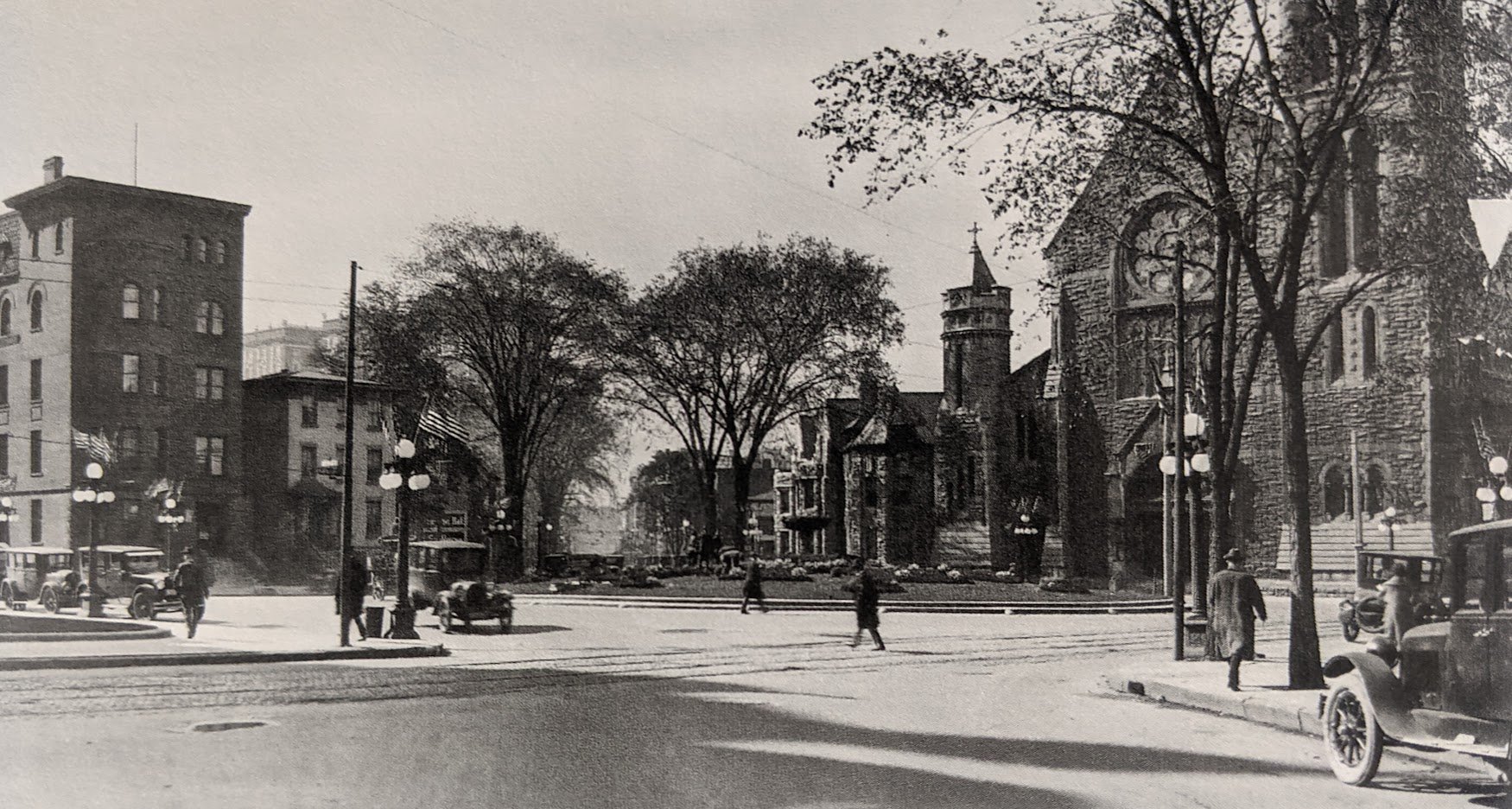
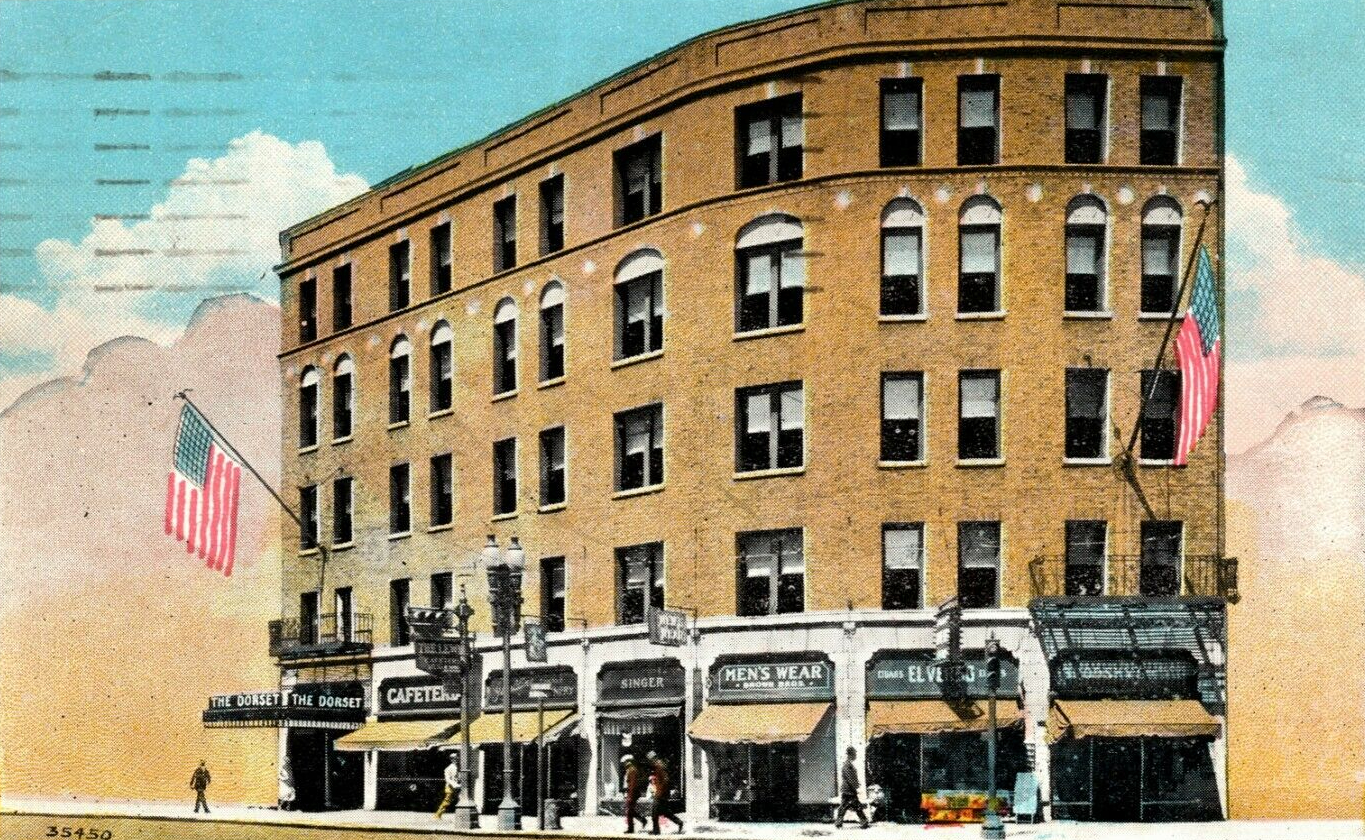
The most striking change in Downtown Syracuse’s building stock over the last 100 years is the almost total removal of apartment houses.
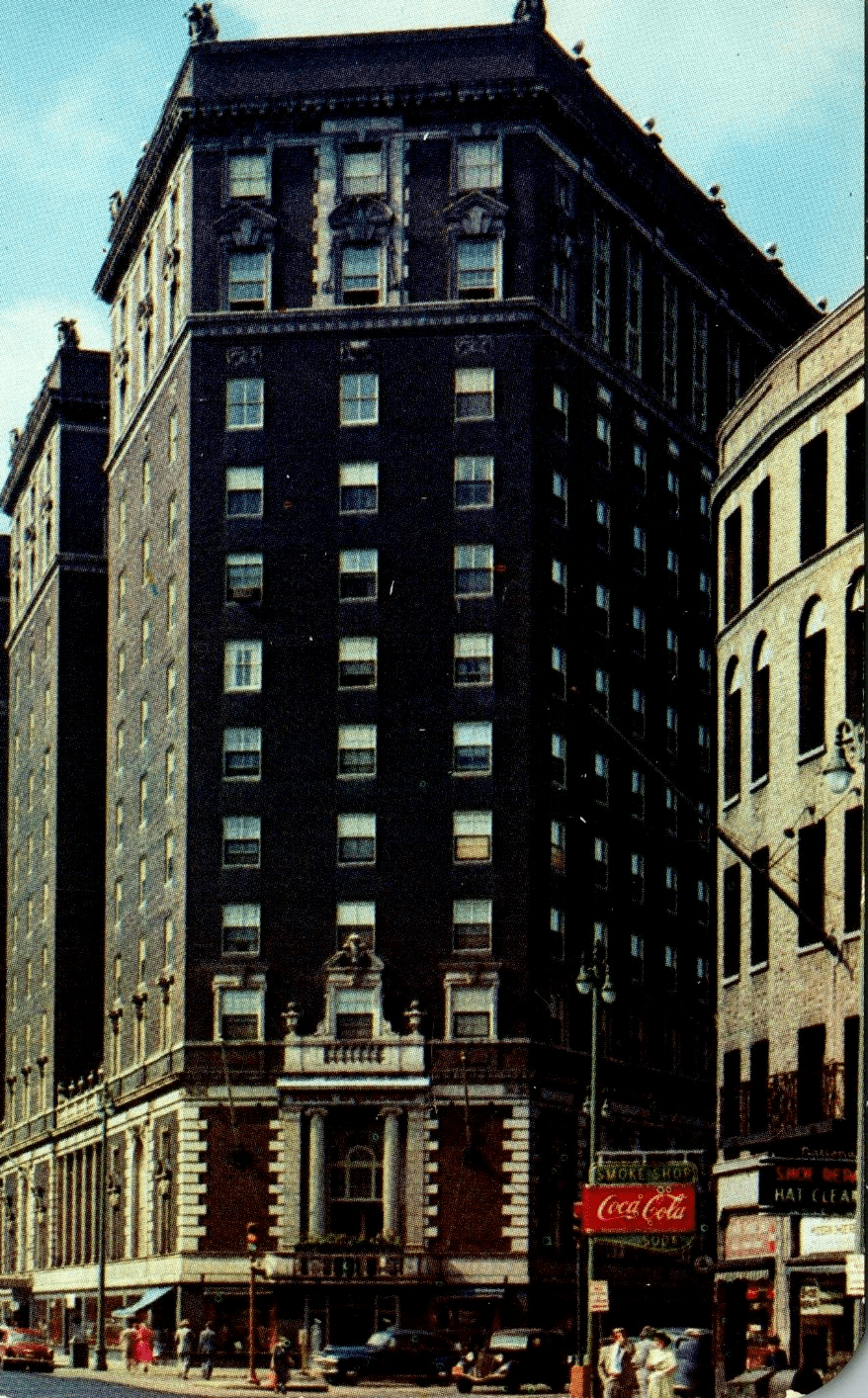
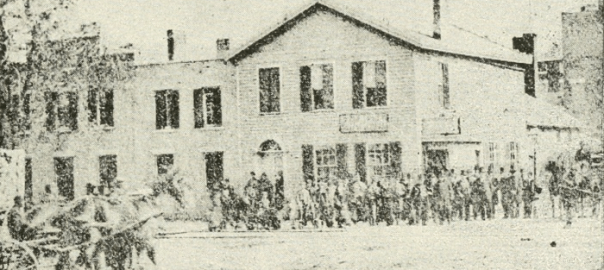
Downtown’s old apartment houses weren’t as famous as major public buildings like the Third County Courthouse of the Yates Hotel, but they were home to hundreds of people at any given time, and their loss explains why Downtown is home to less than half as many people today as in 1930. And because they were less photographed and less missed, it’s easy to forget just how numerous they used to be and just how many people used to live Downtown.
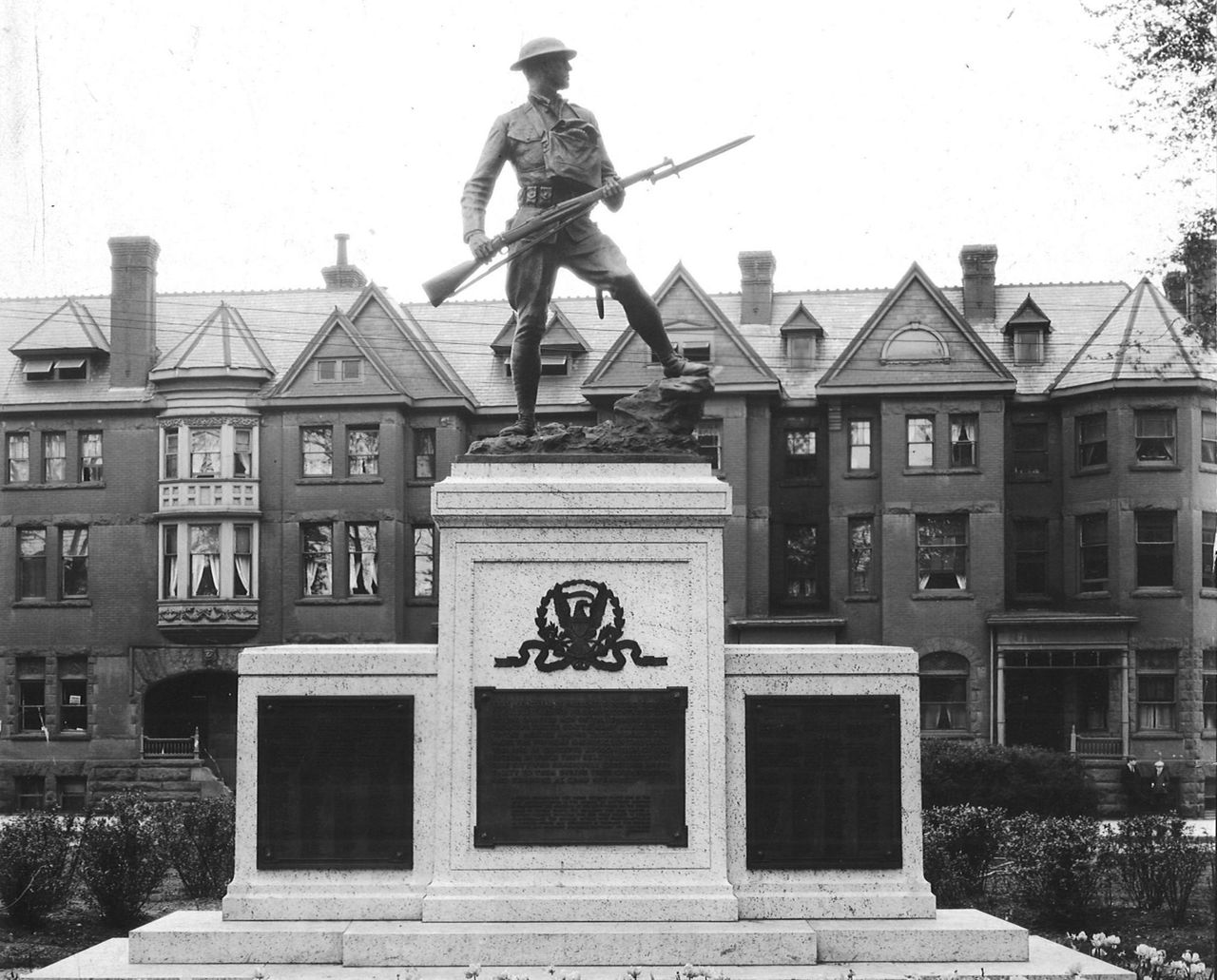
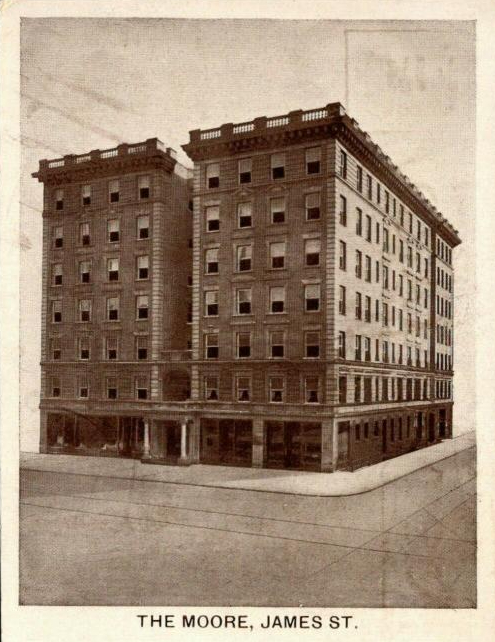
As Syracuse seeks to unmake this Urban Renewal era mistake and knit Downtown back into the the City’s fabric, it’s helpful to see pictures of these lost homes remember that the neighborhood was full of housing for most of its history. Here are some rarely seen photos of just a few of Downtown’s demolished apartment buildings.
This short list doesn’t capture anywhere near the volume or variety of housing that existed Downtown before urban renewal. It doesn’t include other apartment buildings like The Mabelle (513 S Salina St), the Gendreda Flats (620 S Warren St), the Adella Flats (616 S Warren St), the Langdon Flats (614 S Warren St), the Kenyon Flats (610 S Warren St), the Westminster Flats (206 E Harrison St), the Lydon Flats (129 N State St), the Charles Flats (417 E Jefferson St), The Madison Flats (315 Madison St), The Mowry Apartments (100 W Onondaga St), The Florence Flats (101 W Onondaga St), Lyons Flats (200 W Adams St), or Merrick Place (201 W Adams St). It also doesn’t include the many boarding houses, rooming houses, and tenements that used to cover the land bounded by and underneath today’s elevated highways. And it doesn’t include the dozens of hotels that housed both short- and long-term residents before urban renewal.
But this short list does show that there used to be a lot more housing Downtown and that recent residential construction in the City’s center is a reversion to our historical mean rather than some strange new phenomenon. We’ve got a lot more building to do before Downtown can house as many people as it did 100 years ago, but we’re getting closer all the time, and that’s a good thing.
Syracuse has a housing crisis, but when a new apartment build gets proposed there’s usually someone who asks whether Syracuse really needs any new housing. The thinking behind that question goes something like this: ‘Syracuse’s population is basically stagnant, we already have plenty of housing, why should we build any more?’
There’s good sense there. Syracuse’s overall population is stable, and it is good to invest in the City’s built infrastructure like its existing but deteriorating housing stock.
But there are plenty of reasons Syracuse also needs more new housing and why any new construction is, all else equal, a good thing. Here are three of those reasons.
population change from 2000 to 2020 (blue is growing, red is shrinking)
Some neighborhoods are growing
Syracuse’s overall population stability masks wildly divergent trends between neighborhoods. In general, since 2000, while the City as a whole has neither gained nor lost population, there has been a huge surge in the number of people living on the Northside, University Hill, and Downtown. At the same time, the South and West Sides have seen significant population loss.
Many growing neighborhoods compete for residents with suburban areas rather than other City neighborhoods. When these places put artificial limits on the number of families who can move in, they spur sprawl and rising prices.
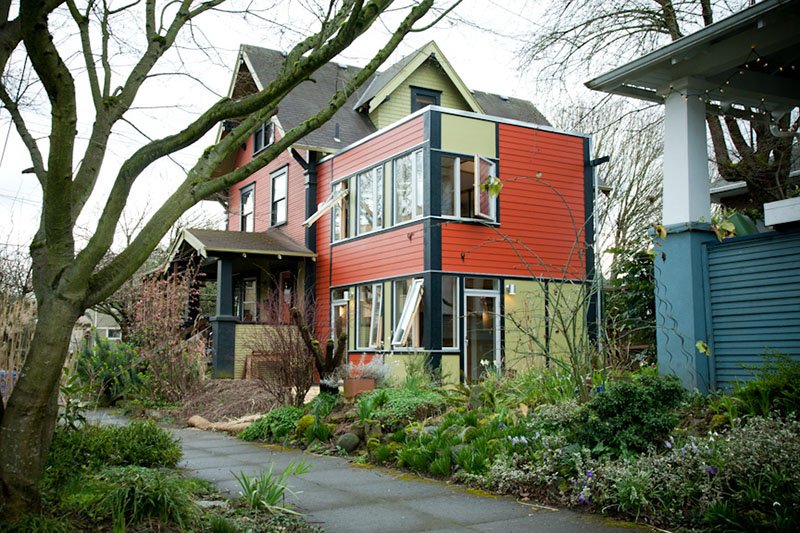
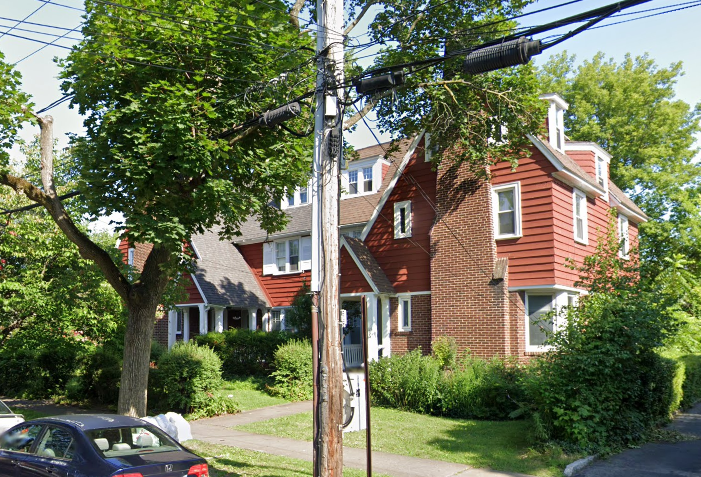
This house doesn’t exist anymore.
Existing housing is falling down
It shouldn’t be news to anyone that Syracuse has lots of uninhabitable housing. In neighborhoods with fewer families than homes, lots of older houses and apartments have sat vacant for years, and our harsh winters and wet summers have done lots of damage to their roofs and foundations and walls.
Some of these houses can be rehabbed—and some contractors make money flipping dilapidated Land Bank houses—but many will simply never house another family. There just aren’t enough people willing to pay enough money to cover the enormous cost of renovating them—at least not at scale—so they sit empty until they fall over or get demolished.
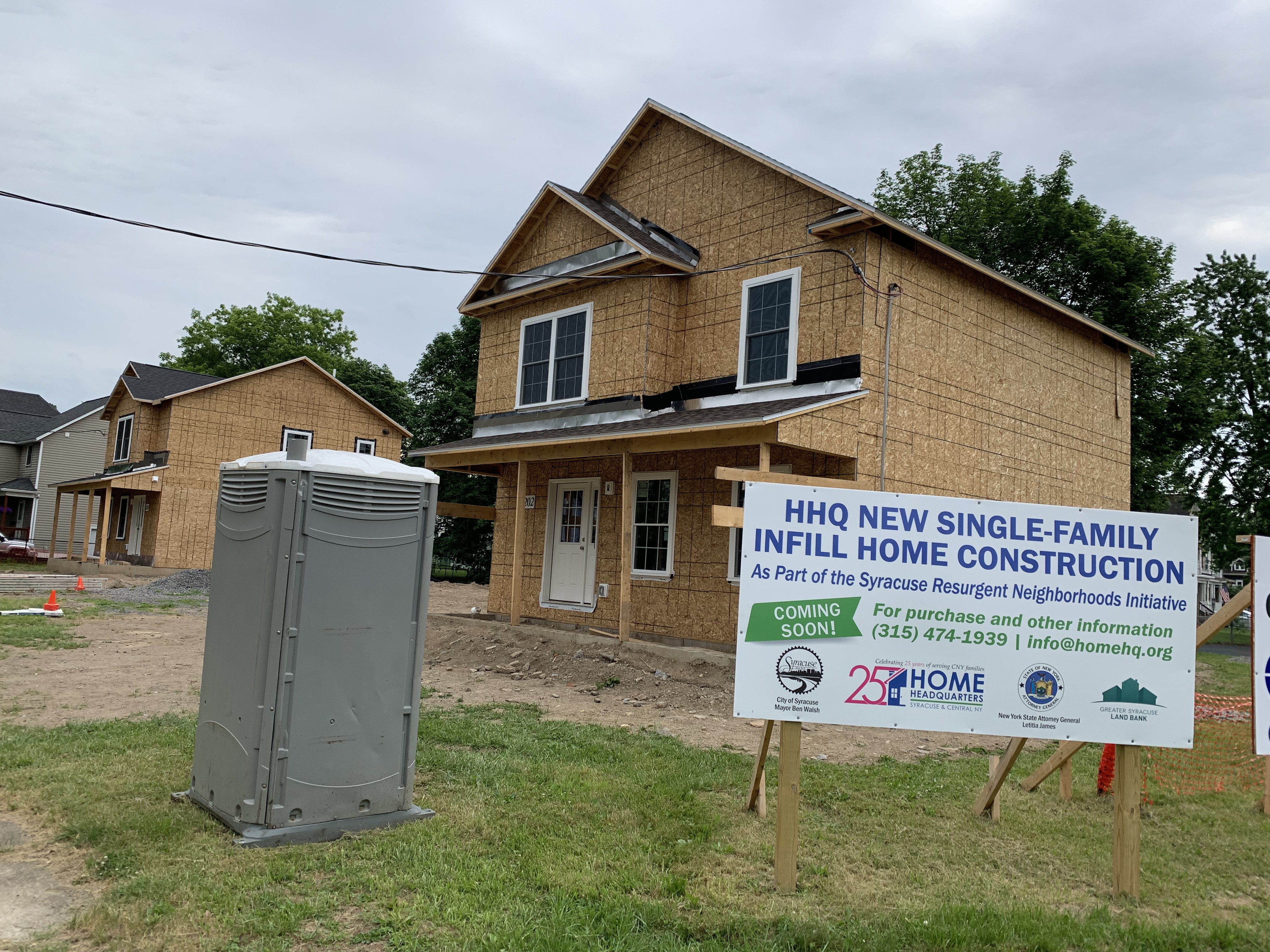
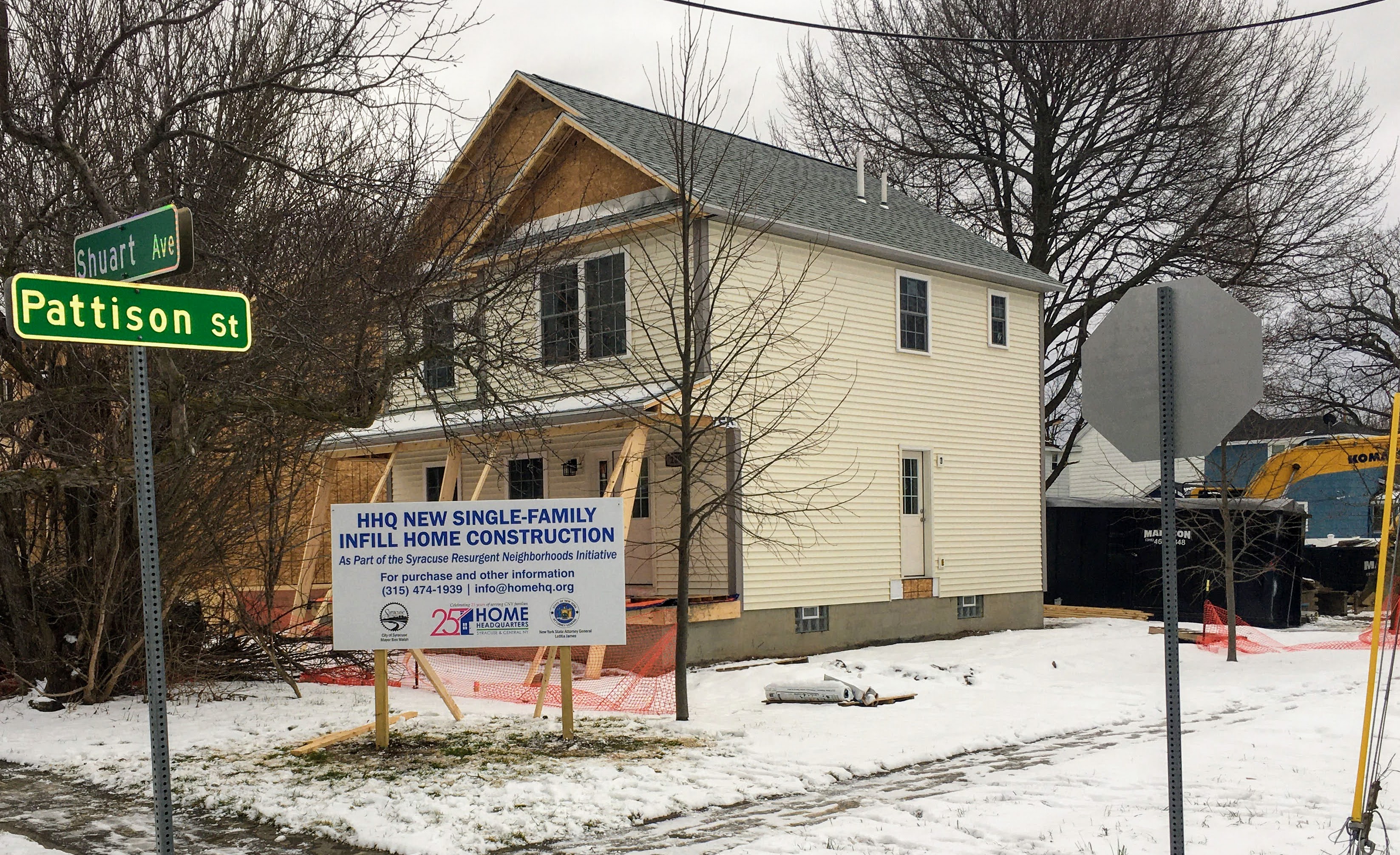
With so much housing rotting away every year, Syracuse needs new construction just to house a stable population. That’s the idea behind City Hall’s Resurgent Neighborhoods Initiative. They assemble contiguous vacant parcels in targeted neighborhoods and build brand new houses to fill the space left by demolished dilapidated housing.
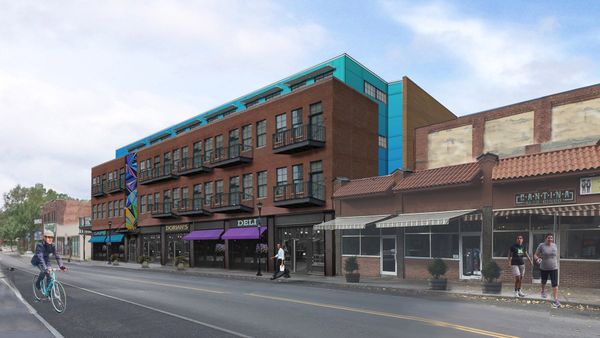
This proposed building would have added 34 1-bedroom apartments to a neighborhood that needs them
Households are shrinking
More than 2 out of every 5 housing units in Syracuse were built before World War II. Life’s changed a lot since then, and Syracuse’s existing housing doesn’t exactly match the community’s needs. In particular, households are much smaller than they used to be (this is true across America). The average Syracuse household in 1940 contained 3.6 people. In 2020, that number was down to 2.6.
This demographic shift creates a need for new housing in two ways. First, smaller households mean Syracuse needs more housing to accommodate even a stable population. 205,967 people lived in Syracuse in 1940, but they only made up 57,009 households. 2020’s census counted just 148,620 people in the City, but those people formed 59,336 households. Even though 28% fewer people lived in Syracuse in 2020 than in 1940, that smaller population filled more homes.
And second, changes in household size create new needs for different kinds of housing. In 1940 there were 4,526 one-person households in Syracuse—they accounted for 8% of all households in the City. In 2020, there were 21,913 one-person households in Syracuse, and they accounted for 39% of all households.
But Syracuse’s housing stock has not kept up with the huge increase in 1-person households. Just 13,158 occupied units are either 1-bedroom or studio apartments. That means plenty of 1-person households are living in homes with more than one bedroom. Some of them may need the extra space, but many probably do not, so they are overpaying and competing for space with larger households.
That’s why so much new construction includes lots of 1-bedroom apartments—Syracuse needs more of that kind of housing because of huge demographic shifts that have occurred since most of our existing housing was built. Matching Syracuse’s housing stock to its present-day population is going to require a lot more new construction.
Syracuse needs new housing. We need it to make more room for people in the places they want to live, we need it to replace the housing that’s been allowed to fall into disrepair, and we need it to meet the new needs of new generations.
The Near Eastside needs more small streets. A fine-grained street grid with many small streets and many small blocks yields many different benefits to a neighborhood. The Near Eastside used to have one of the most finely grained grids in Syracuse, but urban renewal removed many streets and consolidated many blocks, and the result is bad for the neighborhood. When NYSDOT builds the community grid, and as City Hall extends NYSDOT’s work through the rest of the City’s center, they should focus on restoring the neighborhood’s traditional street grid to make a better neighborhood.
Small streets are good for all kinds of reasons. For one, they can increase the number of people who can live in a neighborhood. To see how, look at the block bounded by Washington, Water, McBride, and Almond Streets. That block has enough room to fit about 80 new rowhomes, but it only has enough street frontage to fit about 40 rowhomes. Reopening the little street that used to cut through that block—Orange Alley, just 20′ wide—would almost double the amount of usable street frontage and allow the block to hold twice as many people.
Small blocks also improve mobility. When a neighborhood has many small streets, people have lots of different options for getting between any two points. All of those options allow people to disperse through the neighborhood, and that discourages traffic from all bunching up on one congested street. Car drivers coming from DeWitt can keep to high-capacity streets like Genesee while people on foot and on bike can follow safer, slower parallel streets like Water or Jefferson to reach the same destination.
a fine-grained street grid offered many options to move through the Near Eastside before urban renewal
Small streets are also good for small businesses. Jane Jacobs showed how a street network with many streets and small blocks creates allows more retail businesses to succeed with foot traffic. The Near Eastside used to have some of the smallest blocks in Syracuse, and the neighborhood also supported a high density of small-scale retail.
On the whole, Syracuse has a good street grid that brings these benefits to most of the City’s neighborhoods, but urban renewal degraded the street grid on the Near Eastside. City Hall and NYSDOT removed miles of local streets and consolidated dozens of blocks. Now in that neighborhood, the scrambled street grid limits housing options, harms small businesses, and makes it harder to get around.
The Community Grid is about more than just removing the viaduct, it also has to be about restoring the City’s traditional street grid destroyed by urban renewal to secure all of its many benefits for the neighborhood.
But—as of the 2021 DEIS—NYSDOT plans to do almost none of that on the Near Eastside. NYSDOT only intends to restore two of the many streets that urban renewal removed—Pearl and Irving—and those would function less like local streets than as extensions of new highway off-ramps.
City Hall and NYSDOT should do more to restore the neighborhood’s traditional street grid. Along Almond Street, NYSDOT should install pedestrian crossings at Madison and Monroe Streets in order to connect already existing streets that have been broken by the highway. City Hall should reopen through streets removed by urban renewal, like Washington and Cedar, in order to give people more options for travelling through the neighborhood. And City Hall should establish new small streets just a single block long, like Orange Alley, in order to create more room for people to live in the neighborhood.
City Hall should build new housing on the Near Eastside, and a lot of that new housing should be rowhomes. Rowhomes combine the benefits of both single-family and multi-family housing and they are a perfect housing solution for the growing Near Eastside.
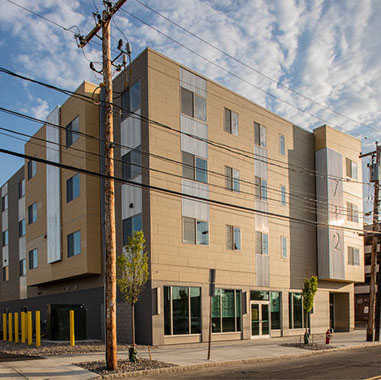
Over the past few years, private for-profit developers operating on the Near Eastside have been building one basic kind of housing: the midrise apartment block. These buildings can fit a lot of homes in a neighborhood, and all those people help support more local businesses and better public services.
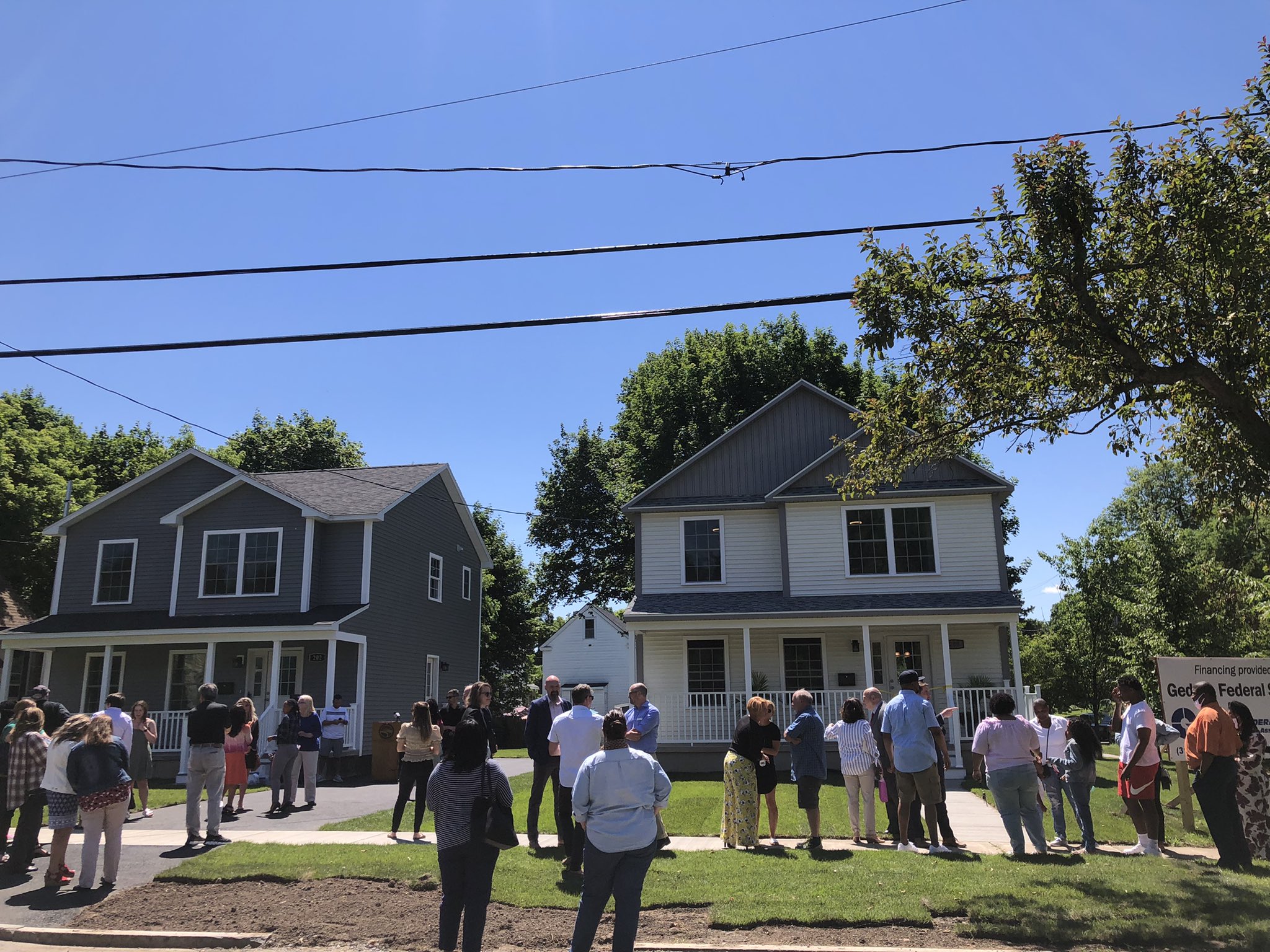
In the past couple of years, City Hall’s Resurgent Neighborhoods Initiative has built a very different kind of housing in other City neighborhoods: single-family houses with large front, side, and backyards. These buildings give people a little bit of private outdoor space, they encourage a sense of ownership of the block, and they provide people with the opportunity to own their own home.
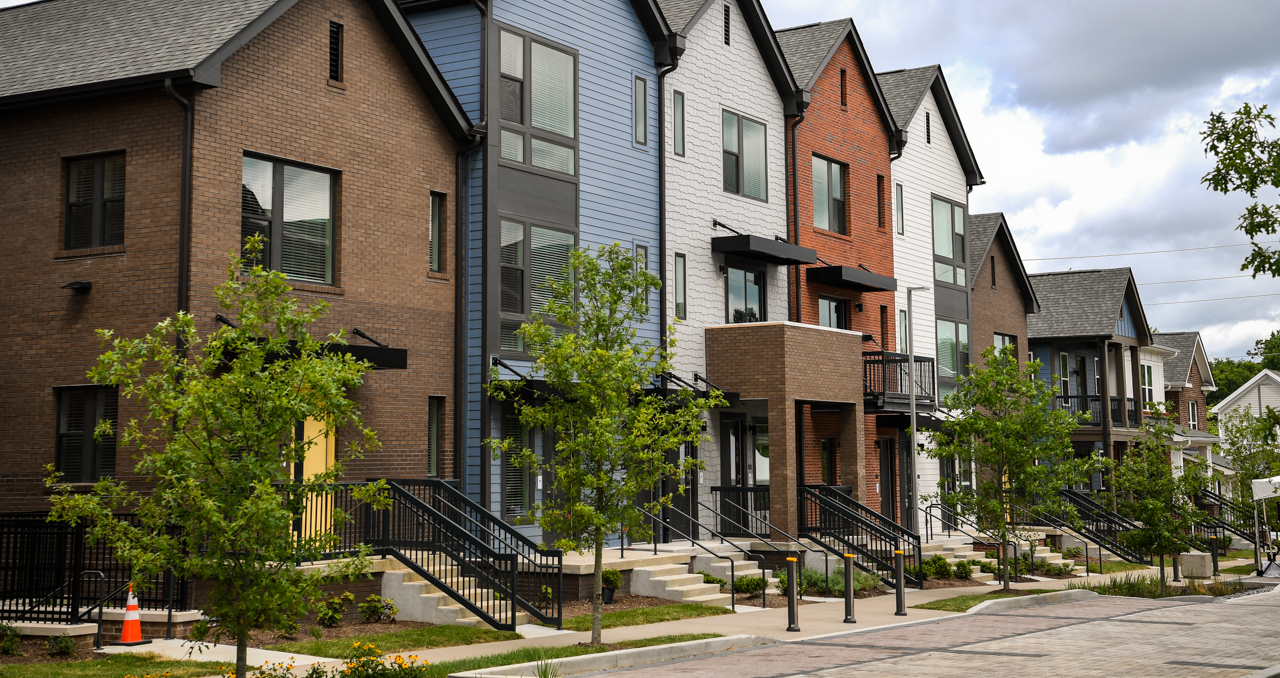
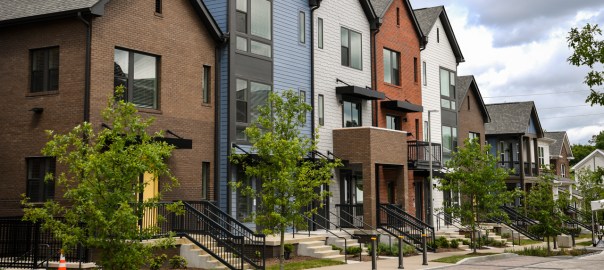
Rowhomes—houses on narrow lots that share sidewalls with neighboring houses—combine all these benefits. Like large apartment buildings, they can house lots of people and support vibrant growing neighborhoods. Like detached single-family homes, they provide small yards and opportunities for home ownership.
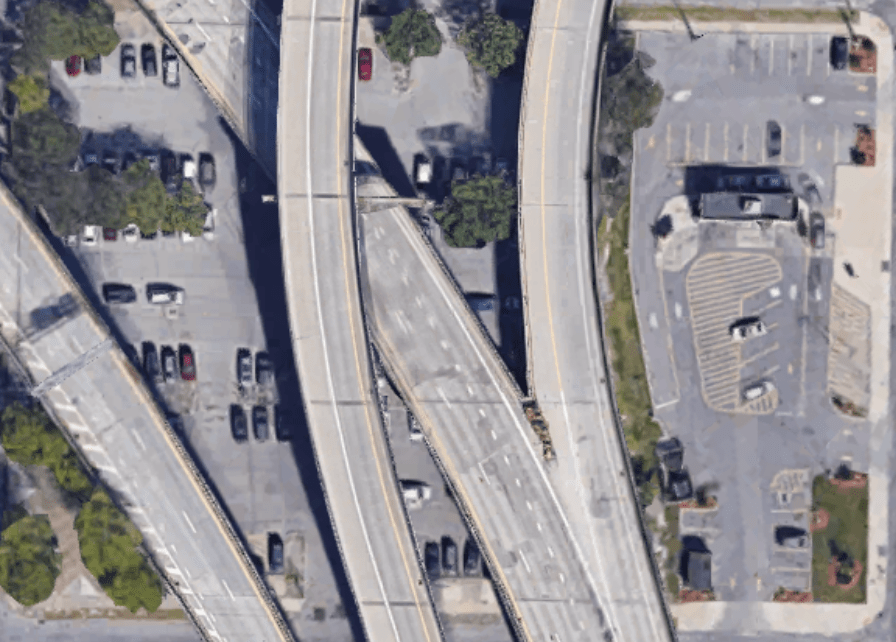
To see how rowhomes would help bring these benefits to the Near Eastside, just look at the block bounded by Water, Washington, Almond, and McBride Streets. It’s currently almost completely covered by a tangle of two elevated highways, but the I81 project will remove that interchange and transfer the land back to the community. That block could easily fit 80 rowhomes, so there would be room for 80 families to own a home on a single block of this high-opportunity neighborhood.
Of course, it’s not currently legal to build rowhomes in Syracuse. The City’s antiquated zoning code prohibits them, and ReZone would still maintain that ban by requiring what it calls “attached single-family” houses to sit on overly large lots that rob rowhomes of some of their chief benefits. Before City Hall adopts the new zoning ordinance, it should amend ReZone to allow rowhomes to be built on lots as narrow as 15’ wide and as small as 750 square feet. These standards would simply allow City Hall to build rowhomes similar to those that already exist in other Syracuse neighborhoods.
Rowhomes hit a housing sweet spot: they make room for lots of people to live in a neighborhood, and they also provide families with private yards and the opportunity to own a home. Syracuse could use more rowhomes, and City Hall should build them on the Near Eastside.
The Near Eastside needs more new housing, and it needs that new housing to be affordable for families with a range of incomes. Recent private for-profit development is providing housing for households at the top of that range, but it will take public and not-profit development to meet the needs of the rest of the community. City Hall should actively guide new housing construction in order to serve the public’s interest by making the neighborhood’s restoration equitable and sustainable.
In the private for-profit housing market, rents in new buildings are higher than those in older buildings. New buildings have to cover costs—to buy land and materials, to pay construction workers—that older buildings paid off a long time ago, and private for-profit developers cover those costs with relatively high rents. New construction on the Near Eastside is being driven almost entirely by private for-profit developers, and so it is much more expensive than older housing across the City.
In a different world where City Hall hadn’t destroyed almost all of the neighborhood’s preexisting housing, this would be less of a problem. New, private, for-profit buildings would still be expensive, but they would be surrounded by thousands of older homes whose mortgages were already paid off and whose owners could compete for tenants by lowering rents. In such a neighborhood, the construction of new housing—with newer appliances, better HVAC, and more amenities—could even help to reduce rents in older buildings by luring the richest tenants away.
But we don’t live in that world—City Hall did destroy almost all preexisting housing between Montgomery and Beech Streets—so there aren’t many cheap homes just east of Downtown, and no amount of private, for-profit, new construction will change that in your lifetime or mine. This is a problem City Hall will have to fix by directing the construction of not-for-profit housing on behalf of the public.
When the public builds housing, it doesn’t need to cover upfront costs solely with income from rents and sales. Instead, it can draw on the municipal budget to meet those costs with the understanding that—once you account for the full range of public benefits that flow from restoring a neighborhood in the City’s center—the public will come out better in the end. Those benefits include increased sales taxes from new businesses, increased property taxes in surrounding neighborhoods, savings on social and emergency services, savings on asphalt maintenance, better outcomes for SCSD students, expanded transportation options, and—most importantly—more people who need homes in Syracuse will have them.
A lot of land on the Near Eastside is already controlled by some public entity—be it City Hall, Syracuse City Schools, SUNY Upstate, or NYSDOT. The I81 project should include an agreement between those public entities to build new housing on that land on behalf of the public, NYSDOT should provide funding to build that new housing in the I81 budget, and that new housing should be made available at prices affordable to households making a wide range of incomes. This is the only realistic way to serve the public’s interest by restoring the Near Eastside sustainably and equitably.
Before urban renewal, tight-knit neighborhoods right next to Downtown provided housing and opportunity for tens of thousands of people. Now, most of those neighborhoods are mostly parking lots and home to very few people. In order for the Community Grid to succeed, Syracuse must restore those neighborhoods.
Urban renewal hit the 15th Ward/Near Eastside worse than any other neighborhood. That’s a product of City Hall’s racism (the 15th Ward was home to 8 of every 9 Black people living in Syracuse at midcentury), and it’s important to note that Urban Renewal wasn’t a one-time event. City Hall began mass demolition of Black families’ homes in the 1930’s, and it’s continued into the 21st century with the willful neglect and destruction of Kennedy Square.
These maps show how land uses changed just east of Downtown between 1953 and 2021. Areas shaded yellow are housing (including mixed-use buildings), red are commercial, purple are institutional (churches, schools, hospitals, etc), blue are parking and vacant land, and green are parkland.
In 1953, the vast majority of this neighborhood was covered in housing, but it was also served by many small businesses, schools, churches, and synagogues. Small streets laid out before the Civil War cut the land up into small blocks, making the neighborhood easier to get around on foot.
By 2021 the neighborhood was dominated by vacant land and parking lots. Entire blocks of housing have been demolished, and many small streets have been either eliminated (Renwick, Washington, Irving, Cedar, McBride, Jefferson, Madison) or widened (Harrison, Adams, Almond, Townsend) in order to make the area easier to drive around at the expense of people on foot.
As a result of all these changes, the population of the Near Eastside fell from 14,646 in 1950 to 5,656 in 2020—a drop of 61%. With that huge loss of people, the neighborhoods has lost most of its character as well. Few children mean there are no more schools, most houses of worship have either closed or followed their congregants to some other neighborhood, and the local businesses that sustained the neighborhood’s permanent residents have been replaced (if at all) by office buildings staffed by commuters.
This neighborhood has transformed from a place where people can make a good life into a space that serves residents of other neighborhoods who come and go in cars.
The Community Grid is Syracuse’s opportunity to unmake these mistakes. We’re removing the highway, and the new street grid can be designed in a way that supports walking, biking, and transit, small businesses, new housing, and repopulation. It’ll take more than transportation planning to right urban renewal’s wrongs, but if Syracuse pursues that goal intentionally, we can restore these neighborhoods and create good places for people to make their lives in the City.