All posts by inthesaltcity

Building the infrastructure to make bikeshare succeed

You’d be hard pressed to find a better metaphor for the sorry state of our bike infrastructure than the Mayor announcing the return of bikeshare by riding an e-scooter over the barely visible remains of a sharrow worn away by car traffic. So—as someone who enjoys metaphors and is often very angry about how dangerous it is for me and my family to bike around Syracuse—I took dark pleasure when that exact thing happened last week.

Here’s the Mayor riding down Westcott Street, and if you squint hard enough you can just make out two parallel lines of worn white paint right in front of him. Those faded painted lines are what pass for bike infrastructure in the neighborhood with the highest rate of bike commuting in the entire City.

That’s not going to cut it. For bikeshare to live up to its promise, City Hall needs to build out the infrastructure that can keep people safe as they make their way across town.

the Mayor riding over Syracuse’s woefully insufficient bike infrastructure

Bikeshare’s return to Syracuse is good. Making e-bikes available for minimal upfront cost and without the hassles of storage, security, or maintenance gives a lot of people another good option for getting around town, and that makes people more free.

Adding e-scooters is also good. They were already growing in popularity as a cheap, easy way to get around, and they will make the program accessible to people who might be intimidated by bkeshare’s heavier, more physically demanding e-bikes.

But, for many people, bikeshare won’t eliminate the main barrier that’s keeping them from getting around Syracuse by bike: Syracuse’s streets are too dangerous for people on bikes! Almost necessarily, bikeshare is for people who don’t bike much now and probably aren’t very comfortable riding on city streets. It’s scary riding a bike and getting buzzed by a 2-ton truck because the driver is on their phone or maybe just pissed at you for being on the street. People who bike often out of necessity know this and develop strategies to avoid these kinds of situations, but it’s not reasonable to expect that most people will tolerate that level of danger and discomfort.

Just putting bikes and scooters out on the street isn’t enough. In order for bikeshare to truly be a new practical transportation option, people need to feel safe riding bikes and scooters on Syracuse’s streets.

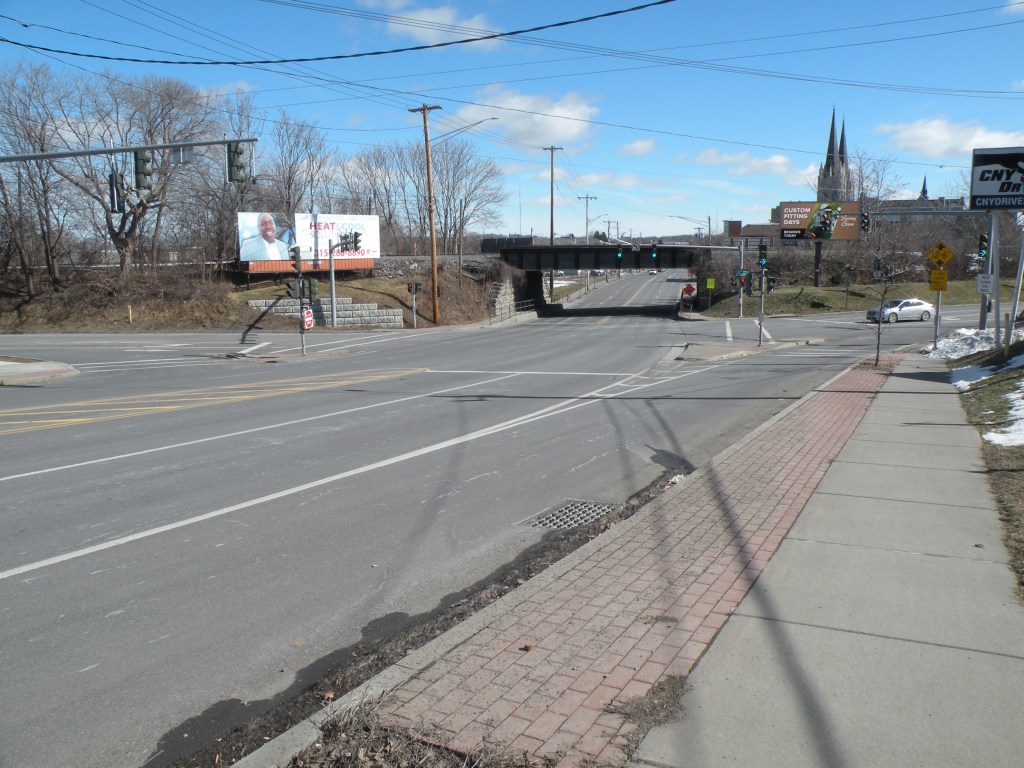
the only connection between Tipp Hill and Park Avenue runs through this outrageously dangerous intersection

This means Syracuse needs bike infrastructure specifically designed to be inviting to new riders who aren’t necessarily used to riding in cities. Low-stress cycling is an infrastructure design approach that’s become national best practice because it increases access to city biking by making the experience safe and comfortable. You don’t have to be particularly comfortable on a bike, you don’t have to have planned your route out in painstaking detail beforehand, you don’t have to maintain total alertness the entire ride in order to get where you’re going safely. This is infrastructure that welcomes novices, forgives mistakes, and generally treats biking as the legitimate activity for anybody rather than a specialized hobby for hardcore enthusiasts.

In other words, low-stress cycling infrastructure is the perfect complement to a bikeshare program designed to increase the number of people getting around by bike.

There’s a lot that goes into low-stress cycling infrastructure, but here are two main points: riders need to be protected from the stress of travelling near heavy vehicular traffic, and riders need easy access to a citywide network that can get them where they need to go without long detours.

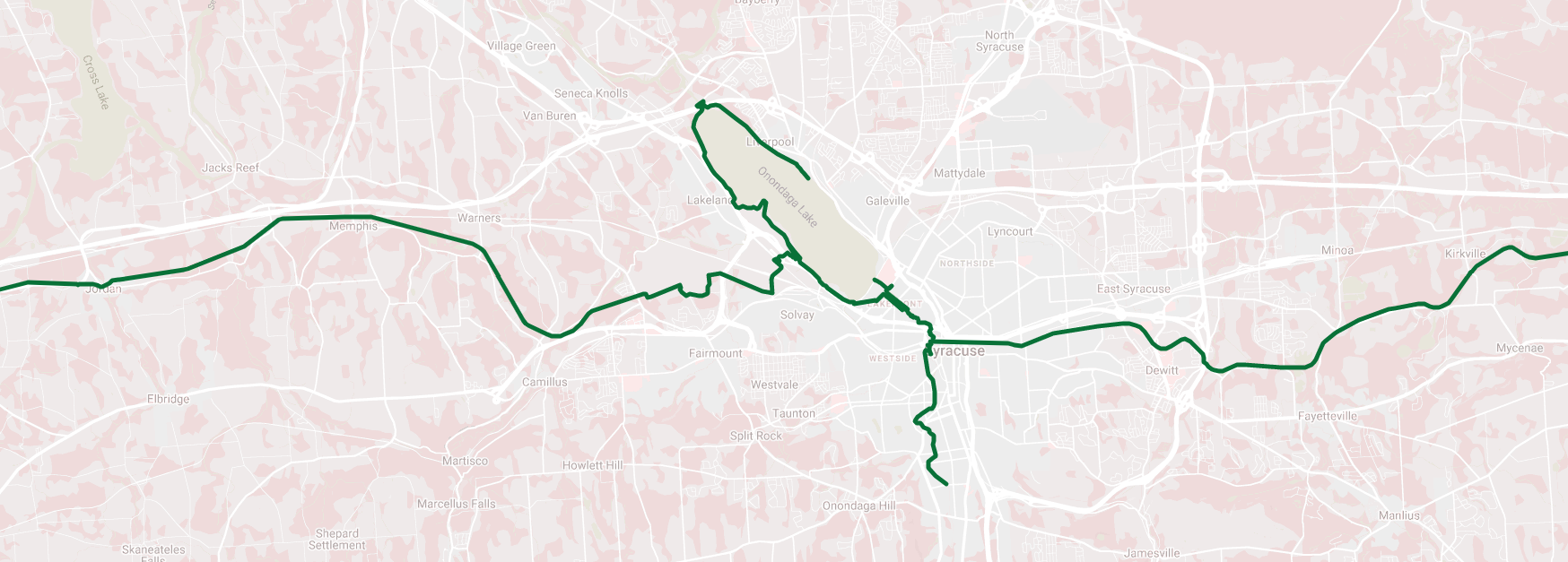
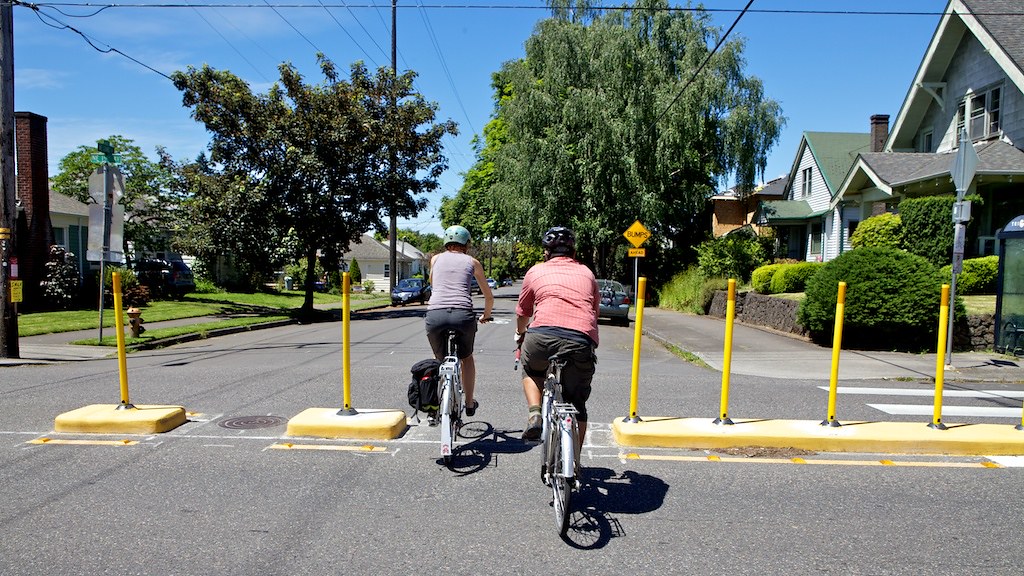
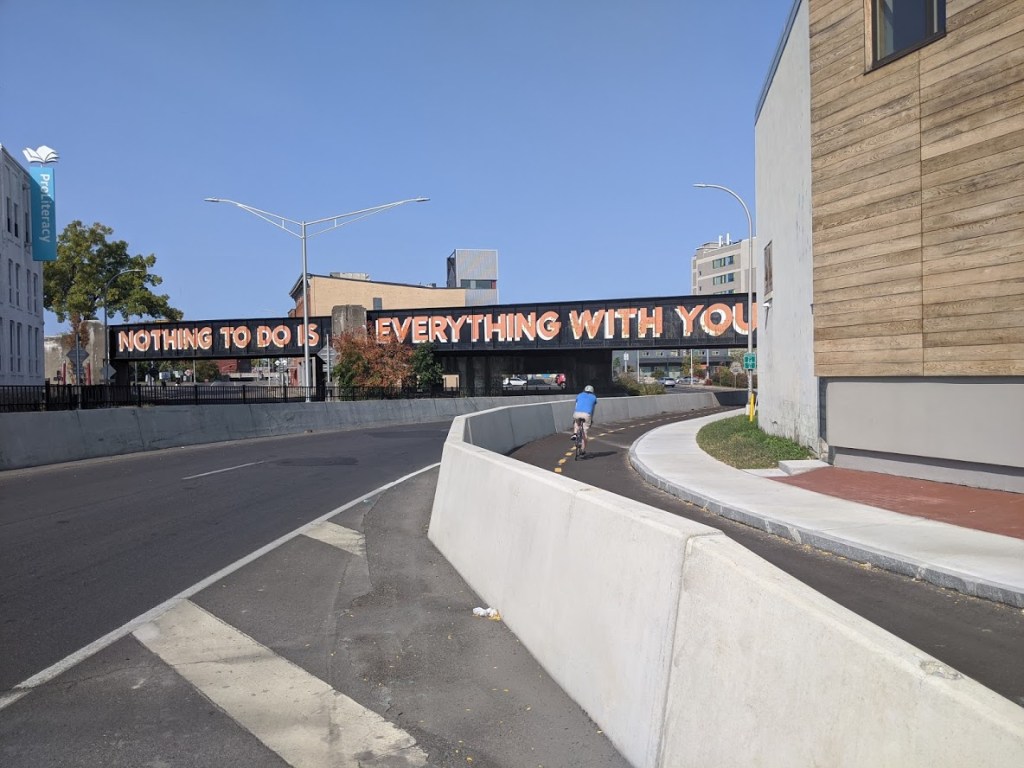
In practice that means a lot more bike lanes and paths protected from vehicular traffic with some physical object like bollards or a curb—not paint—and laid across the City so that people can easily move within and between neighborhoods. The Creekwalk and Empire State Trail are very good examples of this kind of low-stress infrastructure, and they should form the backbone of a larger citywide network.

This should not be hard to implement. The Mayor has expressed interest in better bike infrastructure, but he often says the problem is money. Well, the American Rescue Plan gave City Hall $123 million to spend on Covid recovery, and Centro is running skeleton service because Covid caused structural changes in the nature of work that are making it hard for them to hire bus operators. City Hall is well within its rights to use that money to improve transportation infrastructure for people without reliable access to a car, and they should do so immediately to complement the return of bikeshare.

Bikeshare has the potential to expand access to a cheap, convenient, sustainable method of transportation. That’s good because people need better options for getting around in this town, now more than ever. But in order for the program to live up to its potential, City Hall has to make Syracuse’s streets safer. That’s going to require an investment in low-stress cycling infrastructure like protected bike lanes and multi-use trails. People need to feel comfortable using bikeshare even if they’ve never ridden in a city before, even if they haven’t been on a bike in years. That’s the only way for bikeshare to succeed.

How tearing down I-81 will reduce traffic

The I-81 Draft Environmental Impact Statement put a lot of effort into explaining exactly how many minutes it would take to drive a car between different points in the County depending on what NYSDOT ultimately decides to do with the I-81 viaduct. NYSDOT estimates, for instance, that in 2056 during the morning rush it’ll take 27 minutes to get from Cicero to Lafayette if they leave the viaduct as it is, 23 minutes if they build a brand new viaduct, and 27 minutes if they build the Community Grid.

But the I-81 project’s biggest transportation impact won’t have anything to do with how long it takes to drive a car between Cicero and Lafayette. Instead, the I-81 project is going to decrease the number of car trips between such far flung locations and replace them with much shorter carless trips by changing the geography of where people can live in Onondaga County.

In general, if you were to walk from the edge of the Syracuse metropolitan area to its center at Clinton Square, each area you passed through would be more densely populated than the one you saw last. Onondaga County is more densely populated than predominantly rural Madison and Oswego Counties. Onondaga County’s inner ring suburbs are more densely populated than its newly built exurbs. The City’s neighborhoods are more densely populated than most all of its suburbs. The City’s older closer-in neighborhoods are more densely populated than the more recently developed neighborhoods at its edge.

And this makes a good deal of sense because it’s good to live near the center of things, so that’s where lots of people choose to live. It’s good to have ready access to hospitals and schools and places to work and places to socialize and lots of people to socialize with. Syracuse is the only place in all of Central New York where a person could step out their front door and be within walking distance of 50,000 jobs.

But once you reached the very center of the city, this pattern of increasing population density would all of a sudden reverse. Downtown Syracuse and the area that immediately surrounds it is significantly less densely populated than neighborhoods like the Northside and the Southside.

This is a real paradox, because the City’s center is one of the best places to live in order to enjoy the benefits that cities bring—being near stuff—and it’s obvious that people want to live in this area since the few that do pay exorbitant rents for the privilege.

But very much of the very middle of Syracuse is basically barren because of I-81. Cars promised to provide ready access to everything Syracuse had to offer—the jobs, the institutions, the community—without actually having to live near any of it. All they required was a highway and a parking spot. Syracuse’s leaders happily got to work demolishing housing, schools, businesses, and churches to make space for I-81, its arterial feeders, and the parking lots that surround and sustain them.

All that pavement creates a huge dead zone around the center of town that hurts Syracuse in two ways. First, it prevents people from living in places where people absolutely want to live. Second, it cuts City neighborhoods off from the opportunities available in the City’s center. 

People want to live near the center of town, but they can’t because the highway takes up too much space. The highway makes it so that the most desirable areas to live instead are on the exurban fringe. So people move out to the exurban fringe, but everybody’s moving to a different part of that fringe whether it’s Camillus or Lysander or Clay or Manlius. The community gets dispersed over an enormous area, and that’s how people find themselves in situations where they regularly need to get from Cicero to Lafayette for book club or work or their kid’s soccer game.

Tearing down the I-81 viaduct is a huge step towards fixing this transportation failure. The viaduct covers 18 acres of land, and tearing it down will free up a lot of space where people could find a good place to live. It will also make a lot of currently vacant land much more suitable for housing because there won’t be a big ugly polluting noisy highway right nearby anymore.

With more people living closer together, more of the places they need to go and the things they need to do will be located in a smaller area, so the post office and the pharmacy will be a 5 minute walk from home rather than a 5 minute car ride. As more people move to the center of town, there will be less need for all that parking and all those arterials, and there will be even more room for more people.

This trend is already underway. The five census tracts that surround the I-81 viaduct grew by 26% between 2010 and 2020. The people who accounted for that growth are not going to have to drive nearly as often or nearly as far as they would if they had instead moved to someplace like Fabius. When NYSDOT tears down the viaduct and replaces it with the Grid, they will make it more possible for more people to live similarly. That’s going to be the Grid’s biggest transportation impact.

Getting people out on the water

Syracuse should reconnect with its waterfront. This City was built around water, and we have miles and miles of creeks, canals, and lakefront where people can get in touch with Syracuse’s maritime side.

One way to make that happen is to just make our various waterfronts more accessible—give people public space next to the water, and they will use it.

But Syracuse should go farther and actually get people out on the water. We need more boats in this town.

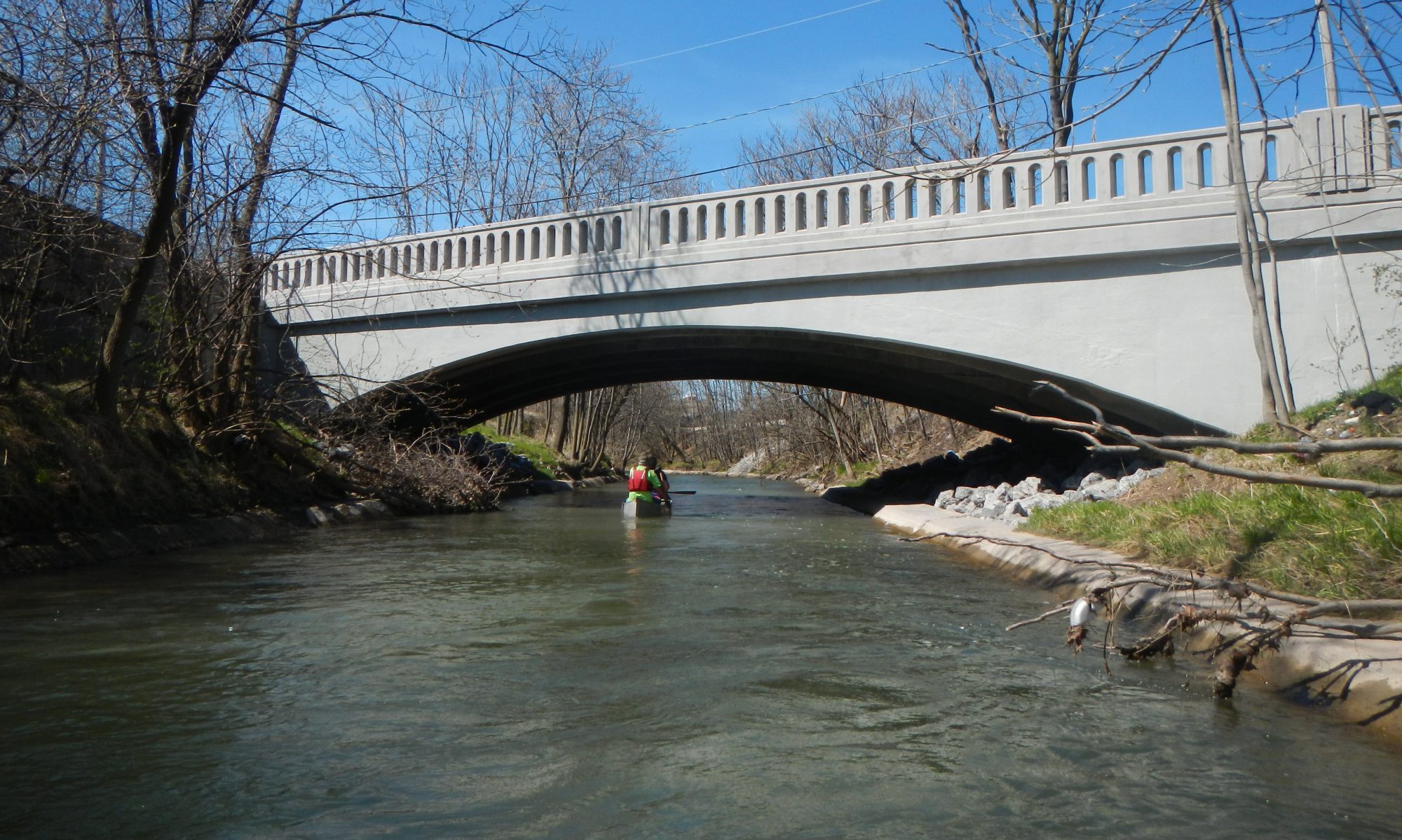
source: Creekrats

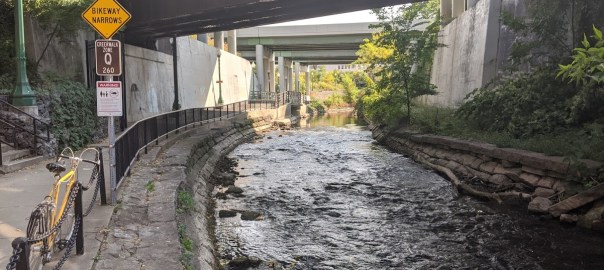
Syracuse’s small waterways are perfect for kayaking. The Creekrats—a very good volunteer organization that helps clean and care for Onondaga Creek—know this, which is why they host Fun Floats where anybody can show up, borrow a kayak or canoe, and take a trip down the Creek the entire length of the City.

This is great, and we need more of it. In addition to kayaks and canoes, people should be tubing down the Creek. In addition to the Creekrats volunteer efforts, the City Parks department should be providing the public with small boats.

As Syracuse’s summers get hotter, people are going to need new ways to keep cool. Getting them floating down Onondaga Creek is a great place to start.

ferry lines to the Amphitheater and State Fair

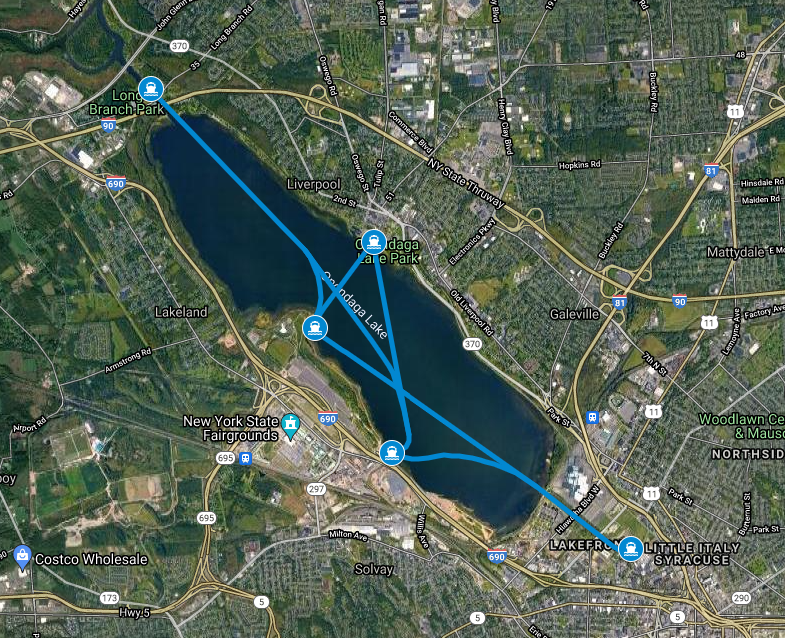
Car traffic to the State Fair and the Lake Amphitheater is famously terrible. That’s what happens when tens of thousands of people all try to drive to the same location. The only way to fix it is to give people more options for getting to those popular destinations.

Ferries would relieve that congestion, and they’d get people out onto Onondaga Lake. People going to concerts and the Fair could catch a ferry at the Inner Harbor, the Village of Liverpool, and Longbranch Park. They’d trade the hassle of traffic and parking for a leisurely sunset trip across the Lake.

skating on the Erie Canal

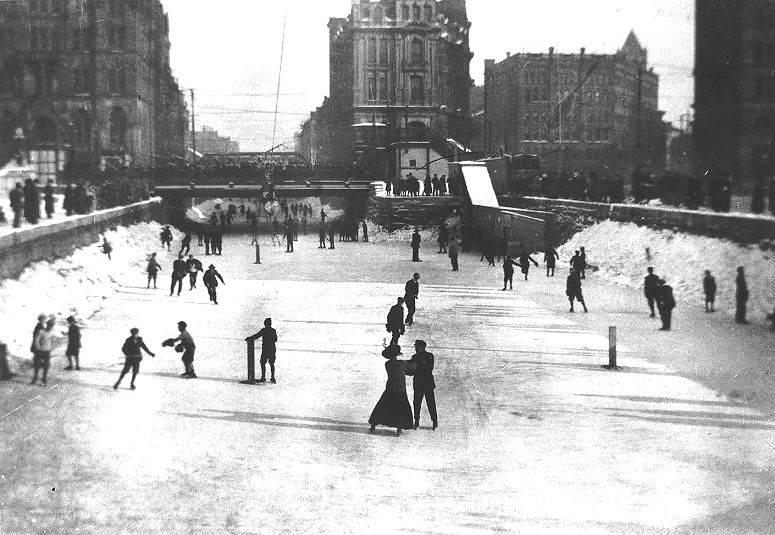
The ice rink at Clinton Square is great because it recreates a traditional recreational use of the canal. The people who redesigned the square in 2001 had that iconic photograph in mind when they planned the public skating program. They wanted to give people “a sense of the canal.”

That’s fantastic—let’s do more.

One of the other ways that Syracuse residents used to interact with the canal was by boarding the floating attractions, museums, and shops that travelled from town to town along the canal. If we make more of NYSDOT’s planned ‘canal district’ and actually rewater the canal between Franklin and Montgomery Streets, there should absolutely be boats in that water for people to board.

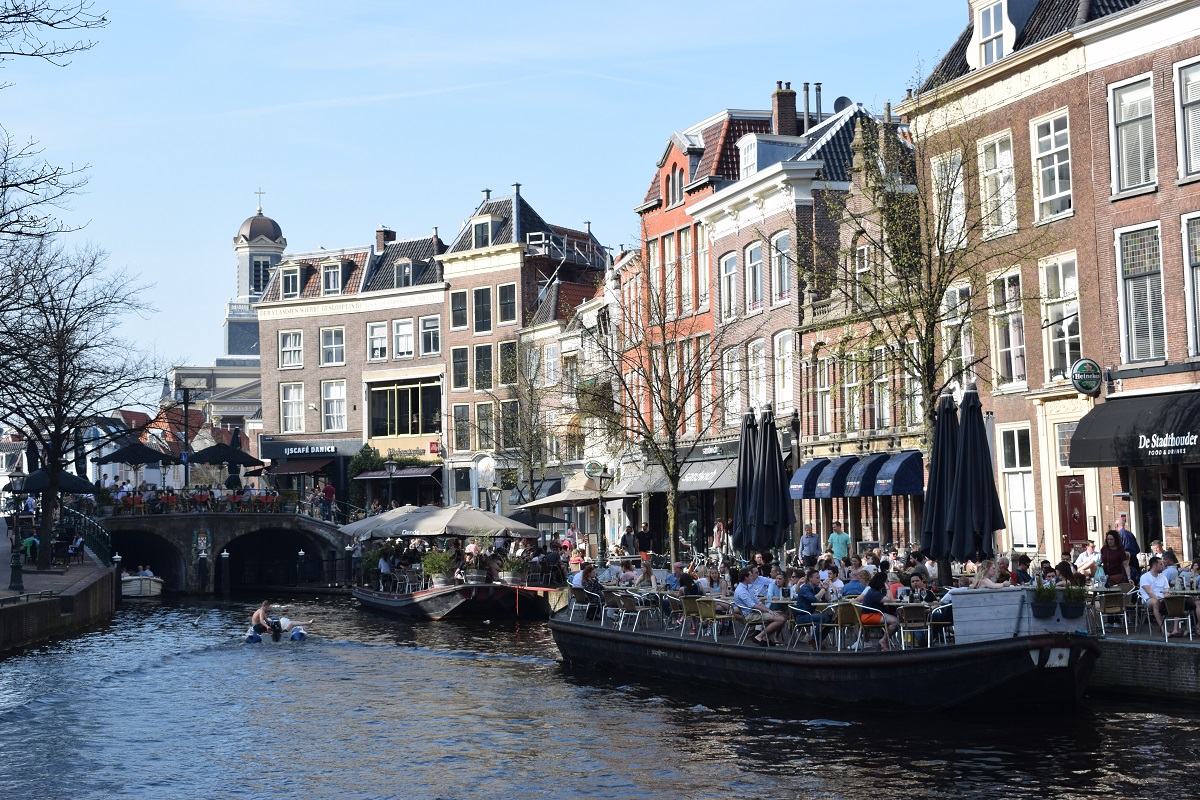
The Erie Canal Museum could run a historic packet boat, restaurants could put outdoor seating on a stationary barge, local artists could set up pop up retail shops. There are plenty of attractions that would get people onto boats, and that would reconnect them with the canal.

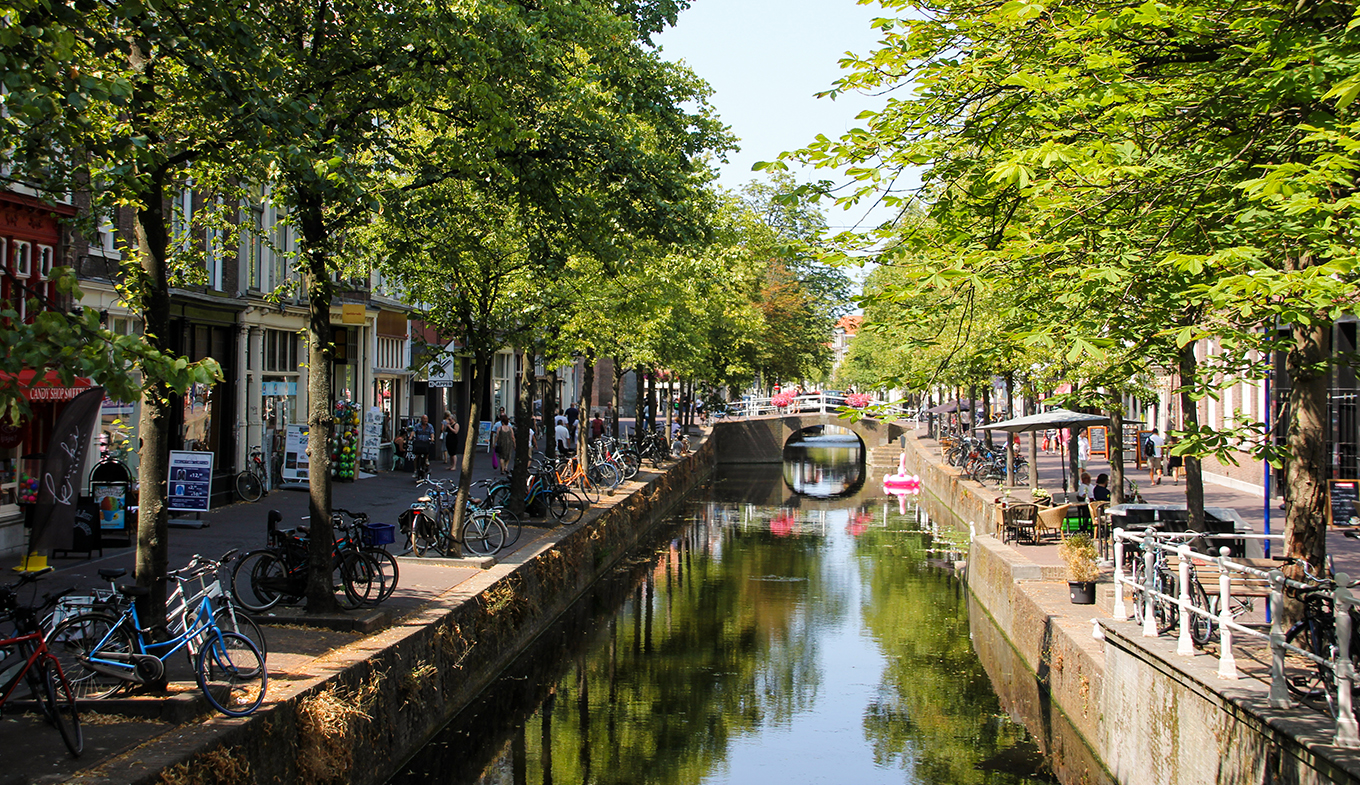
canal dining in Leiden, Holland

In order to really activate Syracuse’s waterfront, we need more programming. Kayaking, tubing, ferries, floating attractions, whatever. Just provide people with ways to get out on the water, and they will do it.

A Waterfront City

Water created Syracuse. Natural springs brought salt up from underground deposits to briny pools on the surface. Onondaga Creek powered a sawmill that turned trees into the lumber that built the early village. The Erie Canal turned the little settlement at the corner of Genesee and Salina into a city. This is a maritime town.

We’ve lost touch with that history. The canal’s filled in. Onondaga Creek’s buried through much of Downtown. We’re cut off from the Lake by a sewage treatment plant and the Mall’s parking lots.

But recently, Syracuse has started to reconnect with the natural and manmade waterways that flow through the City. This is fantastic, and we should celebrate it, and we should do much much more of it. Syracuse is situated on a site of stunning natural beauty—let’s make the most of it.

Onondaga Creek

The Creekwalk is incredible. It takes you almost clear across the City, passing through a wide variety of habitats and connecting diverse neighborhoods.

But the Creekwalk falls flat Downtown. For about a mile and a half, the designated trail route barely ever comes within sight of Onondaga Creek itself. When the trail does parallel the Creek, it’s two stories above the water. This stretch still provides good transportation infrastructure for people walking or biking through the center of town, but it doesn’t do a very good job of connecting people to the Creek.

Syracuse should create a new path that goes down to the water level at Water Street and follows the creek bed all the way to the Trolley Lot behind Armory Square. This is one of the most dynamic parts of the entire creek. It passes beneath a series of beautiful old steel and stone rail bridges, many decorated with beautiful graffiti. In Armory Square itself, the trail should widen to provide space for people to sit and relax, and it should include stairs that let people access this public space from street-level.

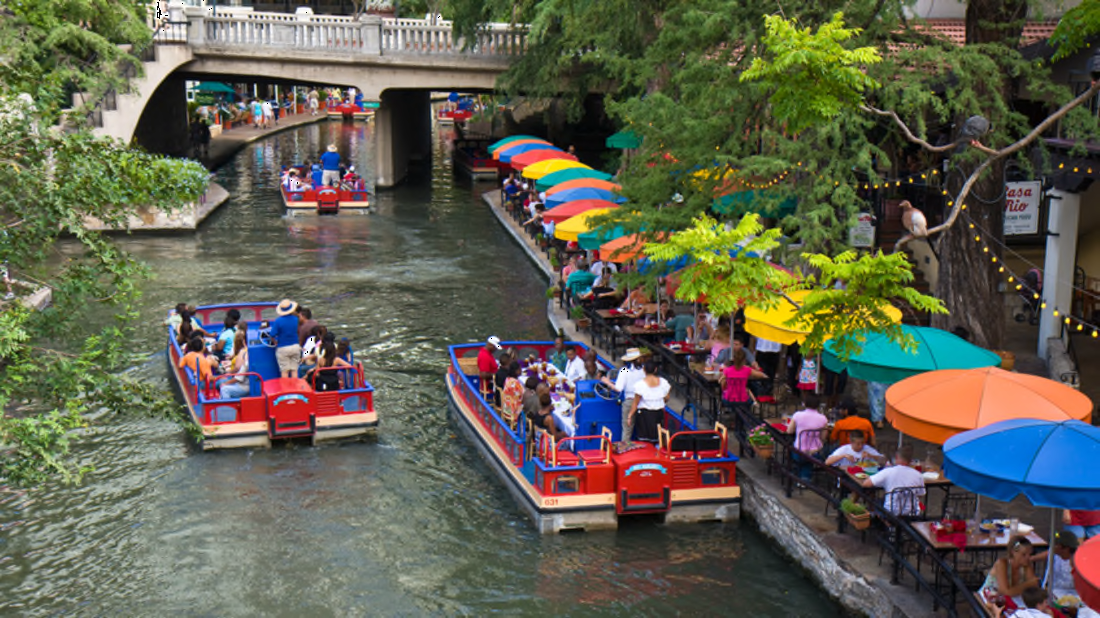
San Antonio’s Riverwalk brings people right to the edge of the water

Onondaga Lake

For years, Onondaga County has been expanding and improving Onondaga Lake Park in bits and pieces. From the original park in the Village of Liverpool, to Maple Bay, to the West Shore Trail, to the Amphitheater, it’s been so exciting to watch this beautiful park grow. But it had been bittersweet knowing that no one from Syracuse could access the community’s premier public space without a car.
So it’s a big deal that the Empire State Trail now connects Syracuse to Onondaga Lake Park. That big bridge over the train tracks brought the City back into meaningful contact with Onondaga Lake for the first time in decades, and it’s glorious.

So think how much better it would be if Onondaga Lake Park actually went all the way around Onondaga Lake. We’re still cut off from about a quarter of the shoreline by a limited access highway, and that missing link is keeping this park from being all it can be.

In the short term, we can get part of the way there by turning the Parkway into a Park on Sundays. We did this from 1992 to 2014, and it was great. It’ll be even better now that people could use the opportunity to walk, bike, or jog all the way around the Lake.

In the long term, we should make this pop-up parkspace more permanent by reducing the speed limit on Onondaga Lake Parkway to 30 mph and repurposing 2 car lanes for park space and parking spots. This is a common-sense solution that will help complete the Lake trail, improve access to the park space, and—as an added bonus—keep big box trucks from running into the low bridge that crosses the Parkway.

Onondaga Lake Park offers incredible views of Syracuse

The Inner Harbor

Cor’s initial plans to redevelop the Inner Harbor were very interesting, but it’s clear they’re not going anywhere fast. The development company is embroiled in scandal, and they were always a kind of weird choice for this project since their core competency is building suburban shopping malls.

Let’s stop waiting for a miracle and work with what we have at the Inner Harbor now: a unique post-industrial waterfront less than a mile from the City’s center.

Baltimore shows how to activate a space like this. There’s a spot on that city’s inner harbor where the ground’s too polluted to build anything very big. For a while, the city let the waterfront lie unused and just waited for some private developer to take on the expense of cleaning the soil in order to build condos or whatever.

But for the last few years, this site has hosted a pop-up social space called Sandlot. They trucked in a bunch of sand, put up beach chairs, and built a temporary kitchen and bar out of old shipping containers. Now, all summer long, people flock to this formerly barren space. Maybe someday some developer will try to make money building a new office building there, but in the meantime this is a place where people want to be, and it’s making the city better.

Syracuse should do the same. The two piers that stretch into the Inner Harbor are unique in Onondaga County, and they’re such interesting spaces to sit and hang out. Syracuse should activate them with pop-up programming. It could be a semi-permanent beer garden like in Baltimore, or it could be a food truck rally, or a series of cultural festivals. What matters is that there should be something to do to draw people to this extremely cool and extremely underused waterfront space.

Baltimore turned a piece of polluted post-industrial waterfront into a popular social space

The Erie Canal

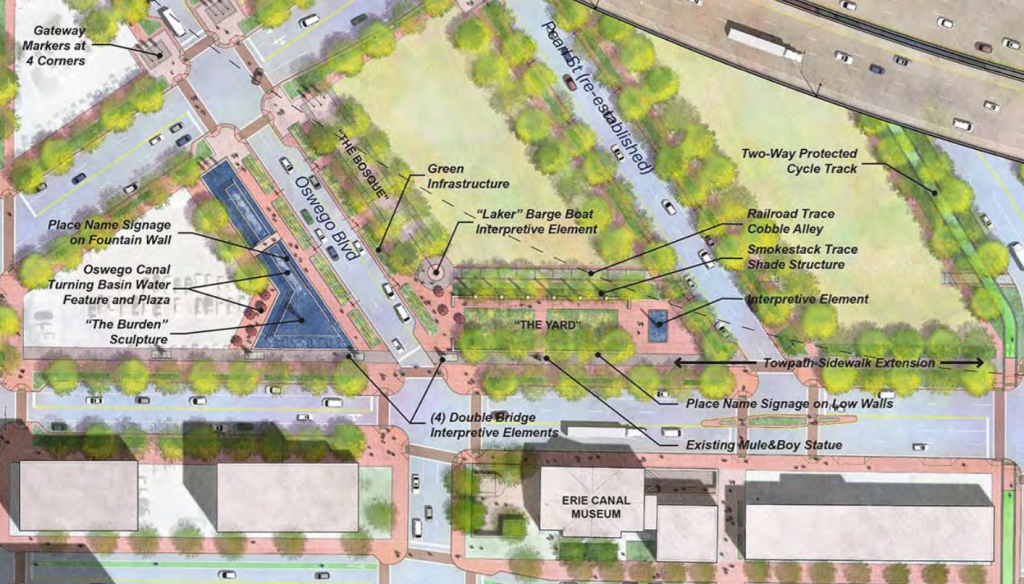
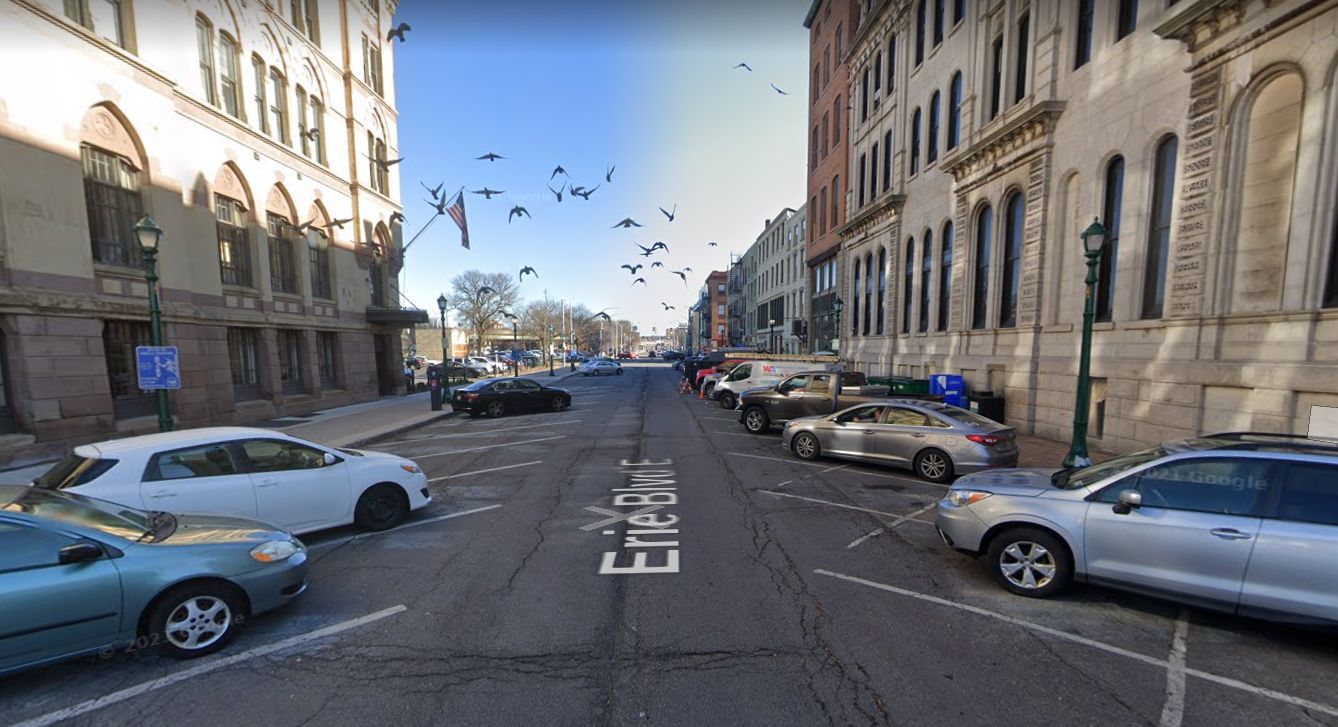
Visit any village where the canal still flows through the center of town, and you can see just what Syracuse lost when it built Erie Boulevard. The canal used to be the center of the community, and it’s a shame we replaced it with asphalt.

When Syracuse redesigned Clinton Square 20 years ago, it got something of the canal back. Look at the fountain from the right angle, and it really does appear like the canal is still flowing through the middle of the square.

But we can do so much more. Three more blocks of Erie Boulevard—one to the west and two to the east—carry barely any car traffic, and they don’t need nearly as much pavement as they’ve got now. Similarly wide streets in the Dutch city of Delft show how the current right of way could easily accommodate 2 lanes of traffic, curb parking, sidewalks, and a rewatered Erie Canal running down the center of the street. 

This would connect Clinton Square to the I-81 project’s planned Canal District, and it would help knit newly uncovered land into Downtown once NYSDOT demolishes the 81/690 interchange.

In Delft, streets no wider than Erie Boulevard accommodate surface traffic and a canal

Water is beautiful. We’re blessed to be surrounded by it. Syracuse ignored this blessing for decades, but we’re finally starting to come around. Let’s embrace it.

The price of delay

Now that it’s clear that I-81 is coming down, the viaduct’s supporters have adopted a new tactic: delay. They’re done trying to influence the final outcome of the project—compare the in-depth 2-year tunnel analysis to the half-assed Skyway proposal—and they are instead trying to hold it off as long as possible.

The Mall has hired a lawyer who argues NYSDOT needs to redo all of its economic analyses with newer data. Busybodies from Skaneateles want additional traffic studies for locations 50 miles away from the highway. Congressman John Katko just managed to get NYSDOT to extend the comment period by another 30 days. Expect to see more of this nonsense as we take the final steps towards tearing down the viaduct.

None of these delaying tactics will change the project’s ultimate outcome. The Grid is so obviously the correct choice from an environmental, safety, economic, social justice, cost, and transportation perspective. In the long run, the viaduct will come down, and Syracuse will be better off for it.

But we don’t live in the long run. We live here now, and the interested parties have a lot to gain or lose by dragging this decision out as long as possible.

Take the Delayer-in-Chief, former State Senator John DeFrancisco. He was able to muck up the NEPA process for years. In that time he moved his home and business to the suburbs, and he retired from public life so he no longer needs campaign contributions from viaduct supporters. He couldn’t actually convince NYSDOT to build a tunnel or a new viaduct, but he managed to keep the current viaduct up until it didn’t matter to him, personally, anymore.

Or look at the mall. The long run doesn’t matter to them because structural changes to the world economy is killing their business anyway. But in the short run they sincerely believe they’ll make more money with the viaduct than without it. From that perspective, it’s in their financial interest to keep the viaduct up as long as possible. A 13-year process is better than a 5-year process—even if the viaduct comes down at the end either way—because it means 8 more years of marginally higher profits.

But just as these bad actors benefit from delay, stretching out this process hurts Syracuse. Tearing down the viaduct and building the grid is going to give a lot of people a recession-proof paycheck—it would have been great for that work to have already started before the pandemic caused a recession last year.

The pandemic also caused a huge increase in demand for housing in the Syracuse metro area. Much of that demand matched with supply in the exurbs—places like Clay, Lysander, and Manlius—and furthered sprawl and inter-municipal inequality. If the viaduct had already come down, new housing in the City’s center could have soaked up some of that new demand and made Syracuse a more sustainable, more equitable place.

Most importantly, every single day, the viaduct makes life worse for the people who have to live near it. Noise and air pollution cause chronic illness along the highway’s path, and every day that John DeFrancisco, John Katko, and the Mall delayed construction was another day that kids breathed in exhaust and fell asleep to the sound of speeding cars.

The viaduct will come down. Syracuse will be safer, cleaner, more just, and more pleasant for it. But there are people who want to delay that better future off as long as possible. They talk about caution and making every voice heard and making sure we get this right. But they’re really just interested in running out the clock until they retire, until their business fails, until they move. We don’t need to humor their cynicism for another year.

False hope for the viaduct

Assemblymember Bill Magnarelli just wrote an op-ed arguing that we can’t move forward with the I-81 project until there’s consensus. This is wrong, and we need to move past the false hope that the I-81 project can possibly please everybody.

The Assemblymember pointed to widespread criticism of the recently release Draft Environmental Impact Statement as evidence that NYSDOT should not move forward with the Grid. People living in Pioneer Homes deserve better mitigation during the construction period; car drivers may have to stop at red lights; fewer people may drive directly past the Mall; car exhaust may cause students at Dr. King Elementary to develop chronic respiratory illness. 

From the Assemblymember’s perspective, these criticisms all point to his preferred outcome for this project: the status quo.

“We can have connectivity within the city, including walking and bike trails, and continue to keep the city connected to its suburbs and the rest of the region. These are not mutually exclusive… What we need is a community grid in conjunction with a rebuilt viaduct, tunnel, or new bridge to keep traffic flowing through Syracuse.”

The Assemblymember then implies that this outcome—one which has been opposed by the City’s elected leadership for a decade—would work for everybody:

“I do not believe that a consensus for this project has ever been reached by the city, suburbs and outlying towns in our region. Given the amount of federal monies available, why don’t we have an option that satisfies everyone’s needs?”

There is no option that can possibly meet everyone’s “needs,” and to see why all you have to do is read through the Assemblymember’s list of concerns. A new viaduct would certainly save car drivers from the terror of traffic lights, but it would also increase air pollution at Dr. King Elementary. A tunnel (it’s okay, you can laugh) would definitely keep cars moving past the Mall, but the interchange with 690 would be even bigger than what we have today, and it would create a blackhole in the middle of town where no one would ever have cause to walk or bike.

Assemblyman Magnarelli is wrong: competing interests want mutually exclusive things out of this project. There is no way to reconcile all of the concerns that different members of different communities have expressed about NYSDOT’s current plan for I-81.

In fact, the DEIS has received so much criticism because it is a misguided attempt to find a “consensus” solution. The Grid should resemble a normal city street in order to accommodate local street life while discouraging through traffic from bringing air pollution, noise pollution, and traffic violence into the City. Instead, NYSDOT is offering something no one wants—the West Street Arterial but bigger—in order to appease powerful people like the Assemblymember who have demanded that the Grid accommodate high-speed high-volume car traffic.

There is no possible solution that can please both the Mall and Dr. King Elementary’s community. They simply want mutually exclusive outcomes from the I-81 project. That’s a hard truth because it requires our leaders to make a decision that will be unpopular with some people, but it’s the way things are. Anybody who continues to nurture this false hope—that if we just had more time, if we just thought a little harder about it, if we just spent more money, then everybody could be happy—is ignoring reality.

Neighborhood-Level Population Change

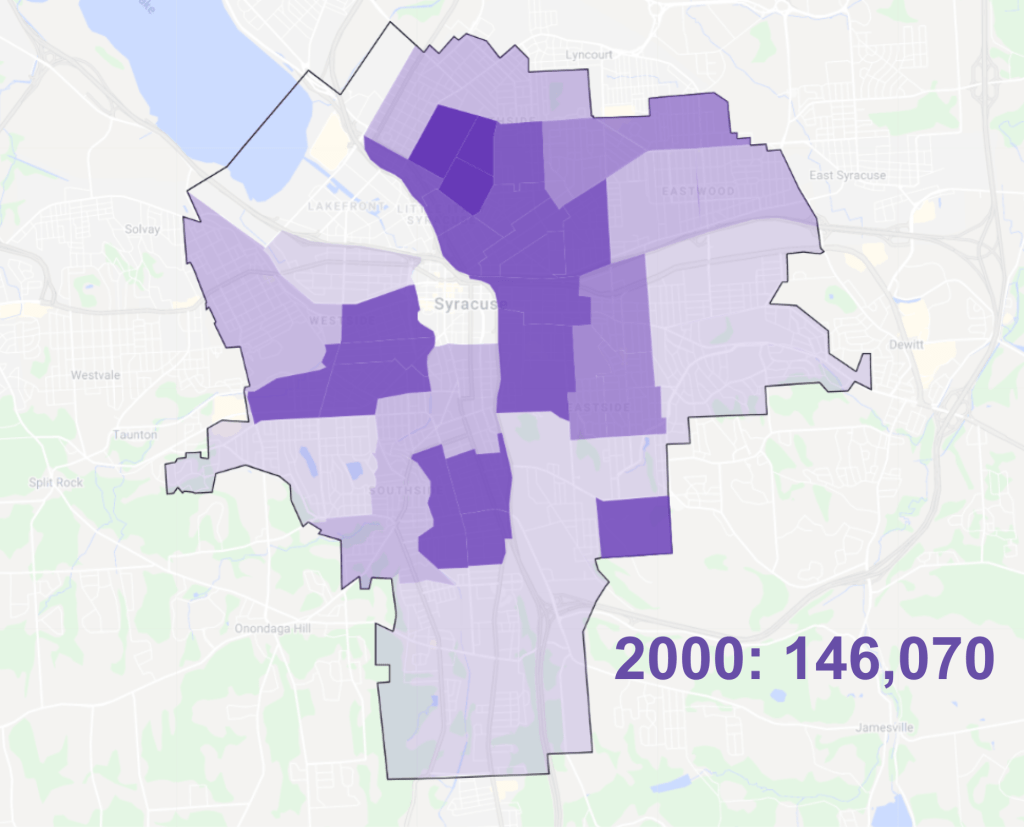
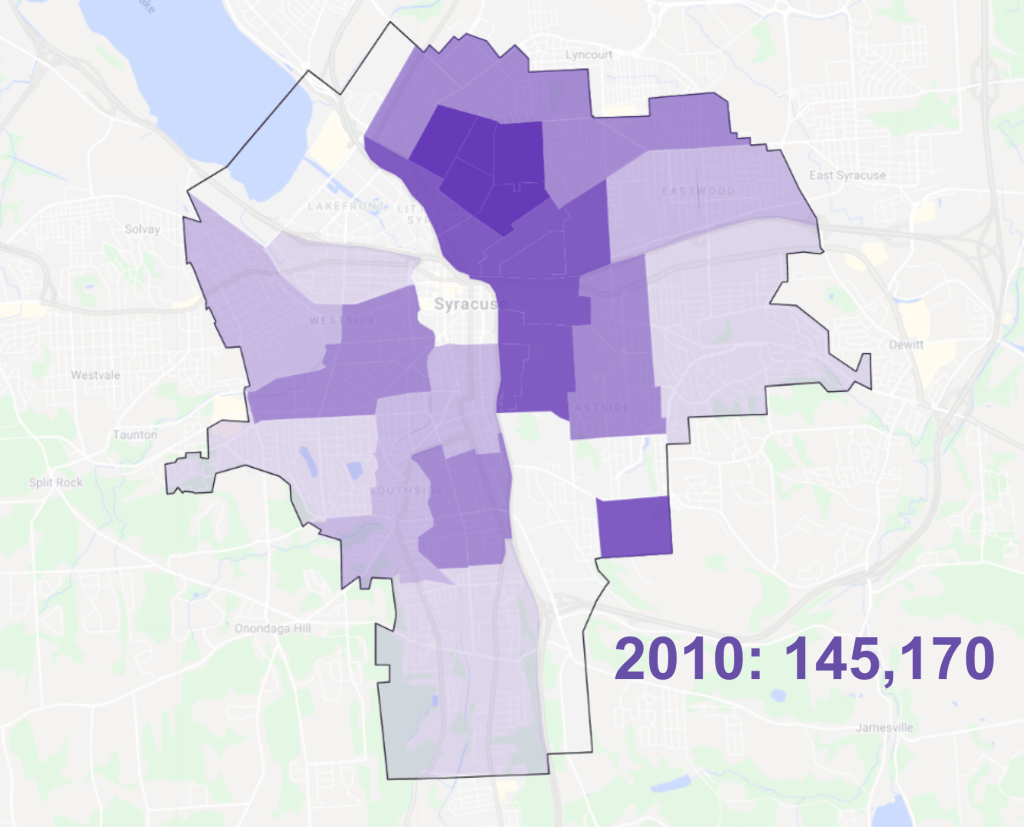
Since the 2000 census, the total number of people living in Syracuse has remained remarkably stable. From 146,070 people in 2000 to 145,170 in 2010 to 146,620 in 2020, the City’s topline population figure has never moved more than 2.4% between censuses, and the most recent count is within 1.7% of the 2000 count.

But that remarkably stable population figure obscures Syracuse’s massive demographic churn at the neighborhood level. Between 2000 and 2020 while the City’s overall population showed just a 1.7% increase, individual neighborhoods saw population shifts ranging from a drop of 21.7% to an increase of 59.1%.

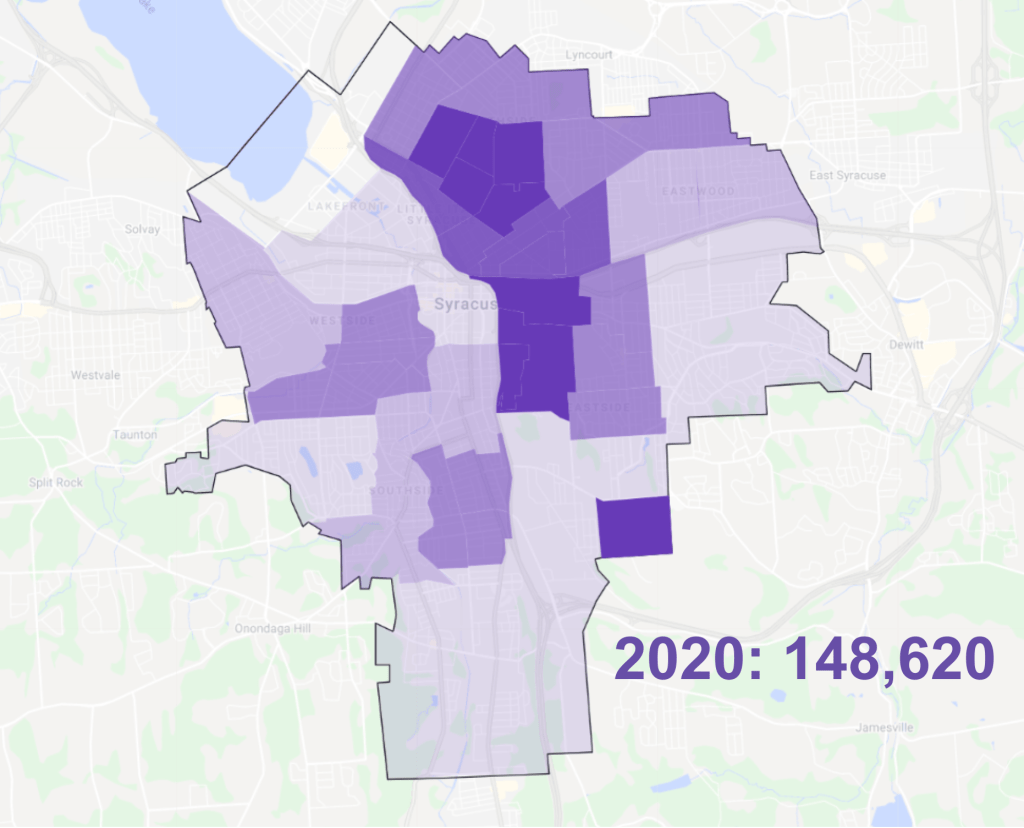
To see these neighborhood-level changes, we need to look at the census tract level. However, because the Census Bureau adjusts tract borders every 10 years, we have to group multiple tracts in order to compare similar areas over the 2000, 2010, and 2020 censuses. The map above shows the groupings (between 1 and 4 census tracts) used in this analysis.
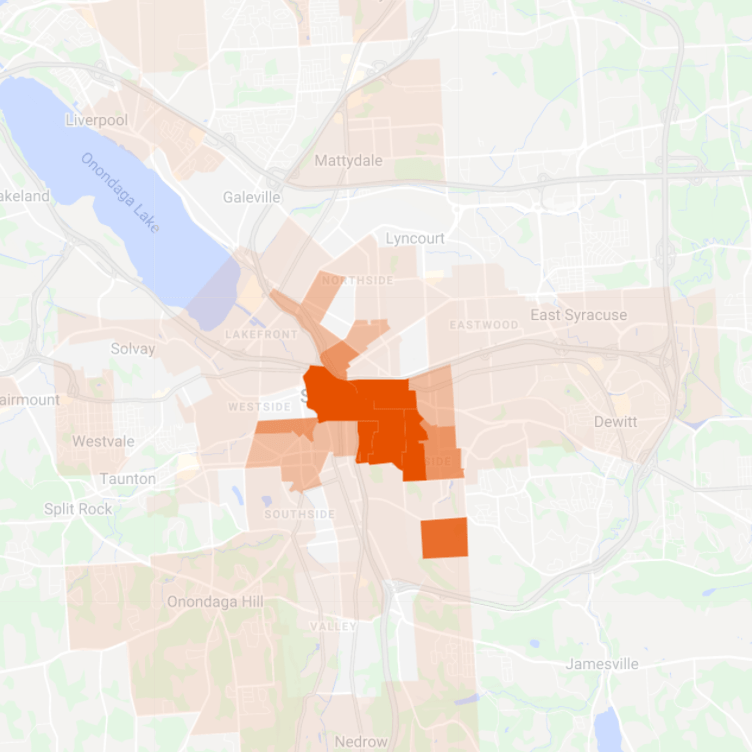
These population change maps show the population shifts that have characterized Syracuse’s neighborhoods during the first two decades of the 21st century. The maps show areas that lost population in red, and areas that gained population in blue. The intensity of each color corresponds to the magnitude of the percentage change in population.
The Northside, the Valley, and University Hill all gained population during each of the last two decades. Salt Springs, the Southside, the Westside, Tipperary Hill, and Strathmore all lost population both from 2000 to 2010 and from 2010 to 2020.

These broad trends held constant over the last twenty years even though Syracuse as a whole shrank between 2000 and 2010 and the city grew between 2010 and 2020. The City gained population between 2010 and 2020 because Downtown and Franklin Square grew by an enormous amount (65.7%) after shrinking modestly the previous decade, and because outer neighborhoods like Eastwood and Outer Comstock grew rather than shrank during the last decade.

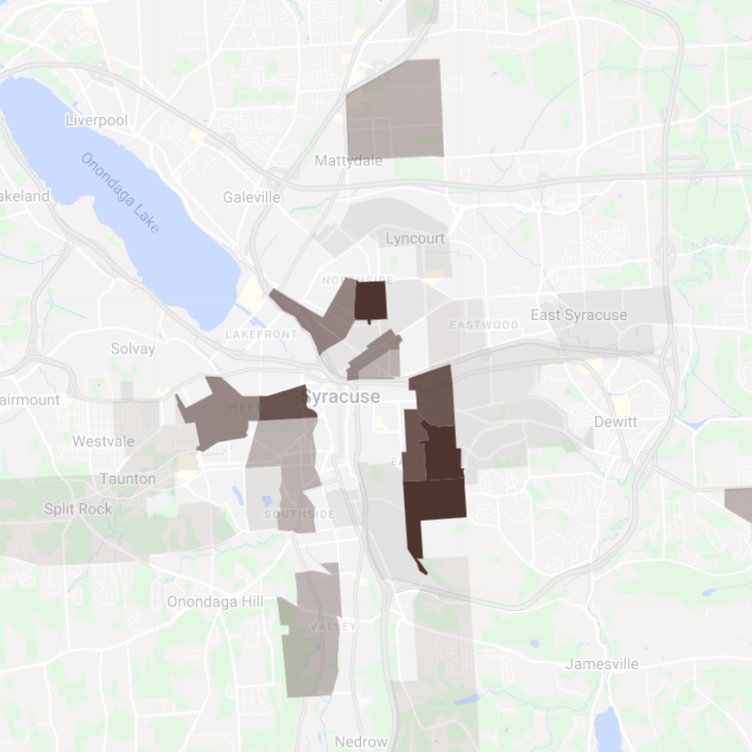
This series of density maps shows how those population trends have changed the concentration of people in different Syracuse neighborhoods has changed over the last 20 years. The South and West Sides lost a lot of density while the Northside and University Hill became much more densely populated and Downtown/Franklin Square gained some density (although this area is still nowhere near as densely populated as the surrounding inner city neighborhoods).

Overall, though, Syracuse’s patterns of density remained relatively stable between 2000 and 2020: outer neighborhoods remained sparsely populated while inner neighborhoods house lots of people in a relatively small area.


The total number of people living in Syracuse has remained essentially stable for the last 20 years, but the populations of the City’s neighborhoods have varied widely. The South and West Sides have lost a huge percentage of their total population while the Northside and the City’s center have grown dramatically. Looking forward, Syracuse will need to reverse these downward trends in its shrinking neighborhoods while also accommodating continued growth in its booming neighborhoods.

A New Kind of Population Growth

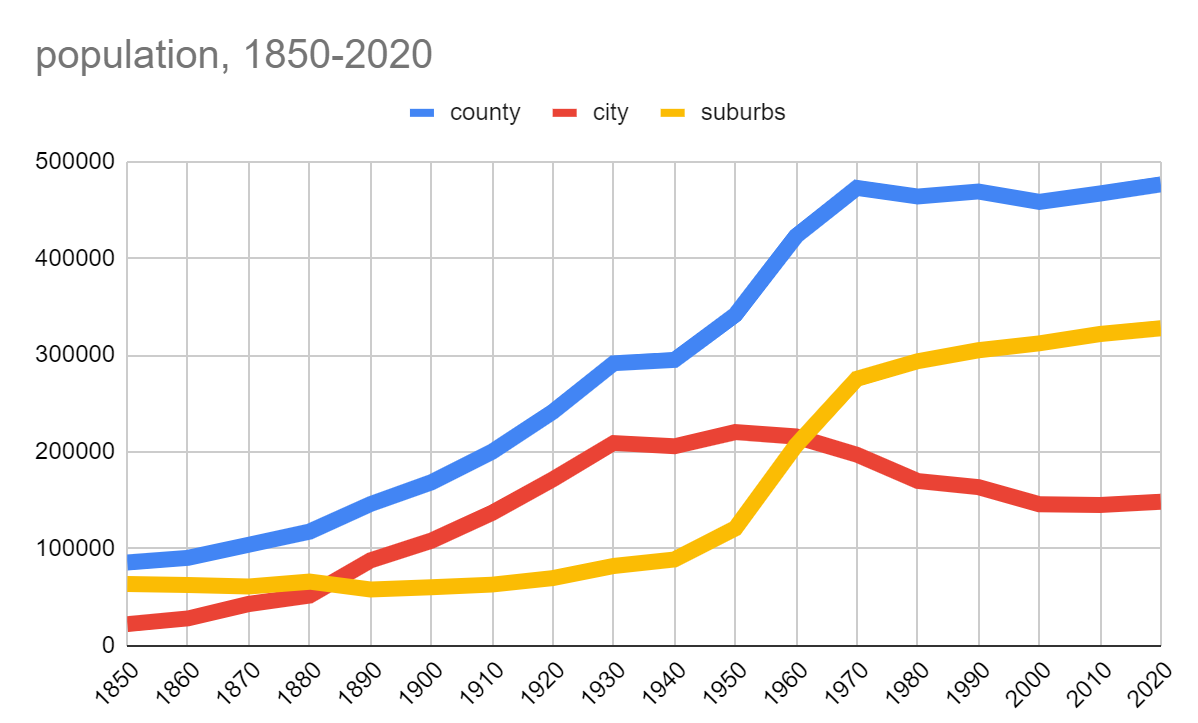
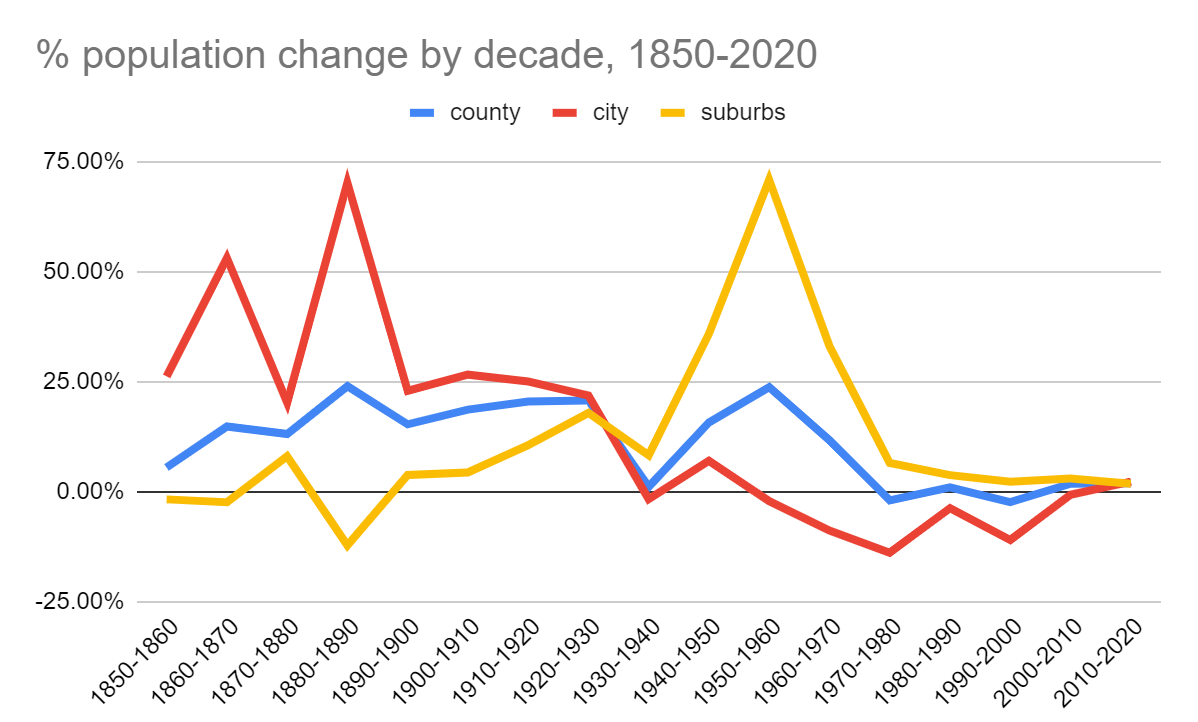
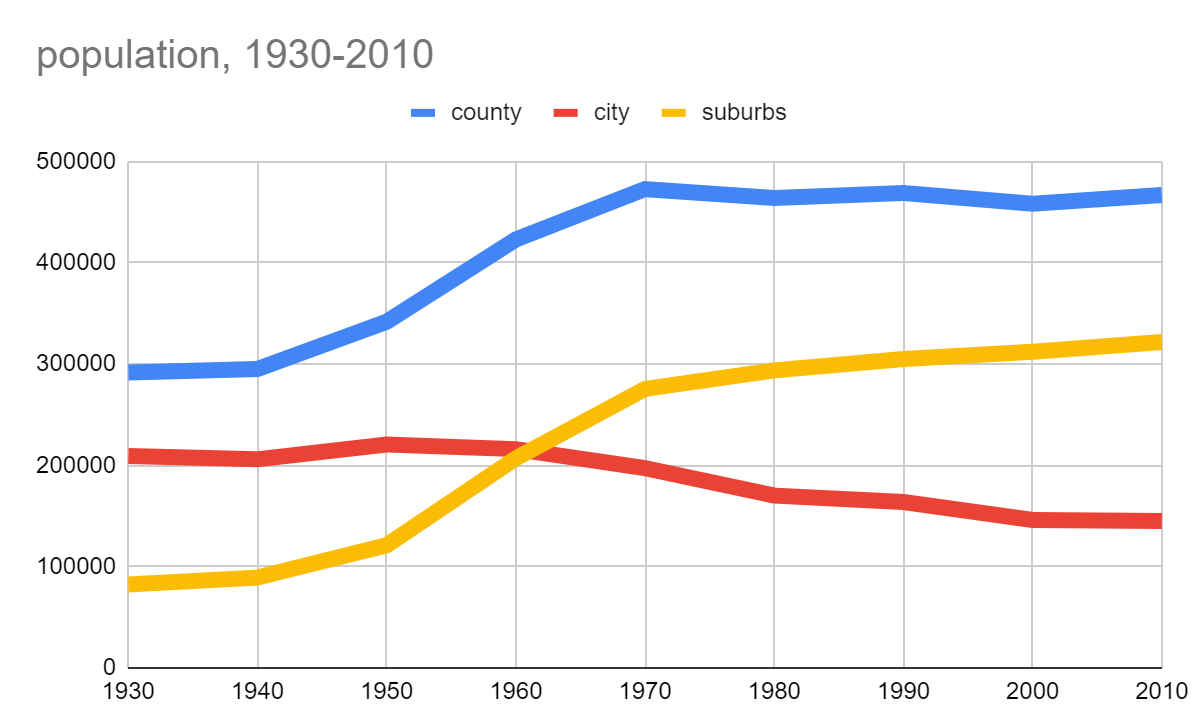
The 2020 census is a big deal for Central New York. Not only did the City of Syracuse post its first decade of population growth since 1950, but—more importantly—the City’s rate of growth exceeded the rest of the county’s. Between 2010 and 2020, Syracuse’s population grew by 2.38% while the towns’ collective population grew by just 1.88%.

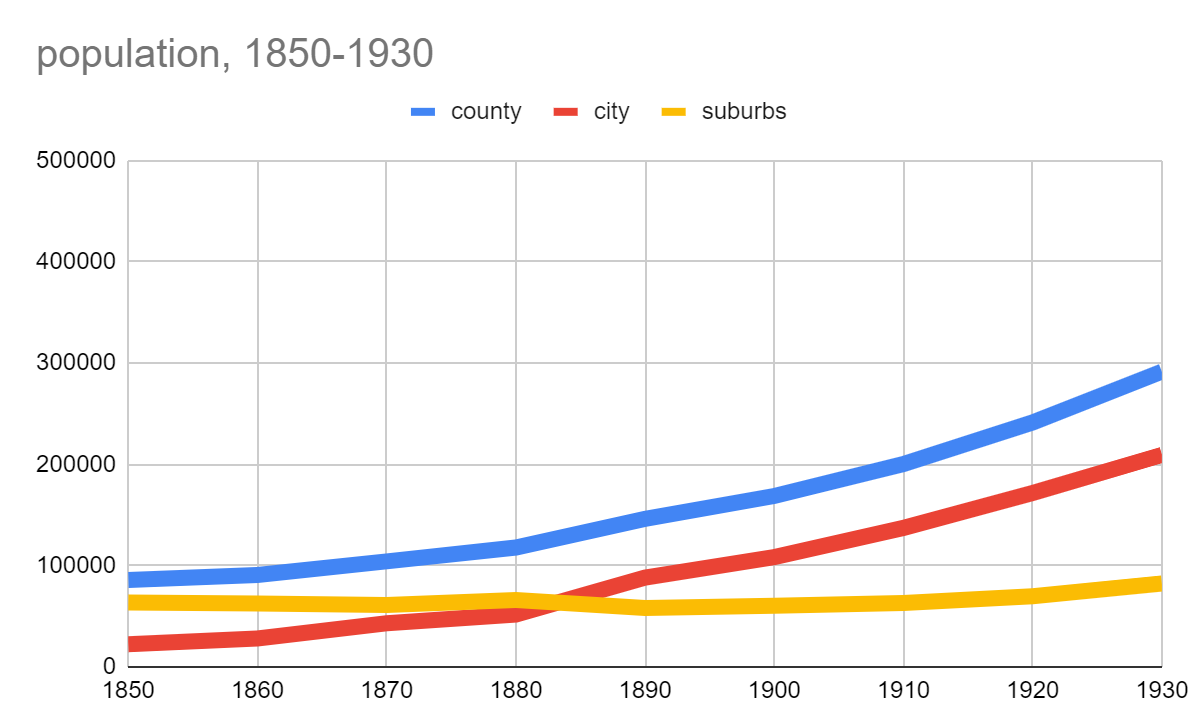
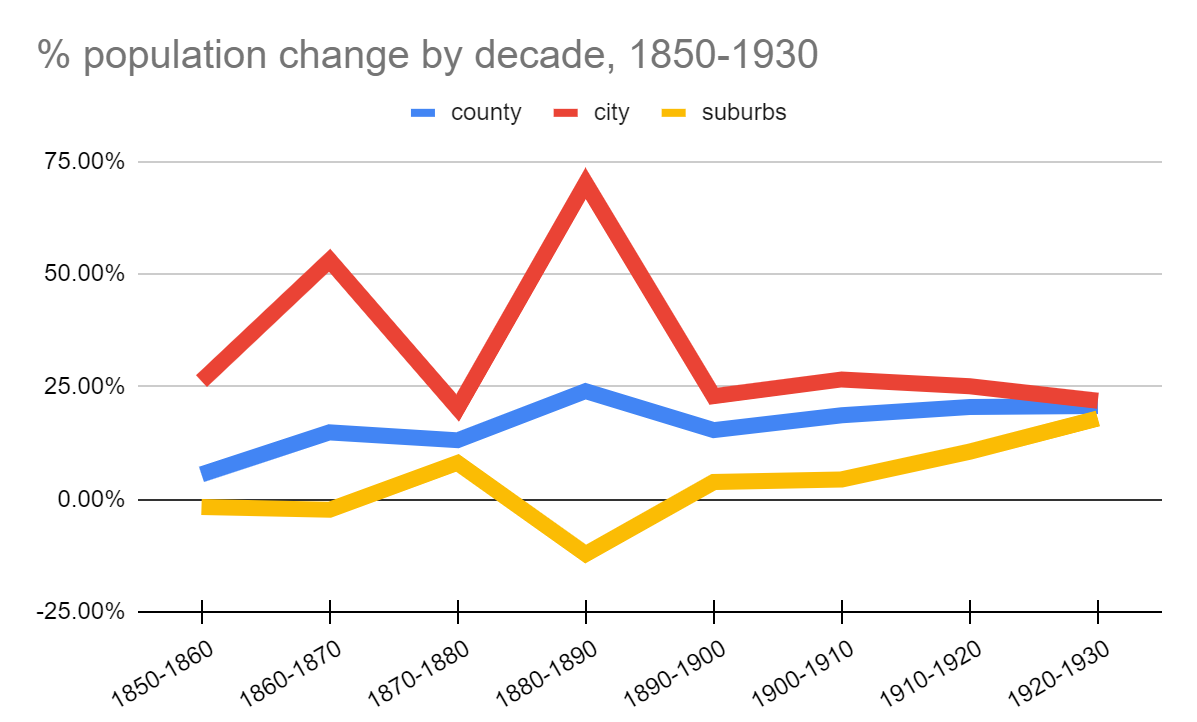
To understand just how crazy this is, we need to back up to 1850: the first census taken after Syracuse became a city. From this point until 1930, Onondaga County grew from a population of 85,890 to 291,606—a 240% increase. Over the same period, Syracuse grew by 840% while the towns that make up the rest of the County grew by just 29%. Syracuse accounted for 91% of the County’s overall population growth during this time.

This was a period of rapid urbanization. Syracuse was a major city at the front of economic, technological, and social change, and people flocked to the city—both from the surrounding countryside, from elsewhere in the United States, and from overseas—to get a better life.

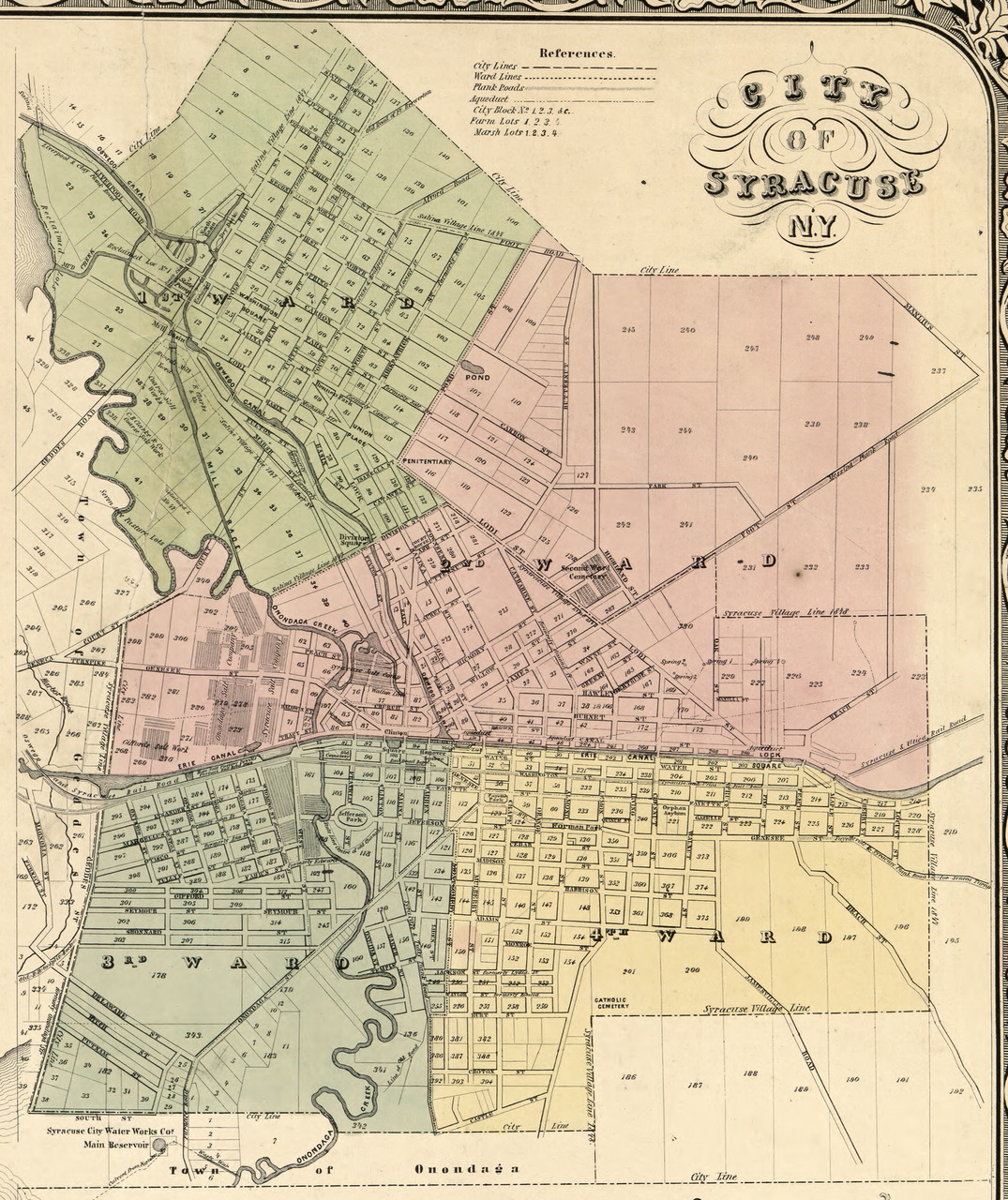
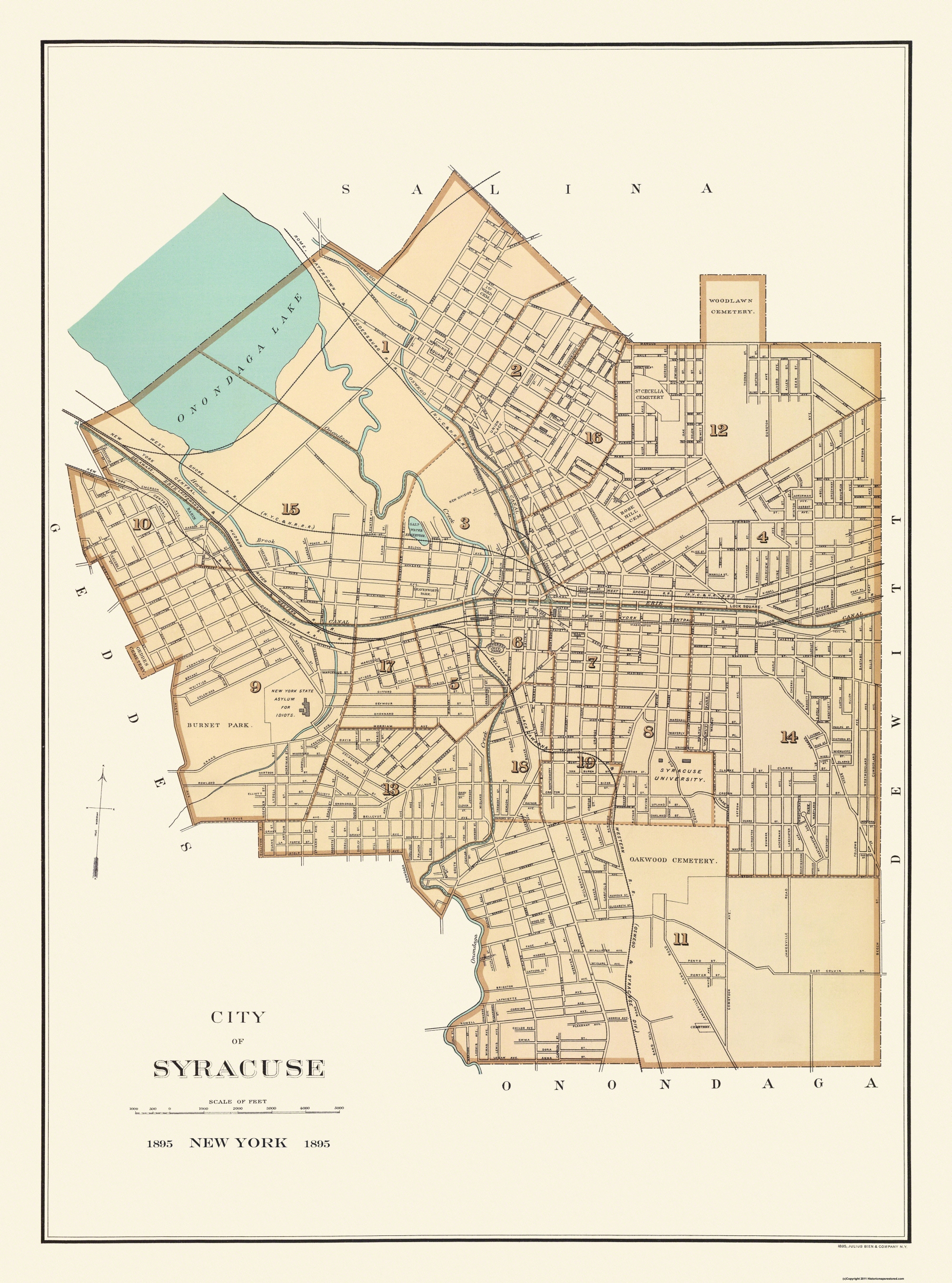
But what these raw numbers don’t show is how Syracuse grew. New housing for all these new people was often built at the edge of town, and the city would annex it in order to provide municipal services. New transportation technologies like electric streetcars facilitated day trips between the growing city and existing villages like Geddes (now known as Tipperary Hill), and the two municipalities agreed to join. Developers built brand new communities like Eastwood—designed from the beginning to function as a suburb of Syracuse—and the City eventually annexed them too.

So this period of rapid urbanization was also a period of suburbanization. Syracuse grew by growing outward—as cities like Houston still do today—and the towns appeared not to grow much at all because the City’s boundaries ate into theirs in order to encompass all of these new people.

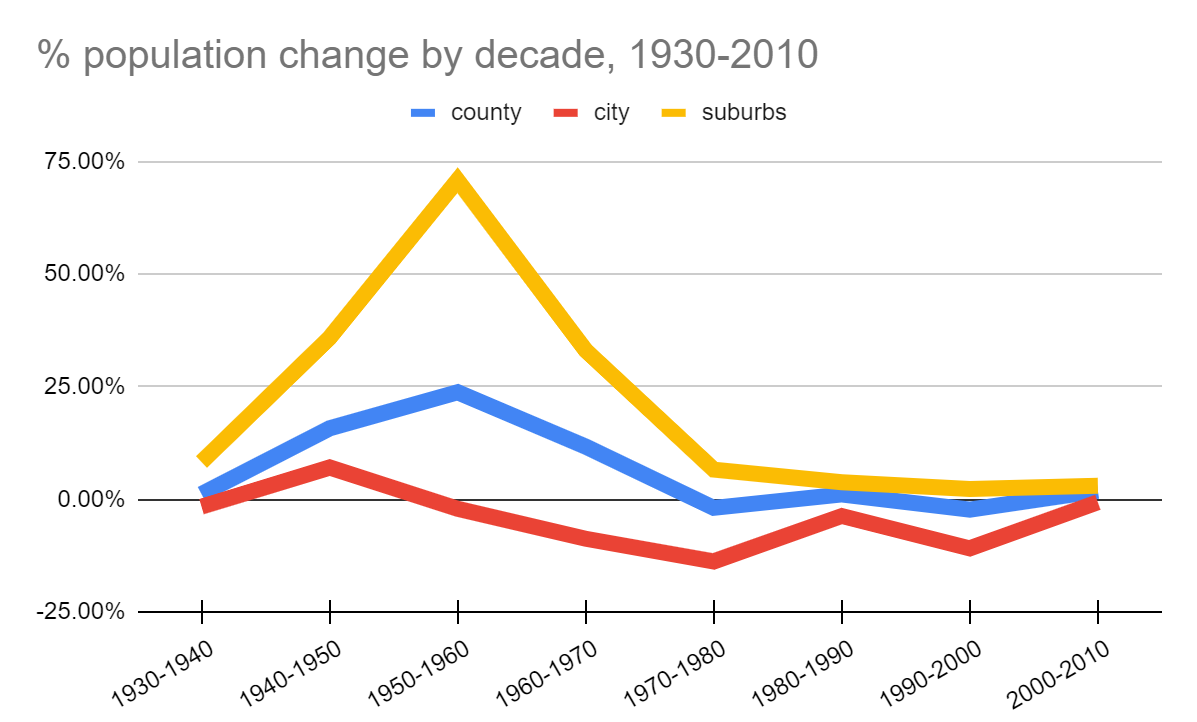
All that changed after the 1930 census. The 1920s saw a huge increase in car ownership that made it easier for people to move far beyond the City’s municipal boundaries, and new laws made it harder for Syracuse to annex land from surrounding towns. Syracuse annexed Eastwood, Meadowbrook, and parts of Salt Springs, Strathmore, and Winkworth between 1920 and 1930—a huge increase in both land area and population—but it was the last time the City was able to annex any significant amount of land.

After 1930, the County’s population continued to grow, but that growth occurred in the towns. Between 1930 and 2010 they grew by 291% while the County’s overall population increased by just 60%, and the City lost 31% of its population.

This was a big change with huge implications for life in Onondaga County, but the demographic trends after 1930 weren’t so different from those before: the County as a whole continued to grow both in population and in extent of urbanized land as prosperity attracted new people, and new transportation technology made it possible for people to live further and further away from each other. The only difference is that Syracuse’s city line used to expand to capture all that sprawl, but since 1930 municipal boundaries have remained essentially static.

So the 2020 census is a big deal because it might signal that Onondaga County has moved into a new phase of population growth. For the first time since Syracuse stopped growing in land area, its rate of population increase outpaced the County as a whole. The city’s population rose by 2.38% while the County gained just 2.03% and the towns only added 1.88%. For the second time since 1850, the lines on the graph on the right have intersected, and Syracuse is again adding people more quickly than the towns.

But what’s different this time is that the City is gaining population without spreading out. All of this past decade’s population increase occurred within a set boundary line. For the first time in its history, Syracuse has managed to house more people without subdividing farmland or forest, without lengthening anyone’s commute, without extending the sewer mains.

This is a new kind of population growth for Onondaga County. It’s fiscally sound because it fosters growth without overextending municipal infrastructure. It’s environmentally sustainable because it accommodates new people without using up new land and without requiring people to spend an hour of everyday behind the wheel of a car. It’s exactly what our community needs in order to meet the challenges of the 21st century.

Lay new sidewalks, keep old trees

This should have gone without saying, but the municipal sidewalk program should preserve as many existing street trees as possible. Tall trees with full foliage shade the sidewalk and make walking around the City more bearable in Syracuse’s steamy summers. A sidewalk—even a brand new perfectly level one—will not be a good place to walk if it’s fully exposed to the elements.

So it’s really very bad that City Hall is trying to fix the sidewalks by cutting down a bunch of decades-old trees. There may be cases where a tree is so close to the sidewalk and its roots are so disruptive that it’s truly necessary to remove the tree in order to build a new ADA-compliant sidewalk. In those rare instances, fine, cut down the tree, but make sure to replace it immediately to avoid the same problem in the future.

But, as Syracuse History has pointed out, City Hall is choosing to cut down trees even when it’s not really necessary. It was probably easier, cheaper, and faster to just cut down this fully grown tree, but it wasn’t necessary. The sidewalk could have curved around the tree, it could have been raised over the roots, they could have removed just a single root. There are plenty of ways to build a decent sidewalk and preserve the mature trees that make walking safer, healthier, and more pleasant.

The Mayor has been making the case that Syracuse needs more trees. He’s using covid relief money to plant a bunch and wants to increase the City’s canopy by about 25%. That’s a good goal, but he will never reach it if he starts by removing the trees we already have.

Cutting down fully-grown street trees in order to lay new sidewalks is penny-wise and pound-foolish. Street trees take decades to grow tall enough to provide all of their benefits. The trees we have now are gifts from previous generations that we can’t quickly replace. City Hall needs to figure out how to lay new sidewalks and preserve these treasures.

The Grid and Bus Rapid Transit

The I-81 project can and should help build a Bus Rapid Transit system in Syracuse. BRT will make public transportation much more useful for current riders, it will attract many new riders, and it will reduce traffic congestion and improve traffic safety for everybody who uses Syracuse’s streets.

In the DEIS, NYSDOT lists “maintain[ing] access to existing local bus service and enhanc[ing] transit amenities within the project limits in and near Downtown Syracuse,” as one of the I-81 project’s five objectives. These transit amenities “could include bus stops and shelters, bus turnouts, and layover and turnaround places.”

NYSDOT elaborates:

“Apart from the Downtown transit hub, Centro has few amenities for its customers. Most stops have a sign, but no seating, lighting, or shelters. Syracuse has a temperate climate with cold winters and hot summers, and the city sees substantial snowfall each year. Lacking any amenities, customers must wait for buses outdoors without the protection of shelters. Where practical, enhanced amenities for riders could provide a better experience for transit customers and facilitate their use of existing transit services.”

This is good. It is ridiculous that the snowiest big city in the nation asks its bus riders to stand in the street to catch the bus in the winter. It is ridiculous that a town where the sun sets as early as 4:30 pm doesn’t provide adequate lighting at its bus stops.

But even though better amenities are good, what we really need is better service. Even the most comfortable bus shelter won’t do much if riders have to wait an hour for the bus to show up.

Luckily, Uplift Syracuse just released a new report—“Better Bus Service”—that shows how investing in infrastructure like better bus stops can make more frequent service more possible by speeding up buses and reducing the annual operating cost of providing improved service.

Basically, faster buses cost less to run than slower buses because they allow a single operator to complete more runs in a single shift. Uplift Syracuse estimates that if bus speeds on Centro’s best performing corridors could be increased from roughly 10 mph to 15 mph, then Syracuse could have an 8-line, 28-mile, citywide network of fast and frequent rapid transit service for roughly $8 million per year—that’s significantly cheaper than Syracuse Metropolitan Transportation Council’s estimate that running a network of just half this size would cost $8.3 million annually.

NYSDOT is willing to build new transit infrastructure anywhere in the I-81 project area shaded red on the map above. This area overlaps with much of the central portion of Uplift’s proposed BRT system. Here are the specific projects NYSDOT should build in order to advance Bus Rapid Transit in Syracuse:

New Stations

potential BRT stations located in the I-81 project area

BRT stations are significantly different from the bus stops Syracuse knows now. They are more than just a place to wait—BRT stations actually increase average bus speeds by minimizing the amount of time that it takes for riders to board and alight from the bus.

BRT stations do this in two ways. First, they are raised up above the sidewalk to sit even with the bus floor. That makes it easier for everybody to get on and off the bus, and it’s especially important for people who use mobility devices. Second, they allow riders to pre-pay their fare while waiting for the bus to arrive. This makes boarding much faster because it eliminates the line at the farebox.

And BRT stations do also have the amenities that every bus station really should have: shelter from the snow, rain, and sun, a nice place to sit, lighting, and real-time information about when the next bus will arrive.

the park at the intersection of Butternut, North Salina, and North State Streets will host a major BRT transfer station

Several potential BRT stations are located within the I-81 project area. One of the most important is the small park at the intersection of Butternut, North Salina, and North State Streets. That’s where two BRT lines will converge, and a station on that park would allow riders to transfer between those lines without the need to cross the street.

Other potential BRT stations are on Fayette near Crouse and Irving, on State Street at Willow, on Adams at McBride, and at the corner of Adams and Irving. Centro needs to finalize its plans for where to locate new stations, and then NYSDOT needs to build the ones that will be in the I-81 project area.

Transit Lanes

potential Transit Lanes located within the I-81 project area

Transit Lanes speed service by letting buses bypass traffic congestion. Syracuse doesn’t have much traffic congestion so transit lanes probably won’t be necessary across most of the City, but Downtown streets do sometimes back up during rush hour. Happily, these same streets are significantly wider than they really need to be, so there’s plenty of room to give BRT buses their own space.

Major streets in the I-81 project area that might also have BRT service are Adams, State, James, Willow, and Salina. In all cases, the I-81 project area does not extend far enough to cover the entire portion of these streets that would need transit lanes, so it will be up to City Hall to complete the work of extending those lanes along State from Erie Boulevard to Harrison Street, say, or along Adams from the Hub to Irving.

These transit lanes will ensure that buses keep their schedules no matter the traffic Downtown, and that will make for faster, cheaper BRT service.

potential Transit Lanes located within the I-81 project area in dark blue with those located outside the project area in light blue

All of these minor transit infrastructure proposals are within the I-81 project area, all would meet one of the five objectives that NYSDOT has set for this project, and all would move Syracuse closer to getting the public transit system that we need and deserve. Let’s make them part of the final I-81 project.

You can let NYSDOT hear about it at this link: I-81 comment form