updated February 10, 2021 in light of information shared during Centro’s public hearings on fare restructuring. New payment technology will allow riders to pay the fare with their phones but not, initially, with a credit card.
There are different kinds of barriers that keep people from riding the bus, and Centro’s about to remove one of the big ones: finding exact change. Centro is upgrading its fare boxes to give riders the option of paying the fare with a smart phone, and that will make a lot more people a lot more comfortable stepping onto the bus.
Right now, paying the bus fare requires some advanced planning. The regular fare is $2, and you have to pay in exact change. That means finding four dollar bills or sixteen quarters or forty dimes or some combination of those before you leave the house in order to make a round trip. People just don’t carry cash as commonly as they used to, and it’s not unusual to not have the right combination of bills and coins to pay the bus fare. (you can also pay with a multi-ride pass, but that requires even more advanced planning since you’ll have to have purchased it well ahead of time).
This is a hassle, and it depresses ridership. Plenty of people really do pass up public transportation because they’re too worried about stepping onto the bus and not being able to pay because the only cash they’re got is a $20 bill and the operator can’t break it.
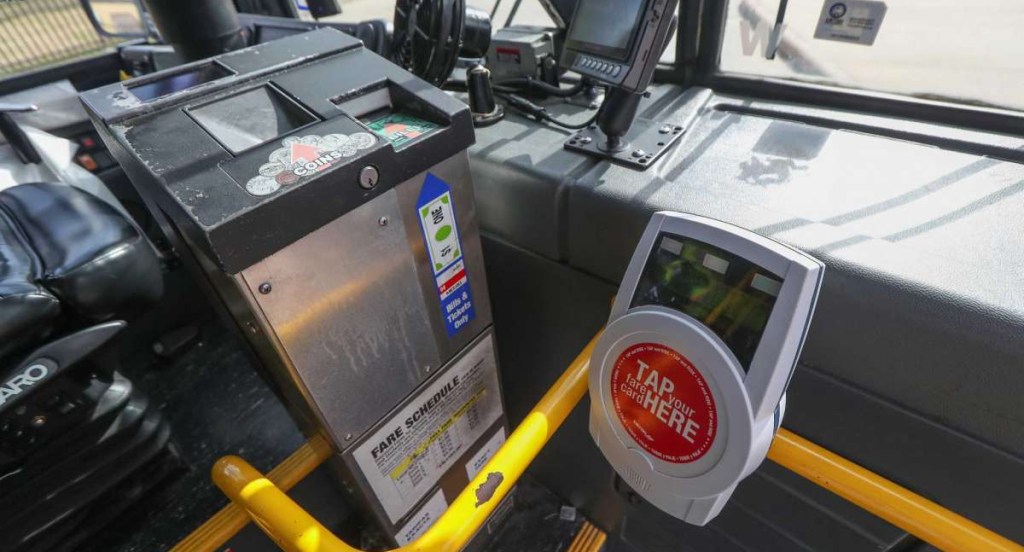
mobile fare technology in Houston
So it’s a very good thing that Centro is upgrading its fare boxes to accept mobile payment. You might have already noticed the new hardware that started showing up on the sides of fareboxes months ago. This new technology will give people the option of paying the fare (which Centro is lowering to $1) with their phone. And because plenty of people have their phone every time they leave the house, paying the bus fare will require no more planning than paying for a cup of coffee.
Clearly, there are other barriers to ridership. People also need to be able to understand where their bus is going, and the bus needs to actually go the places people need to get when they need to get there. Centro has the plans and funding to address those problems too, and they should roll out Bus Rapid Transit service before Ben Walsh leaves office.
But in the meantime, it is very exciting to see Centro making this simple, common-sense improvement to the rider experience. Mobile fare payment has succeeded in making transit more convenient in plenty of other cities, and it will remove an important barrier to ridership in Syracuse.
The Near Eastside needs more small streets. A fine-grained street grid with many small streets and many small blocks yields many different benefits to a neighborhood. The Near Eastside used to have one of the most finely grained grids in Syracuse, but urban renewal removed many streets and consolidated many blocks, and the result is bad for the neighborhood. When NYSDOT builds the community grid, and as City Hall extends NYSDOT’s work through the rest of the City’s center, they should focus on restoring the neighborhood’s traditional street grid to make a better neighborhood.
Small streets are good for all kinds of reasons. For one, they can increase the number of people who can live in a neighborhood. To see how, look at the block bounded by Washington, Water, McBride, and Almond Streets. That block has enough room to fit about 80 new rowhomes, but it only has enough street frontage to fit about 40 rowhomes. Reopening the little street that used to cut through that block—Orange Alley, just 20′ wide—would almost double the amount of usable street frontage and allow the block to hold twice as many people.
Small blocks also improve mobility. When a neighborhood has many small streets, people have lots of different options for getting between any two points. All of those options allow people to disperse through the neighborhood, and that discourages traffic from all bunching up on one congested street. Car drivers coming from DeWitt can keep to high-capacity streets like Genesee while people on foot and on bike can follow safer, slower parallel streets like Water or Jefferson to reach the same destination.
a fine-grained street grid offered many options to move through the Near Eastside before urban renewal
Small streets are also good for small businesses. Jane Jacobs showed how a street network with many streets and small blocks creates allows more retail businesses to succeed with foot traffic. The Near Eastside used to have some of the smallest blocks in Syracuse, and the neighborhood also supported a high density of small-scale retail.
On the whole, Syracuse has a good street grid that brings these benefits to most of the City’s neighborhoods, but urban renewal degraded the street grid on the Near Eastside. City Hall and NYSDOT removed miles of local streets and consolidated dozens of blocks. Now in that neighborhood, the scrambled street grid limits housing options, harms small businesses, and makes it harder to get around.
The Community Grid is about more than just removing the viaduct, it also has to be about restoring the City’s traditional street grid destroyed by urban renewal to secure all of its many benefits for the neighborhood.
But—as of the 2021 DEIS—NYSDOT plans to do almost none of that on the Near Eastside. NYSDOT only intends to restore two of the many streets that urban renewal removed—Pearl and Irving—and those would function less like local streets than as extensions of new highway off-ramps.
City Hall and NYSDOT should do more to restore the neighborhood’s traditional street grid. Along Almond Street, NYSDOT should install pedestrian crossings at Madison and Monroe Streets in order to connect already existing streets that have been broken by the highway. City Hall should reopen through streets removed by urban renewal, like Washington and Cedar, in order to give people more options for travelling through the neighborhood. And City Hall should establish new small streets just a single block long, like Orange Alley, in order to create more room for people to live in the neighborhood.
Syracuse should build bus lanes on specific high-traffic streets as part of the I-81 project. Giving buses dedicated space on city streets makes public transit faster,cheaper, and more reliable, and it’s an important step towards building a transportation system that works for everybody.
But bus lanes weren’t included in NYSDOT’s draft plans for I-81, and they weren’t even part of SMTC’s design of Centro’s planned BRT lines. Even though bus lanes (and preferably, separated bus lanes) are considered necessary for any project to call itself BRT, Centro isn’t asking for any dedicated street space for its buses.
There’s some sense to that. Syracuse doesn’t have the same level of traffic congestion that makes dedicated bus lanes so essential and successful in cities like New York and Boston, and it’s better to focus on other infrastructure improvements—like signal priority and level boarding platforms—that will have a greater impact in Syracuse.
But even though dedicated bus lanes shouldn’t be Centro’s top priority, there are at least three good reasons they should still be part of the I-81 project.
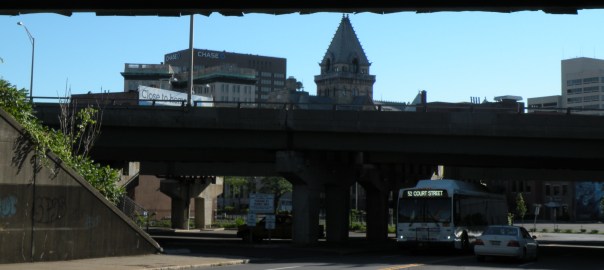
Centro buses are often held up by congested car traffic
FIrst, Centro buses do get stuck in traffic. It doesn’t happen on every bus route, and it doesn’t happen all hours of the day, but there are plenty of times that buses moving through the middle of town get stuck behind a bunch of cars, and that sucks.
Centro should make it a priority to build bus lanes in the specific places where excessive car traffic slows buses down.
Adams Street has ample room for bus lanes
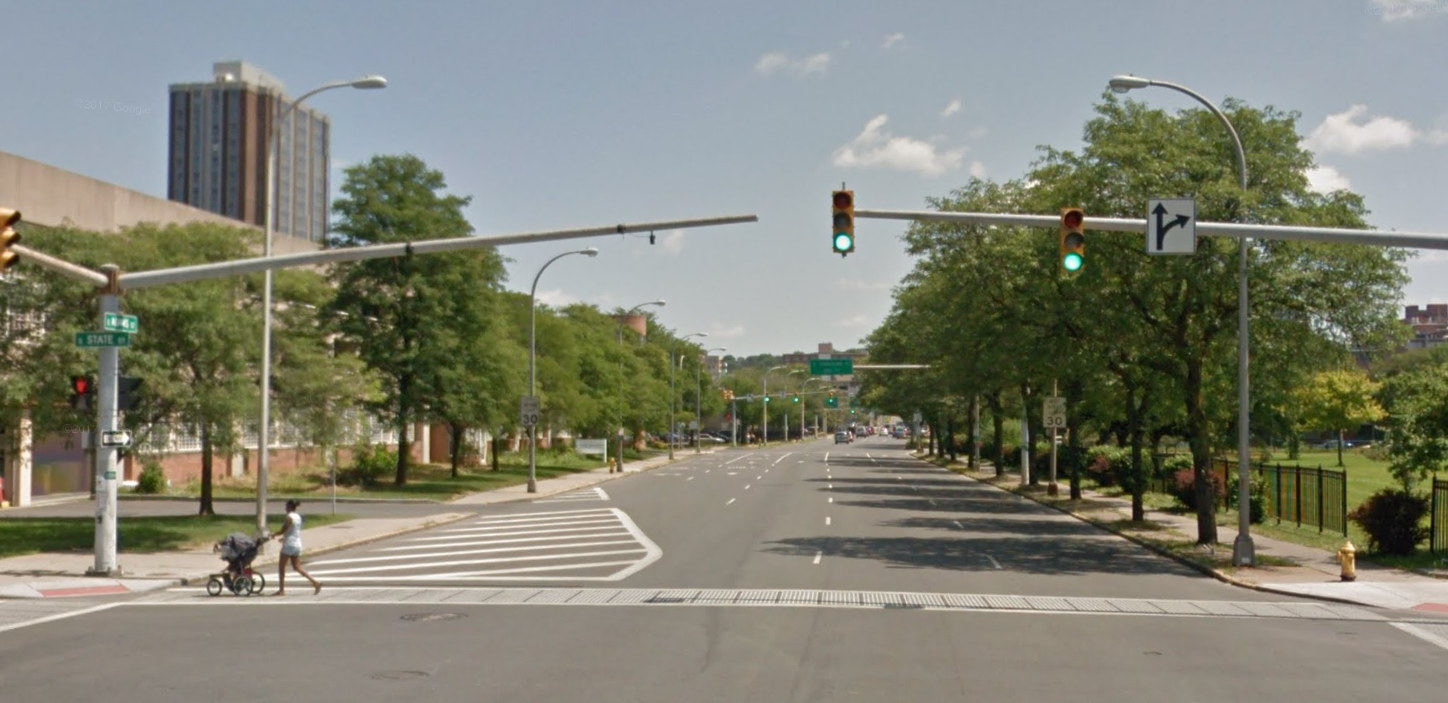
Second, there’s plenty of room for bus lanes already. The places where Centro most needs its own dedicated running lanes just so happen to be overly-wide traffic sewers leading to and from 81’s off and onramps. Parts of James, State, and Adams Streets are 5 lanes and more than 60’ wide. That’s crazy!
These streets have enough room to build dedicated bus lanes without needing to do the costly work of moving a single curb. Just repurpose some of that ample existing street space by painting it bright red with a sign that says “bus only” and call it a day.
These bus lanes would be useful even before BRT is fully implemented, and they should be included in the I81 project.
Third, it’s important to claim that space for public transportation now before doing so becomes politically difficult. Removing the 81 viaduct will temporarily reduce car traffic on these overbuilt streets, but the project will also open up new space for new homes and businesses in the City’s center. When new people move into the center of town, they’ll build their lives around whatever transportation system Syracuse provides. If there’s still mediocre bus service and lots of room for cars, they’ll drive everywhere and create all kinds of new traffic congestion that’ll slow the buses down and make public transportation even less appealing to new residents.
And if Syracuse waits until the buses really are bogged down in terrible traffic, it will be too late to build bus lanes because the drivers bogging down the buses will scream bloody murder at the idea of giving any of ‘their’ space to public transportation. Better to get ahead of that problem now by laying the groundwork for a transportation system that can handle population growth—a transportation system built on high-capacity modes like walking, biking, and public transportation.
This is an opportune moment. Downtown is riven by a few overly wide streets clogged with traffic shunting to and from the highways. When 81 comes down, the excess space on those streets will be immediately—but only temporarily—up for grabs. Syracuse should turn that space into bus lanes as part of the I81 project in order to secure fast reliable public transportation now so that the City’s center can handle population growth in the years ahead.
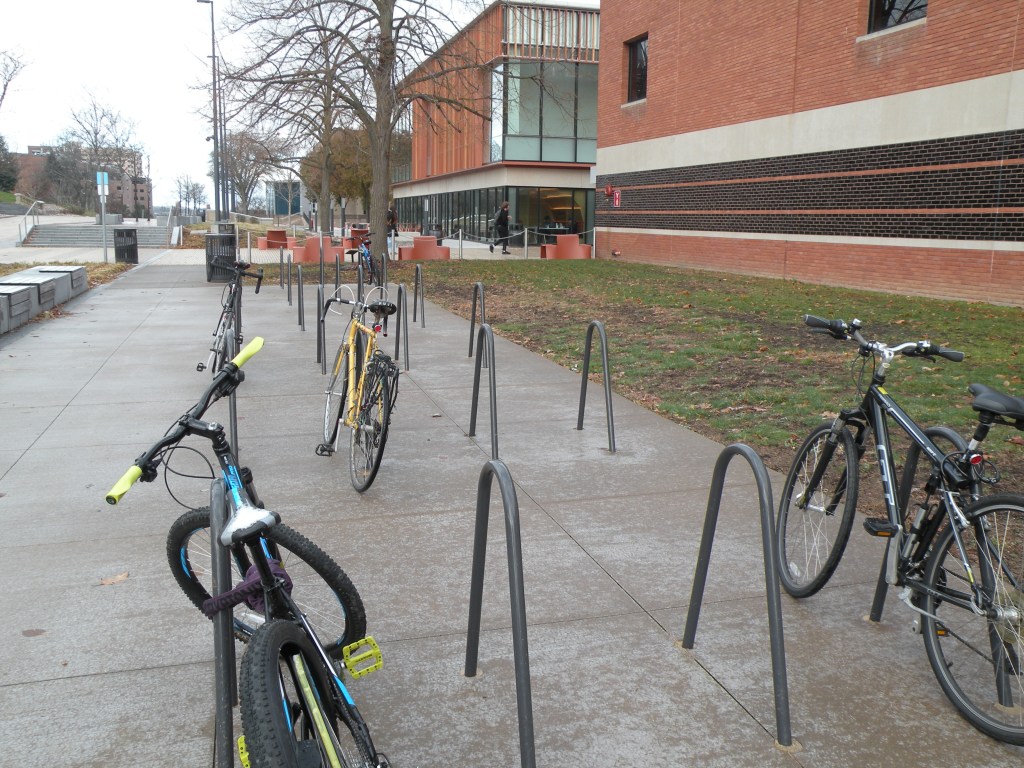
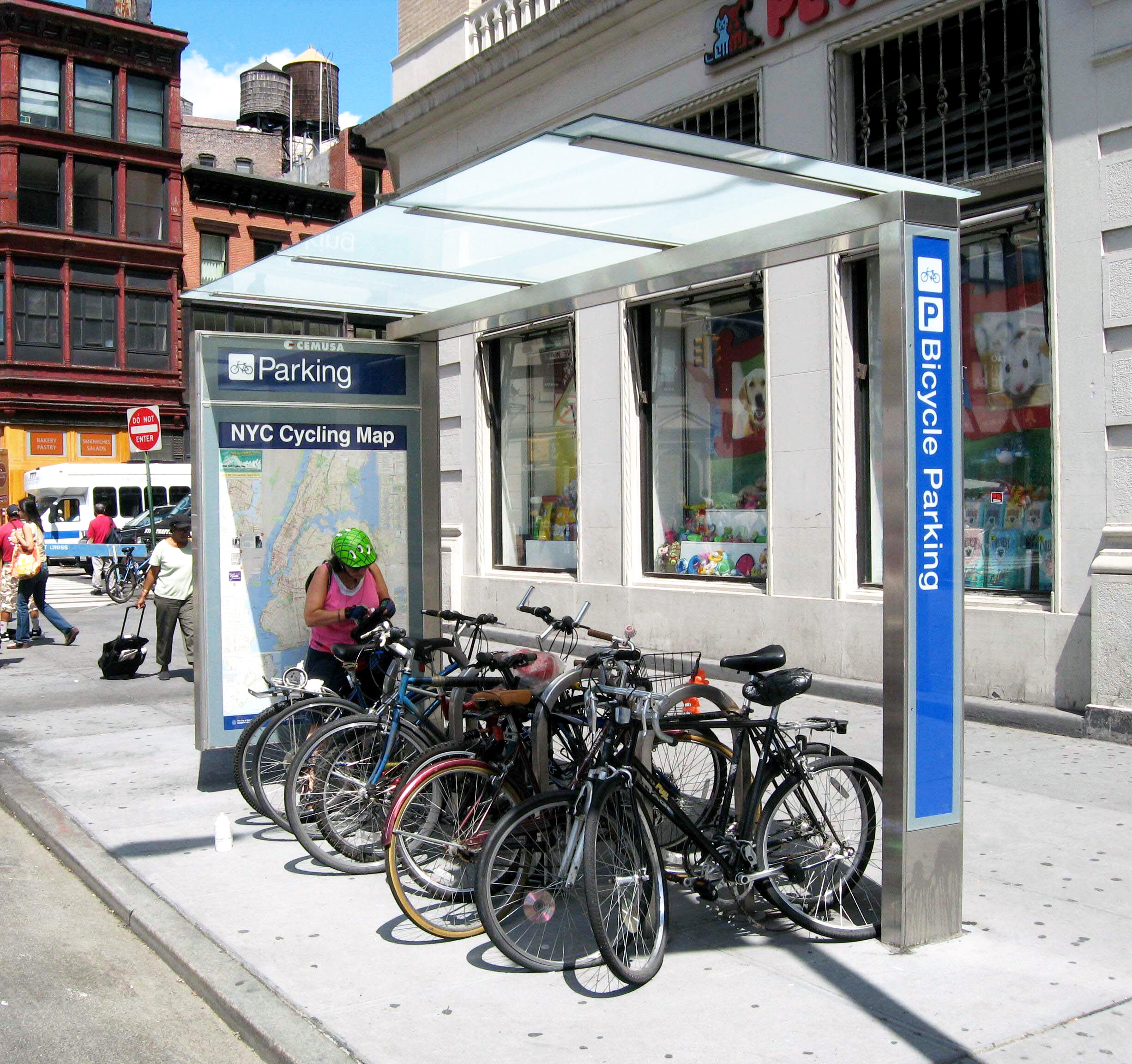
Syracuse needs better bike storage. It’s no good biking somewhere if there’s nowhere to put the bike once you get there. Right now, there’s almost no place in Syracuse with dedicated bike storage for more than one or two people at a time. Bike riders make it work by locking to street signs, fences, benches, etc., but this isn’t a scalable solution. If Syracuse is going to see a meaningful shift to biking, we need better places to store all the bikes.
This concrete pad has enough racks to store 48 bikes. The same space could fit 3 parked cars
University Hill shows how impactful this can be. There’s simply not enough room for every student, professor, and staff member to bring a car onto Syracuse University’s and ESF’s campuses without demolishing half the academic buildings (compare University Hill to Downtown, which did demolish half its buildings to make space for car storage). Bikes (along with quality transit to campus and abundant housing within walking distance of campus) let people get to work or class without needing to bring along a 2-ton steel box that they need to stash somewhere.
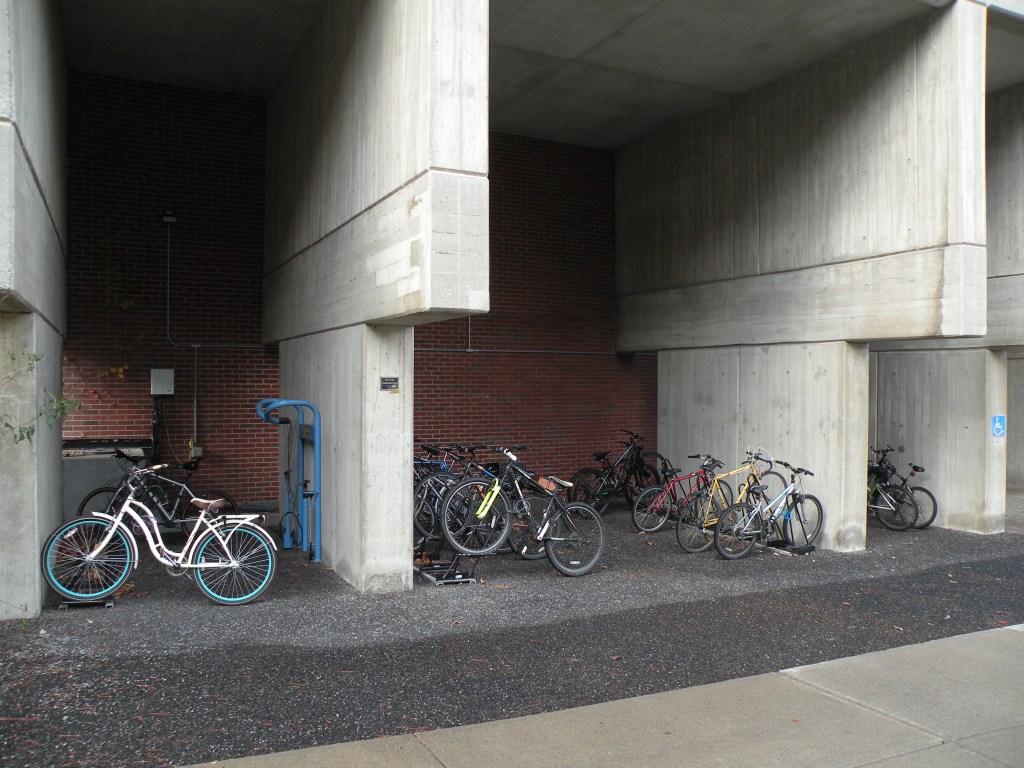
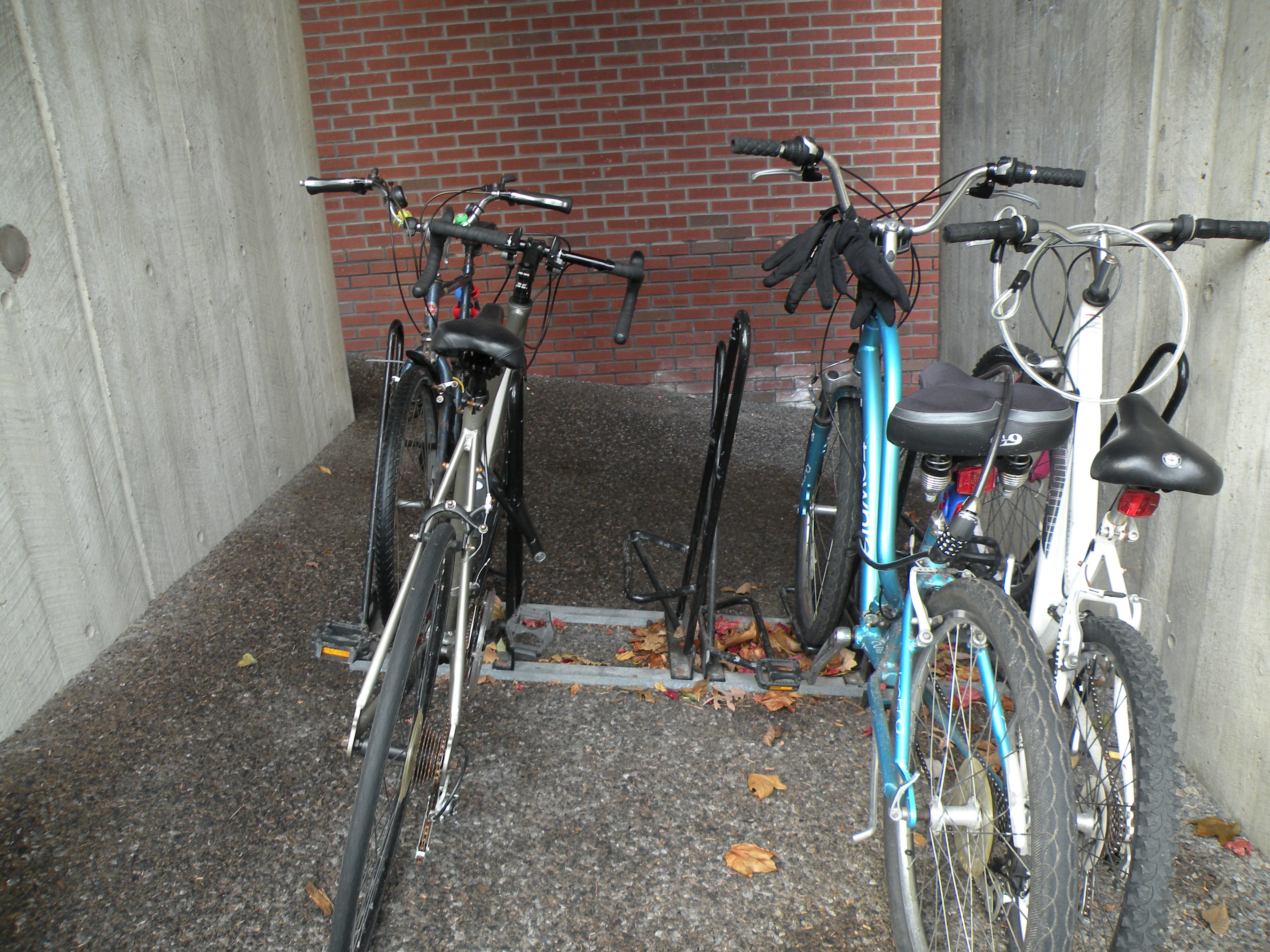
ESF handles bike storage better than SU. To see how, look at the north side of Illick Hall. It’s ‘shark fin’ bike racks are more secure than the traditional racks that SU uses, and they pack more bikes into a smaller space. ESF also placed these racks beneath the building’s overhang to keep bikes out of the elements, and there is a publicly available bike pump and tool set to handle minor repairs.
Here are three lessons from ESF and SU’s bike storage facilities. First, they are abundant. Although many people bike to campus, there’s almost always enough space for another person to lock up their bike.
Second, they are secure. The bike racks on University Hill are sturdy and designed to be locked to a bike’s frame (rather than just the wheel, like the sorry schoolyard-style bike rack outside of City Hall). ESF’s ‘shark fin’ racks are particularly well-designed in that they make it easy to use a single lock to secure both the frame and the front wheel while fitting more bikes into less space.
Third, they are out of the way. These bike racks have their own dedicated space where they don’t get in the way of pedestrians. That’s a much better situation than you find Downtown, where a bike locked to a street sign can easily fall over and block the sidewalk.
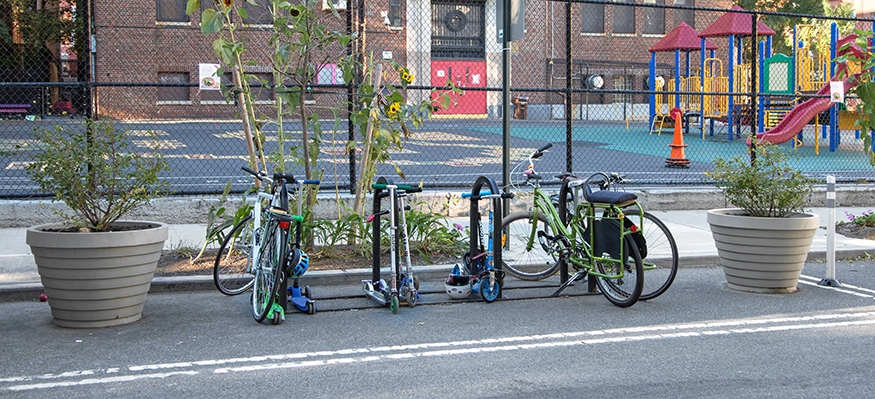
this otherwise unusable space is room enough for 7 bikes
City Hall can learn these lessons and implement similar bike storage strategies in other parts of Syracuse where a shift to bike transportation would yield similar benefits.
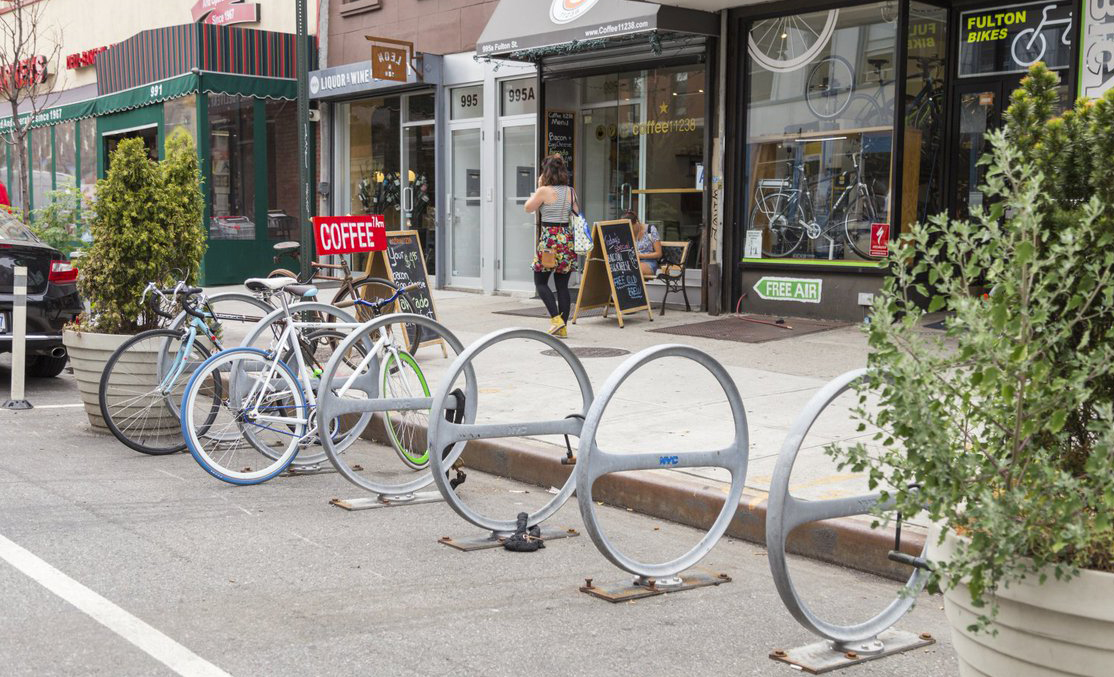
A simple, easily implemented, scalable solution is to build bike corrals below the curb at crosswalks. Bike corrals are just a set of closely-spaced bike racks (enough for 4-8 bikes) protected by bollards or planters. By placing them along the curb at crosswalks, City Hall would improve street safety by reducing the effective length of the crosswalk and by ‘daylighting’ these intersections so that pedestrians and car drivers can see each other. In this way, bike corrals work like curb extensions, but they’re significantly less expensive to construct and they bring the added benefit of quality bike storage.
This simple intervention could make a big impact in places like Downtown and neighborhood centers where lots of people tend to congregate and excessive car storage wastes valuable space that could be put to better use.
Centro has had a rough go of it the last few months, but the transit agency is poised to transform its service and serve the City better. Covid has shaken up service patterns and freed Centro to explore new service strategies, and the federal government’s infrastructure bill will provide the resources to implement those strategies effectively. Public transportation’s future is bright, and that’s a very good thing for Syracuse.
population density
car free households
transit commuters
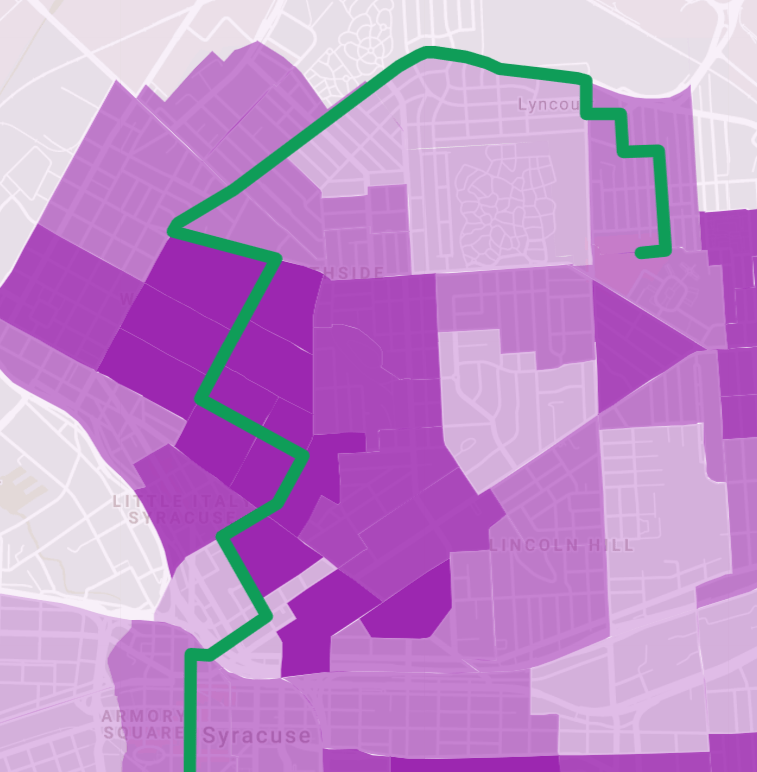
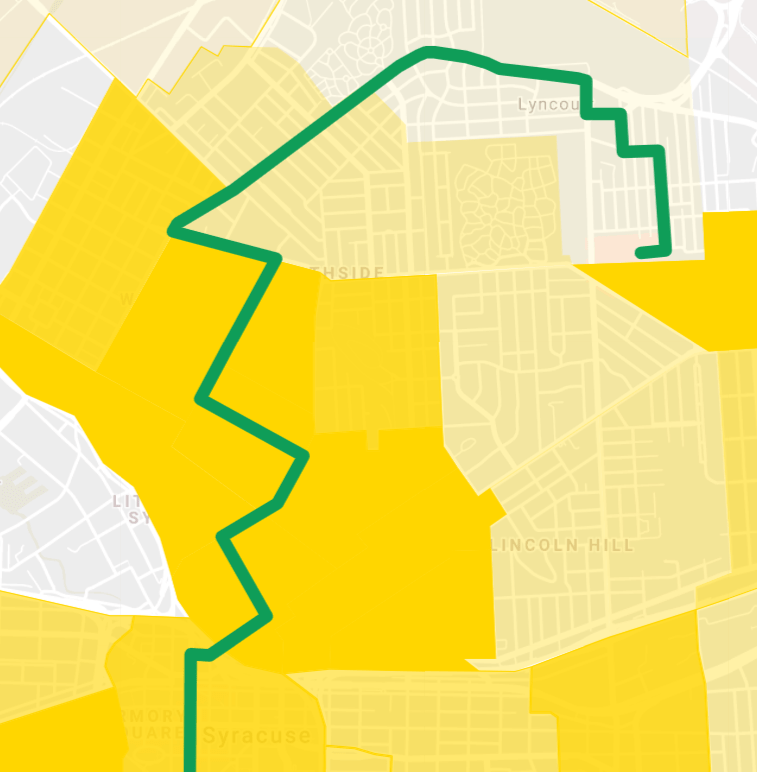
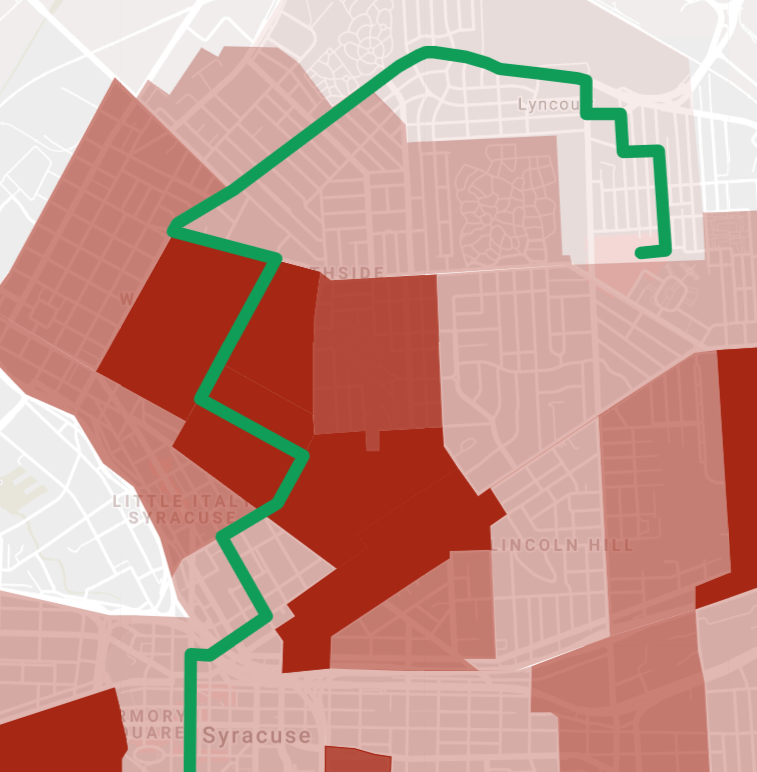
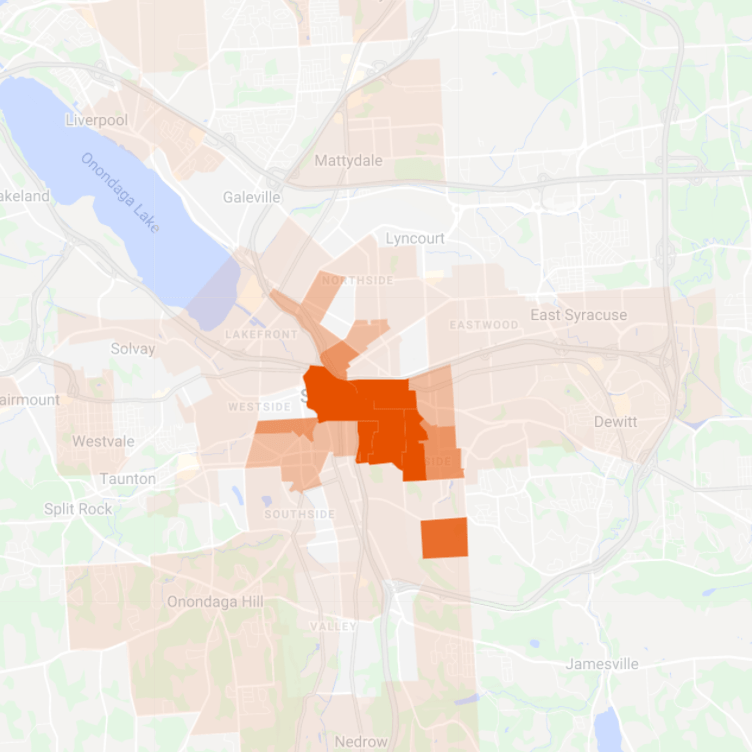
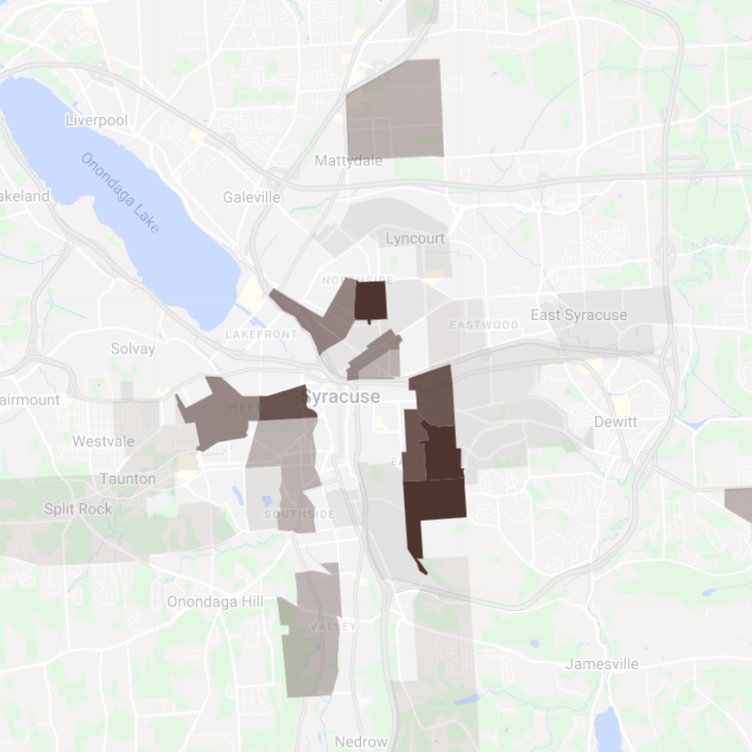
To see how Centro is changing its service to improve transit for the people who use it most, look at the 52 bus that runs through the Northside and Lyncourt. This has consistently been one of Centro’s busiest lines, but ridership is not spread evenly over the entire route. The bus picks up and drops off a lot of people between Butternut Street and Grant Boulevard, but it gets less use as it runs along Court Street.
That makes sense since the Northside is significantly more densely populated than Lyncount, it has a better mix of homes, institutions, and businesses than Lyncourt, and because households on the Northside are much less likely to own cars than are those in Lyncourt.
population density
car free households
transit commuters
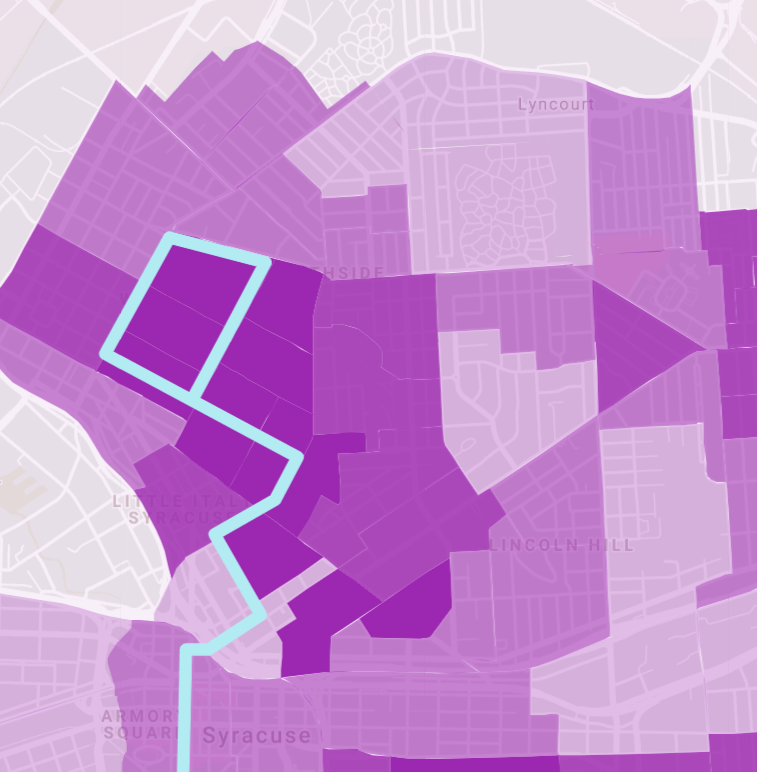
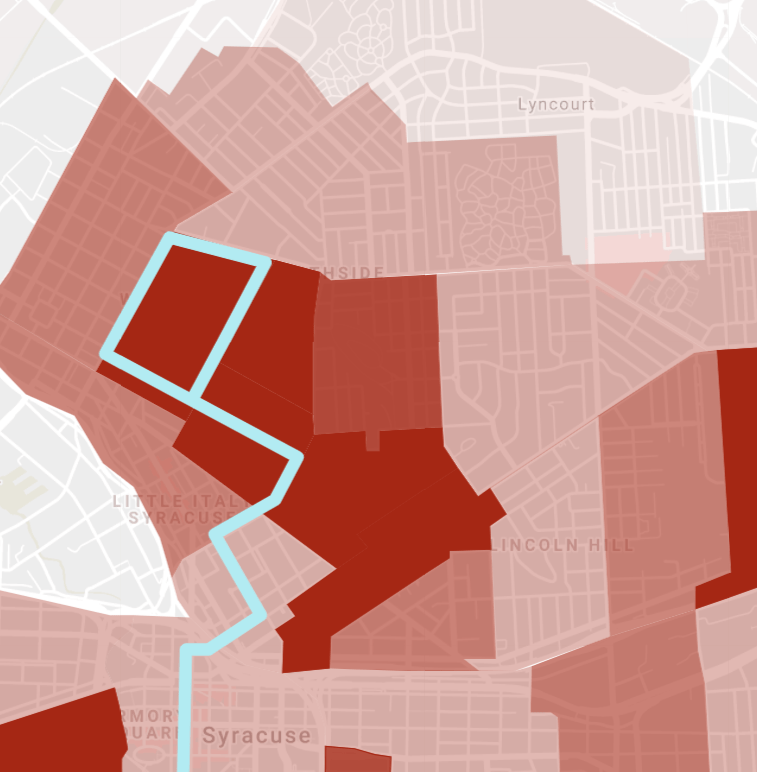
So as Centro is hiring new operators and adding service back to the 52 line , it’s targeting that service to the Northside. Eight times a day, a new variation—the 252 bus, blue on the maps above—will run between the Northside and Downtown without continuing out Court Street to Lyncourt. This truncated route will still serve all of the 52 bus’s busiest stops, and—because it’s so much shorter than the full 52 line—it will allow for much more frequency where people need it most.
Centro is calling this an “urban centric” strategy, and it’s a very good idea—in order to truly connect people to opportunity, the bus needs to run frequently. Centro should use its limited resources to achieve meaningful frequency in neighborhoods like the Northside where many people ride the bus. Similar changes can and should be made to many of Centro’s other routes.
The recently passed federal Bipartisan Infrastructure Framework will supercharge this process. It contains $74 million for Centro to finally build and run BRT in Syracuse. As a start, this means two high-frequency bus lines—one from Eastwood to OCC along James Street and South Avenue, one from University Hill to the Regional Transportation Center along Adams and Salina Streets—with buses running no more than 15 minutes apart all day.
At root, BRT is nothing more than applying Centro’s ‘urban centric’ strategy to its highest ridership lines. The two corridors identified in the 2017 SMART1 plan are really just the best performing sections of four of Centro’s best performing lines. Investing in increased frequency on those high-ridership corridors will multiply the gains from Centro’s new service strategy.
So, if this experiment with the new 252 line goes well—if more people ride it because it targets better service where it’s most useful—then that line might be a candidate for conversion to BRT service in the future. These are the kind of iterative, data-driven service changes that will make BRT such an effective tool for continuously improving public transportation in Syracuse.
Eventually—as routes like the 252 and new service designs like BRT prove themselves—we should see similar improvements to lines like the 68 (Fayette and Erie Boulevard), 10 (South Salina), and 64 (Onondaga Avenue). Uplift Syracuse estimates that BRT service on those corridors would put 125,000 people and 80,000 jobs within walking distance of useful, reliable bus service. That’s the kind of transformational public transit this City needs and deserves.
In Sync’s short history, it’s always been a City-centric service, but bikeshare could make its biggest impact in the suburbs. That’s because Sync’s ebikes are particularly useful for travelling long distances, and—with a growing network of intermunicipal trails—they could remake the way people get around Onondaga County.
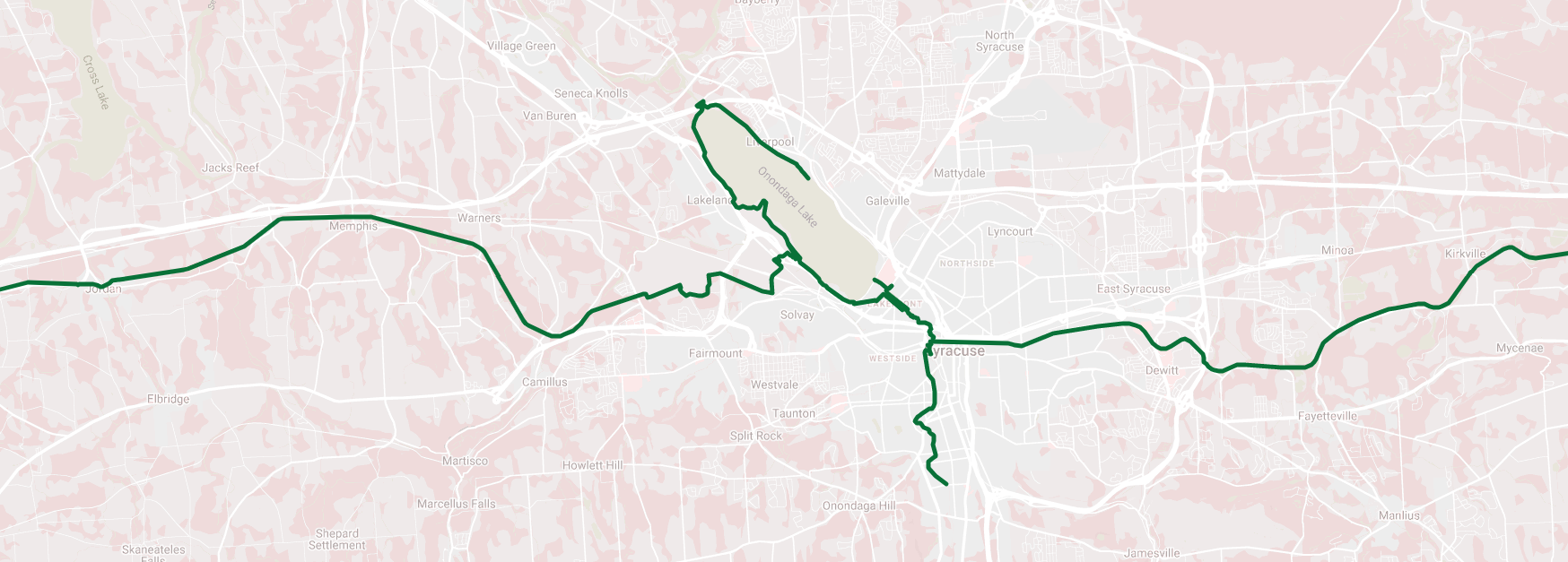
The Empire State Trail, Onondaga Creekwalk, and Loop the Lake Trail are three interconnected trail systems that pass through or near Onondaga County’s main job centers and its most highly populated neighborhoods. They are also the kind of high-quality, low-stress biking infrastructure where lots of people feel comfortable riding a bike, even if they’re not ‘avid cyclists.’ These trail systems could allow people the freedom to travel across the county by bike.
But it’s not entirely practical for many people to use these trails in this way for the simple reason that many people live very far away from the places they work or shop or go to school. Most people who already bike to work live within 2 miles of all the jobs Downtown and on University Hill because that’s about as far as a lot of people are willing to pedal to get to work. Even though a person living in Elmcrest could bike all the way Downtown almost entirely on separated bike trails, that’s a 10-mile trip with a couple of hills, and it’s too difficult and time-consuming on a regular road bike.
But Sync doesn’t use regular road bikes. Its ebikes contain motors that make it much easier and quicker to bike over long distances and steep hills. This ease and speed means that people will be able to travel much further by bike without getting tired and sweaty and without wasting too much time, and it will greatly expand the distance that people are willing to travel by bike.
This is why Sync should look to expand its service area along the Empire State and Loop the Lake Trails. These are areas where it can provide a new and competitive service that will reduce both traffic congestion and greenhouse gas emissions while also making more suburban jobs accessible to City residents. It is also why City Hall, Onondaga County, and New York State should continue to expand the trail system to connect more neighborhoods and employment centers across the metro area.
Taken together, the countywide system of interconnected trails and Sync’s ebikes have the potential to meaningfully change the way people get around Central New York. High-quality, low-stress biking infrastructure makes biking comfortable for people who are just getting used to it, and motorized ebikes make biking long distances easy even for casual riders. Taken together, the countywide system of interconnected trails and Sync’s ebikes have the potential to meaningfully change the way people get around Central New York.
You’d be hard pressed to find a better metaphor for the sorry state of our bike infrastructure than the Mayor announcing the return of bikeshare by riding an e-scooter over the barely visible remains of a sharrow worn away by car traffic. So—as someone who enjoys metaphors and is often very angry about how dangerous it is for me and my family to bike around Syracuse—I took dark pleasure when that exact thing happened last week.
Here’s the Mayor riding down Westcott Street, and if you squint hard enough you can just make out two parallel lines of worn white paint right in front of him. Those faded painted lines are what pass for bike infrastructure in the neighborhood with the highest rate of bike commuting in the entire City.
That’s not going to cut it. For bikeshare to live up to its promise, City Hall needs to build out the infrastructure that can keep people safe as they make their way across town.
the Mayor riding over Syracuse’s woefully insufficient bike infrastructure
Adding e-scooters is also good. They were already growing in popularity as a cheap, easy way to get around, and they will make the program accessible to people who might be intimidated by bkeshare’s heavier, more physically demanding e-bikes.
But, for many people, bikeshare won’t eliminate the main barrier that’s keeping them from getting around Syracuse by bike: Syracuse’s streets are too dangerous for people on bikes! Almost necessarily, bikeshare is for people who don’t bike much now and probably aren’t very comfortable riding on city streets. It’s scary riding a bike and getting buzzed by a 2-ton truck because the driver is on their phone or maybe just pissed at you for being on the street. People who bike often out of necessity know this and develop strategies to avoid these kinds of situations, but it’s not reasonable to expect that most people will tolerate that level of danger and discomfort.
Just putting bikes and scooters out on the street isn’t enough. In order for bikeshare to truly be a new practical transportation option, people need to feel safe riding bikes and scooters on Syracuse’s streets.
the only connection between Tipp Hill and Park Avenue runs through this outrageously dangerous intersection
This means Syracuse needs bike infrastructure specifically designed to be inviting to new riders who aren’t necessarily used to riding in cities. Low-stress cycling is an infrastructure design approach that’s become national best practice because it increases access to city biking by making the experience safe and comfortable. You don’t have to be particularly comfortable on a bike, you don’t have to have planned your route out in painstaking detail beforehand, you don’t have to maintain total alertness the entire ride in order to get where you’re going safely. This is infrastructure that welcomes novices, forgives mistakes, and generally treats biking as the legitimate activity for anybody rather than a specialized hobby for hardcore enthusiasts.
In other words, low-stress cycling infrastructure is the perfect complement to a bikeshare program designed to increase the number of people getting around by bike.
There’s a lot that goes into low-stress cycling infrastructure, but here are two main points: riders need to be protected from the stress of travelling near heavy vehicular traffic, and riders need easy access to a citywide network that can get them where they need to go without long detours.
In practice that means a lot more bike lanes and paths protected from vehicular traffic with some physical object like bollards or a curb—not paint—and laid across the City so that people can easily move within and between neighborhoods. The Creekwalk and Empire State Trail are very good examples of this kind of low-stress infrastructure, and they should form the backbone of a larger citywide network.
This should not be hard to implement. The Mayor has expressed interest in better bike infrastructure, but he often says the problem is money. Well, the American Rescue Plan gave City Hall $123 million to spend on Covid recovery, and Centro is running skeleton service because Covid caused structural changes in the nature of work that are making it hard for them to hire bus operators. City Hall is well within its rights to use that money to improve transportation infrastructure for people without reliable access to a car, and they should do so immediately to complement the return of bikeshare.
Bikeshare has the potential to expand access to a cheap, convenient, sustainable method of transportation. That’s good because people need better options for getting around in this town, now more than ever. But in order for the program to live up to its potential, City Hall has to make Syracuse’s streets safer. That’s going to require an investment in low-stress cycling infrastructure like protected bike lanes and multi-use trails. People need to feel comfortable using bikeshare even if they’ve never ridden in a city before, even if they haven’t been on a bike in years. That’s the only way for bikeshare to succeed.
The I-81 Draft Environmental Impact Statement put a lot of effort into explaining exactly how many minutes it would take to drive a car between different points in the County depending on what NYSDOT ultimately decides to do with the I-81 viaduct. NYSDOT estimates, for instance, that in 2056 during the morning rush it’ll take 27 minutes to get from Cicero to Lafayette if they leave the viaduct as it is, 23 minutes if they build a brand new viaduct, and 27 minutes if they build the Community Grid.
But the I-81 project’s biggest transportation impact won’t have anything to do with how long it takes to drive a car between Cicero and Lafayette. Instead, the I-81 project is going to decrease the number of car trips between such far flung locations and replace them with much shorter carless trips by changing the geography of where people can live in Onondaga County.
In general, if you were to walk from the edge of the Syracuse metropolitan area to its center at Clinton Square, each area you passed through would be more densely populated than the one you saw last. Onondaga County is more densely populated than predominantly rural Madison and Oswego Counties. Onondaga County’s inner ring suburbs are more densely populated than its newly built exurbs. The City’s neighborhoods are more densely populated than most all of its suburbs. The City’s older closer-in neighborhoods are more densely populated than the more recently developed neighborhoods at its edge.
And this makes a good deal of sense because it’s good to live near the center of things, so that’s where lots of people choose to live. It’s good to have ready access to hospitals and schools and places to work and places to socialize and lots of people to socialize with. Syracuse is the only place in all of Central New York where a person could step out their front door and be within walking distance of 50,000 jobs.
But once you reached the very center of the city, this pattern of increasing population density would all of a sudden reverse. Downtown Syracuse and the area that immediately surrounds it is significantly less densely populated than neighborhoods like the Northside and the Southside.
This is a real paradox, because the City’s center is one of the best places to live in order to enjoy the benefits that cities bring—being near stuff—and it’s obvious that people want to live in this area since the few that do pay exorbitant rents for the privilege.
People want to live near the center of town, but they can’t because the highway takes up too much space. The highway makes it so that the most desirable areas to live instead are on the exurban fringe. So people move out to the exurban fringe, but everybody’s moving to a different part of that fringe whether it’s Camillus or Lysander or Clay or Manlius. The community gets dispersed over an enormous area, and that’s how people find themselves in situations where they regularly need to get from Cicero to Lafayette for book club or work or their kid’s soccer game.
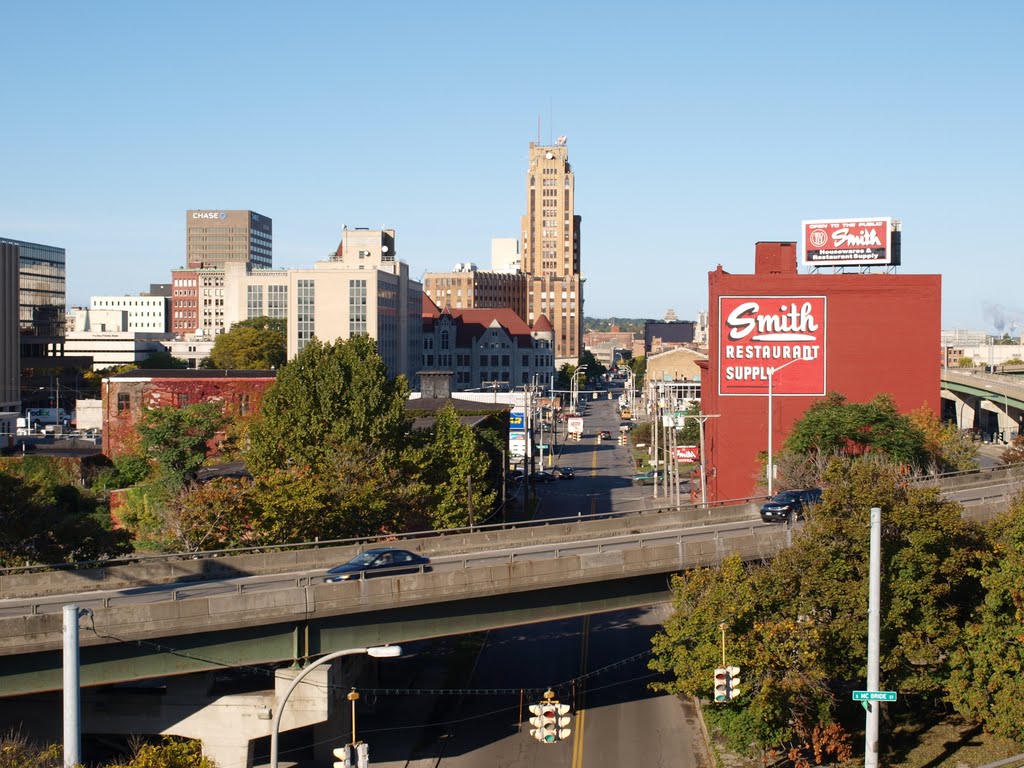
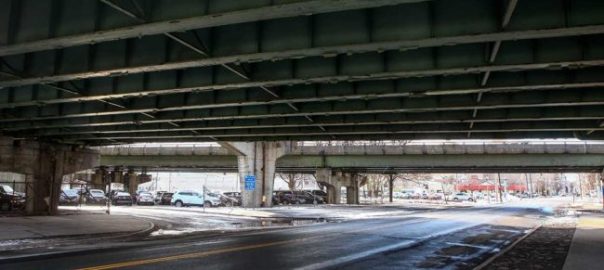
Tearing down the I-81 viaduct is a huge step towards fixing this transportation failure. The viaduct covers 18 acres of land, and tearing it down will free up a lot of space where people could find a good place to live. It will also make a lot of currently vacant land much more suitable for housing because there won’t be a big ugly polluting noisy highway right nearby anymore.
With more people living closer together, more of the places they need to go and the things they need to do will be located in a smaller area, so the post office and the pharmacy will be a 5 minute walk from home rather than a 5 minute car ride. As more people move to the center of town, there will be less need for all that parking and all those arterials, and there will be even more room for more people.
This trend is already underway. The five census tracts that surround the I-81 viaduct grew by 26% between 2010 and 2020. The people who accounted for that growth are not going to have to drive nearly as often or nearly as far as they would if they had instead moved to someplace like Fabius. When NYSDOT tears down the viaduct and replaces it with the Grid, they will make it more possible for more people to live similarly. That’s going to be the Grid’s biggest transportation impact.
Now that it’s clear that I-81 is coming down, the viaduct’s supporters have adopted a new tactic: delay. They’re done trying to influence the final outcome of the project—compare the in-depth 2-year tunnel analysis to the half-assed Skyway proposal—and they are instead trying to hold it off as long as possible.
The Mall has hired a lawyer who argues NYSDOT needs to redo all of its economic analyses with newer data. Busybodies from Skaneateles want additional traffic studies for locations 50 miles away from the highway. Congressman John Katko just managed to get NYSDOT to extend the comment period by another 30 days. Expect to see more of this nonsense as we take the final steps towards tearing down the viaduct.
None of these delaying tactics will change the project’s ultimate outcome. The Grid is so obviously the correct choice from an environmental, safety, economic, social justice, cost, and transportation perspective. In the long run, the viaduct will come down, and Syracuse will be better off for it.
But we don’t live in the long run. We live here now, and the interested parties have a lot to gain or lose by dragging this decision out as long as possible.
Take the Delayer-in-Chief, former State Senator John DeFrancisco. He was able to muck up the NEPA process for years. In that time he moved his home and business to the suburbs, and he retired from public life so he no longer needs campaign contributions from viaduct supporters. He couldn’t actually convince NYSDOT to build a tunnel or a new viaduct, but he managed to keep the current viaduct up until it didn’t matter to him, personally, anymore.
Or look at the mall. The long run doesn’t matter to them because structural changes to the world economy is killing their business anyway. But in the short run they sincerely believe they’ll make more money with the viaduct than without it. From that perspective, it’s in their financial interest to keep the viaduct up as long as possible. A 13-year process is better than a 5-year process—even if the viaduct comes down at the end either way—because it means 8 more years of marginally higher profits.
But just as these bad actors benefit from delay, stretching out this process hurts Syracuse. Tearing down the viaduct and building the grid is going to give a lot of people a recession-proof paycheck—it would have been great for that work to have already started before the pandemic caused a recession last year.
The pandemic also caused a huge increase in demand for housing in the Syracuse metro area. Much of that demand matched with supply in the exurbs—places like Clay, Lysander, and Manlius—and furthered sprawl and inter-municipal inequality. If the viaduct had already come down, new housing in the City’s center could have soaked up some of that new demand and made Syracuse a more sustainable, more equitable place.
Most importantly, every single day, the viaduct makes life worse for the people who have to live near it. Noise and air pollution cause chronic illness along the highway’s path, and every day that John DeFrancisco, John Katko, and the Mall delayed construction was another day that kids breathed in exhaust and fell asleep to the sound of speeding cars.
The viaduct will come down. Syracuse will be safer, cleaner, more just, and more pleasant for it. But there are people who want to delay that better future off as long as possible. They talk about caution and making every voice heard and making sure we get this right. But they’re really just interested in running out the clock until they retire, until their business fails, until they move. We don’t need to humor their cynicism for another year.
Assemblymember Bill Magnarelli just wrote an op-ed arguing that we can’t move forward with the I-81 project until there’s consensus. This is wrong, and we need to move past the false hope that the I-81 project can possibly please everybody.
The Assemblymember pointed to widespread criticism of the recently release Draft Environmental Impact Statement as evidence that NYSDOT should not move forward with the Grid. People living in Pioneer Homes deserve better mitigation during the construction period; car drivers may have to stop at red lights; fewer people may drive directly past the Mall; car exhaust may cause students at Dr. King Elementary to develop chronic respiratory illness.
From the Assemblymember’s perspective, these criticisms all point to his preferred outcome for this project: the status quo.
“We can have connectivity within the city, including walking and bike trails, and continue to keep the city connected to its suburbs and the rest of the region. These are not mutually exclusive… What we need is a community grid in conjunction with a rebuilt viaduct, tunnel, or new bridge to keep traffic flowing through Syracuse.”
The Assemblymember then implies that this outcome—one which has been opposed by the City’s elected leadership for a decade—would work for everybody:
“I do not believe that a consensus for this project has ever been reached by the city, suburbs and outlying towns in our region. Given the amount of federal monies available, why don’t we have an option that satisfies everyone’s needs?”
There is no option that can possibly meet everyone’s “needs,” and to see why all you have to do is read through the Assemblymember’s list of concerns. A new viaduct would certainly save car drivers from the terror of traffic lights, but it would also increase air pollution at Dr. King Elementary. A tunnel (it’s okay, you can laugh) would definitely keep cars moving past the Mall, but the interchange with 690 would be even bigger than what we have today, and it would create a blackhole in the middle of town where no one would ever have cause to walk or bike.
Assemblyman Magnarelli is wrong: competing interests want mutually exclusive things out of this project. There is no way to reconcile all of the concerns that different members of different communities have expressed about NYSDOT’s current plan for I-81.
In fact, the DEIS has received so much criticism because it is a misguided attempt to find a “consensus” solution. The Grid should resemble a normal city street in order to accommodate local street life while discouraging through traffic from bringing air pollution, noise pollution, and traffic violence into the City. Instead, NYSDOT is offering something no one wants—the West Street Arterial but bigger—in order to appease powerful people like the Assemblymember who have demanded that the Grid accommodate high-speed high-volume car traffic.
There is no possible solution that can please both the Mall and Dr. King Elementary’s community. They simply want mutually exclusive outcomes from the I-81 project. That’s a hard truth because it requires our leaders to make a decision that will be unpopular with some people, but it’s the way things are. Anybody who continues to nurture this false hope—that if we just had more time, if we just thought a little harder about it, if we just spent more money, then everybody could be happy—is ignoring reality.











 inthesalt.city